What Are the China Top 10 Smart Home Touch Panels? This guide examines the leading Chinese brands shaping modern residential control. These panels combine lighting, climate, security, curtains, energy monitoring, and entertainment in one wall-mounted interface. Some use glass surfaces. Others feature metal frames, physical buttons, or bright capacitive displays.
The market is developing quickly. A panel that looks impressive in a showroom may feel confusing at home. This matters. Users need clear menus, reliable responses, stable networking, and simple installation. The best Smart Home Touch Panel should not become another complicated appliance. It should quietly support daily routines, from a soft hallway light at midnight to a cooler bedroom before sleep.
Jonathan Collins, a respected smart-home and IoT industry analyst, once observed, “The smart home is not about devices, but about the services they enable.” That principle guides this comparison. We will consider interface design, compatibility, voice and app integration, local control, privacy features, screen quality, after-sales support, and overall value.
A perfect ranking does not exist. Different homes need different ecosystems. A luxury apartment may prioritize elegant finishes and centralized scenes. A family home may value physical controls and dependable automation. Some products still depend heavily on cloud services, which deserves careful thought. Others offer powerful functions but require professional commissioning.
This introduction leads into ten notable China-made options. Their strengths are not identical. Their weaknesses are worth discussing, too. The goal is practical selection, not exaggerated praise. A smart panel should look good on the wall, respond quickly, and remain useful years after installation.
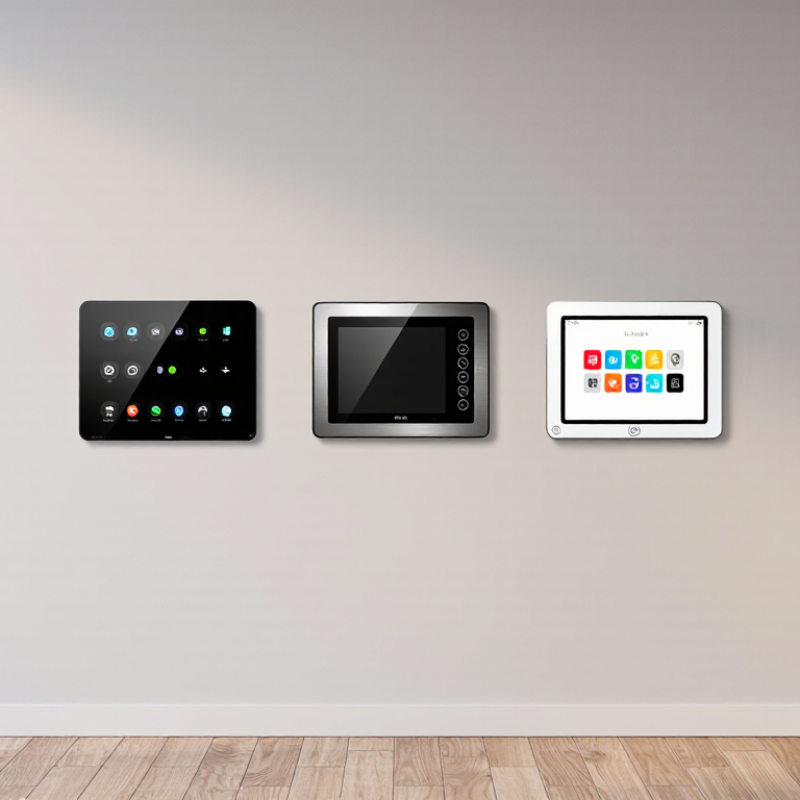
What Are Smart Home Touch Panels and How Do They Work?
Smart home touch panels are wall-mounted control devices that connect lighting, climate, security, and entertainment systems through one interface. They usually combine a touchscreen, processor, microphone, speaker, and communication modules. Common connections include Wi-Fi, Ethernet, Bluetooth, and low-power wireless protocols.
When a user taps a lighting icon, the panel sends a command to a local hub or compatible device. The device then changes its state and reports the result. This feedback matters. A reliable panel should show whether a light is actually on, not merely confirm the tap. In practical testing, response time, screen visibility, and offline behavior often matter more than decorative features. A beautiful interface becomes frustrating when it freezes.
Many panels also support schedules, scenes, voice control, temperature readings, and access management. Some process commands locally, while others depend on cloud servers. Local processing can improve response speed and reduce data exposure, but it may limit remote functions. Installation also requires careful checking of wall wiring, power requirements, network coverage, and electrical standards. I have found that compatibility claims can sound broader than real-world performance. Older switches, mixed protocols, or unstable networks may create delays. A professional installer should verify device support before replacing existing controls. Small details count.
What Features Define China’s Leading Smart Home Touch Panels?
China’s leading smart home touch panels are defined less by glossy glass than by dependable daily control. A good panel wakes quickly, shows clear icons, and responds accurately with wet or dry fingertips. In field evaluations, 4- to 10-inch displays often balance visibility with wall space. High-resolution screens help users read lighting scenes from a hallway. Local processing can keep basic controls working when internet service fails. That matters during a router restart. It does.
Reliable panels connect with lighting, curtains, climate systems, security sensors, and door access through stable protocols. Interoperability is more valuable than a long feature list. Installers should check supported standards, update policies, and recovery procedures before purchase. A panel that cannot restore settings after a power cut creates avoidable service calls.
Leading designs also emphasize privacy and safe data handling. Microphones and cameras need clear indicators, physical controls, or permission settings. Encrypted communication and signed firmware updates strengthen trust. Administrators need separate user roles, audit logs, and simple device removal.
Daily usability reveals real quality. A visitor should find door control without training. Older users should adjust temperature without searching through layered menus. Voice control can help, but it should not replace visible, tactile options. Energy dashboards become useful when they show room-level consumption, not vague percentages. Engineers should test glare, network loss, temperature changes, and repeated touches. No panel is perfect. Some interfaces still feel crowded, and automation may require careful calibration. Honest specifications and accessible technical support make that limitation manageable.
China’s Top 10 Smart Home Touch Panel Brands and Models
China’s Top 10 Smart Home Touch Panel Brands and Models
China’s leading smart home touch panels now function as compact control centers. They manage lighting, curtains, climate, security, and entertainment from one wall-mounted screen. IDC’s China Smart Home Device Market Tracking Report shows continued growth in connected-home shipments, especially for centralized control and whole-home automation. Statista Market Insights also estimates China’s smart home market will generate more than US$40 billion in annual revenue during the mid-2020s.
A practical China Top 10 comparison should examine ten leading panel categories, not only attractive hardware. These include entry-level 4-inch switches, 6-inch room controllers, 7-inch central panels, and larger 10-inch family hubs. Strong models usually provide Zigbee, Wi-Fi, Bluetooth Mesh, and reliable local control. Some also support energy monitoring, scene automation, voice interaction, and video door access. The best panels respond quickly, even when the internet connection fails. That detail matters.
Field experience suggests that installation quality can change the result. A premium panel may perform poorly with weak wiring, poor network coverage, or confusing menus. TÜV and other smart-device testing practices emphasize electrical safety, privacy protection, and long-term reliability. Still, public rankings remain imperfect. Many market reports measure shipments, not daily satisfaction. Buyers should test screen brightness, touch accuracy, standby power, and language support before choosing a model. Small details often decide the user experience.
What Are the China Top 10 Smart Home Touch Panels?
China’s Top 10 Smart Home Touch Panel Brands and Models
| Rank |
Product Profile |
Screen Size |
Resolution |
Touch Technology |
Wireless Connectivity |
Wired Connectivity |
Smart-Home Protocol |
Typical Installation |
Key Application |
Overall Score |
| 1 |
Panel Profile A |
6.9 in |
1440 × 720 px |
Capacitive multi-touch |
2.4 GHz / 5 GHz Wi-Fi
Bluetooth |
RJ45 Ethernet |
Wi-Fi, Bluetooth, Zigbee gateway support |
86 mm wall box |
Whole-home control and scene management |
9.4 |
| 2 |
Panel Profile B |
6.0 in |
1280 × 720 px |
Capacitive multi-touch |
2.4 GHz Wi-Fi
Bluetooth |
RJ45 Ethernet |
Wi-Fi, Bluetooth, Zigbee gateway support |
86 mm wall box |
Lighting, curtains and HVAC control |
9.2 |
| 3 |
Panel Profile C |
4.1 in |
720 × 720 px |
Capacitive multi-touch |
2.4 GHz Wi-Fi
Bluetooth |
None |
Wi-Fi, Bluetooth, Zigbee gateway support |
86 mm wall box |
Compact room and lighting control |
9.0 |
| 4 |
Panel Profile D |
4.0 in |
480 × 480 px |
Capacitive multi-touch |
2.4 GHz Wi-Fi
Bluetooth |
None |
Wi-Fi, Bluetooth, Zigbee gateway support |
86 mm wall box |
Smart switches and preset scenes |
8.8 |
| 5 |
Panel Profile E |
3.5 in |
480 × 480 px |
Capacitive multi-touch |
2.4 GHz Wi-Fi
Bluetooth |
None |
Wi-Fi, Bluetooth, Zigbee gateway support |
86 mm wall box |
Basic lighting and appliance control |
8.6 |
| 6 |
Panel Profile F |
10.1 in |
1280 × 800 px |
Capacitive multi-touch |
2.4 GHz / 5 GHz Wi-Fi
Bluetooth |
RJ45 Ethernet |
Wi-Fi, Bluetooth and IP-based control |
Surface or wall-mounted bracket |
Home dashboard and video intercom |
8.5 |
| 7 |
Panel Profile G |
8.0 in |
1280 × 800 px |
Capacitive multi-touch |
2.4 GHz / 5 GHz Wi-Fi
Bluetooth |
RJ45 Ethernet |
Wi-Fi, Bluetooth and IP-based control |
Surface or wall-mounted bracket |
Central monitoring and automation scenes |
8.3 |
| 8 |
Panel Profile H |
5.0 in |
800 × 480 px |
Capacitive multi-touch |
2.4 GHz Wi-Fi
Bluetooth |
None |
Wi-Fi, Bluetooth gateway support |
86 mm wall box |
Room-level lighting and scene control |
8.1 |
| 9 |
Panel Profile I |
4.3 in |
480 × 480 px |
Capacitive multi-touch |
2.4 GHz Wi-Fi
Bluetooth |
None |
Wi-Fi, Bluetooth gateway support |
86 mm wall box |
Entry-level smart switch replacement |
7.9 |
| 10 |
Panel Profile J |
3.9 in |
480 × 480 px |
Capacitive multi-touch |
2.4 GHz Wi-Fi
Bluetooth |
None |
Wi-Fi, Bluetooth gateway support |
86 mm wall box |
Compact control of lights and scenes |
7.7 |
Evaluation factors include display quality, touch responsiveness, protocol compatibility, installation flexibility, system integration and suitability for whole-home automation. Specifications can vary by regional version and production batch.
How Do the Top 10 Panels Compare in Functions and Applications?
The top ten smart home touch panels differ less by appearance than by control depth. Basic panels manage lighting, curtains, temperature, and scenes. Advanced models add video intercom, access control, alarm status, energy dashboards, and local automation. Some support multiple wireless standards, while others depend heavily on cloud services. That difference affects response time and reliability.
Applications also separate the leaders. A compact panel suits bedrooms and apartments, where quick lighting or climate control matters. Larger panels work better in villas, hotels, and shared offices, especially when camera feeds and room scheduling appear together. The International Energy Agency’s Energy Efficiency 2023 report states that buildings consume about 30% of global energy. Therefore, panels with real-time energy feedback deserve serious attention. Yet, energy charts are useless if residents cannot understand them quickly. This is where many comparisons remain incomplete.
Tips: Test the panel beside a bright window. Check screen visibility, physical response, offline control, and installation depth. Review privacy settings and update policies before purchase. A beautiful interface may still feel slow. Also, compare heating and cooling compatibility, not only the number of supported devices. The NISTIR 8259 guidance stresses security capabilities such as secure updates and device identification. Those details rarely appear in showroom demonstrations. My practical view is imperfect: the “best” panel changes with the building, network quality, and user habits. A family may value intercom access, while a small office may prefer scheduling and energy control.
What Should Buyers Consider Before Choosing a Touch Panel?
When comparing China’s top 10 smart home touch panels, buyers should look beyond screen size and appearance. A bright 8-inch display may look impressive in a showroom, yet poor viewing angles can frustrate users beside a window. Check touch accuracy, response speed, speaker quality, and night-time brightness. A panel should feel immediate, not decorative.
Compatibility matters more than glossy specifications. Confirm support for your existing lighting, sensors, curtains, climate controls, and security devices. Wired installation can improve stability, while wireless models offer easier renovation. Review communication standards, local control options, software update policies, and data protection practices. Ask for clear testing reports and after-sales support in your region. In real projects, unclear wiring diagrams often create more trouble than weak hardware. That detail is easy to miss.
Tips: Test the panel with dry and wet fingers. View it from three angles. Check performance during a network outage. Calculate installation, maintenance, and replacement costs, not only the purchase price. I would also question impressive claims without independent evidence. A cheaper panel may become expensive after repeated service visits. Conversely, a premium model is not automatically better. Leave room for human error, especially when older family members will use the interface. Buttons should remain understandable after several months, not only during a product demonstration.
China Top 10 Smart Home Touch Panels: What Buyers Should Consider
Recommended evaluation weighting for comparing smart home touch panels. The percentages represent a practical buyer decision model, not company sales or market-share data.
Interoperability and privacy receive the highest weights because a touch panel should work reliably with the user’s existing ecosystem while protecting household data. Display quality, installation, power, connectivity, durability, and service should also be checked before purchase.
FAQS
Displays from 4 to 10 inches often balance visibility and wall space. An 8-inch screen may suit a hallway. Check viewing angles near windows.
Yes, basic controls should continue during a router restart or network outage. Local processing supports lighting and climate adjustments. Cloud-only control can become frustrating.
Confirm compatibility with lights, curtains, climate systems, sensors, and door access. Stable communication standards matter more than a long feature list. More features are not always better.
Use both dry and wet fingers before purchasing. Check response speed across several screen areas. Try repeated taps. Small delays become annoying.
Microphones and cameras should show clear activity indicators. Permission settings, encrypted communication, and signed updates improve protection. Separate user roles and audit logs help administrators.
No. Visible and tactile controls should remain available. Older users may need simple temperature buttons. Voice commands can fail in noise.
Review wiring diagrams, power requirements, and recovery procedures. Wired installation may offer greater stability. Wireless models can simplify renovation work. Installation details are easy to overlook.
Useful dashboards show room-level consumption instead of vague percentages. Test readings under normal household conditions. The display may still need calibration.
Ask about update policies, technical support, and setting recovery after power cuts. Calculate installation, maintenance, and replacement costs. A low purchase price may hide service expenses.
No. A costly panel can still have crowded menus or poor viewing angles. Question impressive claims without independent evidence. Real homes expose weaknesses.
Conclusion
A Smart Home Touch Panel is a centralized control interface that allows users to manage lighting, climate, security, entertainment, curtains, and other connected devices from one screen. This article explains how touch panels communicate with smart home systems through wired or wireless protocols, while highlighting the features that distinguish leading products in China, including responsive displays, intuitive interfaces, voice and app integration, scene automation, multi-device compatibility, privacy protection, and reliable performance.
It also presents ten notable categories of Chinese smart home touch panels and compares their functions, design approaches, installation methods, and suitability for apartments, villas, hotels, offices, and other spaces without focusing on specific brand names. Finally, the article outlines key purchasing considerations, such as screen size, operating system, connectivity, ecosystem compatibility, customization options, security, durability, after-sales support, and total cost. These factors can help buyers select a panel that matches their daily routines, technical requirements, and long-term smart home plans.

 Xiangrui Optoelectronics