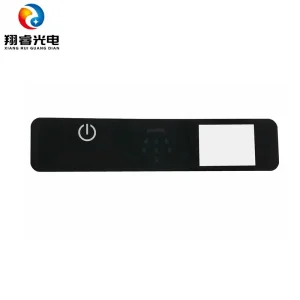
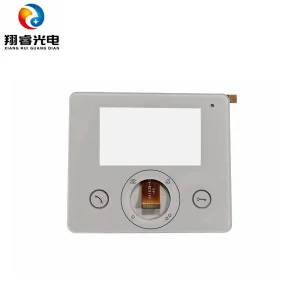
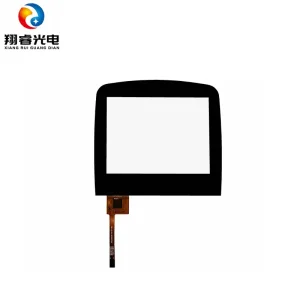
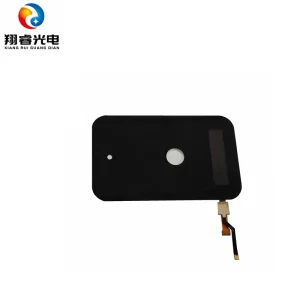
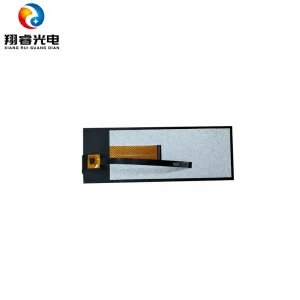
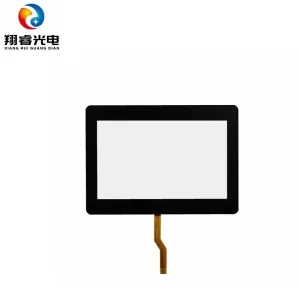
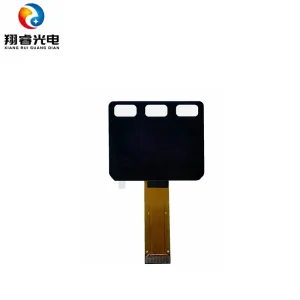
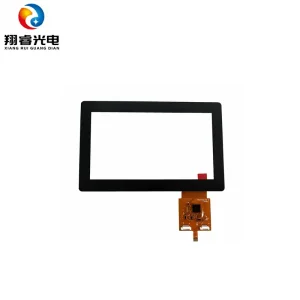
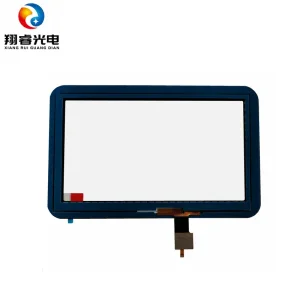
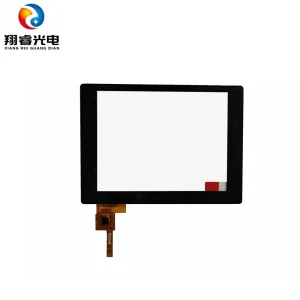
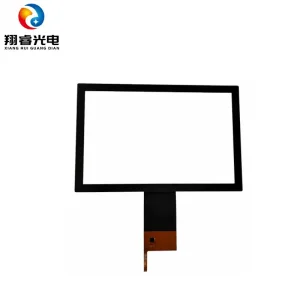
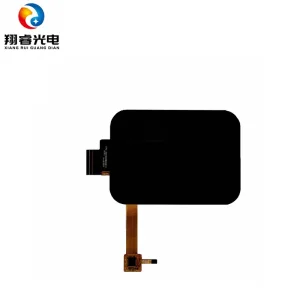
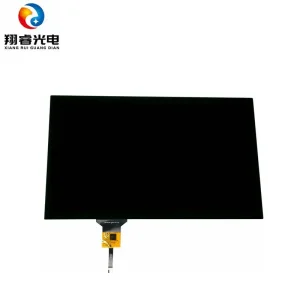
Explore our engineering capabilities through our active product lineup, customized for extreme environments, industrial automation, and smart interfaces.
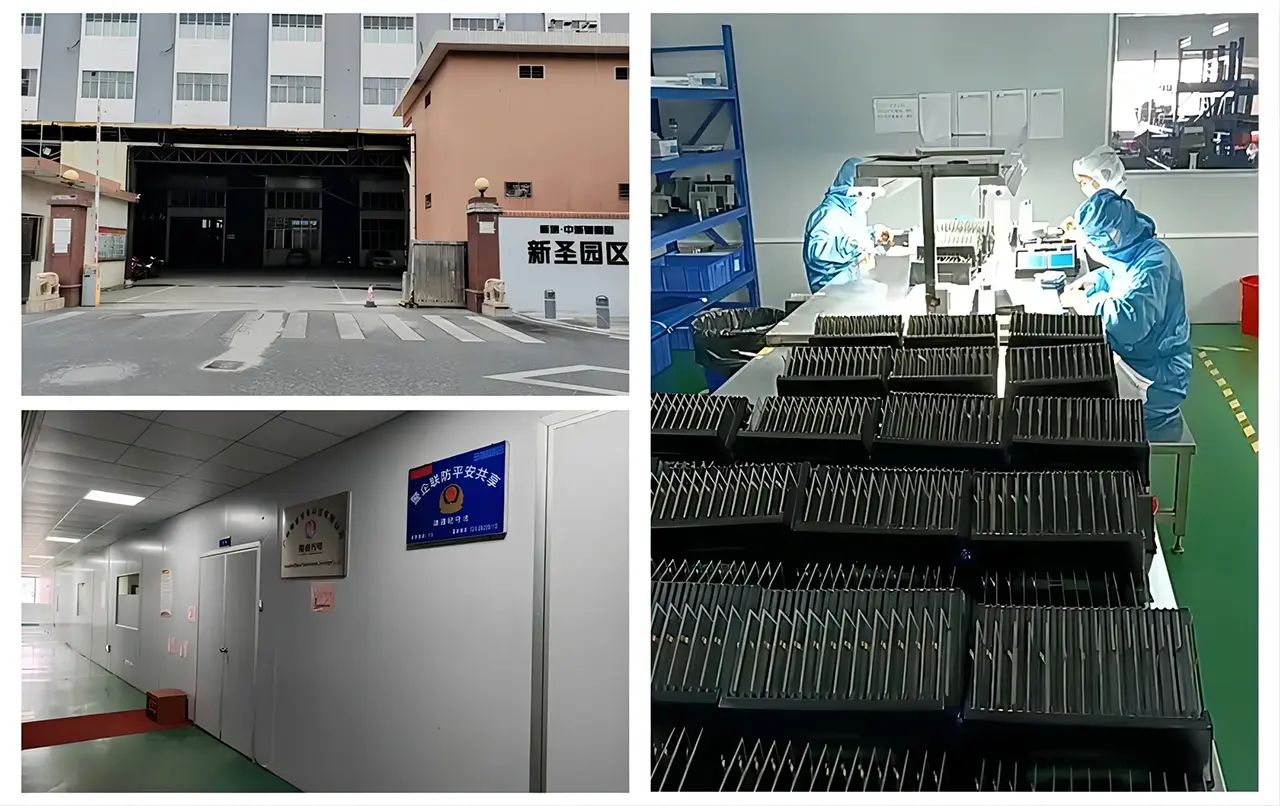
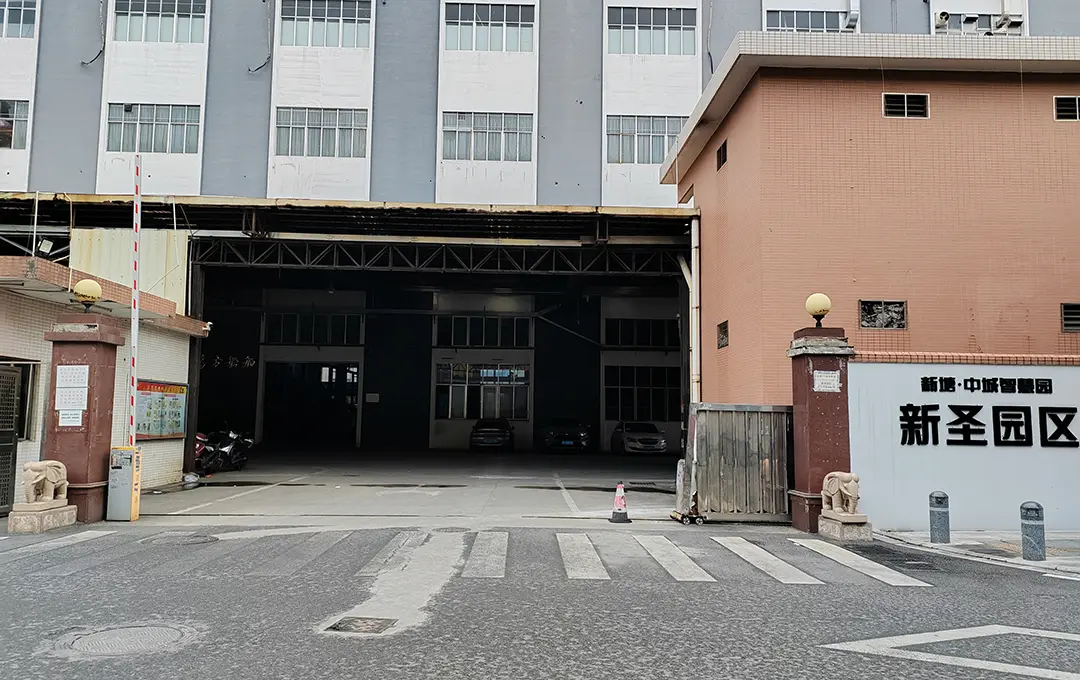
Our state-of-the-art production floors and optical assembly cleanrooms in Guangzhou, China.
Founded in 2010 and located in Guangzhou, China, we are a company dedicated to the research and development, production, sales, and service of resistive touch panels, capacitive touch panels, cover glass, and module bonding products. We provide customized production of various touch screens, as well as OEM and ODM services.
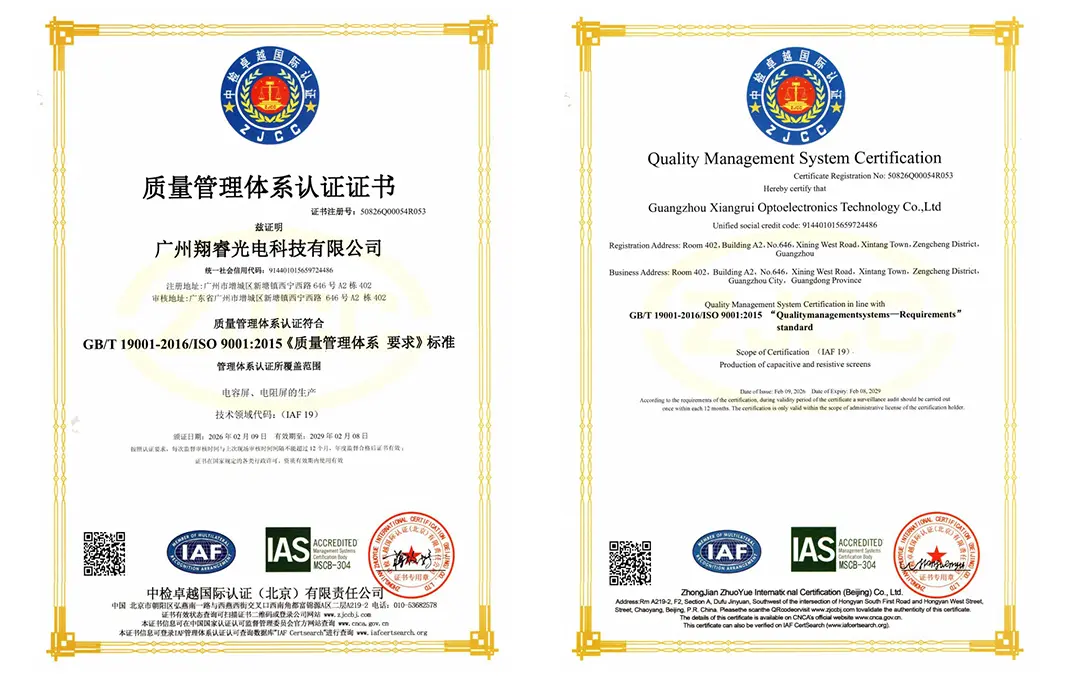
Our company has obtained the ISO 9001 and ISO 14001 certificates. Our products are widely used in fields such as industrial control, medical equipment, home appliances, smart home, outdoor products, and palm print recognition payment systems.
A statistical overview of our production capabilities, quality systems, and market presence.
The transition from mechanical tact switches to solid-state capacitive touch buttons represents one of the most significant paradigm shifts in modern Human-Machine Interface (HMI) design. Historically, mechanical buttons were prone to mechanical wear, ingress of environmental contaminants (such as moisture, dust, and oils), and required complex assembly tolerances. Today's industrial and commercial touch buttons address these vulnerabilities by offering hermetically sealed, wear-free operations that drastically increase the Mean Time Between Failures (MTBF).
Globally, the capacitive touch market is expanding at a CAGR of over 7.8%, driven by the integration of IoT interfaces in smart appliances, medical instrumentation, automotive cockpits, and public transaction terminals. As touch button manufacturers and factories, we observe a growing demand for interfaces that operate reliably behind thick protective glass covers (up to 10mm or more) or through vandal-proof polycarbonate surfaces. The design challenge has shifted from basic touch registration to the execution of precise, multi-layered signal filtering to prevent false triggers in harsh, electromagnetic-noise-heavy environments.
"True innovation in capacitive interfaces lies not in sensing a touch, but in intelligently rejecting every source of environmental noise—whether that be liquid condensation, high frequency electromagnetic interference (EMI), or physical vibration—while still ensuring 100% user intent detection."
In automated industrial ecosystems, touch controls are exposed to volatile temperatures, chemical washdowns, and electrical transients. Manufacturers must optimize self-capacitance and mutual-capacitance parameters, configure internal analog-to-digital converters (ADCs), and select appropriate cover lens materials. This ensures that the interface complies with stringent industry regulations, such as the IEC 61000-4-6 standard for conducted disturbance immunity.
An in-depth look at sensor matrices, optical enhancements, and the manufacturing physics of modern touch interfaces.
At Guangzhou Xiangrui Optoelectronics, we engineer two fundamental architectures for capacitive touch controls:
To maintain visual clarity, drop resistance, and thermal performance, we utilize two main bonding methodologies in our class 1,000 and 100 dust-free workshops:
| Feature Parameter | Air Bonding (Tape/Frame Fitting) | Optical Bonding (LOCA / OCA) |
|---|---|---|
| Refractive Index Matching | Poor (Air gap causes internal reflections) | Excellent (Matches glass and sensor refractive indices) |
| Outdoor Sunlight Readability | Low (Contrast decreases due to light wash) | High (Reduces reflections by up to 90%) |
| Condensation & Moisture Protection | Prone to fogging in high-humidity areas | 100% Sealed (Eliminates moisture entry completely) |
| Mechanical Shock Absorption | Moderate (Glass flexes over the air gap) | Superior (Gel layers absorb and distribute impact force) |
| Ideal Application | Cost-sensitive indoor consumer appliances | Industrial HMIs, medical displays, outdoor terminals |
A touch button’s interface is only as durable as its cover glass. Xiangrui utilizes chemically strengthened glass (such as sodium-lime glass or high-aluminosilicate glass) that has undergone ion-exchange tempering. This process replaces smaller sodium ions on the glass surface with larger potassium ions, creating a dense surface compression layer that resists scratching and impacts.
To optimize touch interfaces for specific environmental challenges, we apply the following chemical coatings:
A look into Guangzhou Xiangrui's foundational commitments, certifications, and high standards.
Guangzhou Xiangrui Optoelectronics Technology Co., Ltd. is based on the fundamental purpose of being people-oriented, honest, pragmatic, innovative, and enterprising, maintaining a sincere and united team.
Since our establishment, we have been committed to the development, research, and application of new products, new processes, and new materials, relying on a professional R&D team, rich production experience, and high-quality service. This dedication ensures that our enterprise remains competitive in fierce market conditions, achieving rapid and stable development.
In the spirit of reputation first, customer first, quality satisfaction, delivery on time, and good faith cooperation, we maintain long-term partnerships with top enterprises and well-known manufacturers.
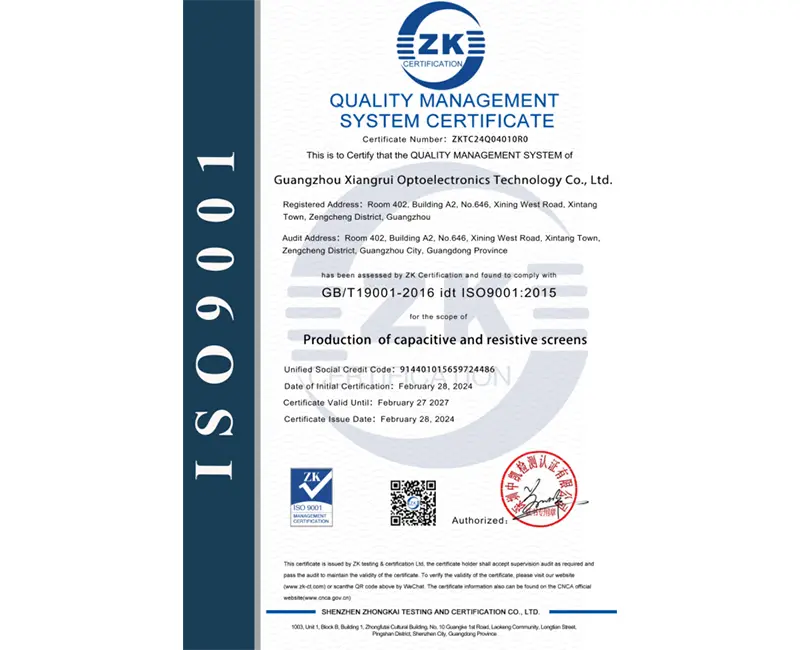
We have passed the ISO9001 quality management system and ISO14001 environmental management system qualification certifications. We highly standardize and monitor our production processes to ensure that all raw materials and finished products meet high quality standards.
Under the leadership of our R&D department, we have obtained utility model patents and invention patents, and won the title of Guangdong Province High-Tech Enterprise.
How we tailor capacitive and resistive touch button arrays to solve unique performance obstacles across diverse industries.
Medical HMIs require flat, seamless surfaces to prevent pathogen accumulation and support cleaning with harsh sterilizers like isopropyl alcohol. Our panels are designed to work with heavy latex or nitrile gloves. They feature high EMI immunity to prevent false activations from adjacent electrosurgical equipment.
Engineered to operate in high-temperature settings (-30°C to +85°C), our touch panels are resistant to grease, water spray, and vibrations. They are built for CNC machine control, manufacturing terminals, and processing lines. The integrated controllers are tuned to reject electrical noise from surrounding heavy motors.
For premium home appliances and security systems, aesthetic design is vital. We supply ultra-thin capacitive buttons integrated under customizable glass cover structures, with options for proximity backlighting, sliding touch controls, and haptic response mechanisms.
Integrating capacitive touch button control with palm print scanning modules. Our specialized glass optical properties support IR-based vein and palm print scanners, ensuring safe and durable high-traffic public access operations.
Outdoor EV chargers, transit ticketing kiosks, and automated fuel pumps require vandal-proof, weather-resistant designs. We manufacture optical-bonded cover screens (up to IK10 impact protection standards) that prevent rain-induced false triggers, feature high UV-blocking materials, and operate reliably in direct sunlight without thermal degradation.
Predicting the next phase of human-machine interaction through R&D innovation, new materials, and smart algorithms.
As a forward-looking touch button manufacturer, Guangzhou Xiangrui is continuously researching advanced materials and integration processes. Our engineering roadmap outlines the developmental trajectory of upcoming HMI solutions:
Conventional touch sensors are flat, rigid layers applied to the backside of a cover plate. The future lies in In-Mold Electronics (IME), where capacitive sensing circuitry is printed directly onto flexible substrates and thermoformed into three-dimensional shapes. This eliminates heavy support frames and allows designers to integrate touch buttons and sliders into curved car dashboards, complex hand-held appliances, and streamlined equipment surfaces.
One limitation of touch surfaces compared to mechanical buttons is the lack of physical feedback. We are resolving this by integrating ultra-thin piezoelectric actuators and Linear Resonant Actuators (LRAs). When a user touches a button, the system triggers a localized vibration waveform that mimics the mechanical "click" of a physical switch, confirming activation without requiring visual verification.
Water droplets on a touch button can alter surface capacitance, occasionally causing false activations. To prevent this, we are upgrading our capacitive microcontrollers with machine-learning-based noise filtering. These algorithms analyze the shape and charge changes over time, distinguishing between static rain, flowing water, cleaning operations, and actual finger presses.
Get answers to common technical questions about custom capacitive touch buttons, optical bonding, and manufacturing processes.
Explore our high-performance touch screen panels, custom-bonded overlays, and wide-temperature components.
 Xiangrui Optoelectronics