China Top 10 OLED Touch Screen Manufacturers

Time:2026-10-16 Author:Madeline
0%

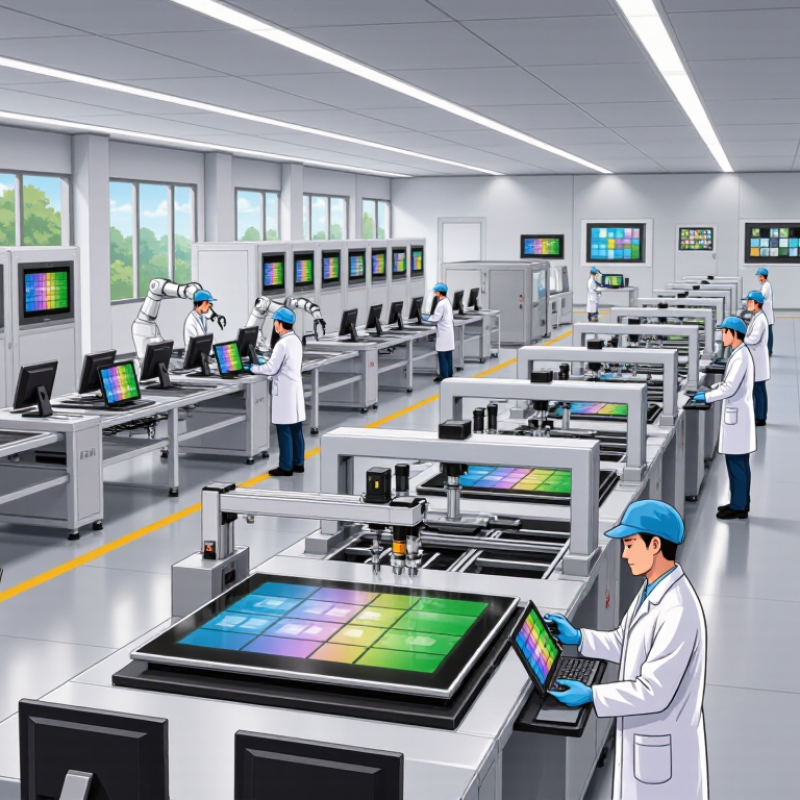
China’s OLED display industry has become a practical sourcing destination for smartphones, vehicles, medical devices, and industrial equipment. This guide introduces the China Top 10 OLED Touch Screen Manufacturers through measurable capabilities, not impressive claims alone. Each company should be examined for production scale, engineering depth, quality controls, and export experience.

A reliable OLED Touch Screen supplier must manage more than panel brightness. Its process may include OLED deposition, touch-sensor integration, cover-glass bonding, optical calibration, and final inspection. Small details matter. A clean edge seal can protect performance in humid environments. Stable touch response should remain consistent after repeated finger presses and temperature changes. Buyers should also review sample reports, factory certifications, warranty terms, and communication speed. These factors reveal operational maturity better than a polished website.

The ranking should be treated as a research starting point, not an absolute verdict. Public information can be incomplete, and factory capabilities may change after equipment upgrades or ownership changes. That limitation deserves attention. In practice, an experienced buyer should compare samples under the same brightness, viewing angle, and touch conditions. Supplier visits, third-party testing, and documented quality agreements can reduce uncertainty. The manufacturers discussed here represent notable Chinese capabilities, but the best choice depends on application requirements, order volume, customization needs, and long-term support. A strong supplier is not always the largest one. It is the one that delivers consistent performance when real production begins.

China Top 10 OLED Touch Screen Manufacturers

Defining China’s OLED Touch Screen Manufacturing Landscape

China Top 10 OLED Touch Screen Manufacturers

China’s OLED touch screen manufacturing landscape is shaped by scale, engineering depth, and rapid process improvement. The leading ten manufacturers should be judged beyond factory size or shipment volume. Their capabilities include OLED panel integration, touch sensor design, flexible substrate handling, and precise optical bonding. The details matter.

A reliable evaluation examines production yield, pixel uniformity, touch sensitivity, and resistance to humidity and temperature changes. It also reviews cleanroom controls, automated inspection, material traceability, and after-sales engineering support.

In practical audits, small defects often appear near curved edges or bonded corners. These areas reveal process maturity. Consistent sampling records and documented corrective actions strengthen confidence.

The strongest manufacturers usually support prototypes before mass production. They can adjust stack design, connector placement, cover glass thickness, and firmware communication. Automotive, medical, industrial, and consumer applications require different validation methods. Public information remains uneven, so any top-ten list needs careful verification through factory visits, technical documents, and customer references. A ranking can still mislead. A large output does not always indicate stable quality, and impressive specifications may depend on ideal testing conditions. Experienced buyers should compare long-term yield data, not only catalogue figures. Layered protection, low-reflection surfaces, and glove-friendly operation increasingly influence purchasing decisions. Procurement teams also need to examine supply continuity and transparent communication when specifications change.

Ranking Criteria for the Top 10 OLED Touch Screen Manufacturers

China Top 10 OLED Touch Screen Manufacturers

Ranking credible OLED touch screen manufacturers requires more than comparing factory size. The evaluation should examine verified production records, engineering capability, and customer feedback. Audited data matters more than promotional claims.

Product quality receives the highest weight. Reviewers should measure brightness, contrast, color accuracy, touch latency, and pixel uniformity. Durability tests should include repeated tapping, temperature changes, humidity exposure, and surface scratches. A screen that performs well in a laboratory may behave differently inside a vehicle or handheld device.

Manufacturing depth also influences the ranking. Important evidence includes cleanroom control, automation levels, yield rates, material traceability, and inspection procedures. Delivery reliability should cover lead times, capacity during peak demand, packaging quality, and corrective action records. Technical support deserves attention too. Engineers who provide clear drawings, sample analysis, and stable communication reduce development risk.

Independent certifications can strengthen confidence, but certificates alone cannot prove daily consistency. Buyers should compare recent samples, not only old test reports. Pricing is considered, although the cheapest offer may hide replacement costs. No ranking is perfect. Weighting criteria still involves judgment, and public data can remain incomplete. A responsible ranking should disclose its evidence, update results regularly, and separate verified performance from estimated claims.

Profiles of China’s Leading OLED Touch Screen Manufacturers

China’s leading OLED touch screen manufacturers now cover a broad supply chain. Large panel producers focus on flexible AMOLED, while specialized module makers integrate touch sensors, cover glass, and display drivers. Counterpoint Research reported that Chinese suppliers held roughly one-quarter of global smartphone OLED panel shipments in 2023. Their progress reflects stronger domestic production and faster customer sampling.

The strongest manufacturers usually offer six-generation or larger OLED lines, fine-pitch touch integration, and automated optical inspection. They serve smartphones, vehicle displays, tablets, medical equipment, and industrial terminals. DSCC’s 2024 OLED Shipment Report expected global smartphone OLED shipments to exceed 800 million units. That figure creates room for suppliers with stable yields, not only low prices. Still, public comparisons are imperfect. Yield data and defect rates are rarely disclosed, so rankings can look more certain than reality. A factory may appear advanced, yet struggle with small-batch customization.

Tips: Check the manufacturer’s active-matrix process, monthly capacity, touch latency, brightness retention, and qualification records. Request sample data at the intended temperature range. Ask for uniformity maps, not only attractive showroom images. Omdia’s display research repeatedly emphasizes capacity utilization and application mix as key market indicators. Buyers should also examine driver-IC availability and repair support. A lower quote may hide longer tooling cycles. That matters.

OLED Touch Screen Technologies and Manufacturing Capabilities

China's top ten OLED touch screen manufacturers are often assessed beyond catalog size. Their capabilities begin with AMOLED process control, thin-film transistor backplanes, and precise organic deposition. Flexible panels require ultra-thin encapsulation, stable bending performance, and careful alignment of touch sensors. Rigid OLED remains practical for instruments needing flatter surfaces and predictable assembly. In factory audits, I look for cleanroom discipline, calibrated equipment, and traceable process records. Small details matter. A visible dust mark can reduce yield or delay delivery.

Touch integration usually follows on-cell or in-cell designs, depending on thickness, sensitivity, and application demands. Engineers tune electrode patterns for glove input, wet fingers, stylus use, or low-light operation. Manufacturers also manage cover glass bonding, optical clarity, and electromagnetic interference. Production capability is not only equipment. It includes materials planning, fixture design, reliability testing, and responsive engineering support. Typical evaluations include bending cycles, high-temperature storage, humidity exposure, impact checks, and repeated touch activation. Test methods should match the customer's real environment, not only laboratory conditions.

A strong supplier can provide sample customization, pilot runs, and consistent measurements across production batches. Useful evidence includes inspection reports, failure analysis, and clear change-control procedures. Still, capability claims deserve scrutiny. Some specifications look impressive until brightness falls after prolonged heat exposure. I would compare uniformity, response time, power behavior, and dead-pixel criteria under identical settings. Manufacturers with mature processes explain limitations openly and adjust designs before mass production. That honesty is sometimes more valuable than a polished demonstration unit.

China Top 10 OLED Touch Screen Manufacturers — Technology and Manufacturing Capability Benchmark

Representative commercial pixel-density ranges for OLED touch displays across major application segments. The benchmark focuses on technology and manufacturing requirements rather than company or brand performance.

Reading the chart: Higher pixel density generally requires finer OLED patterning, tighter TFT process control, advanced touch integration, and more demanding inspection and yield-management capabilities. Smartphone and foldable OLED panels typically require the highest density and process precision.

Market Comparison and Buyer Selection Considerations

China Top 10 OLED Touch Screen Manufacturers

Comparing ten OLED touch screen manufacturers requires more than checking price lists. Buyers should examine display brightness, touch accuracy, viewing angle, active area, and expected service life. Request identical samples from each supplier. This makes differences visible under the same test conditions. A screen may look excellent indoors but become difficult to read beside a sunny window.

Production capability also matters. Review cleanroom controls, inspection records, lamination methods, and monthly capacity. Ask whether the manufacturer supports custom sizes, cover glass thicknesses, interface options, and protective coatings. Technical teams should confirm compatibility with the buyer’s processor, operating system, and enclosure. Small connector changes can delay a product launch. Very small changes matter.

Cost comparisons should include tooling, sample fees, packaging, shipping, warranty support, and possible replacement rates. A low quotation is not always economical. In previous sourcing work, some attractive offers changed after customization details were clarified. That is a warning, though not proof of poor reliability. Buyers should request a written specification, quality agreement, sample approval process, and realistic delivery schedule. Factory audits and third-party testing can strengthen confidence. Still, paperwork cannot replace long-term performance data. Ask for field references when available, then verify them independently.

FAQS

What technologies should a capable OLED touch screen manufacturer provide?

Look for AMOLED processing, thin-film transistor backplanes, precise deposition, and reliable touch integration.

How can buyers evaluate touch performance?

Test touch latency, accuracy, glove input, wet-finger operation, and stylus response.

What production evidence should manufacturers provide?

Request inspection reports, uniformity maps, failure analysis, and traceable process records.

Which reliability tests are important for OLED touch screens?

Check bending cycles, high-temperature storage, humidity exposure, impact resistance, and repeated touch activation.

What display details should buyers compare?

Compare brightness, viewing angle, active area, uniformity, response time, and expected service life.

How should buyers assess factory capacity?

Review production lines, cleanroom controls, monthly capacity, equipment calibration, and inspection records.

What costs should a purchasing comparison include?

Include tooling, samples, packaging, shipping, warranty support, and possible replacement rates.

How can buyers reduce supply and compatibility risks?

Confirm connector details, interface options, cover glass thickness, coatings, processor compatibility, and enclosure fit.

Conclusion

This article presents an overview of China’s Oled Touch Screen manufacturing landscape, examining how domestic manufacturers contribute to the global display and interactive technology supply chain. It explains the main criteria used to rank the top ten companies, including production capacity, research and development strength, product quality, customization ability, delivery performance, certification, and customer support. The discussion also introduces the typical capabilities of leading manufacturers, from flexible and rigid OLED panels to touch integration, high-resolution displays, advanced bonding processes, and reliable quality-control systems.

In addition, the article compares manufacturing technologies, application areas, pricing structures, and service models to help buyers understand the differences between potential suppliers. It highlights important selection considerations such as technical compatibility, durability, minimum order requirements, communication efficiency, scalability, and long-term cooperation potential. By combining market analysis with practical purchasing guidance, the article offers a clear framework for evaluating China-based Oled Touch Screen manufacturers and choosing a partner that matches specific project, performance, and budget requirements.

Madeline

Madeline

Madeline is a dedicated marketing professional with a wealth of expertise in our company's core offerings. With a keen understanding of the industry, she brings a unique perspective to her role, consistently delivering high-quality content that highlights the superior aspects of our products. As......