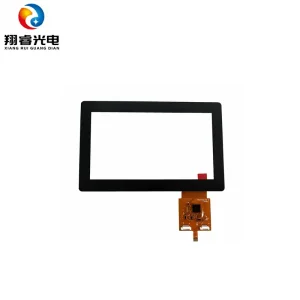
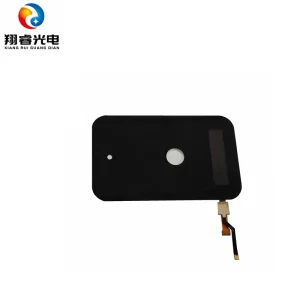
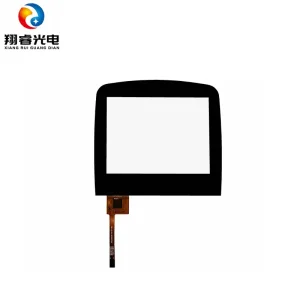
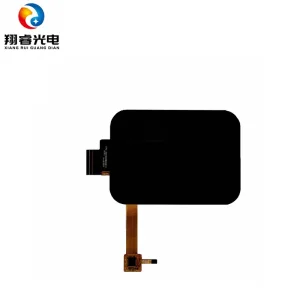
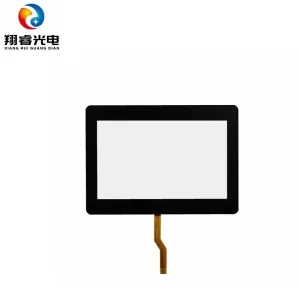
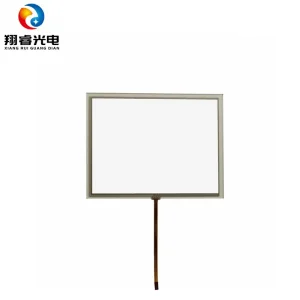
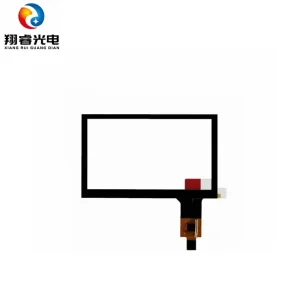
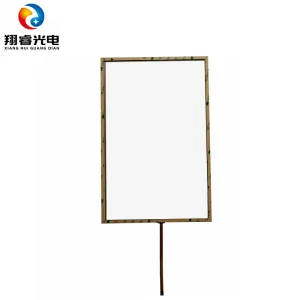
Industrial performance designed for responsive touch control, extreme durability, and seamless system integration.
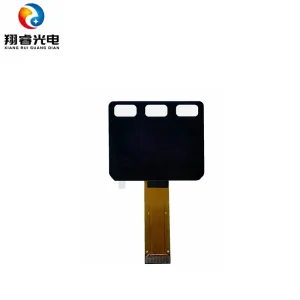
In the current paradigm of industrial automation, medical device design, and public-access systems, the human-machine interface (HMI) serves as the critical touchpoint. Standard resistive monitors, while historically functional, are giving way to advanced Projected Capacitive (PCAP) display technologies. These monitors offer enhanced multi-touch capabilities, high light transmittance, superior impact resistance, and long-term durability without calibration requirements.
As a leading custom capacitive monitor manufacturer and factory, Guangzhou Xiangrui Optoelectronics Technology Co., Ltd. builds solutions designed to address the challenges of harsh operational environments. From electromagnetic interference (EMI) mitigation to optical bonding, our systems are constructed to deliver consistent performance, even in wet, high-temperature, or extreme industrial environments.
A Globally Certified Touch Display Manufacturing Facility Founded in 2010
Founded in 2010 and based in Guangzhou, China, Guangzhou Xiangrui Optoelectronics Technology Co., Ltd. is a specialized enterprise focused on the research, development, production, and service of resistive touch panels, capacitive touch panels, cover glass, and module optical bonding. We provide end-to-end custom production, including complete OEM and ODM design services tailored to industrial specifications.
Our manufacturing facility spans over 3,000 square meters. The plant integrates dedicated departments for R&D, production, marketing, quality control, purchasing, and human resources. To ensure dust-free assembly for optical layers and optical bonding processes, we operate cleanrooms verified at Class 100, Class 1,000, and Class 10,000 standards.
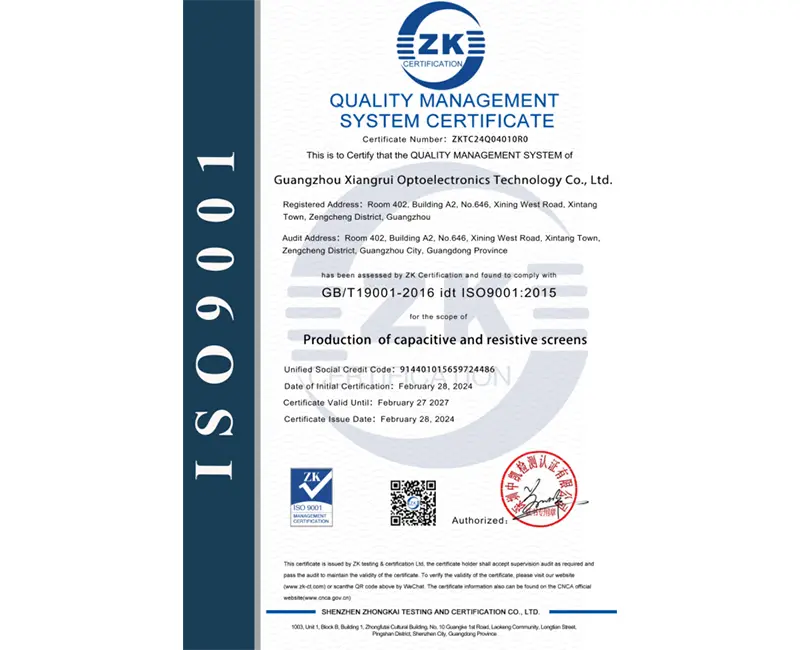
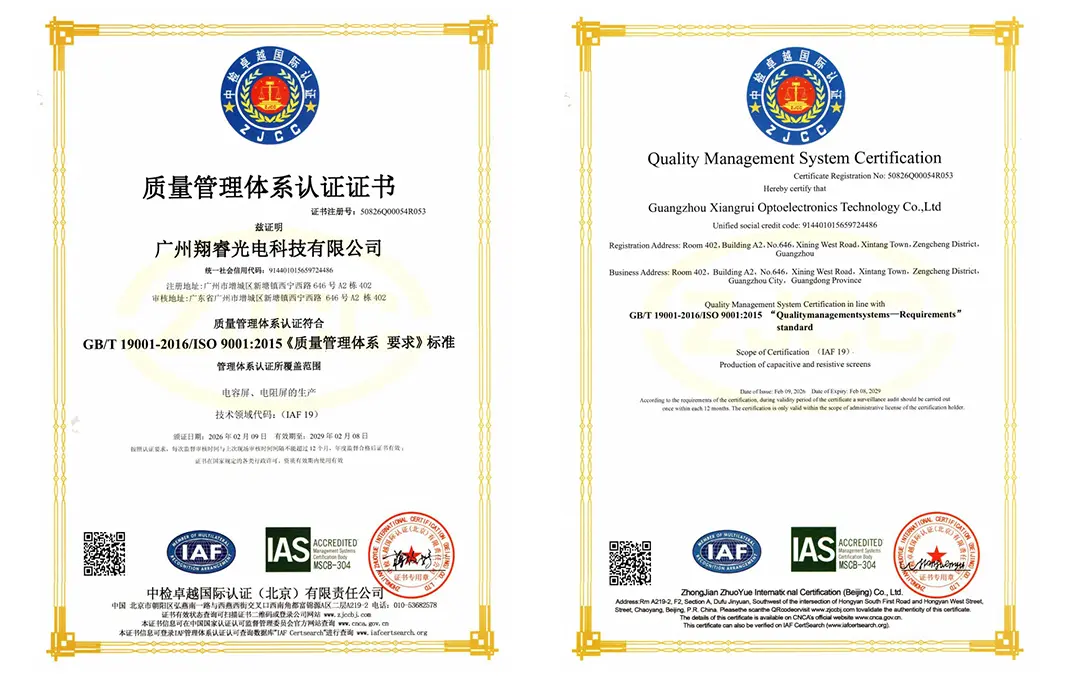
Xiangrui operates in compliance with international quality and environmental management protocols, certified under ISO 9001:2015 and ISO 14001:2015. Our touch systems and displays are widely integrated in industrial controllers, medical diagnosis terminals, smart home controls, out-of-home advertising, and high-security biometric/palm-print payment terminals globally.
Analyzing technical developments, market demand, and material science evolution.
Modern applications require specialized glass treatments to combat ambient reflections and fingerprint contamination, improving display visibility in variable lighting conditions.
Industrial applications require operations to continue during water exposure or when operators wear protective gloves. Customized IC controllers facilitate adaptivity.
Unlike commercial electronics with short lifecycles, industrial programs require component availability and form-fit compatibility for 7 to 10 years.
Evaluating touch integration technologies for optimal display output.
When engineering a custom capacitive monitor, selecting the assembly method between the liquid crystal display (LCD) and the projected capacitive (PCAP) sensor is critical. We offer both Air Bonding (Tape Lamination) and full Optical Bonding (OCA/LOCA) processes inside our Class 100/1000 cleanrooms.
| Parameter | Air Bonding (Tape Lamination) | Optical Bonding (OCA / OCR) | Engineering Recommendation |
|---|---|---|---|
| Optical Performance | Double boundary refraction reduces brightness and legibility under direct sunlight. | Matches refractive index, eliminating internal reflections and boosting contrast. | Optical Bonding is recommended for outdoor and high-ambient light environments. |
| Durability & Impact | Air gap leaves display susceptible to flexing and internal dust ingress. | Solid resin layer increases overall mechanical impact and vibration resistance. | Optical Bonding is recommended for public kiosks, marine, and military uses. |
| Condensation Risk | Temperature swings can cause moisture condensation in the air gap. | No air gap means zero chance of condensation or fogging behind the touch glass. | Optical Bonding is recommended for medical, maritime, and cold-storage operations. |
| Cost Considerations | Lower tooling and direct assembly cost. Easy to rework. | Requires specialized process control and cleanroom parameters. Higher cost. | Air Bonding is suitable for cost-sensitive indoor instrumentation. |
Guangzhou Xiangrui Optoelectronics Technology Co., Ltd. operates with a quality management process that controls every step of assembly—from raw material verification to FPC bonding and final display alignment.
Our operations are managed according to ISO 9001 and ISO 14001 parameters, ensuring that manufacturing workflows, raw materials, and finished goods trace back to established quality benchmarks.
To prevent particles from causing display defects, our key lamination and bonding steps occur in dedicated Class 100 and Class 1,000 cleanroom environments.
Recognized as an official High-Tech Enterprise in Guangdong Province (2022), our R&D unit continuously refines sensor layouts, optical bonding methods, and FPC designs to adapt to changing market requirements.
Essential considerations for sourcing managers, system integrators, and product design engineers.
Industrial machinery often generates high electromagnetic interference (EMI). Choosing touch systems with controllers like EETI or ILITEK that offer high Signal-to-Noise Ratios (SNR) helps maintain touch accuracy near heavy electrical machinery.
For outdoor or heavy industrial machinery, enclosures must meet IP65/IP67 ingress ratings. The front glass needs to resist impacts, often requiring chemical strengthening to meet IK08 or IK10 mechanical impact standards.
A capable manufacturer should provide design customization options, including flexible printed circuit (FPC) tail exits, logo printing, cover glass thicknesses ranging from 0.7mm to 10mm, and support for non-standard aspect ratios.
The next generation of human-machine interfaces.
As industry needs shift toward sleeker profiles and faster response times, we are focusing on advanced technologies, including:
Engineered to work reliably across diverse operations.
Answers to common design, engineering, and manufacturing questions.
Cover glass thickness determines the impact protection (IK rating) of the display. While consumer products typically use 0.7mm to 1.1mm glass, industrial displays often use 3.0mm, 4.0mm, or thicker glass to resist impact.
As glass thickness increases, the physical distance between the finger and the ITO sensor array grows, which reduces touch sensitivity. We address this by using higher-drive voltage touch controllers (such as EETI or ILITEK) and adjusting the capacitance threshold settings. This enables reliable touch tracking through glass up to 10mm thick, even when operators wear gloves.
Achieving an IP65 or IP67 ingress protection rating depends on the mechanical seal design between the cover glass and the system enclosure. We use a flat cover glass design (flush mount or true-flat) that allows clean integration with the housing.
Applying high-durability gaskets (such as Poron foam or customized silicone beads) or laminating with double-sided acrylic adhesives seals out dust and liquids. Additionally, the touch controller firmware is configured to ignore static moisture on the screen while registering active user touch inputs.
We provide multiple custom design options, including:
Industrial machinery, high-voltage lines, and switching power supplies can cause electric noise that interferes with capacitive touch sensors, leading to phantom touches or missed inputs.
We address this by designing FPCs with internal ground shielding layers, using high-voltage differential signal controllers, and programming digital signal processing (DSP) filters to isolate noise. For high-interference environments, we can laminate a transparent EMI shield layer (such as ITO film) on the back of the touch sensor to isolate the display panel's backlight noise.
For custom projected capacitive sensors or glass work, the standard design phase is 1 to 2 weeks for drawings, followed by 2 to 3 weeks for prototype tooling and sample production. Bulk manufacturing typically ranges from 3 to 4 weeks depending on the order volume.
Our minimum order quantities are flexible, designed to accommodate industrial and medical project phases: prototyping is supported with low MOQs (typically 50–100 pieces), while standard production runs are structured to support the lifecycle needs of specialized equipment manufacturers.
 Xiangrui Optoelectronics