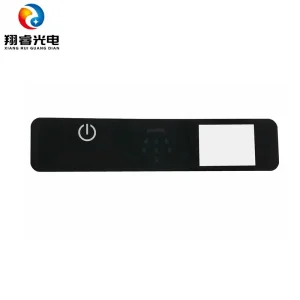
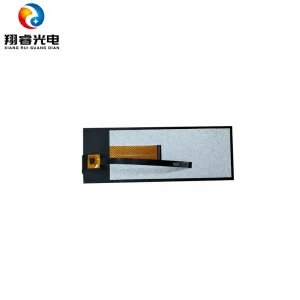
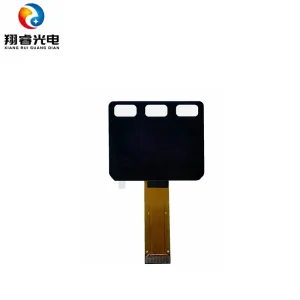
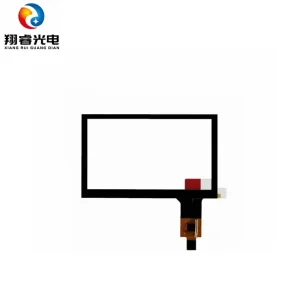
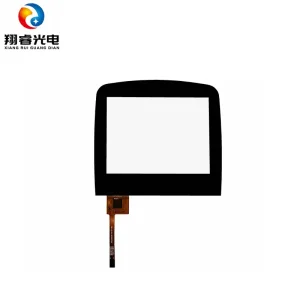
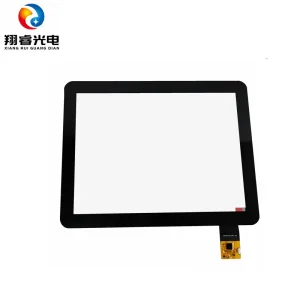
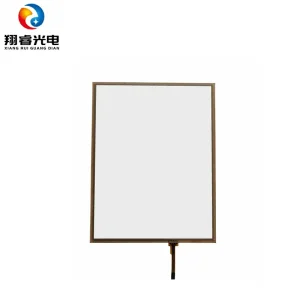
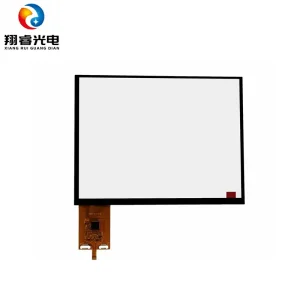
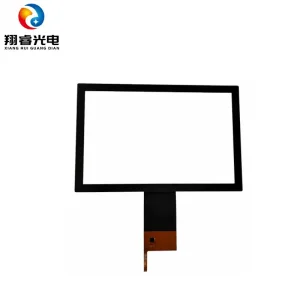
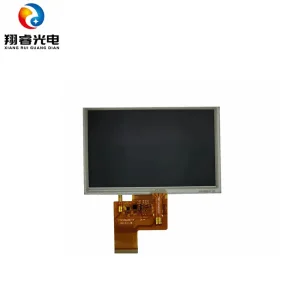
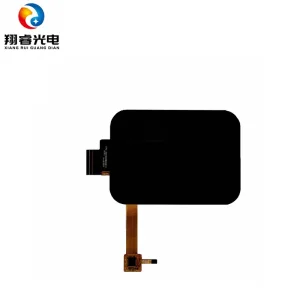
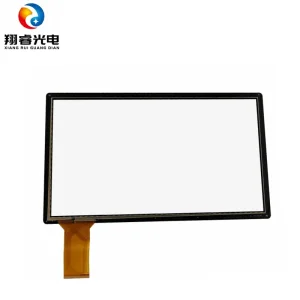
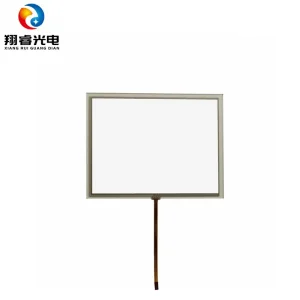
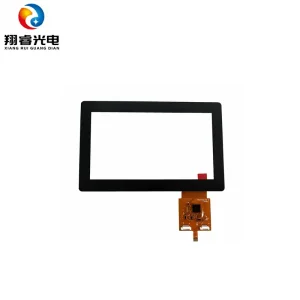
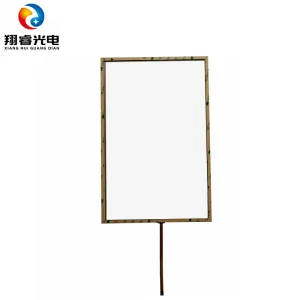
Explore our technical range of projected capacitive (PCAP) and analog resistive displays engineered for industrial, medical, and commercial environments.
Human-Machine Interface (HMI) modules have shifted from simple click inputs to highly responsive, tactile, and secure multi-touch systems. As industries implement automated logic, specialized medical diagnostic setups, and harsh outdoor infrastructure, standard consumer touch options fail to satisfy the necessary longevity, environmental tolerances, and signal clarity. Guangzhou Xiangrui Optoelectronics Technology Co., Ltd. (established in 2010 in Guangzhou, China) engineers high-reliability touch surfaces designed for complex enterprise architectures.
Corporate Standard: Operating from a modern 3,000-square-meter facility, we provide end-to-end customization, prototyping, production, and module bonding services. We maintain ISO 9001 and ISO 14001 certifications to ensure every manufacturing batch meets global trade and performance standards.
Our engineering capabilities cover both projected capacitive (PCAP) and analog resistive systems, specialized protective cover glass coatings (Anti-Glare, Anti-Reflective, Anti-Fingerprint), and advanced optical bonding (using high-transmittance liquid OCA/OCR). This combination prevents condensation issues, improves mechanical integrity, and ensures readability in direct sunlight.
Technical parameters that procurement managers prioritize when choosing reliable, industrial-grade multi-touch components.
Buying cheap consumer-grade touch components often leads to failure in demanding environments. True industrial panels reduce downtime through durable glass (Mohs > 6H), stable controller IC configurations, and moisture-resistant optical bonds, lowering long-term maintenance costs.
Industrial machinery often has life cycles of 7 to 10+ years. Our team provides form-fit-function replacement guarantees and long-term component availability, avoiding the frequent redesigns common with consumer-grade electronics.
Global systems operate in harsh conditions, from high-humidity marine platforms to high-temperature desert installations. Specialized components must withstand temperatures from -40°C to +85°C, receive IP65 protection ratings, and operate reliably near heavy electrical noise.
Off-the-shelf screens rarely meet specific industrial requirements. We offer complete custom integration, adjusting glass thicknesses (from 0.55mm to 10mm), adding colored border graphics, and integrating custom cutouts for cameras, buttons, or biometric sensors.
Tailoring capacitive and resistive technologies to meet specific operational requirements across different industries.
Modern medical devices demand clean, high-precision interfaces. Our touchscreens feature specialized Anti-Microbial coatings and are designed to function reliably with gloved fingers or when exposed to moisture, cleaning chemicals, and saline solutions.
Factory environments present high levels of electromagnetic interference (EMI), mechanical vibrations, and airborn particles. We integrate advanced controller ICs (EETI, Ilitek) that isolate and filter electrical noise.
Consumer-facing devices require high optical clarity, responsive touch, and resistance to scratches. Our custom cover glass processes produce modern, sleek screens with high scratch resistance.
Displays used outdoors must handle direct sunlight, UV exposure, rain, and temperature fluctuations. Our optical bonding reduces internal reflections to less than 1.5% and prevents condensation build-up inside the display.
Understanding the technology behind our touch screens: comparing PCAP and Resistive options.
We work closely with clients to choose the right touch technology. Below is a structural comparison of the engineering trade-offs between Projected Capacitive and Analog Resistive touch screens.
| Performance Metric | Projected Capacitive (PCAP) | Analog Resistive |
|---|---|---|
| Touch Points | True Multi-Touch (up to 10-40 points) | Single touch or dual-touch gestures |
| Input Methods | Bare fingers, thin gloves, active styluses | Gloves, stylus, fingernails, any hard object |
| Optical Clarity | High (typically > 88%, up to 92% with bonding) | Medium (typically 75% - 82%) |
| Durability | Exceptional. Hard glass surface resists scratches. | Moderate. PET film surface can be scratched or worn. |
| EMI Susceptibility | Requires careful tuning and high-quality ICs. | Not affected by electrical noise. |
Optical bonding fills the air gap between the touch sensor and the LCD screen, matching their refractive indices. This eliminates internal reflections, improves contrast by up to 400% in bright light, and enhances structural strength, protecting the display from impacts.
We use Dry Optical Bonding (OCA) for high-precision, small-to-medium displays, and Wet Optical Bonding (Liquid OCR/LOCA) for large screens or when dealing with irregular surfaces, ensuring bubbles and distortions are minimized.
A single particle of dust in a touch panel can cause line breaks, optical distortions, or sensor failures. Our facility features cleanrooms rated from Class 10,000 to Class 100, ensuring high precision throughout our assembly, screen printing, and bonding stages.
Every step of our process, from checking incoming ITO films to final shipping inspection, follows strict quality protocols. This ensures consistent quality across large orders.
We test our touch panels in environmental chambers, checking performance through extreme temperature cycles, humidity aging, and ESD testing up to 15kV air discharge.
Our quality control teams use automated optical inspection (AOI) to find minor surface blemishes, bubbles, or alignment errors, maintaining high visual standards.
Answers to common technical questions about custom display integration.
OCA (Optically Clear Adhesive) uses a pre-cured adhesive film, making it ideal for flat displays and high-volume runs. OCR (Optically Clear Resin), or liquid bonding, uses a liquid silicone or acrylic adhesive. This method is preferred for larger screens, complex curved cover glass, or uneven borders, as the liquid fills gaps without causing stress on the display.
We manage electromagnetic noise through careful hardware design and firmware tuning. By using industrial-grade controller ICs (EETI or Ilitek), we implement frequency-hopping algorithms that detect and avoid noise. We also offer custom shielding, like transparent micro-grid meshes, to block EMI from nearby heavy machinery.
Yes. We process chemically strengthened cover glass (using soda-lime or aluminosilicate) in thicknesses ranging from 0.55mm to over 6mm, and up to 10mm for specialized installations. We adjust the chemical tempering (Depth of Layer and Compressive Stress) to meet drop tests and IK08 to IK10 impact ratings.
We offer three primary surface treatments: Anti-Glare (AG) to diffuse reflections, Anti-Reflective (AR) to minimize light bounce, and Anti-Fingerprint (AF) to reduce finger oil build-up. We can combine these treatments to optimize readability and touch response for outdoor use.
Yes, our projected capacitive sensors are tuned at the firmware level to recognize touch inputs from heavy gloves (like leather or nitrile) and to distinguish actual touch commands from water droplets or condensation on the screen.
Select from our range of custom-size resistive and capacitive touch assemblies for your engineering projects.
 Xiangrui Optoelectronics