Explore our primary custom capacitive and resistive touch panel configurations engineered for robust environments.
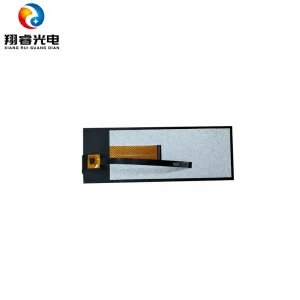
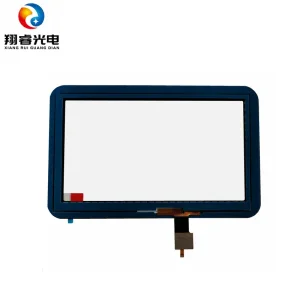
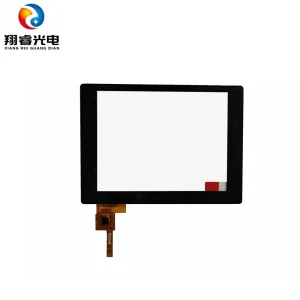
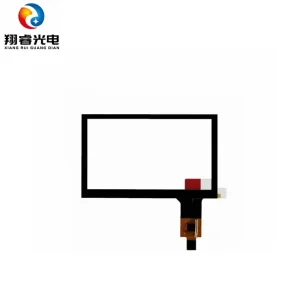
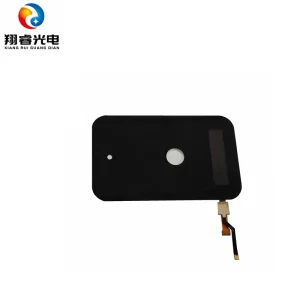
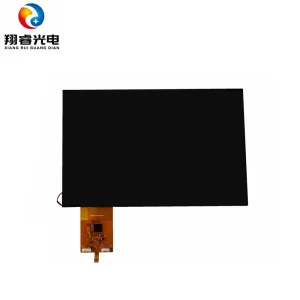
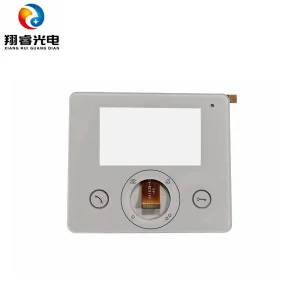
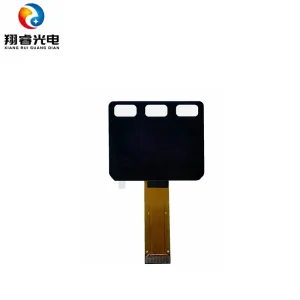
For modern OEMs and system integrators, selecting a screen touch supplier is not merely about sourcing components; it is a critical decision that influences system reliability, product lifecycle, and user experience. Under hostile operating conditions—such as high electromagnetic noise, shifting humidity levels, direct sunlight exposure, and chemical cleanings—off-the-shelf capacitive solutions fail.
Guangzhou Xiangrui Optoelectronics Technology Co., Ltd. addresses these engineering pain-points. By combining state-of-the-art optical bonding with custom-tailored cover glass treatment and controller firmware tuning, we deliver touch panels that function flawlessly under extreme conditions. Our focus on E-E-A-T (Experience, Expertise, Authoritativeness, and Trustworthiness) parameters guarantees transparent supply chain processes and verifiable structural durability.
Founded in 2010 and located in Guangzhou, China, Guangzhou Xiangrui Optoelectronics Technology Co., Ltd. is a specialized high-tech enterprise dedicated to the research, development, production, and global delivery of premium resistive touch panels, capacitive touch panels, cover glass, and complete module bonding products. Over more than a decade of focused growth, we have built a manufacturing footprint that handles both high-mix, low-volume custom modifications and mass-production runs.
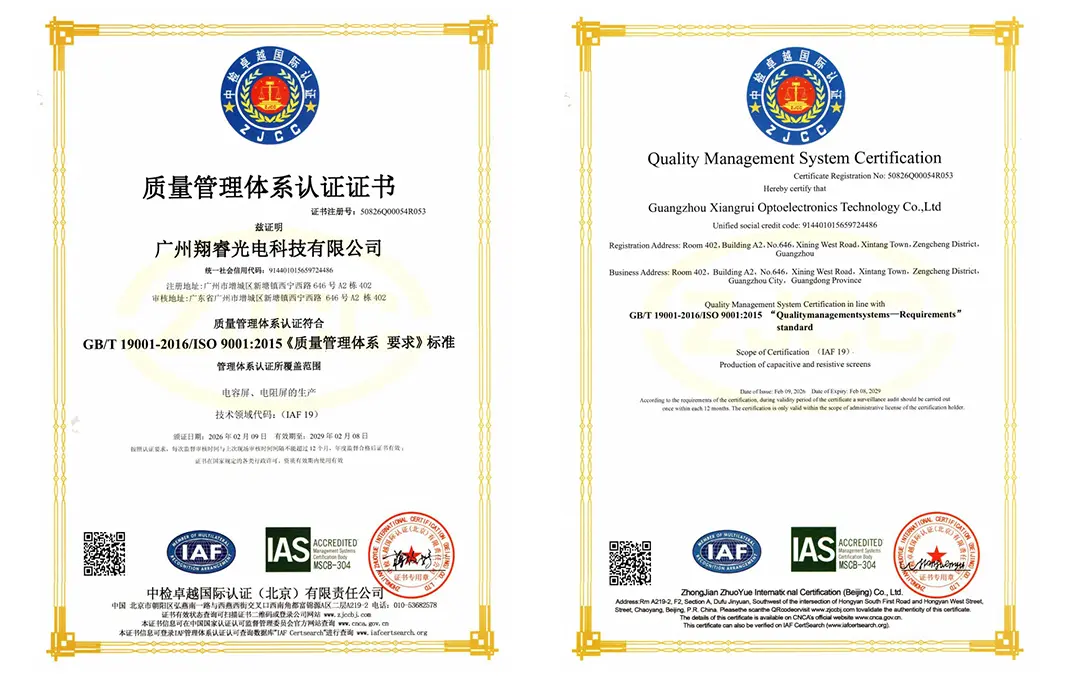
We pride ourselves on our versatile OEM and ODM capabilities. To satisfy challenging quality environments, our manufacturing plants operate under rigorous quality structures. The company has officially obtained the ISO 9001 and ISO 14001 certifications, verifying that our production and ecological footprints comply with high international benchmarks. Our custom screens support mission-critical equipment in industrial control, medical diagnostic systems, home automation, smart retail ecosystems, rugged outdoor equipment, and biometric palm print recognition terminals.
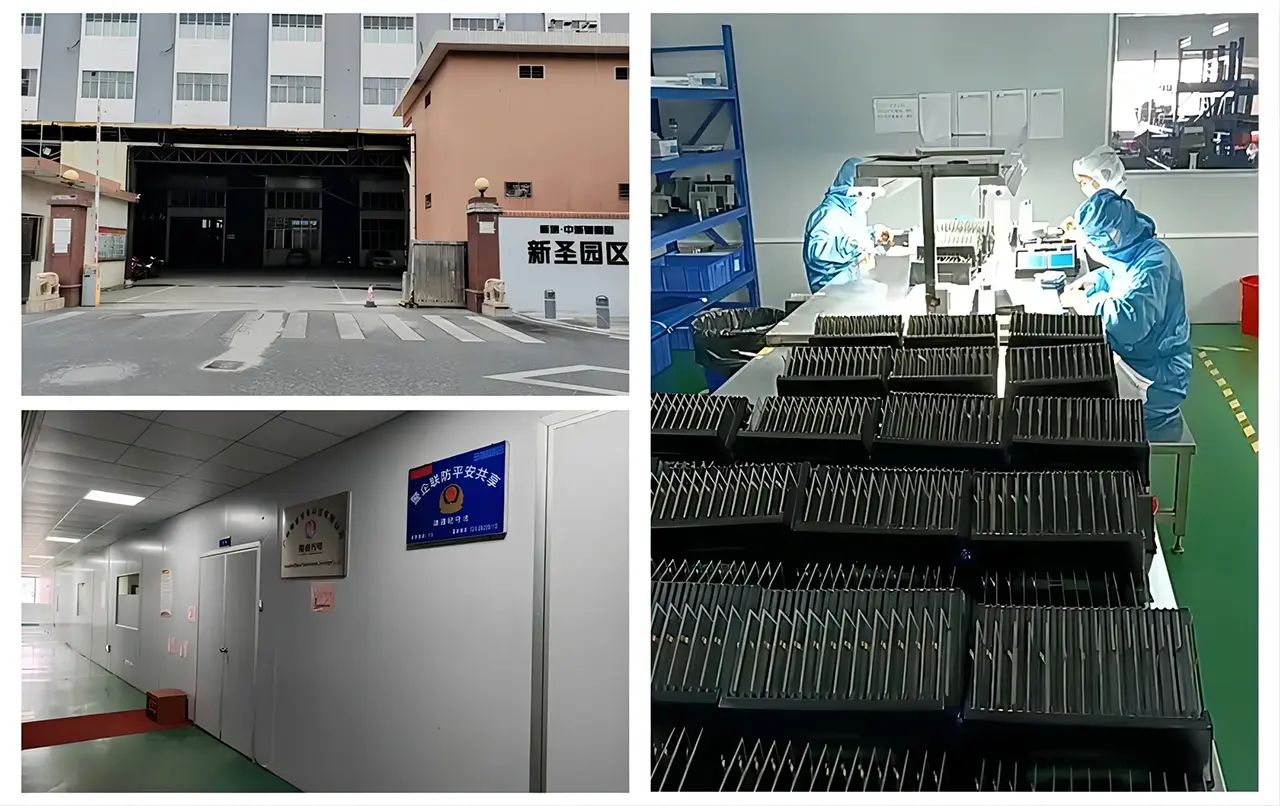
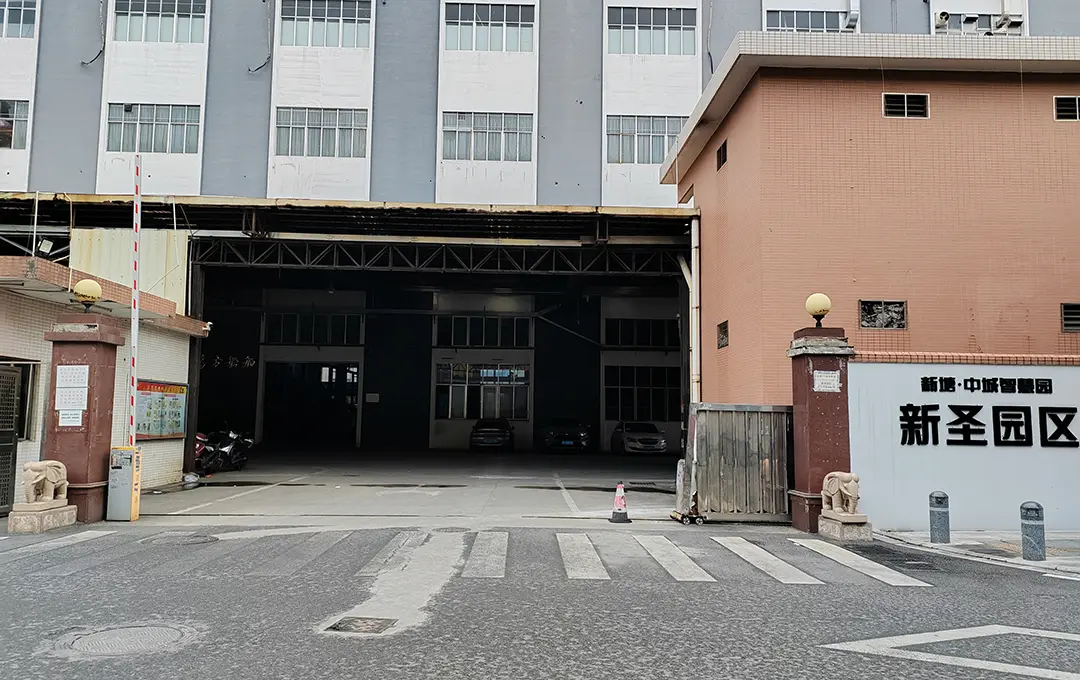
Quantifying our design capability and physical infrastructure in touch screen engineering.
Every industry possesses distinct operating constraints. We customize controller parameters and physical overlays to solve specific operational challenges.
Medical monitors require strict conformance to hygiene guidelines. Our custom capacitive screens support fluid rejection (water-droplet immunity) and allow operators wearing multi-layer latex or nitrile gloves to enter clinical data seamlessly. Chemical resistance permits repetitive cleaning with isopropyl alcohol and aggressive clinical disinfectants without cover glass corrosion.
Factories are dense with electromagnetic interference (EMI) from heavy machinery. Our capacitive touch controllers utilize customized chipsets (EETI, Ilitek) that implement frequency-hopping algorithms to isolate electrical noise. High physical endurance ensures resistance to shocks, heavy vibrations, and wide temperature swings.
Sunlight readability and moisture resistance are paramount. We apply optical bonding (using high-optical-transparency UV-cured adhesives) to eliminate the air gap between the display panel and the cover lens. This process reduces ambient light reflection by up to 90%, prevents inner condensation, and offers an IP65 protection rating against dust and water ingress.
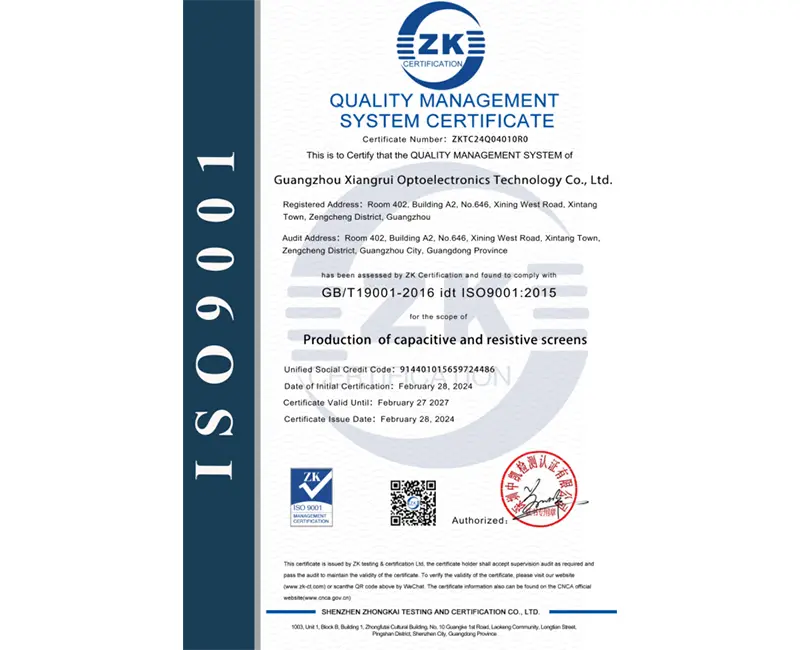
We operate under the philosophy of "reputation first, customer first, quality satisfaction, delivery on time, and good faith cooperation." We maintain strong, long-term technical partnerships with major electronics components manufacturers and global system suppliers.
Our facilities are certified under the ISO 9001 quality management system and the ISO 14001 environmental management system. Standardized operations ensure that all inputs—from ITO sensors and cover glass to controllers—are checked, verified, and traced.
Under the direct supervision of our engineering department, we consistently secure utility model and invention patents. This ongoing innovation earned us the official title of "High-Tech Enterprise of Guangdong Province" in 2022.
Pioneering tomorrow's screen touch architectures for next-generation systems.
As devices become slimmer and curved geometries integrate into automotive dashboards, we are shifting from traditional glass-film-film (GFF) stackups to ultra-thin glass-film (GF) and flexible optical plastic substrates. This optimizes device weights and reduces optical refraction indices.
Modern screens demand enhanced visibility in outdoor locations. Our research targets cost-effective sputtering deposition for Anti-Glare (AG), Anti-Reflective (AR), and Anti-Fingerprint (AF) coatings. This ensures clear displays even under high sun exposure.
By upgrading touch IC scanning rates, we support fine active-stylus input (up to 4096 pressure levels). This enables detailed medical notations, engineering markups, and signature collection directly on the terminal.
Operating a high-end cleanroom is essential for defect-free touch screen laminations. Any trapped airborne particle can create a bubble or interrupt an electrical trace, rendering the unit unusable. Our facility features Class 100, Class 1,000, and Class 10,000 dust-free workshops that correspond directly to standard ISO classifications.
Our localized supply chain in Guangzhou grants us immediate access to raw materials, including high-purity glass, customized flexible printed circuits (FPCs), and controller ICs. This logistical framework reduces prototyping cycles and shields our clients from global shipping disruptions. Automation in optical bonding and cover glass cutting helps ensure consistent dimensional tolerances across large production volumes.
| Class Level | Cleanliness Standard | Production Step |
|---|---|---|
| Class 100 | ISO 5 Equivalent | Sensor laminating & critical IC bonding |
| Class 1,000 | ISO 6 Equivalent | Optical bonding (LOCA/OCR) |
| Class 10,000 | ISO 7 Equivalent | Cover glass preparation & visual testing |
We align our testing protocols with international industry standards to ensure seamless integration into global markets.
All finished products are produced with materials that satisfy CE, RoHS, and REACH directives. Our compliance procedures verify that our products are suitable for export to environmentally conscious markets like Europe and North America.
To eliminate deployment delays, we offer remote debugging and controller tuning services. We help calibrate coordinate systems, adjust touch sensitivity thresholds, and optimize noise filter registers to fit your specific operating system (Windows, Linux, Android).
Our environmental testing labs subject prototypes to prolonged thermal stress (-30°C to +85°C), damp heat cycles, saline fog spraying (for marine installations), and impact testing (IK code tests) to ensure physical durability.
A structured reference guide to help B2B sourcing managers align their touch panel specifications with application demands.
Capacitive touch panels (PCAP) offer long operational lifespans and support multi-touch gestures, making them ideal for modern user interfaces. 5-wire resistive screens remain suitable for budget-conscious terminals and applications that require physical pressure inputs.
Tailor your cover glass thickness (from 0.7mm for light handhelds up to 10mm or more for vandal-resistant outdoor kiosks). Apply chemically strengthened sodium-aluminosilicate glass to achieve high IK impact ratings.
Air bonding (using double-sided tape along the perimeter) is cost-effective for indoor settings. Optical bonding provides high readability under sunlight, protects against moisture condensation, and enhances structural strength.
Technical guidance directly from our engineering team.
Optical bonding fills the air gap between the touch sensor and the display with a clear liquid adhesive (LOCA) or solid gel (OCR). This eliminates light refraction layers, significantly enhancing visibility under bright sunlight. It also prevents condensation in humid environments and improves physical durability. Tape bonding only secures the outer frame, leaving an air gap that can trap moisture and increase reflections.
We use specialized controllers (e.g., EETI, Ilitek) running custom firmware that differentiates between localized touch inputs and uniform moisture layers. The firmware automatically filters out large, distributed capacitive changes caused by water splashes, preventing false touch triggers while maintaining touch tracking.
Yes. We provide complete customization options for the cover glass, including custom outer dimensions, color-matched border prints, hole cutouts, chemical tempering, and thickness options ranging from 0.7mm up to 10mm for vandal-proof applications.
Industrial components must remain available for long lifecycles. We build our designs around stable, long-term IC components and sensor layouts, offering formal product lifecycle notices and compatible drop-in replacements when parts evolve.
Yes. By adjusting the sensitivity parameters of our capacitive touch controllers, we can calibrate the screens to recognize inputs from users wearing industrial safety gloves, warm winter gloves, or sterile medical gloves.
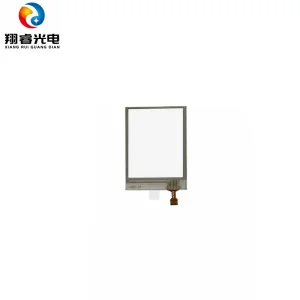
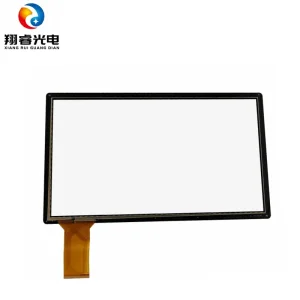
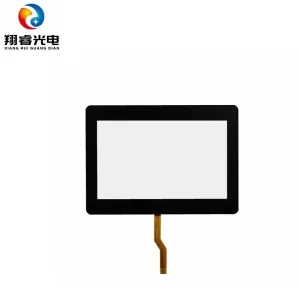
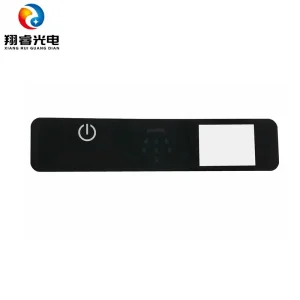
Browse through our specialized sizing configurations, custom touch buttons, and resistive options.
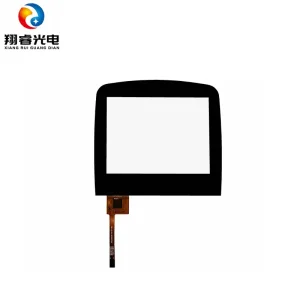
 Xiangrui Optoelectronics