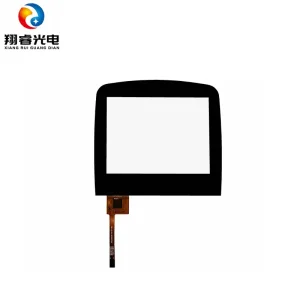
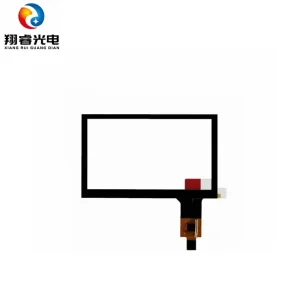
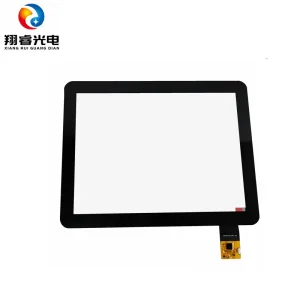
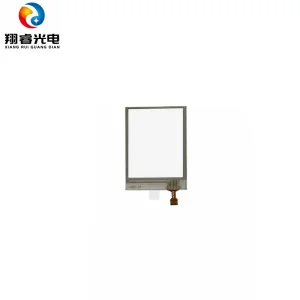
In the era of modern Human-Machine Interface (HMI) systems, display panels are no longer simple input interfaces; they are critical gateways to automation, diagnostic precision, outdoor operational efficiency, and transaction verification. Choosing a professional touch screen display panel supplier is a key decision that impacts the lifecycle cost, environmental durability, and compliance structure of terminal hardware.
Global OEMs (Original Equipment Manufacturers) and ODMs (Original Design Manufacturers) in sectors like industrial automation, medical healthcare, and transportation face a complex purchasing environment. Devices must operate continuously in harsh conditions: exposure to high moisture levels, intensive washing, wide temperature fluctuations (-30°C to +85°C), electromagnetic interference (EMI), and physical impact. Developing bespoke solutions requires careful attention to glass chemistry, sensor designs, controller IC firmware tuning, and structural optical bonding.
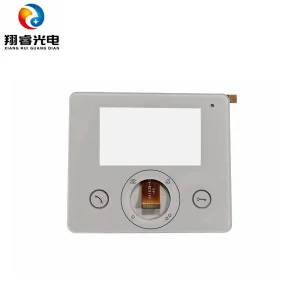
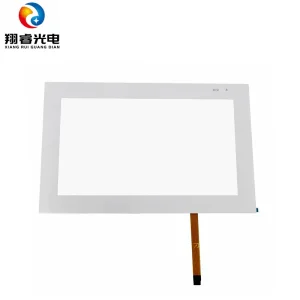
Tailored physical architectures including custom cover lens glass shapes, complex curved profiles, precise CNC cutouts, silk-screened branding, and variable glass thicknesses from 0.55mm up to 10mm blast-proof configurations.
Integration of specialty chemical coatings such as Anti-Glare (AG) to reduce ambient reflection, Anti-Reflective (AR) to maximize readability under high solar exposure, and Anti-Fingerprint (AF) to limit grease adhesion.
Sealing capabilities ranging from basic dustproof designs to robust IP65, IP67, and IP69K liquid ingress ratings. Engineered to withstand high-pressure water jets and extreme chemical washdown agents.
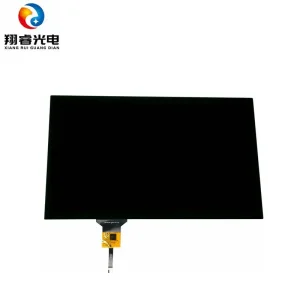
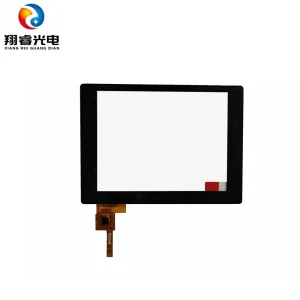
Founded in 2010 and located in Guangzhou, China, Guangzhou Xiangrui Optoelectronics Technology Co., Ltd. is a dedicated manufacturer in the research, development, production, and service of resistive touch panels, capacitive touch panels, cover glass, and display module bonding solutions.
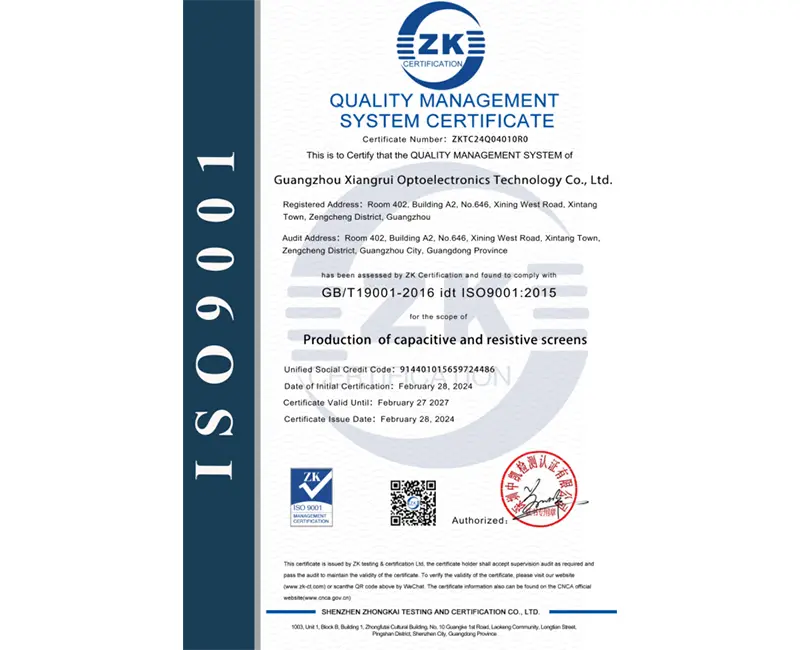
We provide comprehensive custom touch screens alongside OEM and ODM services. Our production facilities hold the ISO 9001:2015 Quality Management System and ISO 14001:2015 Environmental Management System certifications. With over a decade of technical specialization, our custom display products serve demanding applications across industrial automation, medical diagnostics, marine systems, smart home automation, high-traffic outdoor kiosks, and palm-print recognition payment terminals.
Sourcing customized touch screen panels from China offers significant structural and supply chain advantages. The integration of advanced raw material suppliers, component ecosystems, and high-precision automation equipment provides global buyers with several distinct benefits:
Our location in the Guangdong electronics cluster gives us direct, local access to raw glass materials (such as Corning Gorilla, Schott, and AGC), specialized ITO conductive sensors, optical adhesives (OCA/OCR), and controller ICs (EETI, Ilitek, FocalTech). This proximity reduces lead times and simplifies supply chain logistics.
Our in-house R&D engineering team can transition custom 2D drawings into functional CAD files, structural glass layouts, and functional capacitive sensor patterns in just 10 to 15 working days. This speed helps accelerate our clients' overall product development cycles.
Our facility maintains Class 100, Class 1000, and Class 10000 cleanrooms. This controlled environment minimizes particulate contamination during critical processes like ITO sensor alignment, glass lamination, and liquid OCR optical bonding, ensuring stable yields.
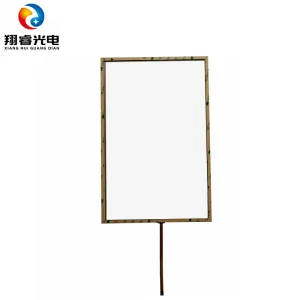
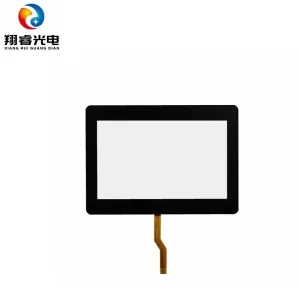
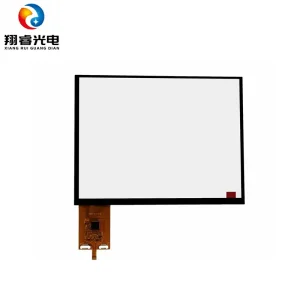
Understanding the core differences between Projected Capacitive (PCAP) and Analog Resistive touch technologies is essential for selecting the appropriate product for your project. The table below compares key engineering parameters.
| Feature Parameter | Projected Capacitive (PCAP) Touch Panel | Resistive Touch Panel (4-Wire / 5-Wire) |
|---|---|---|
| Touch Mechanism | Electrostatic field disruption by human finger or conductive stylus. | Mechanical compression of flexible outer film layer against base glass. |
| Multi-Touch Capability | True Multi-Touch supporting up to 10 points (gestures, swipe, pinch). | Single-touch only (highly reliable for discrete point inputs). |
| Light Transmission | High transparency (>88% to 92%), ensuring bright display output. | Lower transparency (75% to 82%) due to double ITO layers and air gaps. |
| Input Flexibility | Bare fingers, latex/medical gloves, or active/passive digital pens. | Any input tool: gloved fingers, plastic styluses, tools, or fingernails. |
| Scratch Resistance | Tempered cover glass (up to 7H Mohs hardness). Scratch-resistant. | Soft PET film outer layer (typically 3H hardness), susceptible to scratches. |
| Environmental Durability | Excellent resistance to chemicals, moisture, oils, and physical impact. | Susceptible to PET degradation over time from moisture and chemicals. |
| Average Lifespan | Over 50 million touches at a single point without signal degradation. | Up to 35 million touches for 5-wire; 1 million for 4-wire configurations. |
For displays intended for outdoor kiosks, marine bridges, medical screens, or public transportation hubs, basic touch panels may suffer from poor readability or physical fragility. Guangzhou Xiangrui Optoelectronics offers advanced glass engineering and lamination services to address these challenges.
Anti-Glare (AG): A chemical etching process that scatters light off the cover glass surface. This reduces screen reflections in high-ambient environments like factory floors or bright control rooms.
Anti-Reflective (AR): A thin-film vacuum deposition coating applied to the outer surfaces of the cover glass. AR coatings increase light transmission by reducing overall reflectance, helping to maintain high display readability in direct sunlight.
Anti-Fingerprint (AF) / Hydrophobic: A nano-layer applied to limit finger smudges, oil build-up, and moisture condensation, simplifying routine cleaning for medical interfaces.
Air Bonding (Tape Lamination): The touch sensor and the display module are joined using double-sided adhesive tape along the perimeter. This creates a thin internal air gap, making it a cost-effective solution for standard indoor operating conditions.
Optical Bonding (OCR / OCA): The air gap between the touch sensor and the display is completely filled with an optical-grade liquid silicone gel (OCR) or a solid dry adhesive sheet (OCA).
This elimination of the air gap provides three primary benefits:
Our custom touch screen display panels are engineered to meet the operational demands of diverse localized applications.
Designed for factory environments, our industrial resistive and capacitive touch panels offer IP65 dust and moisture seals, chemical resistance to solvents, and noise-immune controller tuning. They remain functional when operated with heavy leather or rubber gloves.
Medical monitors require precise touch responsiveness, even in the presence of liquids. Our custom PCAP panels support multi-touch operation when wet and are compatible with cleaning agents and sanitizing wipes used in healthcare facilities.
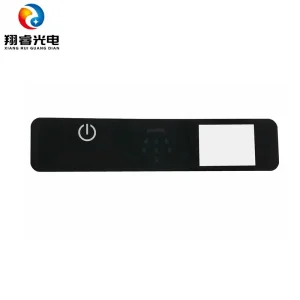
Integrated smart home wall hubs, oven controllers, and coffee machine interfaces utilize customized glass cover lenses featuring rounded shapes, physical CNC cutouts, and tinted decals to match modern aesthetic designs.
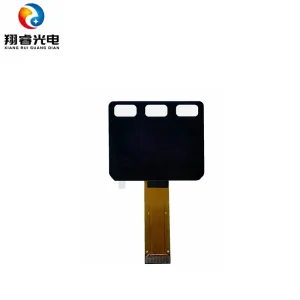
Our small-format capacitive button panels and high-transparency glass surfaces are engineered to fit security camera enclosures and biometric scanners. These systems demand optical clarity for accurate biometric recognition.
Operating as an established global supplier, Guangzhou Xiangrui Optoelectronics adheres to international regulatory frameworks. These standards ensure our custom touch screen components integrate into parent machines certified for use in the EU, North America, Japan, and other markets.
Our factory operations implement a structured quality management system. From incoming material inspections of ITO films to cleanroom assembly and final product dispatch, every step is documented for traceability.
All custom touch assemblies, bonding adhesives, cover lenses, FPC cables, and driver boards use components that comply with RoHS and REACH directives, ensuring they are free from restricted hazardous substances.
We subject our custom designs to environmental stress testing, including thermal cycling (-40°C to +85°C), damp heat storage (90% RH at 60°C), steel ball drop tests for impact resistance, and electrostatic discharge (ESD) immunity evaluations.
 Xiangrui Optoelectronics