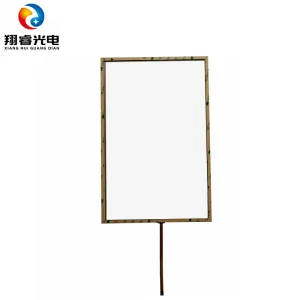
Explore our custom design capacities, specializing in wide-temperature, optical bonding, and robust capacitive/resistive touch modules.
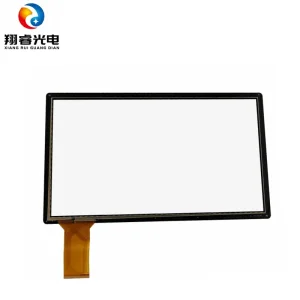
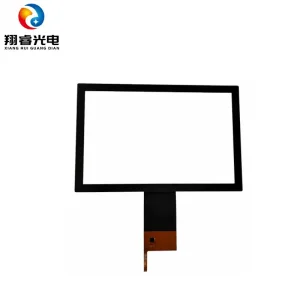
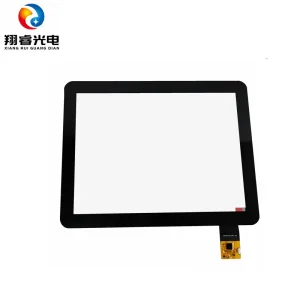
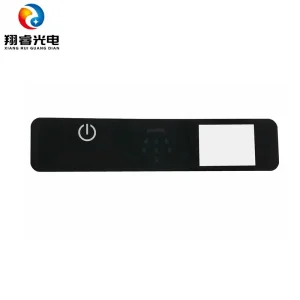
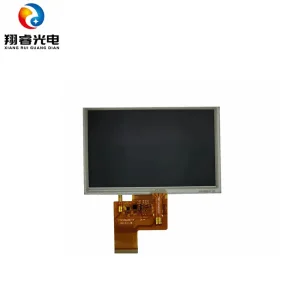
In modern electronic design, the 5-inch form factor stands as a crucial junction between compactness and robust data presentation. Highly valued across industrial, medical, and smart-home applications, the 5-inch touch panel provides enough screen real estate to support complex graphic user interfaces (GUIs) while preserving the lightweight, power-efficient, and handheld physical dimensions required by portable and modular equipment.
Globally, the market for 5-inch touch displays is growing rapidly, propelled by the rise of the Industrial Internet of Things (IIoT) and the digitization of smart retail terminals. Historically restricted to simple liquid crystal displays with basic mechanical button overlays, today's industrial systems demand modern touch options. From Projected Capacitive (PCAP) multi-touch panels to highly durable, pressure-activated resistive architectures, product developers require reliable solutions that perform under harsh environmental stresses.
As leading suppliers, our role involves not just manufacturing, but also standardizing components to meet the requirements of international organizations, including CE, FCC, RoHS, and REACH. The supply chain demands robust touch panel designs that resist electromagnetic interference (EMI), moisture, scratches, and wide temperature swings (typically from -30°C to +85°C) to prevent system downtime.
Selecting the correct touch technology requires evaluating operating conditions, optical demands, and cost constraints. Here, we outline the functional mechanics of modern 5-inch panels:
PCAP screens utilize an Indium Tin Oxide (ITO) sensor layer laminated beneath a protective cover lens. When a conductive object (such as a finger) approaches the surface, it changes the local electrostatic field. The controller IC (e.g., EETI, Ilitek, or FocalTech) calculates the exact coordinates of this capacitance change. Key advantages include 10-point multi-touch capability, light transmission levels exceeding 87%, and surface hardness ratings of up to 7H. This prevents scratching in rugged industrial or public kiosk applications.
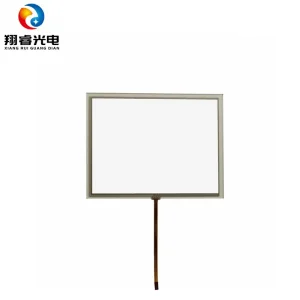
Resistive panels rely on physical pressure to flex an upper ITO-coated film layer until it contacts a lower ITO-coated glass layer. This physical connection creates a voltage divider that defines the coordinates. Because they are activated by pressure, resistive panels are compatible with heavy gloves, plastic styluses, and non-conductive pointers. They also offer high immunity to electromagnetic noise, making them suitable for high-voltage industrial setups, welding machinery, and outdoor marine gear.
The method used to attach the touch panel to the LCD module significantly impacts both optical performance and physical durability:
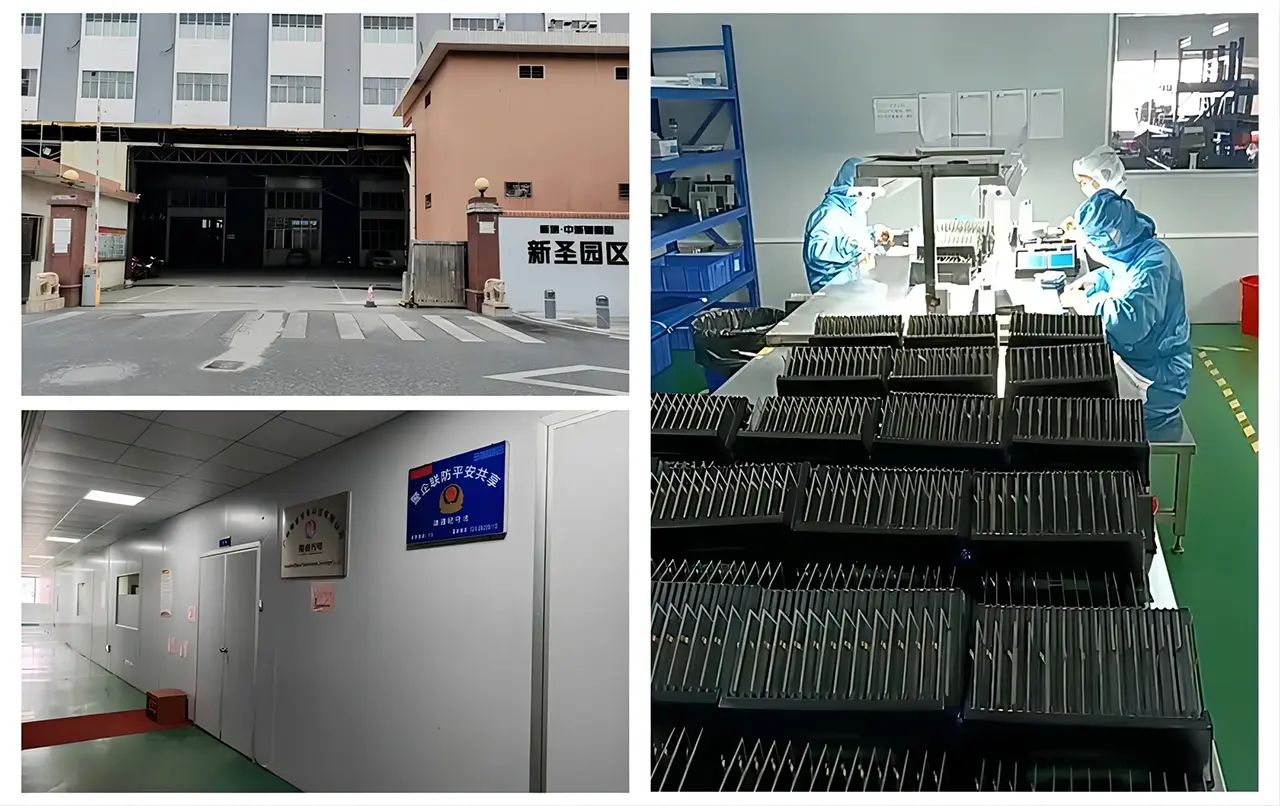
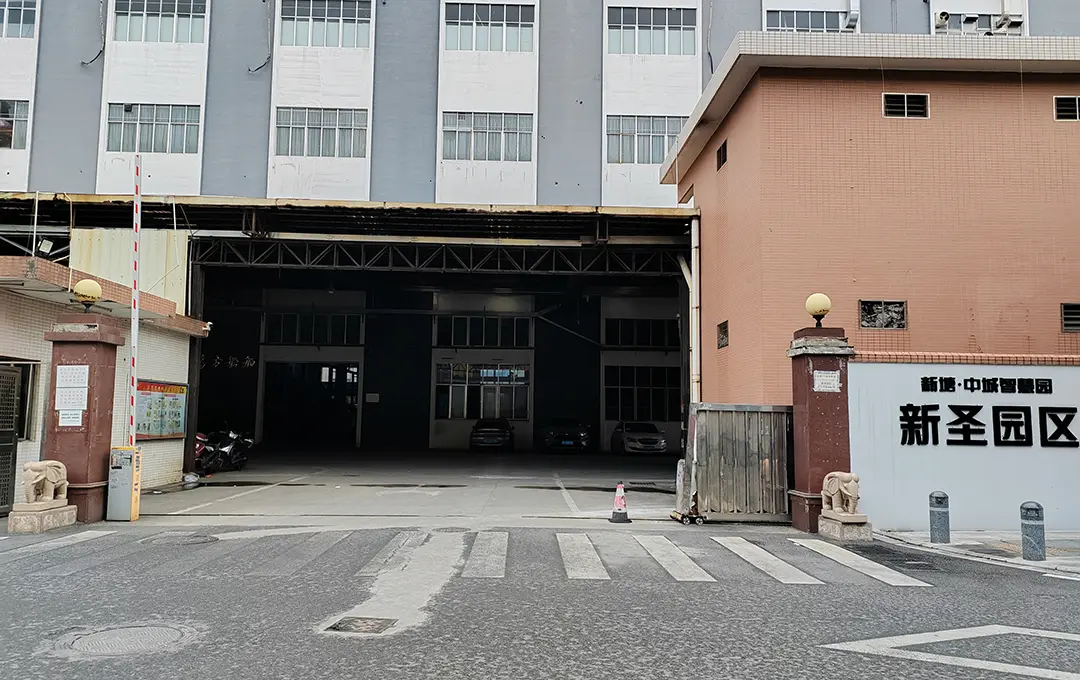
Founded in 2010 and based in Guangzhou, China, Guangzhou Xiangrui Optoelectronics Technology Co., Ltd. is a dedicated manufacturer specializing in the research, development, production, sales, and service of custom touch display interfaces. Our extensive catalog includes resistive touch panels, projected capacitive touch panels, high-durability cover glass, and specialized module lamination services.
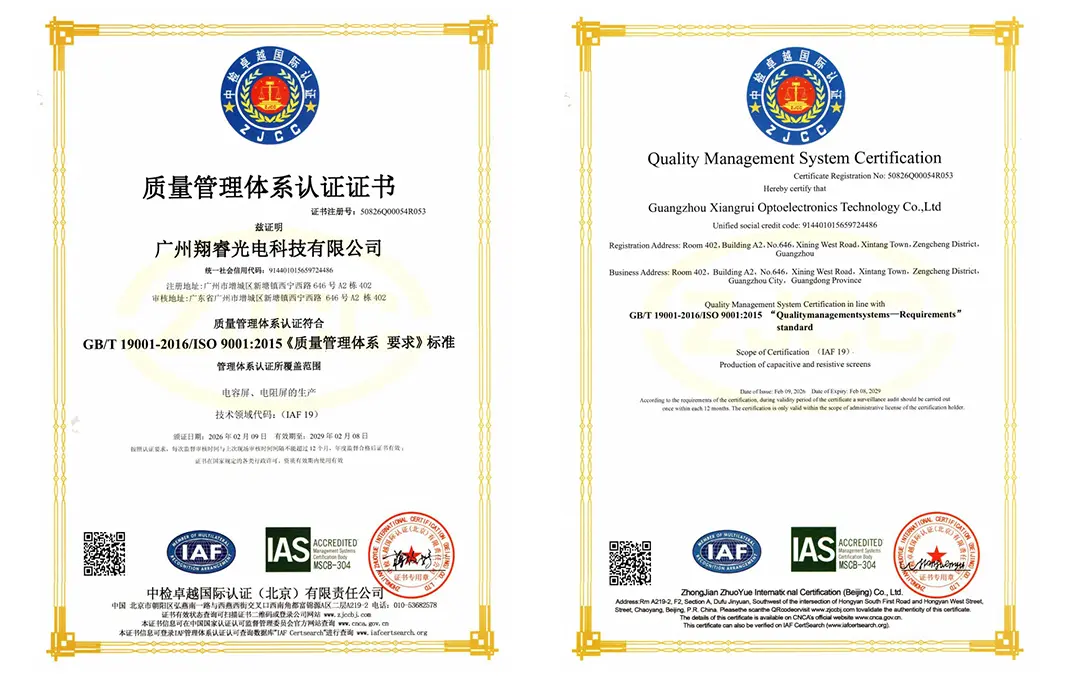
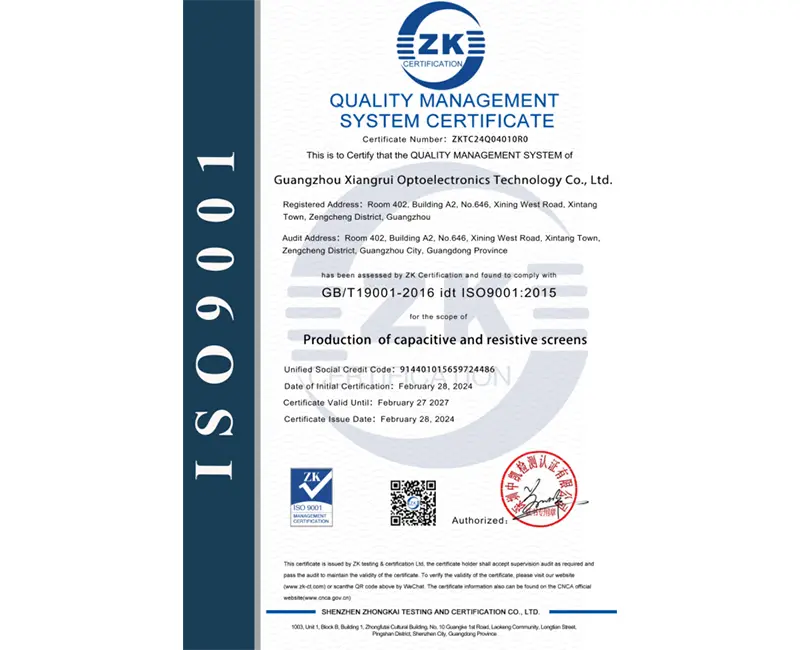
Our production system operates in compliance with ISO 9001:2015 Quality Management and ISO 14001:2015 Environmental Management standards. We offer comprehensive OEM and ODM support, tailoring design profiles, tail designs (FPC), and cover glass coatings to meet the custom specifications of our global client base.
To prevent contamination and guarantee high optical yield rates during lamination and assembly, our 3,000 square meter facility houses specialized cleanrooms:
The 5-inch touch panel serves a wide variety of localized applications. Our customized designs are engineered to meet the specific requirements of each environment:
As industrial design cycles accelerate, we continuously refine our engineering processes to keep pace with emerging trends:
High-voltage machinery can inject electrical noise into capacitive touch sensors, resulting in false inputs or drift. To address this, we implement low-impedance ITO coatings, copper shielding grids on the back of the sensor layer, and specialized controller IC tuning (using frequency-hopping algorithms) to ensure stable performance under heavy electromagnetic interference.
To prevent shattered glass in food processing lines and cleanrooms, we offer chemically strengthened soda-lime glass or aluminosilicate glass substrates. For environments requiring high impact resistance, we supply thicker cover lenses (up to 3.0mm or 5.0mm) designed to meet IK08 and IK10 mechanical impact standards.
We offer specialized surface treatments to meet diverse operational needs:
Common technical questions asked by system integrators, design engineers, and procurement teams.
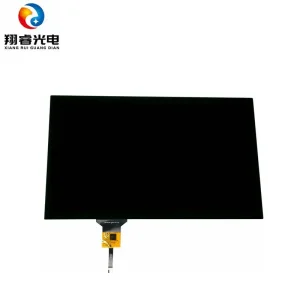
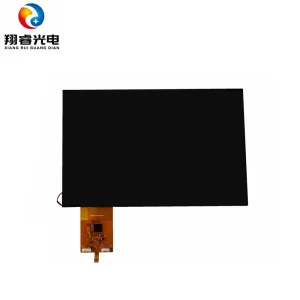
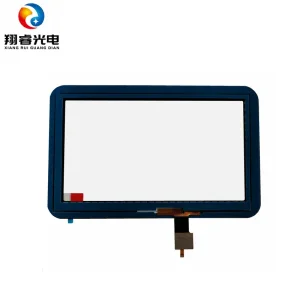
Discover our wider product portfolio designed for robust industrial integrations and optical lamination requirements.
 Xiangrui Optoelectronics