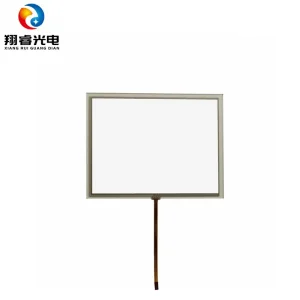
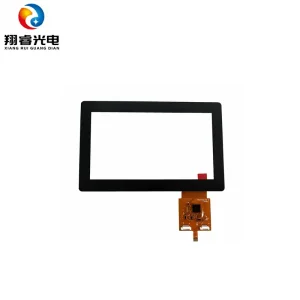
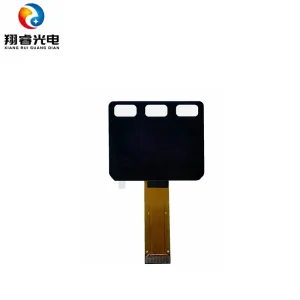
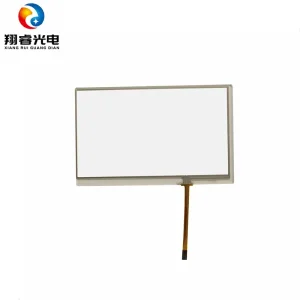
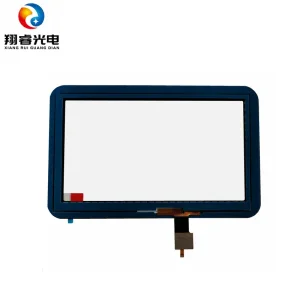
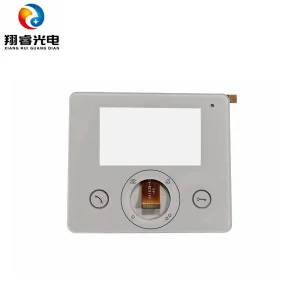
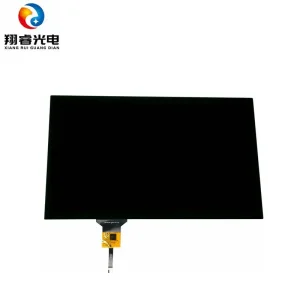
Explore our leading collection of capacitive and resistive touch systems designed to operate flawlessly under challenging environmental conditions.
Founded in 2010 and located in Guangzhou, China, we are a leading designer and manufacturer dedicated to the research, development, production, and custom assembly of resistive touch panels, capacitive touch panels, cover glass, and module optical bonding. Over more than a decade of active operations, we have established our reputation as a trusted partner for multi-national brands requiring reliable human-machine interface (HMI) modules.
Equipped with state-of-the-art cleanroom environments spanning Class 100, Class 1,000, and Class 10,000 ratings, we maintain high yield integrity for complex touch sensor stacks and custom cover glass bonding processes. Whether your applications are deployed in medical diagnostic tools, harsh marine environments, industrial automation consoles, or security-compliant palm-print recognition systems, our engineering team handles integration constraints from concept through to full scale production.
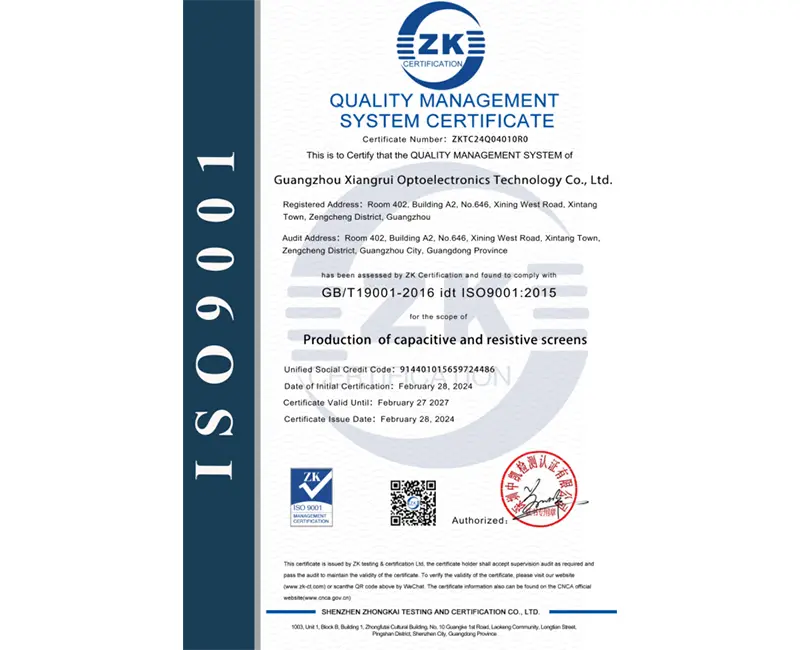
We are fully certified under ISO 9001:2015 Quality Management Systems and ISO 14001:2015 Environmental Management Systems. In 2022, we were officially designated as a High-Tech Enterprise in Guangdong Province, reflecting our ongoing commitment to technical progress and intellectual property development, supported by over 30 utility patents.
A statistical summary demonstrating our industrial scale and structural capacity to execute bulk global requests.
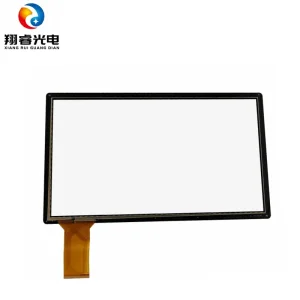
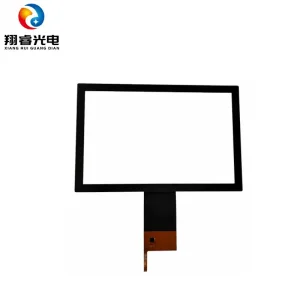
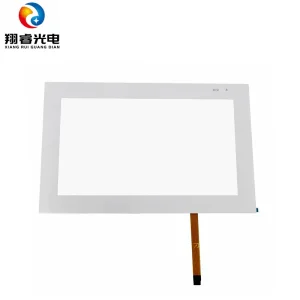
In global industrial design, the 7-inch touch panel represents one of the most critical structural display ratios. It balances the visual hierarchy required for complex user interactions with a compact physical layout. For industrial control panels, medical equipment consoles, and high-reliability home environments, the 7-inch form factor provides optimal area-to-performance efficiency.
From an engineering perspective, developing a high-grade 7-inch touch screen requires resolving the trade-offs between electromagnetic compatibility (EMC), environmental endurance, and sensory sensitivity. Industrial panels often operate near high-voltage motors or high-frequency communication transmitters. To maintain structural performance, we deploy custom capacitive driver IC configurations (such as EETI, Ilitek, and Cypress solutions) calibrated specifically for noise resistance. This allows our capacitive modules to operate under heavy moisture or while the operator is wearing heavy protective industrial gloves.
Choosing the correct touch technology depends on the operational environment of the end product:
How we address the mechanical, optical, and operational issues encountered by system integrators globally.
Industrial lines and medical devices can suffer from electromagnetic interference. We design multi-layer sensor structures with grounded shielding layers and configure firmware to dynamically filter out environmental noise.
Outdoor devices need to endure wide operating temperatures. Our wide-temperature panels function from -40°C up to +85°C. This prevents issues like ITO film cracking and liquid crystal slow-down.
Under bright sunlight, internal reflections can make displays hard to read. We offer full optical bonding (LOCA/OCA) services to eliminate air gaps. This reduces internal reflections to less than 1.5% and improves contrast.
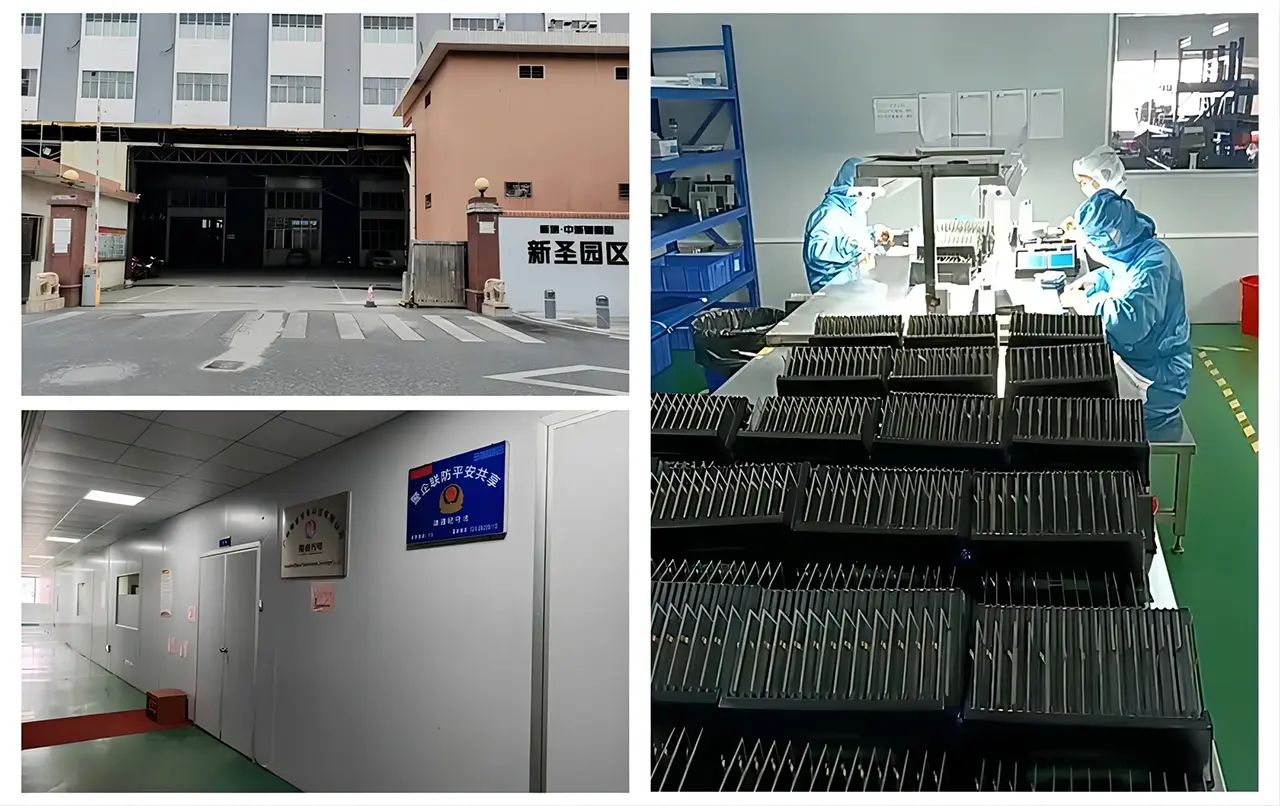
Our production plant in Guangzhou leverages the cluster density of the Pearl River Delta industrial region. This localized network of raw material suppliers, combined with our in-house automated manufacturing lines, allows us to optimize both production costs and lead times.
We use automated glass cutting, CNC edge grinding, automated sensor layout alignment, and state-of-the-art optical bonding machines. Our cleanroom facilities run positive pressure air filtration networks to prevent particulate contaminants from settling between layers, keeping yields high even for complex custom runs.
By integrating supply chain logistics under one management system, we maintain access to raw materials (ITO sensors, FPC designs, cover glass, and controller ICs). This setup allows us to buffer against unexpected market shifts and keep delivery dates stable for our international clients.
Guangzhou Xiangrui Optoelectronics designs touch solutions tailored to the needs of different industries:
Our touch systems are calibrated to resist fluid contact, clean easily with medical solvents, and support accurate inputs when operated with latex or nitrile gloves. They are commonly used in patient monitoring systems, drug delivery devices, and diagnostic consoles.
Built to handle harsh environments, these panels resist chemicals, dust, and vibrations. Featuring thick cover glass (IK08+), they run reliably on manufacturing floors, CNC machinery interfaces, and heavy logistics systems.
Designed with slim borders and high-resolution cover glass, these panels offer responsive touch controls for home automation systems, intercom displays, and modern elevator panels.
As human-machine interaction systems continue to evolve, our R&D department is focusing on several key technical updates:
To support clients working across international borders, our designs comply with major industry and environmental standards. We ensure all materials used in production meet RoHS and REACH directives, helping our clients navigate European and North American environmental rules.
From an electrical design standpoint, we build our touch interfaces to meet CE and FCC electromagnetic limits, reducing design cycle times during final product testing. Our engineers provide remote and on-site integration support, guiding your team through mounting methods, FPC routing, and USB/I2C firmware calibration.
Browse our selection of custom capacitive buttons, wide-temperature resistive matrices, and optically bonded touch modules.
Find answers to common engineering and manufacturing questions regarding our 7-inch touch panel technology.
OCA (Optically Clear Adhesive) uses a pre-formed dry film tape to laminate layers, offering clean application for standard flat screen configurations. LOCA (Liquid Optically Clear Adhesive) uses liquid acrylic resin, making it ideal for curved surfaces, thicker cover glasses, or uneven layers. Both methods eliminate internal air gaps to improve contrast and prevent moisture buildup.
We customize the touch sensor's controller firmware (such as EETI or Ilitek ICs) to increase sensitivity and signal-to-noise ratios. This allows the system to detect changes in capacitance through thick gloves, while ignoring false inputs from moisture or surface dirt.
Yes. For outdoor applications, we incorporate UV-blocking films or treatments into the glass stack. These protect the optical adhesives and display layers from yellowing and degradation under direct sunlight.
We offer Anti-Glare (AG) chemical etching to reduce reflections, Anti-Reflective (AR) physical vapor deposition to improve transmission, and Anti-Fingerprint (AF) hydrophobic coatings to minimize smudging and ease cleaning.
Guangzhou Xiangrui Optoelectronics is certified under ISO 9001:2015 for quality management and ISO 14001:2015 for environmental management. Our products are designed to meet RoHS, REACH, CE, and FCC standards.
We design our FPC and sensor grids with protective shield routing and ground loops. We also tune the driver IC firmware to dynamically shift scanning frequencies away from typical industrial noise bands.
For custom cover glass shapes or specialized sensor layouts, the design and prototype process usually takes 2 to 4 weeks. Full mass production runs typically ship within 4 to 6 weeks depending on volume.
By using chemically tempered cover glass ranging from 1.1mm to 6.0mm+ in thickness, we can produce touch assemblies that achieve IK08 or IK10 impact ratings, protecting displays in public access points and harsh environments.
 Xiangrui Optoelectronics