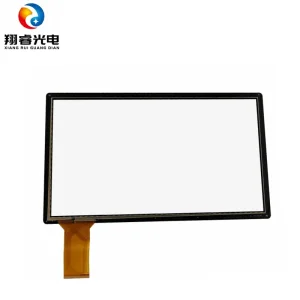
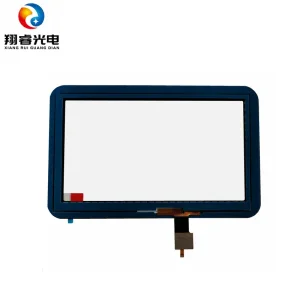
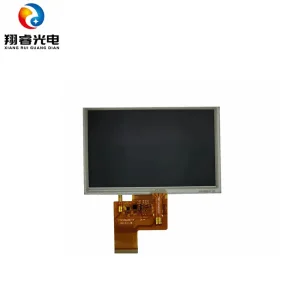
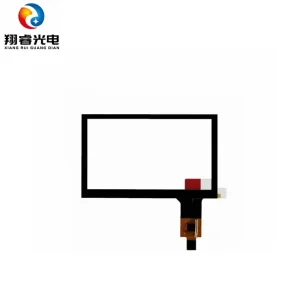
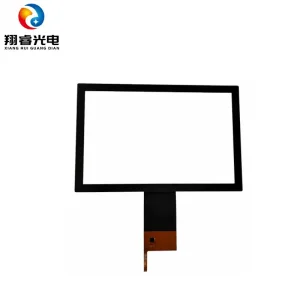
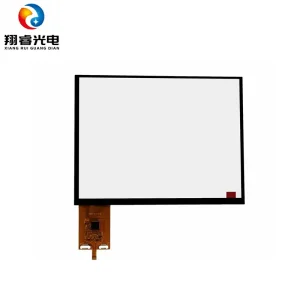
Explore our high-performance capacitive and custom resistive touch solutions engineered for critical industrial and display applications.
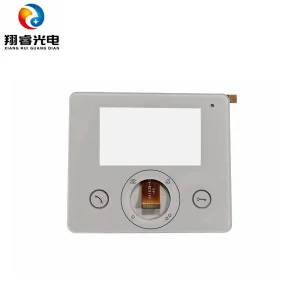
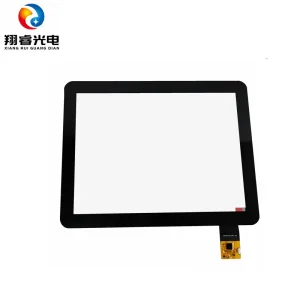
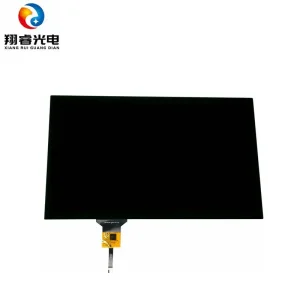
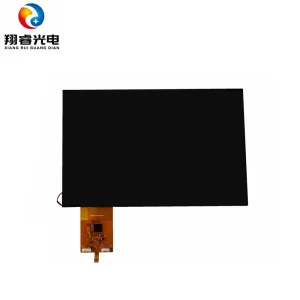
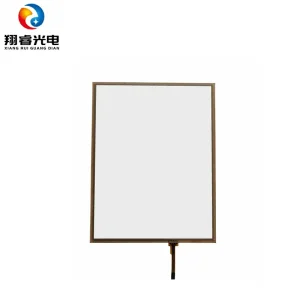
Established in 2010 in Guangzhou, China, we are a leading designer, developer, and manufacturer specialized in high-durability human-machine interfaces. Our core competence spans resistive touch panels, projected capacitive touch panels (PCAP), robust cover glass customization, and optical bonding services.
By integrating professional R&D with strict adherence to quality assurance standards, we provide tailored OEM and ODM solutions to global clients. Our production infrastructure maintains ISO 9001:2015 and ISO 14001:2015 credentials, guaranteeing each product matches strict international specifications for critical operations.
Our solutions cater directly to demanding industries including advanced medical equipment, marine monitors, outdoor payment systems, and precision industrial automation controls.
The global demand for human-machine interface (HMI) units has transitioned significantly towards Projected Capacitive (PCAP) displays.
Historically, resistive panels dominated industries due to their low activation threshold and simplicity. However, modern commercial, industrial, and medical setups demand interfaces capable of handling multi-touch gestures, high optical clarity, and extreme mechanical resilience. Projected Capacitive Screens utilize an electrostatic field etched onto microscopic conductive layers (typically ITO). When a finger approaches the glass cover, it alters the local mutual or self-capacitance, registering inputs with absolute accuracy.
In environments like automated factory lines, diagnostic healthcare hubs, and public payment terminals, downtime is not an option. Modern capacitive systems are constructed to withstand scratches, chemical washdowns, and high impacts, maintaining flawless responsiveness under conditions that would quickly degrade traditional resistive membranes.
From checkout kiosks to interactive menus, capacitive screens offer scratch-resistant surfaces (Mohs hardness up to 7H) capable of millions of touches without drift, outlasting membrane alternatives.
Industrial PCs operate in electrical noise-heavy plants. Optimized controller IC adjustments (e.g., EETI or Ilitek firmware tuning) suppress electromagnetic noise, enabling safe operation even with thick industrial gloves.
Sealed IP65 optical bonding setups allow medical personnel to disinfect displays with chemical sterilizers without risking water intrusion or display clouding, maintaining critical visual accuracy.
Achieving stable performance requires meticulous attention to material selection, controller programming, and mechanical assembly.
To achieve high outdoor legibility and reduce internal reflections, we utilize advanced Optical Bonding (LOCA/OCA) technologies. By filling the air gap between the touch sensor and the LCD panel with a refractive-index-matched adhesive, we eliminate light reflections at internal boundaries. This increases contrast ratio by up to 400% and prevents condensation from forming within the stack under changing temperatures.
| Layer Name | Material/Spec | Function |
|---|---|---|
| Cover Glass | 1.1mm to 6.0mm Tempered Glass | Physical protection, AG/AR/AF Treatment |
| Bonding Interlayer | OCA / LOCA Adhesive | Eliminates air-gap, enhances optical clarity |
| Sensor Glass (ITO) | Double-Sided Conductive ITO | Registers spatial variations in capacitance |
| Controller Board | EETI / Ilitek / Goodix ICs | Interprets signals, filters high-frequency noise |
Our vision for tomorrow's interactive panels relies on expanding capabilities beyond simple touch tracking.
Engineering touch controllers to distinguish between finger inputs, stylus drawing (using protocols such as Microsoft Pen Protocol or active USI stylus support), and accidental palm rest rejection, crucial for modern medical chart updates and marine plotting interfaces.
Optimizing custom high-voltage controller algorithms to penetrate cover glass thicknesses exceeding 10mm. This is vital for outdoor ATMs and public kiosks requiring vandal-proof construction while maintaining sensitive touch performance.
Integrating tailored copper-mesh mesh structures or ITO shielding layers to counteract extreme electrical noise emitted by high-power motors in nearby industrial automated cells, securing continuous, zero-fault operations.
Leveraging deep industrial clusters to deliver high speed, agility, and consistent quality.
Guangzhou, as a premier industrial center, grants us access to a complete supply ecosystem for advanced display glass, flexible printed circuits (FPC), and micro-controllers. This local synergy lets us shorten product design, sampling, and manufacturing phases compared to Western counterparts.
Our raw materials (from ITO sensor films to premium AGC/Corning cover glass) are sourced from neighboring local producers, shielding us from volatile international shipping delays and keeping production timelines stable.
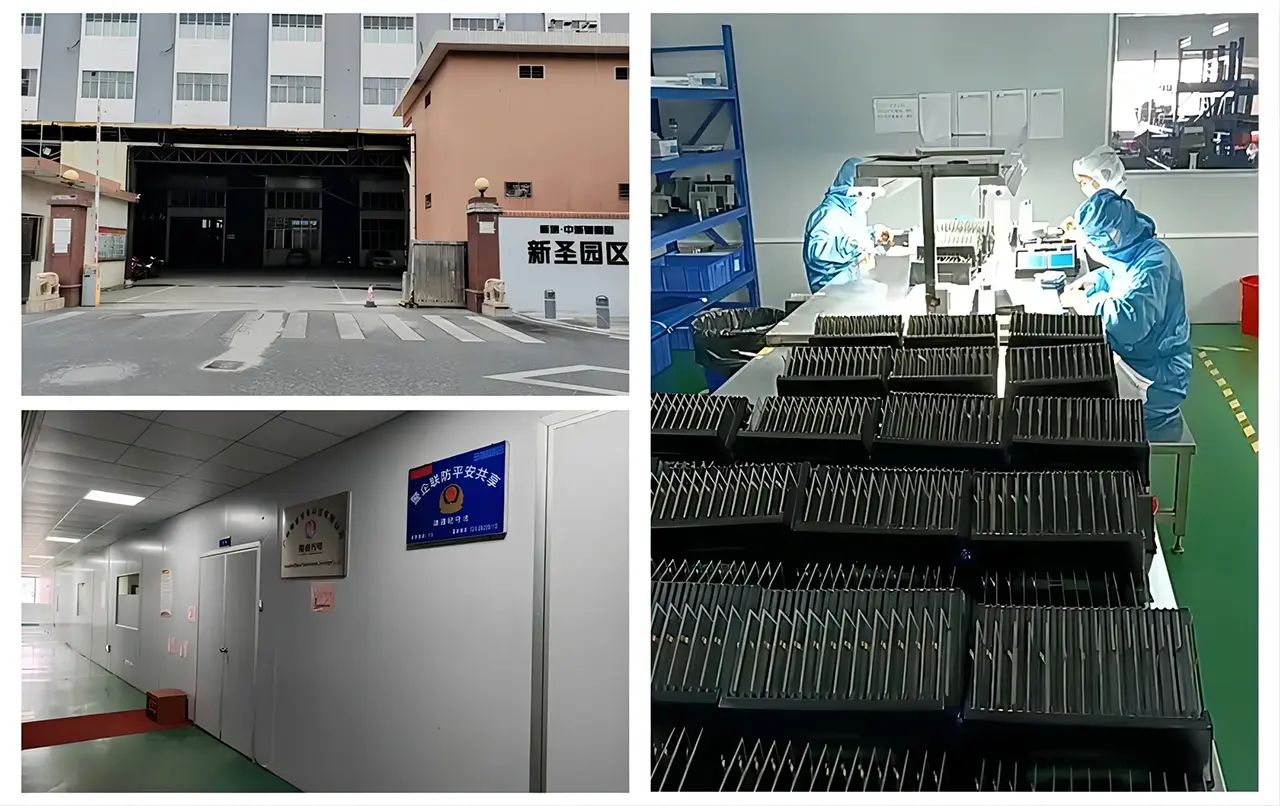
Our 3000 sq. meter factory includes cleanrooms down to Class 100. This highly clean environment prevents air dust contamination during sensitive optical bonding steps, eliminating microscopic bubbles and panel artifacts.
Our design team works alongside clients to design custom covers, tailored FPC routings, and specialized interface configurations, moving from concept to physical testing in as little as 10-15 working days.
To serve industries where safety and performance are non-negotiable, our products undergo rigorous testing cycles before dispatch. We maintain active compliance with internationally recognized frameworks, ensuring seamless integration into our customers' final assemblies.
Our business model is built around responsive, direct technical communication. Rather than relying on third-party agencies, our design engineers assist clients directly during integration.
Expert answers addressing the primary design, integration, and procurement inquiries of industrial HMI engineers.
From custom buttons to ultra-thin optical stacks, find the right specifications for your device.
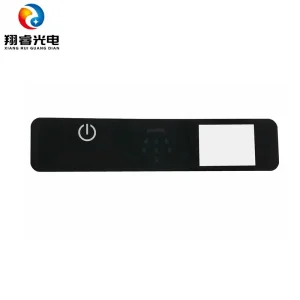
 Xiangrui Optoelectronics