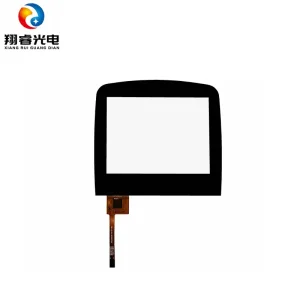
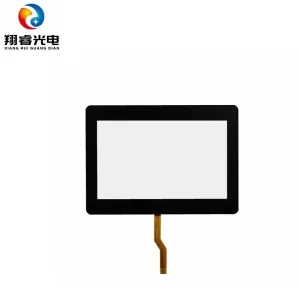
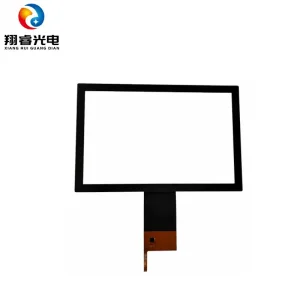
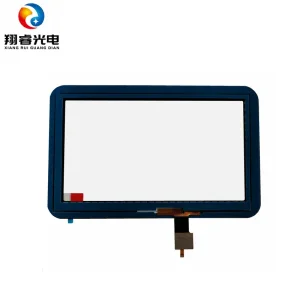
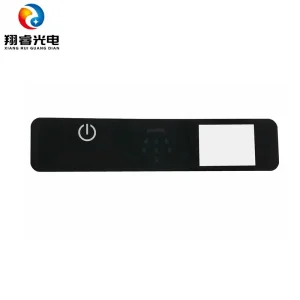
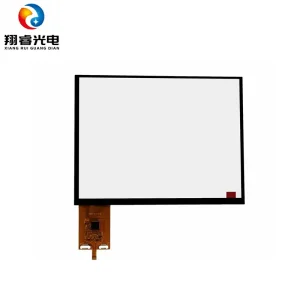
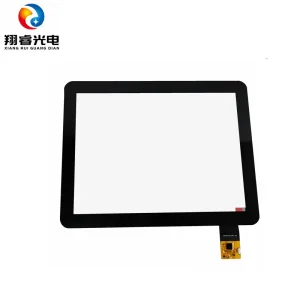
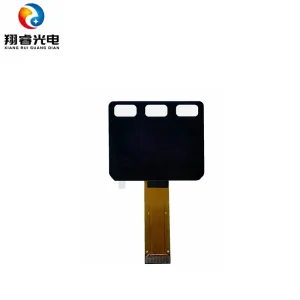
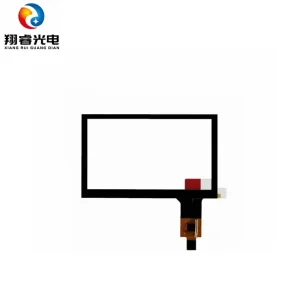
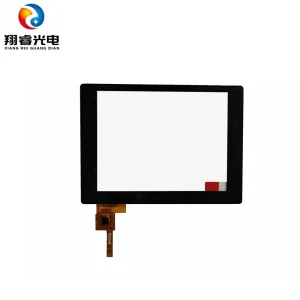
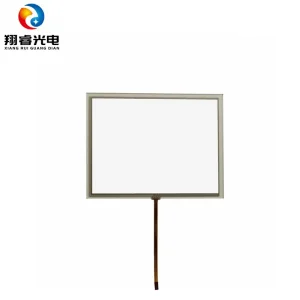
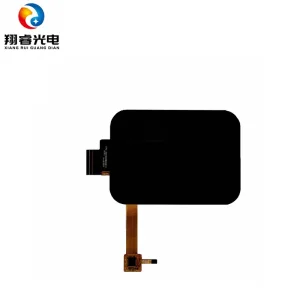
Explore our industrial-grade, wide-temperature resistive and capacitive touch panels featuring advanced optical bonding, IP65-rated front panels, and custom sizing options.
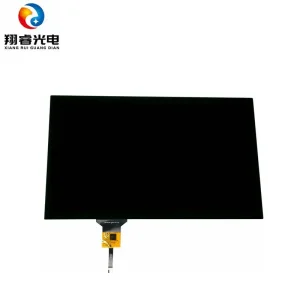
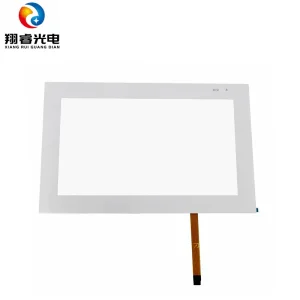
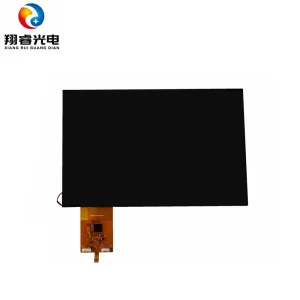
Established in 2010 in Guangzhou, China, Guangzhou Xiangrui Optoelectronics Technology Co., Ltd. has developed into a premier high-technology enterprise specializing in the custom design, manufacture, and validation of resistive touch panels, projected capacitive (PCAP) touch screens, chemically strengthened cover glass, and precision module bonding solutions (OCA and OCR).
We work at the intersection of optoelectronics and mechanical engineering, delivering custom touch display panels for highly regulated industries. Our ISO 9001 and ISO 14001 certified plant occupies 3,000 square meters, equipped with Class 100, Class 1,000, and Class 10,000 cleanroom facilities designed to meet precise particle-count standards. This cleanroom integrity guarantees high-yield optical bonding, eliminating bubble defects and dust inclusions for outdoor, medical, and aerospace visual applications.
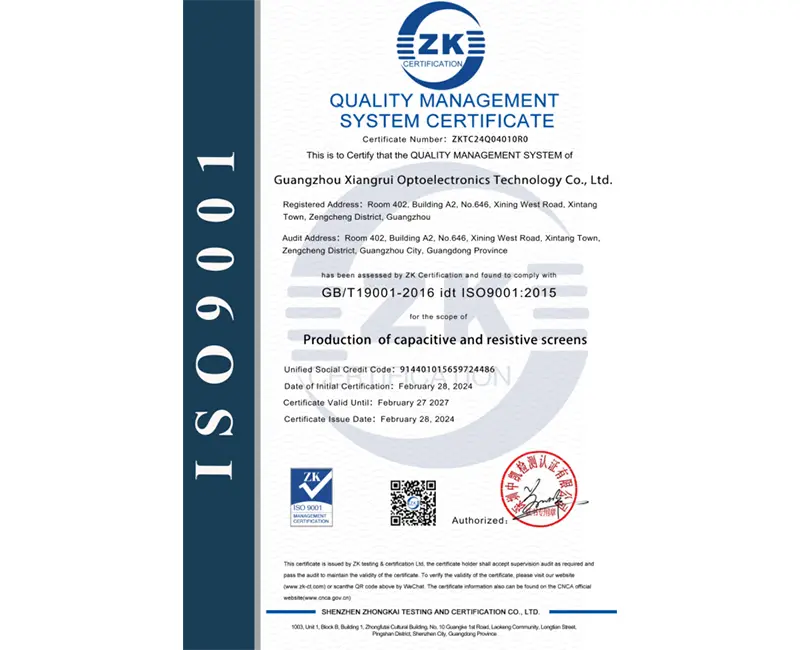
Delivering high-reliability, customized display modules that adhere to rigorous industrial specifications and international quality standards.
We operate strictly under ISO 9001 and ISO 14001 management systems, guaranteeing material traceability, inbound QC, in-process control (IPQC), and 100% outbound functional and optical validation.
Our engineering team possesses 30+ patents, continuously designing solutions for electromagnetic interference (EMI) shield layers, wet-hand/thick glove capacitive detection algorithms, and ruggedized housing integrations.
Awarded the official high-tech designation in Guangdong Province, we are committed to sustainable innovation, long-term technical support, and component end-of-life (EOL) transition management.
Analyzing key advancements shaping HMI engineering and multi-touch performance requirements worldwide.
While resistive touch panel technology remains critical for legacy applications and ultra-high noise environments due to its pressure-activated input mechanism, industrial projects are shifting toward multi-touch PCAP systems. This change is driven by the demand for modern, multi-finger gesture operation (pinch-to-zoom, swipe) and glass-fronted designs that resist chemicals, scratches, and impact forces.
Modern capacitive touch panels must operate with water droplets present on the surface and reject false inputs caused by conductive liquids. The integration of advanced touch controllers (like EETI, Cypress, and Ilitek) allows for custom firmware tuning, enabling reliable inputs even through thick leather or rubber gloves.
Standard air-bonding (tape bonding) leaves a 0.1mm to 0.5mm air gap between the touch sensor and the LCD module. This boundary causes internal light reflections that degrade readability in bright daylight. It also creates a path for condensation under high-humidity conditions.
Our factory utilizes Optical Clarity Adhesive (OCA) and Liquid Optically Clear Resin (OCR) bonding under vacuum inside cleanrooms. This fills the gap entirely, matching the refractive index of the display glass (n ≈ 1.49) to reduce external light reflections by up to 90%, enhance mechanical impact resistance, and prevent display condensation under temperature extremes.
We provide full customization options for touch panels, cover glass treatments, and assembly integrations.
Chemical strengthening (Soda-Lime or Gorilla Glass), Anti-Glare (AG) chemical etching, Anti-Reflective (AR) vacuum sputtering, and Anti-Fingerprint (AF) oleophobic coatings.
Glass-to-Glass (GG), Film-to-Film (FF), Glass-to-Film-to-Film (GFF), or ultra-thin PG architectures. Customized FPC routes, shielding tails, and connector pinouts.
Pre-integrated IC configurations from industry-leading silicon vendors (EETI, ILITEK, Cypress, Goodix, FocalTech) supporting USB, I2C, UART, or RS232 protocols.
Fully automated cleanroom lamination of touch panels to color TFT-LCDs (sizes ranging from 1.54 inches up to 21.5 inches) using precision vacuum alignment.
Providing custom HMI interfaces tailored to the functional requirements of diverse industries.
High-noise manufacturing floors require touch interfaces with high electromagnetic immunity. Our 10.1" and 15.6" wide-temperature touch panels are tuned for high-voltage noise rejection, wet-hand handling, and compliance with heavy-industrial EMC regulations.
Medical systems demand precise operation with surgical gloves. Our capacitive panels support custom firmware mapping for nitrile, latex, and vinyl gloves, while the flat cover glass design prevents chemical ingress from sterilizing agents.
Sunlight readability and moisture protection are critical. We combine high-nit LCD panels with optical bonding, UV-cut films, and IP65-rated cover lenses. This layout eliminates fogging and ensures long-term display readability in direct sunlight.
High-frequency retail and banking kiosks demand reliable capacitive touch sensors. We manufacture thin-frame glass sensors integrated with high-performance ICs, ensuring fast response times and support for scratch-resistant glass covers.
Minimizing supply chain risk through localized engineering support, technical compliance, and materials transparency.
Modern display procurement involves complex technical requirements, component life-cycle tracking, and regulatory standards. Guangzhou Xiangrui Optoelectronics Technology Co., Ltd. provides comprehensive engineering documentation to assist our clients' compliance efforts.
Technical answers to common engineering questions regarding touch panel integration and customization.
OCA (Optically Clear Adhesive) is a solid, dry film adhesive cut to match the display size. It provides clean, uniform lamination for flat display surfaces. OCR (Optically Clear Resin) is a liquid-dispensed adhesive that is cured under UV light. It is ideal for curved displays, uneven cover panels, or very large display screens where a liquid can fill gap variations without creating air bubbles.
Yes. By using advanced controllers (such as EETI or ILITEK) and custom firmware tuning, we can configure our touch panels to differentiate between a localized finger touch and a conductive water film. This enables reliable operation in outdoor environments or wet industrial settings.
We offer Anti-Reflective (AR) coatings, which use thin-film vacuum deposition to reduce surface reflection, and Anti-Glare (AG) coatings, which use chemical etching to diffuse light reflections. We also apply Anti-Fingerprint (AF) oleophobic coatings to reduce fingerprint grease buildup.
An IP65 rating requires the front face of the display to resist water spray and dust ingress. We achieve this by chemically bonding a custom cover glass over the touch sensor and sealing the assembly to the front bezel using durable closed-cell gasket tapes or custom mechanical enclosures.
Standard industrial PCAP panels support cover glass thicknesses of 1.1mm to 3.0mm. For high-vandalism or outdoor kiosk installations, we can tune our touch controller firmware to support up to 6.0mm or even 10.0mm thick chemically tempered safety glass, while maintaining accurate touch sensitivity.
Yes, our capacitive touch sensors support multi-touch operation with standard latex, nitrile, and leather industrial gloves. We optimize this during development by tuning the sensor's sensitivity thresholds in the controller firmware.
Our touch modules can be configured with standard I2C, USB, UART, or RS232 interfaces. We customize the FPC tail routing, length, and connector pinouts to match our customers' motherboard layout requirements.
Cleanrooms are essential for optical lamination. Maintaining a particle-controlled environment prevents airborne dust from settling between the display layers. This ensures clean optical paths, reduces defects, and improves long-term reliability under environmental stress.
Select from our standard industrial modules, or request custom dimensions, surface coatings, and touch interface tuning.
 Xiangrui Optoelectronics