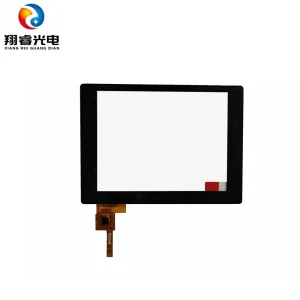
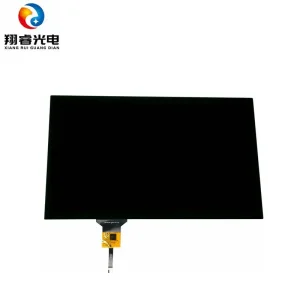
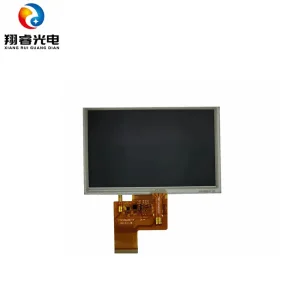
OEM 3.5 Inch LCD Displays: Engineering & Manufacturing Excellence

High-Performance Touch & Display Modules for Global Industrial, Medical, and Embedded Systems

1. The Global Landscape of 3.5 Inch LCD Displays

In the rapidly evolving world of human-machine interfaces (HMI), the 3.5-inch LCD display format stands as a foundational bedrock for compact visual interaction. Bridging the gap between ultra-small wearable indicators and larger tablet displays, the 3.5-inch form factor is universally coveted across industries due to its precise ergonomic balance. It sits perfectly within a single-hand grasp pattern, making it the preferred canvas for handheld diagnostic devices, smart thermostats, industrial telemetry nodes, and point-of-sale (POS) systems.

Globally, the market demands high pixel density, low power consumption, and mechanical robustness. Advanced TFT-LCD matrices operating at standard resolutions like QVGA (240x320), HVGA (320x480), and even high-density VGA (640x480) offer crisp text and detailed telemetry rendering. Today's commercial buyer looks beyond simple display modules; they require integrated optical assemblies containing custom cover glasses, capacitive touch layers, specialized anti-reflective or anti-glare coatings, and robust interface protocols (RGB, MCU, SPI, and MIPI DSI).

Key Technical Parameters of 3.5" Modules

  • IPS Technology: Delivers wide viewing angles (up to 85°/85°/85°/85° U/D/L/R) without color inversion, crucial for off-axis readability in fixed industrial machinery.
  • Sunlight Readability: High-efficiency backlights pushing luminance metrics from standard 300 nits to over 1000 nits for outdoor applications.
  • Extended Lifetime: LED backlight half-life cycles reaching up to 50,000 hours of continuous operational service.

2. Corporate Capability & Professional Expertise

Established in 2010, Guangzhou Xiangrui Optoelectronics Technology Co., Ltd. has dedicated over a decade to the specialized research, design, production, and distribution of high-reliability resistive touch panels, capacitive touch panels, cover glass assemblies, and fully integrated optical bonded module products. From our modern headquarters in Guangzhou, China, we operate as a leading OEM and ODM partner, transforming complex display challenges into ruggedized HMI realities.
10+ Yrs
Manufacturing
A decade of engineering expertise in display integration.
3000+ m²
Plant Area
Advanced facilities containing Class 100 to 10,000 cleanrooms.
30+
Patents
Continuous innovation in resistive & capacitive architecture.
40+
Countries
Exporting global-grade visual interfaces worldwide.

To meet the stringent particulate requirements inherent in advanced visual laminations, our facility maintains a multi-tier dust-free environment:

  • Class 10,000 Cleanrooms: Utilized for component preparation, preliminary sensor processing, and peripheral testing.
  • Class 1,000 Cleanrooms: Dedicated to automated assembly procedures and sensor-to-glass lamination.
  • Class 100 Workbenches: Deployed at critical steps where optical bonding occurs, ensuring zero dust contamination between layers.

Our operations are backed by ISO 9001:2015 Quality Management System and ISO 14001:2015 Environmental Management System certifications. Every module undergo strict qualification testing, including thermal cycling tests (-30°C to +80°C), damp heat tests, electrostatic discharge (ESD) verification, and drop ball impact tests.

3. Industry Trends & Technology Roadmap

The display landscape is undergoing a macro shift from passive matrix panels to high-speed, intelligent HMI nodes. For 3.5-inch displays, the technical trends focus heavily on:

  1. Industrial-Grade Projected Capacitive (PCAP) Touch: The market is moving away from traditional resistive layouts to multi-touch capacitive structures. However, these systems must work seamlessly when operated with heavy leather work gloves or when exposed to direct water sprays and cleaning solvents.
  2. Optical Lamination (Direct Bonding): Traditional air bonding introduces a small air gap between the display panel and the touch layer, leading to internal reflections, reduced contrast, and susceptibility to moisture condensation. Optical bonding uses optical-grade adhesives (LOCA/OCR) to eliminate this boundary layer, improving daylight viewability by up to 400% and offering robust mechanical impact dampening.
  3. High Electromagnetic Compatibility (EMC): Industrial and medical devices operate in noise-dense environments. Sensor controller integrated circuits (like Ilitek, EETI, or FocalTech) must be precisely tuned to prevent false touch triggers from EMI generated by motors, medical ventilators, or radio transmitters.
Feature Spec Resistive Touch Modules Capacitive Touch Modules (PCAP) Optical Bonded Assemblies
Touch Points Single-touch (Pressure sensitive) Multi-touch (up to 10 points) Multi-touch + Improved display contrast
Glove Operation Excellent (Universal pressure) Requires specialized firmware tuning Superior (Firmware tuned for thick gloves)
Condensation Protection Susceptible to internal fogging Susceptible to air gap fogging Zero fogging (No internal air gap)
Outdoor Usability Low visibility under direct sunlight Moderate (Reflections present) High (Minimum internal reflections)

4. Macro Industry Solutions & Applications

Guangzhou Xiangrui Optoelectronics Technology Co., Ltd. provides localized display integrations designed to survive demanding applications:
🩺

Medical Instrumentation

We supply anti-bacterial cover glasses integrated with high-sensitivity touch panels that function with nitrile gloves and withstand regular sterilization cycles using harsh chemical disinfectants.

⚙️

Industrial Control Units

Our wide-temperature displays (-30°C to +80°C) with IP65-rated frontal protection are engineered for CNC machinery, handheld diagnostics, and petrochemical telemetry nodes.

🏠

Smart Home & IoT

Optimized for low standby power, our 3.5-inch screens offer clean aesthetic integrations for premium residential thermostats, intercom systems, and building automation controllers.

5. Choosing the Right OEM Partner: Design & Customization Services

A standard off-the-shelf display module rarely fits the exact cosmetic and mechanical constraints of an industrial product. As an established OEM partner, our design services span across every detail:

Cover Lens Customization (CG)

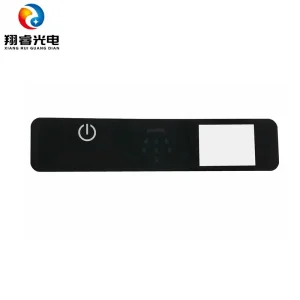
We construct cover plates from soda-lime glass, chemically strengthened aluminosilicate glass, or PMMA. Customers can specify thickness (0.5mm to 10mm), silk-screened logos, custom colors, and special edge finishes (2.5D round edges, chamfered cuts, or step shapes). We also apply high-performance surface treatments:

  • Anti-Glare (AG): Chemically etched surface treatment that diffuses reflections, transforming harsh mirror-like glare into soft, manageable light dispersion.
  • Anti-Reflective (AR): Vacuum-deposited thin-film layers that optimize light transmission through destructive wave interference, bringing reflection rates down below 1%.
  • Anti-Fingerprint/Oleophobic (AF): Hydrophobic coating that resists grease and sweat, facilitating easy cleaning and maintaining a smudge-free surface.

FPC & Electronics Customization

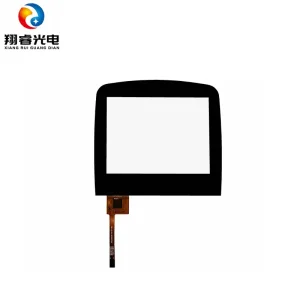
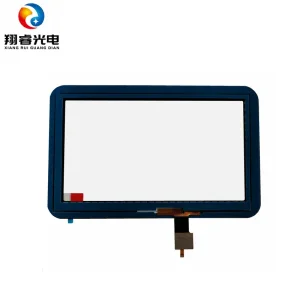
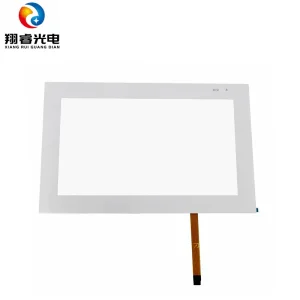
Flexible Printed Circuit (FPC) tailoring is critical to resolve structural space constraints. We customize layout paths, component configurations, pin assignments, and connector standards (FPC, ZIF, BTB). Interface conversions (such as converting MCU to SPI, or RGB to HDMI) are managed directly on the interface board.

6. Technology Roadmap & Future Outlook

The display ecosystem is transitioning toward lower power consumption, higher color accuracy, and seamless sensor integration. In our R&D roadmap, we are focusing on:

  • Ultra-low Power Transflective Displays: Combining reflective ambient-light collection with traditional transmissive backlights, ensuring readability under direct sunlight without draining portable batteries.
  • Force Sensing Integration: Combining capacitive position sensing with Z-axis pressure tracking to prevent accidental inputs on critical control surfaces.
  • Smart Haptics: Integrating localized micro-vibration feedback to give operators tactile confirmation of touch inputs on flat-screen dashboards.

Frequently Asked Questions

Technical insight into our manufacturing processes, capabilities, and delivery models.

What is the difference between optical bonding and tape bonding on a 3.5-inch module?
Tape bonding (or air bonding) connects the touch sensor to the display panel via double-sided adhesive tape around the perimeter, creating a small air gap. Optical bonding uses an optical-grade liquid adhesive (LOCA) or solid optical gel (OCA) to completely fill the space between the display and the touch glass. Optical bonding reduces reflection losses, increases display contrast under bright light, prevents internal condensation in high humidity, and significantly improves impact resistance.
Can your touch panels operate with water on the screen or while wearing industrial gloves?
Yes, our capacitive touch panels are tuned at the firmware level (using controllers like EETI or Ilitek) to support multi-touch operation even when the surface is wet or when the operator is wearing thick leather, latex, or industrial gloves. We optimize mutual capacitance scan frequencies to suppress noise from water droplets and external EMI.
What certifications do your display modules and touch panels carry?
Our company is fully certified under ISO 9001:2015 and ISO 14001:2015. Additionally, the materials used in our cleanrooms are CE, RoHS, and REACH compliant. For custom medical or automotive display modules, we work closely with clients to supply the necessary technical documentation for custom system-level regulatory approvals.
What is your typical OEM development and production timeline?
For custom touch panel or cover glass designs, standard prototype samples are delivered within 2 to 3 weeks after technical drawing approval. Mass production typically requires 4 to 6 weeks, depending on component sourcing complexity and ordering volumes. We offer customized production runs to support both high-mix low-volume (HMLV) and high-volume projects.
How do you ensure ESD and noise immunity in industrial applications?
We integrate dedicated shielding lines and ESD protection diodes directly on the FPC. The touch controller firmware is customized with advanced noise-filtering algorithms to resist high electromagnetic interference (EMI) originating from industrial generators, wireless modules, and internal system components.