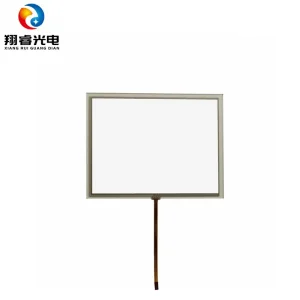
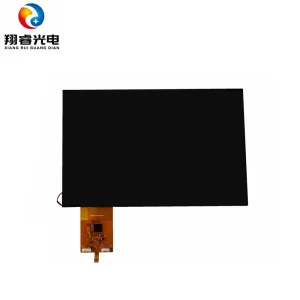
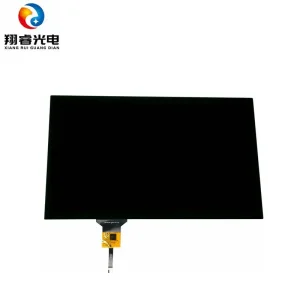
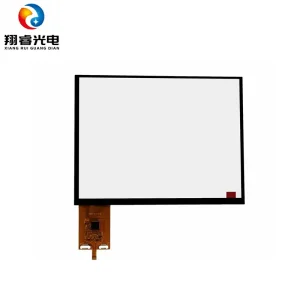
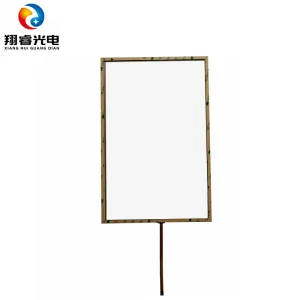
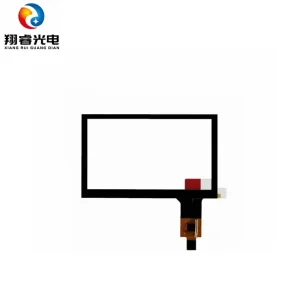
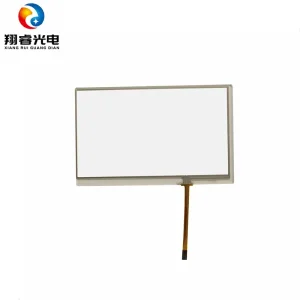
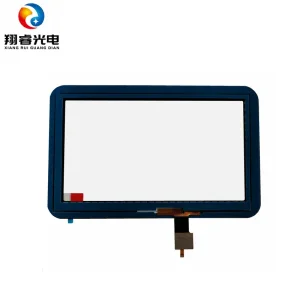
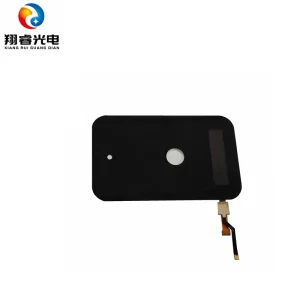
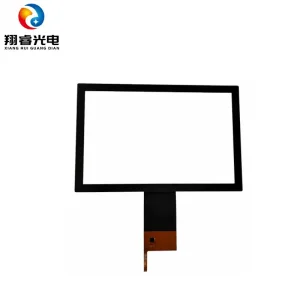
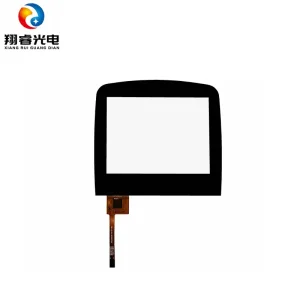
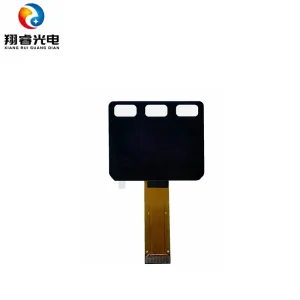
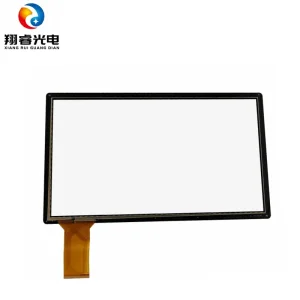
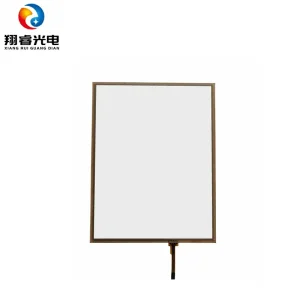
Explore our flagship, highly reliable touch panel modules built to withstand extreme temperatures, moisture, and high electromagnetic interference.
Established in 2010 in Guangzhou, China, Guangzhou Xiangrui Optoelectronics Technology Co., Ltd. has evolved into a global leader in high-performance touch screen technology. We specialize in the research, design, production, and assembly of customized projective capacitive (PCAP) touch screens, resistive touch panels, custom cover glass, and complete liquid crystal module (LCM) optical bonding solutions.
For more than a decade, our engineering teams have pushed the limits of human-machine interaction, securing over 30 invention and utility patents. Our products serve mission-critical industrial monitors, embedded medical systems, smart retail terminals, ruggedized logistics handhelds, outdoor charging stations, and biomechanical security payment devices globally.
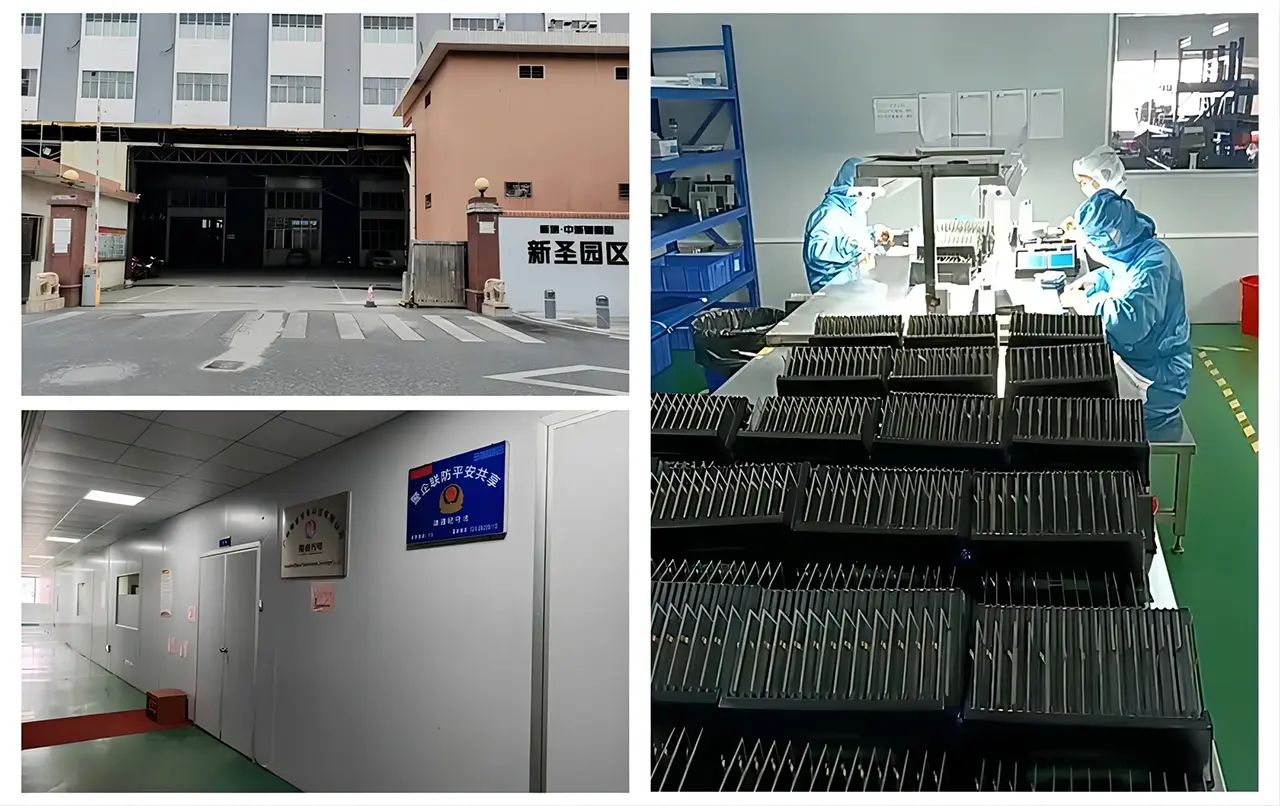
Our 3,000 square meter state-of-the-art facility features dedicated Class 100, Class 1,000, and Class 10,000 cleanroom environments. This environment prevents contamination during delicate processes like OCA/OCR optical bonding and cover glass chemical strengthening, allowing us to maintain compliance with rigorous ISO 9001:2015 and ISO 14001:2015 quality and environmental management standards.
An analytical overview of modern capacitive touch technology shifts, commercial market dynamics, and technological requirements.
The industrial display market is undergoing a transition. Traditional resistive panels are being replaced by high-performance Projective Capacitive (PCAP) touch systems. Historically favored for low costs and pressure-based actuation (allowing operation with any stylus or heavy work glove), resistive technology is limited by lower optical clarity, shorter life cycles, and susceptibility to mechanical wear. Today's industrial and commercial deployments demand rugged multi-touch interfaces that deliver the user-friendly experience of modern consumer electronics.
Glass-on-Glass (G+G) stack-ups are standard in high-end projects. G+G involves bonding a chemically strengthened cover glass to a glass touch sensor, protecting the system from environmental stress, high temperatures, scratching, and mechanical impacts.
Industrial HMIs operate in conditions with high moisture, dust, salt spray, and extreme temperatures. OEM manufacturers utilize specialized optical bonding (OCA/OCR) to seal air gaps, preventing moisture condensation and improving shock resistance.
High-voltage machinery, motors, and communication systems generate electromagnetic interference (EMI). Modern PCAP controllers (e.g., EETI, ILITEK) use specialized DSP algorithms and frequency hopping to suppress noise and prevent ghost touches.
A detailed look at sensor architectures, custom enhancements, and materials used in high-quality OEM manufacturing.
In modern industrial touch applications, selecting the appropriate sensor stack-up determines system durability and optical performance. The table below outlines the primary configurations manufactured at Guangzhou Xiangrui Optoelectronics:
| Technology Feature | Glass-on-Glass (G+G) | Glass-on-Film (G+F/G+F+F) | One Glass Solution (OGS) |
|---|---|---|---|
| Common Applications | Industrial Displays, Medical Terminals, Outdoor EV Chargers | Consumer Handhelds, Automotive HUD, IoT Sensors | Ultra-thin Notebooks, Smart Home Controller Hubs |
| Optical Transparency | > 90% (Customizable to 98% via AR coatings) | > 86% - 88% | > 92% (High light transmission) |
| Impact Resistance (IK Rating) | High (IK08 to IK10 with thick Cover Glass) | Medium (Flexible substrate absorbs shock) | Low-Medium (Sensor is directly on cover glass) |
| Operating Temperature | -30°C to +85°C (Wide industrial range) | -20°C to +70°C | -10°C to +60°C |
| OEM Unit Customization Cost | Moderate (Highly scalable, flexible molds) | Low tooling cost for custom profiles | High initial lithography/tooling costs |
To address outdoor sunlight readability and humidity resistance, our factory utilizes advanced Optical Bonding (often utilizing liquid optically clear resin OCR or dry optically clear adhesive OCA films) to bond the capacitive touch sensor directly to the TFT LCD. Unlike standard Air Bonding (which leaves a micro-gap of air that scatters incoming light and allows humidity to condense), Optical Bonding matches the refractive index of the glass. This eliminates interior reflection by up to 99%, improves contrast ratios under direct sunlight, and eliminates the risk of internal moisture condensation.
How Guangzhou Xiangrui Optoelectronics optimizes touch technology for specific industrial and commercial environments.
Medical environments require displays that can withstand frequent sanitation with harsh chemicals (e.g., isopropyl alcohol, bleach). Our capacitive touch panels feature flush, flat designs that prevent fluids from pooling. They support operation with latex gloves and maintain sensitivity in clinical diagnostic equipment, patient monitors, and surgical displays.
Industrial factory floors feature high vibration, physical shocks, and electromagnetic noise. Our custom G+G panels use thick, impact-resistant cover glass (up to 6mm) that can meet IK10 standards. Integrated controller chips reject noise from electric motors, welding equipment, and nearby power cables.
Outdoor systems face exposure to UV radiation, rain, and extreme temperature fluctuations. We configure our touch panels with UV-absorbing adhesives to prevent yellowing. We also apply high-efficiency anti-reflective (AR) coatings to ensure readability in direct sunlight, along with water-resistant firmware.
To ensure reliability in critical applications, every production run at our factory undergoes comprehensive verification testing. Our quality control team utilizes automated optical inspection (AOI) alongside physical environmental simulations to verify compliance with customer specifications.
Key steps in our quality assurance process include:
Detailed technical answers to common queries from product engineers, procurement managers, and systems integrators.
G+G (Glass-on-Glass) combines a tempered cover glass with a glass sensor substrate. It offers high optical clarity, excellent mechanical strength, and superior thermal stability, making it ideal for demanding industrial and outdoor systems. G+F (Glass-on-Film) uses a flexible optical PET film sensor substrate instead of glass, resulting in a thinner, lighter profile. However, G+F is more susceptible to thermal expansion and contraction, which can lead to sensor failures in extreme environments.
In standard air-bonded screens, light passes through three surfaces with different refractive indices: the cover glass, the air gap, and the LCD polarizer. This difference in refractive index causes approximately 8.5% of ambient light to be reflected back, creating glare. Optical bonding fills the air gap with a resin (OCA or OCR) that matches the refractive index of the glass, reducing total reflections to less than 0.5%. This improvement increases display contrast and readability in high-ambient-light and outdoor environments.
Yes, our engineering team can configure capacitive touch screens to operate reliably in wet conditions. While water is conductive and can trigger false touch signals (known as "ghost touches"), we utilize advanced controllers from EETI or ILITEK. By programming the firmware with custom mutual-capacitance scan rates and water-suppression algorithms, the touch screen can recognize the difference between a pool of water, a continuous stream of rain, and an actual human finger.
We offer extensive options for custom cover glass designs to fit specific product bezels. These customizations include: custom shapes and dimensional profiles, physical holes for mechanical buttons or cameras, stepped or chamfered edges, customized silk-screened border colors, and chemical treatments such as Anti-Reflective (AR), Anti-Glare (AG), and Anti-Fingerprint (AF) coatings.
Our company operates under ISO 9001:2015 quality management and ISO 14001:2015 environmental standards. Our materials comply with RoHS and REACH requirements. For medical, military, or automotive applications, we cooperate with customers to conduct specialized validation tests, ensuring our modules meet the relevant standards for their end markets.
Browse our wider range of standard and customizable resistive and capacitive touch assemblies.
 Xiangrui Optoelectronics