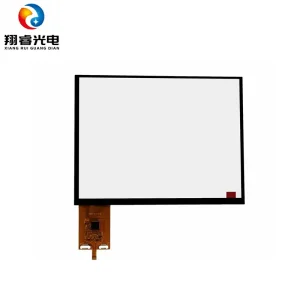
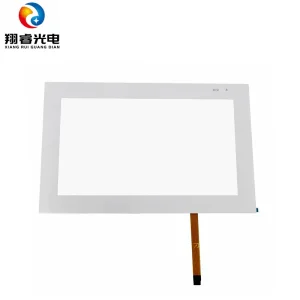
Industrial Grade Capacitive & Resistive Human-Machine Interface Solutions Customized for Hydropower, Medical, and Outdoor Operations in the Himalayas.
High-durability optical bonding panels and capacitive interfaces calibrated for dust-resistance, sub-zero operating thresholds, and electrical stability.
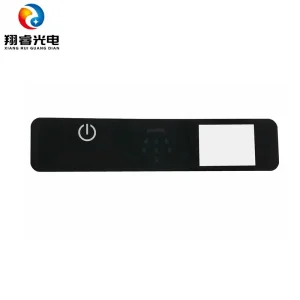
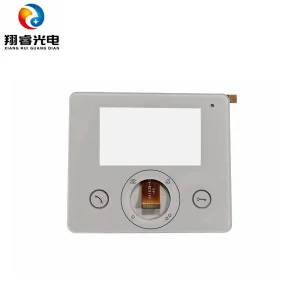
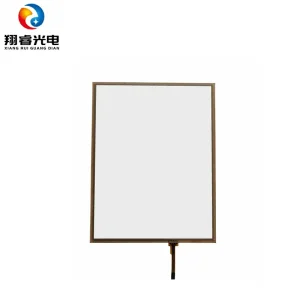
As Nepal scales up its energy generation, smart grid installations, and healthcare accessibility, robust Human-Machine Interfaces (HMIs) represent the thin line between operation and systemic downtime.
The Nepalese landscape is unique. Control infrastructure is subjected to high altitude, relative humidity shifts, heavy dust in valley-based industrial sectors (like Lalitpur and Biratnagar), and the electrical fluctuations typical of grid-connected systems. Standard consumer-grade touch controls decay rapidly under these conditions.
Our strategic expansion into the Nepal market aims to provide ruggedized capacitive and resistive touch button arrays that satisfy global reliability standards. Through advanced shielding, optical bonding, and customized glass tempering, we supply system builders across Nepal with controls built to survive the harshest alpine environments.
Whether in Pokhara's clean medical research environments or the high-humidity turbines along the Koshi River, electronics must remain resilient. Our engineering emphasizes low power dissipation, wide operating temperatures (-20°C to +70°C), and EMI/EMC shielding to mitigate noise from generator sets.
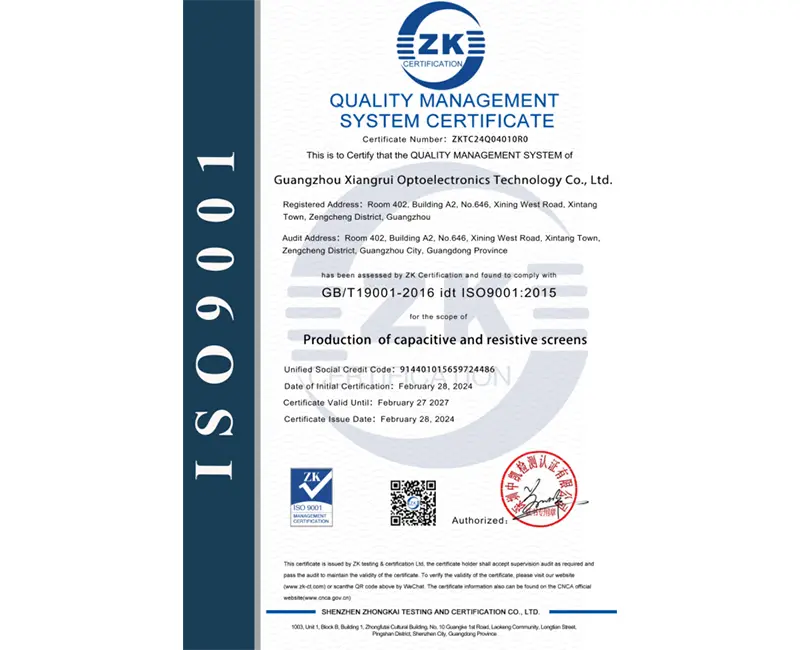
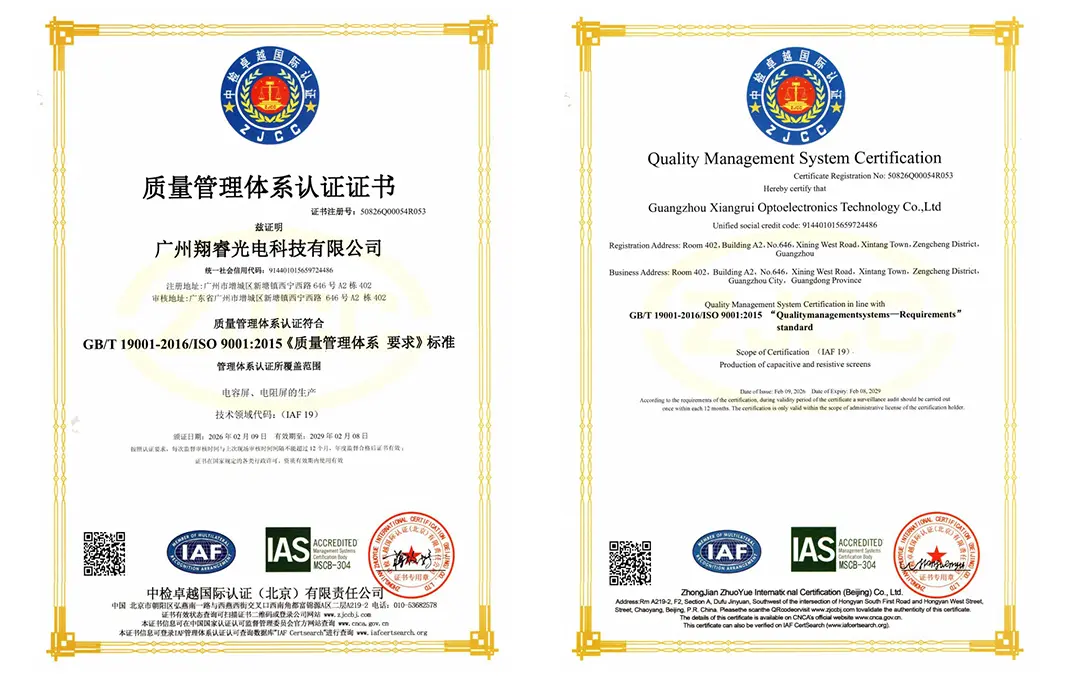
Ensuring ISO-certified performance for Nepalese infrastructure development and system integrators.
We offer customized controller tuning for multi-touch, thick cover glass configurations (up to 10mm), and glove-handling algorithms tailored to the physical demands of high-altitude industrial maintenance.
By eliminating the air gap between the touch layer and LCD, we reduce internal reflections, improve high-luminance readability in alpine sunshine, and prevent condensation under rapid temperature drops.
Our 4-wire and 5-wire resistive structures are immune to electromagnetic noise and can be operated using gloves, styluses, or raw tools, serving as ideal controls in processing mills and rugged sites.
Combining high-precision Chinese engineering with localized commercial support for Nepal.
Founded in 2010, Guangzhou Xiangrui Optoelectronics Technology Co., Ltd. has developed into a leading supplier of resistive touch panels, capacitive touch panels, cover glass, and module bonding solutions. We operate in a highly standardized ISO 9001 and ISO 14001 certified environment, ensuring that every product complies with international quality metrics.
We tailor our products specifically for long-distance logistics and localized integration within the Nepalese technology sector. Our products undergo rigorous testing, including thermal cycling, vibration tables, and high-altitude atmospheric simulation, to ensure they can withstand the rugged conditions of the Himalayas.
Case studies and deployment contexts where our touch panels are critical components.
Vandal-resistant capacitive glass panels integrated into automated ticketing machines, capable of standing up to constant commuter traffic and urban particulate exposure.
Installed directly inside turbine rooms, our resistive panels function amidst significant electrical noise, water droplets, and high pressure, providing operators with responsive control.
Low-temperature touch button arrays utilized in processing cold stores in eastern Nepal, preventing display lag or touch response failures in freezing conditions.
Explore our full line of industrial touch button interfaces, resistive overlays, and custom optical bonded solutions.
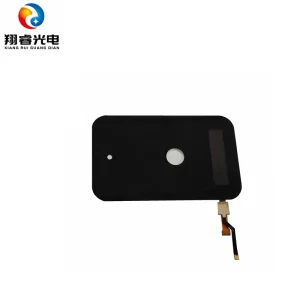
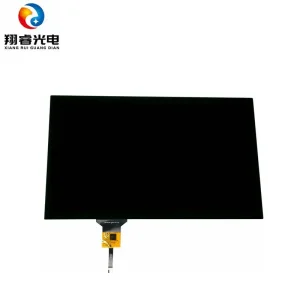
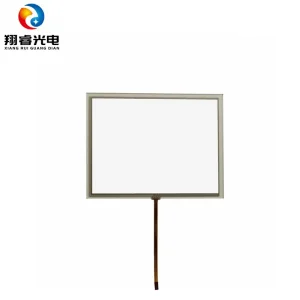
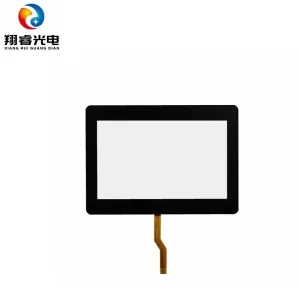
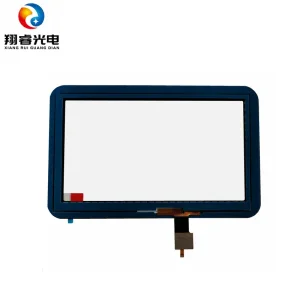
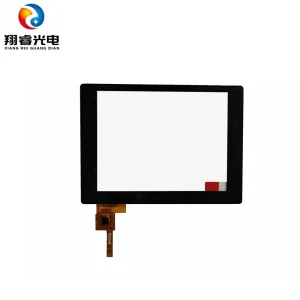
How we are adapting next-generation human-machine interfaces to support Nepal's expanding infrastructure.
Standard touch screens rely on traditional ITO films, which can crack under extreme thermal contraction in high-altitude environments like Solukhumbu or Mustang. Xiangrui is investing in flexible conductive meshes that tolerate extreme physical stress, ensuring longer-lasting touch button operation without signal degradation.
Nepal's rural hydropower generators can generate significant grid harmonics and noise. Our upcoming controller boards feature localized shielding cans and hardware-based noise filtering algorithms, preventing false touches triggered by adjacent heavy machinery.
Condensation and grease deposits represent major points of failure in food processing and remote meteorological monitoring. We apply thin-film hydrophobic treatments that allow moisture droplets to slide off the active display area without activating false touches, maintaining optimal touch accuracy.
Essential technical details for Nepalese system integrators, OEM partners, and procurement directors.
We offer direct air freight and multimodal shipping from Guangzhou to Kathmandu and major economic hubs in Nepal. Standard OEM customized samples require 2 to 3 weeks for engineering, validation, and fabrication, while volume shipments take approximately 4 to 6 weeks depending on volume specifications and design complexity.
Yes. We calibrate the controller integrated circuits (ICs) with custom mutual-capacitance algorithms that ignore continuous water films or moisture drops while reliably picking up touch inputs. For high altitude, we offer optical bonding to eliminate air gaps, preventing pressure differentials that can distort touch panel sensitivity.
Yes, we provide ODM services for size adaptation. Our factory features glass cutting, chemical tempering, silk-screen printing, and sensor patterning tools, allowing us to replicate original dimensions or customize layouts (such as mounting brackets or circular cover glass cutout profiles).
Our company is certified under ISO 9001:2015 for quality management systems and ISO 14001:2015 for environmental management. All touch panels are produced in Cleanroom Class 100 to 10000 facilities and can be certified to meet international CE, FCC, and RoHS compliance requirements based on project demands.
 Xiangrui Optoelectronics