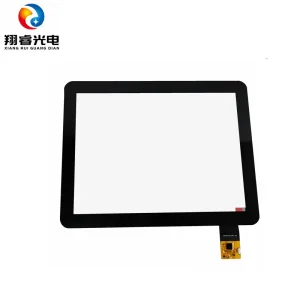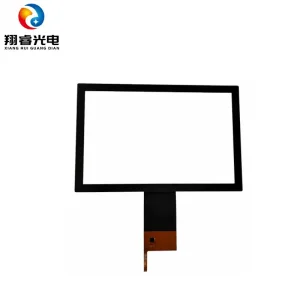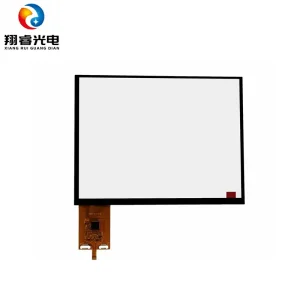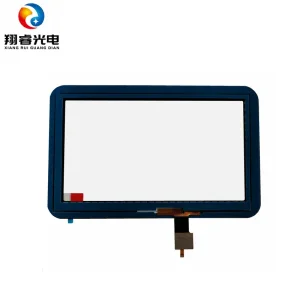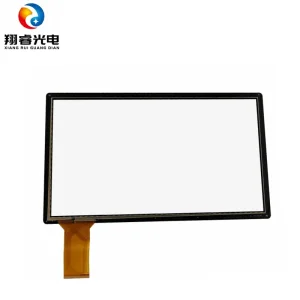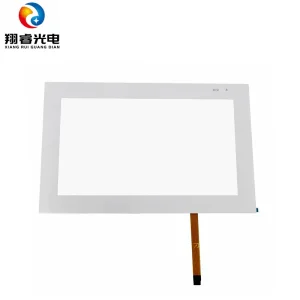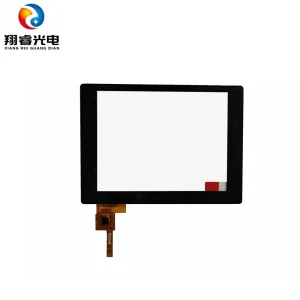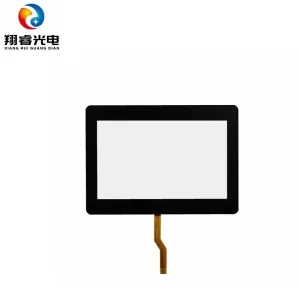
China Capacitive Push Buttons Factories & Service

Providing enterprise-grade touch panel customization, premium optoelectronic engineering, and resilient OEM/ODM solutions worldwide.

The Global Evolution of Human-Machine Interfaces (HMI)

In the modern industrial landscape, the transition from traditional mechanical switches to solid-state control interfaces has accelerated dramatically. Human-Machine Interface (HMI) technologies have evolved far beyond mere visual displays. They are now the core communication hubs for industrial automation, clinical medical setups, intelligent home environments, and heavy-duty marine operation. At the heart of this transformation is the capacitive push button and its closely associated technology, the projected capacitive (PCAP) touch panel.

Capacitive touch switches and sensors operate on the principle of detecting changes in electrical capacitance. Unlike their mechanical counterparts, which depend on physical contact, spring tension, and moving components, capacitive buttons rely on the alteration of an electrostatic field when a conductive object—typically a human finger—approaches the sensor. This mechanism minimizes wear and tear, prevents mechanical fatigue, and permits total surface sealing, offering unprecedented resilience in hazardous and high-use settings.

“Modern smart infrastructure demands control systems that are functionally robust, aesthetically seamless, and impervious to dust, moisture, and chemical contamination. Industrial capacitive solutions satisfy these criteria where mechanical elements consistently fail.”

Industrial Value Drivers: Why Enterprise Buyers Shift to Capacitive Controls

Global procurement teams prioritize longevity, structural durability, and low maintenance costs. When analyzing HMI systems, the advantages of integrated capacitive touch buttons over traditional physical keys become clear:

  • Ingress Protection (IP65 / IP67 / IP69K): Capacitive panels can be protected by a continuous sheet of tempered glass or polycarbonate, eliminating gaps and seams. This prevents dust, liquids, and oils from penetrating the electronic housing.
  • Superior Lifespan: Since there are no moving components, a capacitive button can withstand millions of cycles without degradation, reducing hardware maintenance costs.
  • Chemical and UV Resistance: Through chemical strengthening, raw glass cover plates can be treated to resist harsh detergents, acids, hydrocarbons, and solar ultraviolet radiation, maintaining optical clarity and touch sensitivity over decades.
  • Enhanced UX and Backlighting: Capacitive interfaces easily integrate complex LED backlighting, providing clear visual feedback, multi-state color coding, and sleek, minimalist industrial designs.

About Guangzhou Xiangrui Optoelectronics Technology Co., Ltd.

Founded in 2010 in Guangzhou, China, Guangzhou Xiangrui Optoelectronics Technology Co., Ltd. has established itself as an industry-leading manufacturer and developer of premium resistive and capacitive touch panels, customized cover glass surfaces, and comprehensive optical bonding module assemblies. Over the past decade, we have focused on providing customized HMI touch interfaces to meet the exact specifications of global industrial, commercial, and medical enterprises.

Our production environment is equipped with state-of-the-art Class 100, Class 1000, and Class 10000 cleanrooms. This ensures that every layer of glass, sensor, and optical film is laminated in a completely dust-free setting. Minimizing microscopic contamination is crucial for maintaining optical clarity, preventing capacitive signal noise, and ensuring long-term adhesion of laminated surfaces.

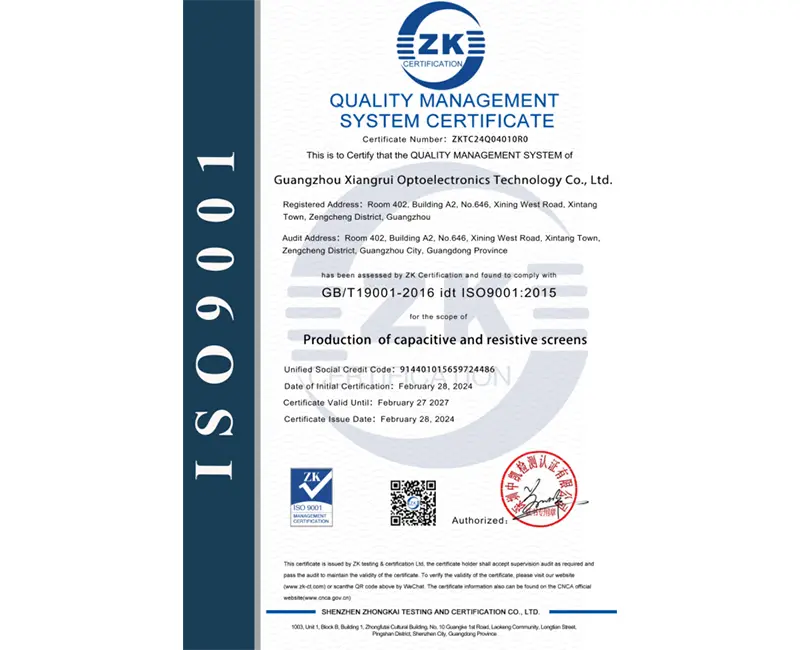
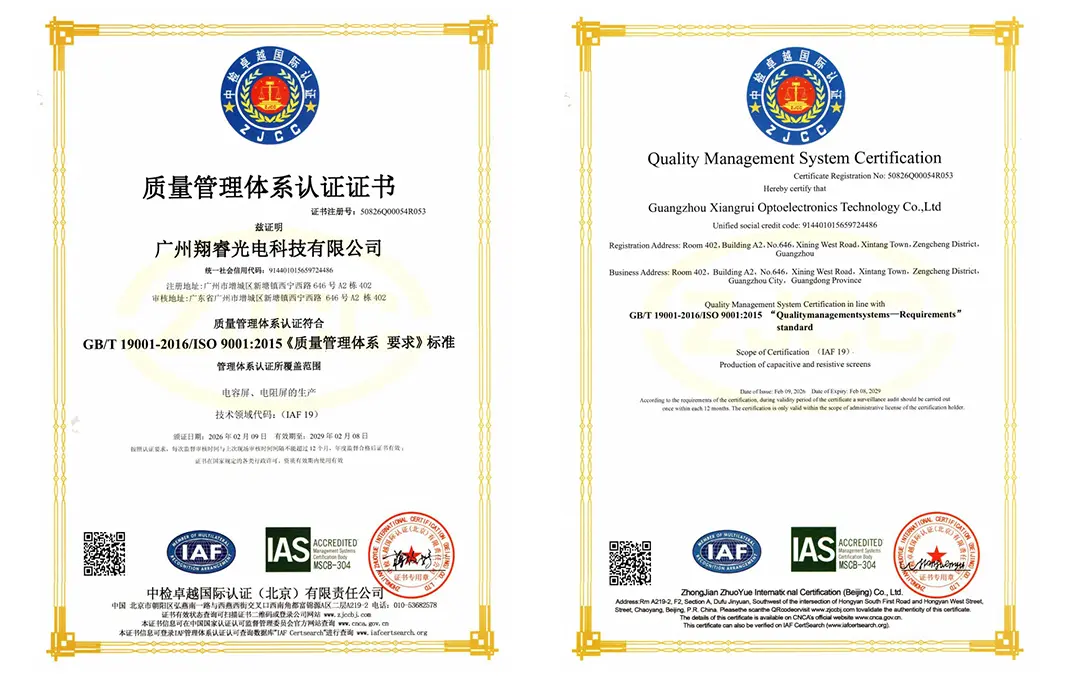
As a verified Guangdong Province High-Tech Enterprise, we hold more than 30 utility and invention patents. Our strict quality management systems are certified to ISO 9001:2015 and ISO 14001:2015, guaranteeing that our products meet the highest environmental and performance standards from design through delivery.
Guangzhou Xiangrui Optoelectronics cleanroom production facility

Our Global Infrastructure and Capability Metrics

We combine design engineering, material science, and cleanroom production to support B2B clients from rapid prototyping through high-volume manufacturing. Our operational footprint is defined by these core milestones:

10 Years+
Manufacturing Excellence
Delivering advanced optoelectronic products since 2010.
30+
Invention Patents
Continuous R&D and proprietary sensor structures.
3000+ ㎡
Cleanroom Facility
Class 100 to 10000 dust-free production halls.
40+
Export Countries
Global logistics supporting regions worldwide.

Technical Roadmap: Capacitive Sensing & Material Engineering

Developing reliable capacitive control surfaces requires balancing electrical sensitivity, noise immunity, and environmental durability. The fundamental sensor layout relies on a multi-layer stack-up, including a front cover glass, an adhesive layer, a capacitive sensor grid, and a controller unit.

Sensor Modality: Self-Capacitance vs. Mutual Capacitance

Our engineers deploy two primary sensing topologies depending on the application:

  • Self-Capacitance: The system measures the change in capacitance on a single electrode relative to the ground. This setup is highly sensitive and ideal for single-touch panels, discrete buttons, and systems operated with heavy industrial gloves.
  • Mutual Capacitance: The system measures the capacitance at the intersections between transmitting and receiving electrodes. This enables multi-touch tracking, gesture recognition, and high-precision spatial input on larger screens.

Advanced Glass Surface Treatments

To ensure legibility and touch accuracy under diverse lighting conditions, we apply customized surface treatments directly to the cover glass:

  • Anti-Glare (AG): Uses chemical etching or spray-coating to scatter reflected light, reducing screen reflections in bright indoor or direct sunlight environments.
  • Anti-Reflective (AR): Applies multi-layer thin-film vacuum deposition to minimize light reflection, improving contrast and transmissivity.
  • Anti-Fingerprint / Oleophobic (AF): Prevents skin oils and moisture from adhering to the glass, making the surface easy to clean and ensuring smooth gestures.

Resilience Through Bonding Technology

Air-gap lamination can introduce reflection interfaces and trap moisture, causing condensation in outdoor environments. To address this, Guangzhou Xiangrui Optoelectronics offers professional optical bonding (OCA/OCR). By filling the air gap between the touch sensor and the display with a refractive-index-matched polymer, we eliminate internal reflections, improve mechanical impact resistance by up to 300%, and prevent internal fogging in humid or fluctuating temperatures.
Key Engineering Technologies & Innovations

Water & Fluid Rejection

Advanced DSP firmware algorithms filter out false touch inputs caused by water droplets, cleaning solutions, or saline splashes, ensuring uninterrupted safety and reliability.

Industrial Glove Optimization

By tuning high-frequency driving voltages, our controllers recognize inputs from users wearing heavy nitrile, leather, or thermal safety gloves.

Electromagnetic Compatibility

Our designs include shielding layers and adaptive frequency-hopping controllers to prevent electromagnetic interference (EMI) from nearby motors, relays, or wireless systems.

Targeted Solutions Across Global Sectors

Guangzhou Xiangrui Optoelectronics manufactures custom touch interfaces designed for diverse operational environments. Our solutions are tailored to meet the specific requirements of various industries:

1. Industrial Controls & Factory Automation

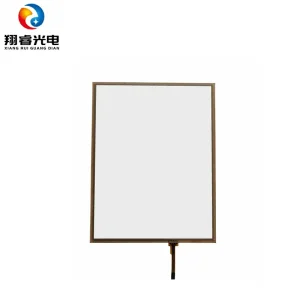
In heavy manufacturing plants, HMIs are subjected to continuous vibration, physical impacts, grease, and high electrical noise. Our wide-temperature, IP65-rated resistive and capacitive touch panels offer consistent performance. They feature high impact resistance, chemical-resistant cover plates, and reliable noise-filtering controllers, enabling safe operation next to high-voltage equipment.

2. Medical Diagnostics and Patient Care

Medical environments require hygiene control and ease of disinfection. Our flat, gapless cover glass touch screens allow medical staff to wipe down control surfaces with aggressive disinfectants like isopropyl alcohol and hydrogen peroxide. The system is designed to support glove operation (latex and nitrile), ensuring accuracy in surgical rooms, intensive care units, and diagnostic laboratories.

3. Commercial Smart Appliances & Home Automation

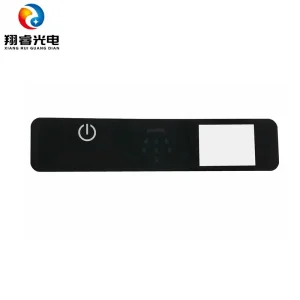
Consumer expectation for domestic control interfaces has shifted towards the premium experience offered by modern smartphones. We supply capacitive push buttons and overlays with integrated high-definition backlighting for coffee machines, smart ovens, climate controllers, and security systems. These interfaces combine sleek glass aesthetics with reliable operation under humid kitchen and bathroom conditions.

4. Outdoor Self-Service Kiosks & Ticketing

Public-facing touch terminals are exposed to direct sunlight, extreme weather, and potential vandalism. We address these challenges with IK08/IK10 impact-rated glass, UV-blocking filters, anti-glare coatings, and high-brightness optical bonding. These features ensure readability and mechanical integrity from desert environments to sub-zero winters.

5. Secure Biometric & Palm Print Payment Systems

For modern retail and security access points, we develop customized cover glass and optical layers optimized for infrared imaging, biometric illumination, and palm print scanning. Our high-transmissivity designs support precise scanning and biometric data capture, providing secure and reliable operation for commercial point-of-sale (POS) systems.

Technology Roadmap & Future Outlook

Human-Machine Interface design is evolving toward more immersive, tactile, and intelligent control systems. Our research and development focuses on three primary technological directions:

Phase 1: Advanced Haptic Feedback Integration
Traditional capacitive buttons lack physical confirmation, which can lead to input uncertainty. We are integrating piezoceramic and linear resonant actuators (LRAs) directly into our touch panel assemblies. This provides distinct haptic pulses upon activation, mimicking the feel of a mechanical switch while maintaining a fully sealed flat interface.
Phase 2: Hybrid Capacitive-Force Sensing (3D Touch)
To prevent accidental activations in industrial and automotive settings, we are developing hybrid touch surfaces that measure both coordinate capacitive location and physical force. The control panel triggers operations only when the applied force exceeds a pre-set threshold.
Phase 3: Smart Antibacterial & Self-Cleaning Coatings
For public kiosks and medical interfaces, we are testing hydrophobic and silver-ion antibacterial coatings. These treatments actively kill pathogens and prevent biological film buildup, maintaining a sanitary touch surface without requiring constant cleaning.

Global Compliance & Supply Chain Resilience

We work closely with global procurement divisions to ensure compliance with international regulatory frameworks, simplifying customs clearance and local integration:

  • ISO 9001 & ISO 14001: Fully audited quality control pathways from raw glass inbound inspection to final electrical verification.
  • RoHS & REACH Compliance: All materials, including optical adhesives, touch sensor inks, and solder paste, are certified free of restricted hazardous substances.
  • CE & FCC Compatibility: We assist in tuning controller electronics to ensure your final system passes electromagnetic emissions standards.
  • End-to-End OEM/ODM Customization: We offer comprehensive engineering support, from initial CAD layout and sensor stack-up optimization to tailored firmware tuning, prototype validation, and scalable volume manufacturing.
Quality verification laboratory and inspection tools

Frequently Asked Questions (FAQ)

Q1: What are the primary differences between capacitive and resistive touch panels?
Resistive touch screens rely on physical pressure to connect two conductive film layers, making them compatible with any stylus or glove. However, they are prone to mechanical wear, offer lower light transmission, and are easily scratched. Capacitive touch screens detect the electrical charge of the human body, providing superior optical clarity, multi-touch support, and exceptional durability, as they can be protected behind thick tempered glass.
Q2: Can capacitive buttons function reliably through a thick cover glass overlay?
Yes. By adjusting the sensitivity and driving voltage parameters in the controller IC (such as EETI or Ilitek), we can enable capacitive touch buttons to operate through cover glass overlays up to 10mm thick, or PMMA materials up to 6mm thick, while maintaining high touch sensitivity and accuracy.
Q3: How do you address capacitive touch false triggers caused by water spray or rain?
We use specialized touch controller firmware with built-in water-rejection algorithms. These algorithms differentiate between the high-capacitance signal of a finger and the distributed capacitance of water droplets. This ensures the panel ignores water films and avoids false touch triggers.
Q4: What is the typical lead time for custom OEM/ODM prototypes and production?
Typically, custom touch sensor layout drawings are finalized within 3 to 5 business days. Once the engineering drawings are approved, prototype tooling and sample production take approximately 15 to 21 days. Full-scale production lead times generally range between 3 to 4 weeks, depending on order volume and material requirements.
Q5: What certifications does Guangzhou Xiangrui Optoelectronics hold?
Our company is certified under ISO 9001:2015 Quality Management and ISO 14001:2015 Environmental Management systems. Our products are fully compliant with RoHS and REACH regulations to ensure smooth import and deployment across global markets.