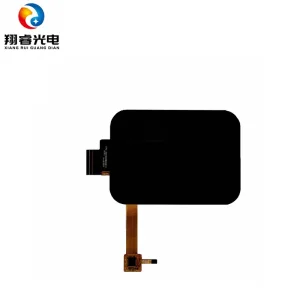
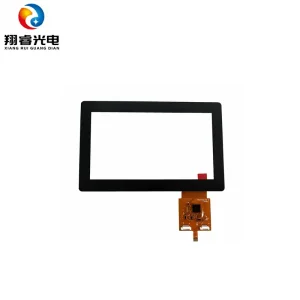
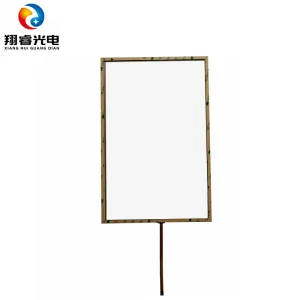
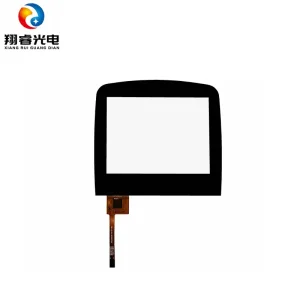
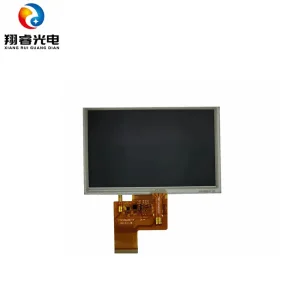
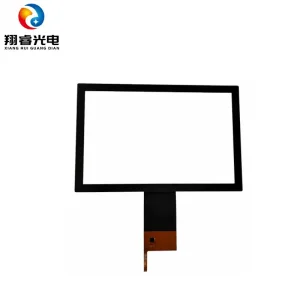
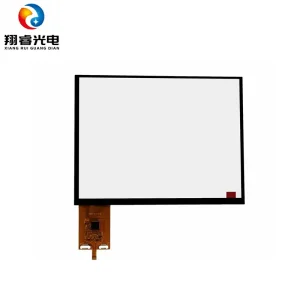
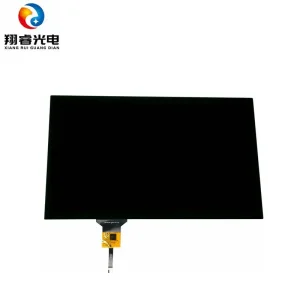
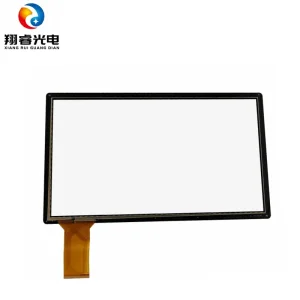
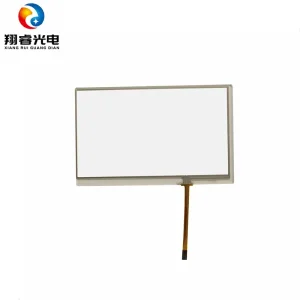
Engineered for optical performance, impact resistance, and durability across harsh environments. Explore our foundational display product lines below.
Optical bonding is the process of applying a specialized optical-grade polymer or adhesive (such as LOCA (Liquid Optically Clear Adhesive) or OCA tape) between the cover glass (or touch panel) and the LCD display module. This fills the air gap that traditionally exists in standard frame-mounted displays.
In a standard display system, the air gap creates two internal reflective surfaces due to the difference in refractive index between the glass (n ≈ 1.5) and air (n = 1.0). This mismatch causes approximately 4.5% of light to be reflected at each boundary, leading to significant reflection losses (up to 9% total) and severely degraded readability under ambient light.
By filling this air gap with a refractive-index-matched adhesive (n ≈ 1.49 - 1.51), we eliminate internal reflective surfaces, reducing total system reflection to under 0.2%. This dramatically increases optical transmission, image contrast, and color saturation, enabling outdoor sunlight readability without excessively high backlight power consumption.
High ambient light washes out standard displays. Index-matching bonding preserves contrast ratios up to 10x better under high solar radiation, maintaining gray-scale levels critical for medical imaging and avionics.
The solid laminating adhesive behaves like a structural dampener. It distributes impact loads across the entire display structure, increasing shock resistance (IK08-IK10 compliance) and preventing shattered glass dispersion.
Condensation occurs when humid air within a non-bonded air gap hits cold cover glass. By eliminating the internal void entirely, moisture penetration and fogging are physically impossible.
Choosing the correct adhesive technology is vital to match thermal stress, dimensions, and visual requirements. Below is a professional-grade analysis of materials.
| Adhesive Technology | Material Phase | Common Applications | Thermal Expansion Resilience | Reworkability | Max Panel Size |
|---|---|---|---|---|---|
| OCA (Optically Clear Adhesive) | Solid Tape / Sheet | Handheld systems, Mobile devices, Wearables | Moderate (prone to bubbles under thermal shock) | Low (highly difficult to remove without damage) | Up to 15.6 inches |
| LOCA (Liquid Optically Clear Adhesive) | Liquid Acrylic / Silicone | Rugged industrial screens, curved displays | High (absorbs thermal differential stresses) | Excellent (can be systematically peeled and clean-reworked) | Up to 100+ inches |
| OCR (Optically Clear Resin) | Liquid Resin (UV/Thermal Cure) | Automotive, Medical displays, Marine electronics | Very High (highest compliance range) | Good (dependent on cure formulation) | Up to 85 inches |
Guangzhou Xiangrui Optoelectronics focuses on LOCA/OCR liquid optoelectronic bonding. Unlike solid OCA tape, which can suffer from delamination and bubbles when exposed to outgassing plastic components or rapid temperature swings (-40°C to +85°C), liquid adhesive adapts to irregular surfaces, sensor lines, and thick bezel borders. This yields a completely void-free, ultra-clean interface.
Displays are no longer just desktop screens; they are critical human-machine interfaces deployed in extreme, life-safety environments worldwide.
Surgical monitors require precise grayscale calibration and zero reflection under intense surgical overhead lighting. Optically bonded capacitive monitors prevent cleaning fluid ingress, support glove-touch operations, and withstand continuous isopropyl alcohol sterilization cycles.
Outdoor construction equipment, oil rigs, and smart factory floor monitors are subjected to relentless vibrations and shock forces. Rigid-frame panels without bonding can fail mechanically. Our ISO 9001-manufactured displays leverage liquid silicone bonding to act as a permanent vibration absorber.
Salt fog and relative humidity easily ruin unbonded screens. Condensation and corrosion of internal touch sensors can bring maritime vessels to a standstill. Our IP65/IP67 rated capacitive touch panels with wide-temperature optical bonding are standard on global transport vessels.
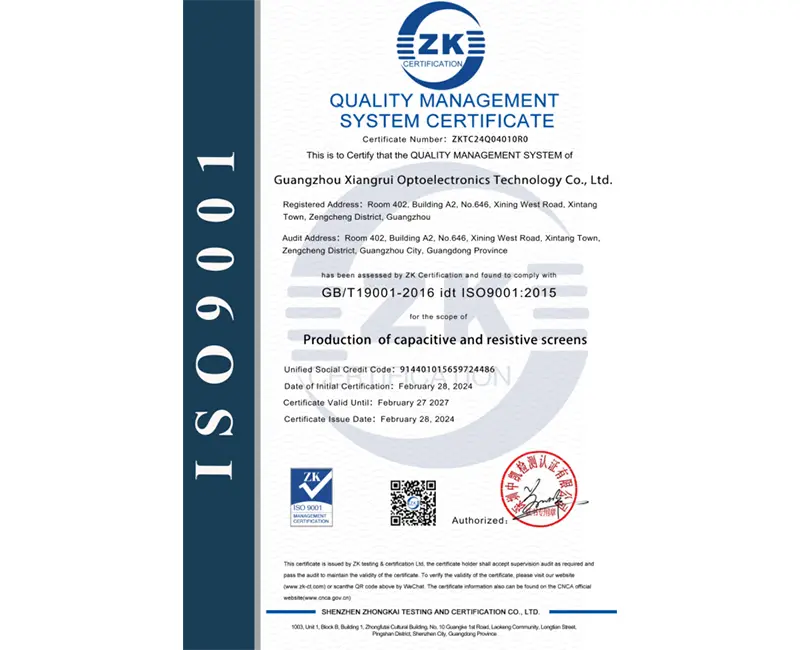
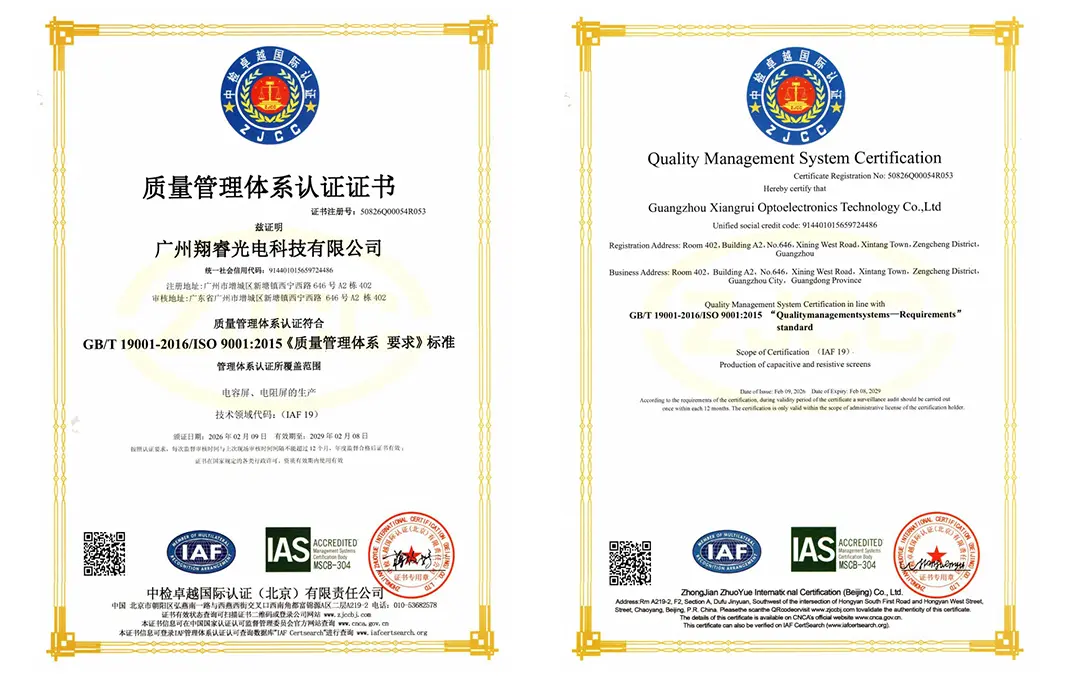
Founded in 2010 | ISO 9001 & ISO 14001 Certified Factory | OEM & ODM Engineering
Located in Guangzhou, China, Guangzhou Xiangrui Optoelectronics Technology Co., Ltd. is a specialized enterprise dedicated to the research, development, production, and precision supply of resistive touch panels, capacitive touch panels, high-durability cover glass, and complete liquid optical bonding assemblies. Over the past decade, we have secured more than 30 utility patents and invention patents, earning us the prestigious title of High-Tech Enterprise in Guangdong Province (2022).
Our 3000-square-meter facility features state-of-the-art cleanrooms of Class 100, Class 1,000, and Class 10,000 ratings. This dust-free infrastructure ensures that particle contamination is prevented during critical bonding steps, maintaining optical purity.
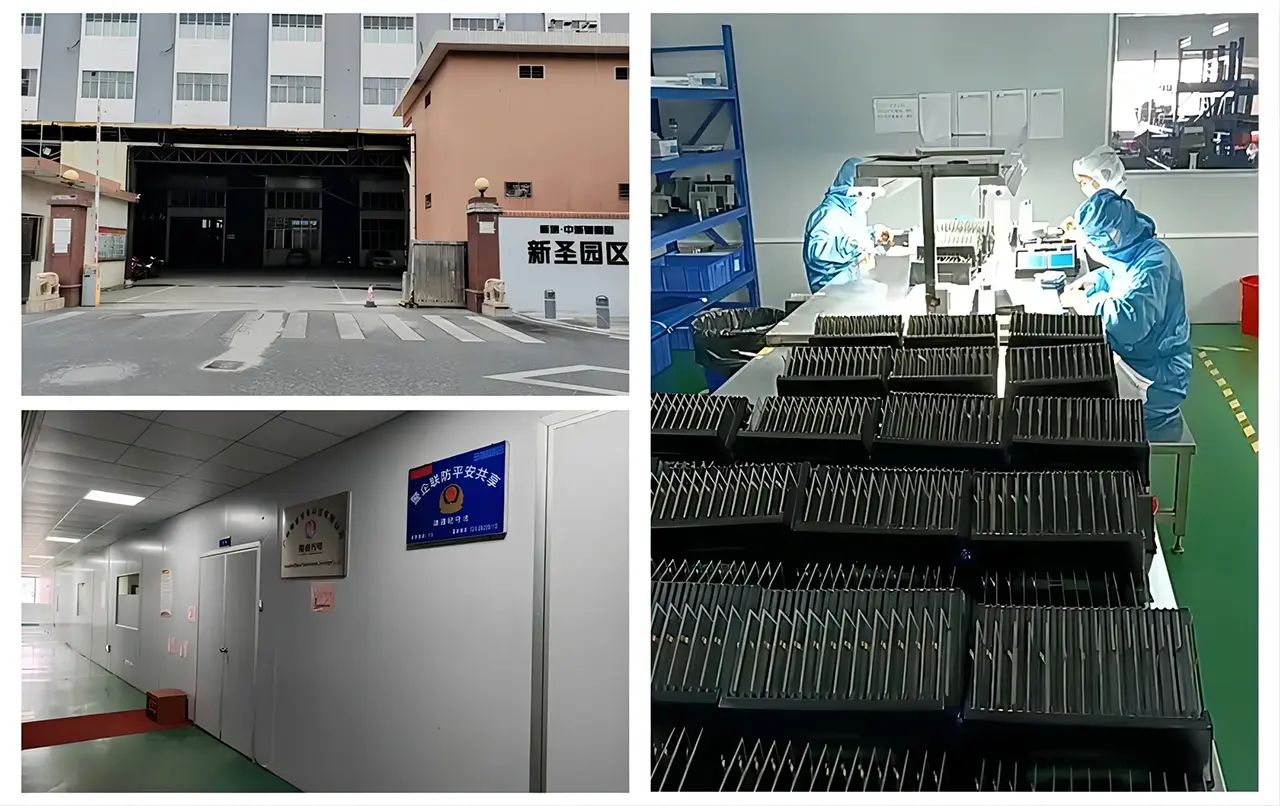
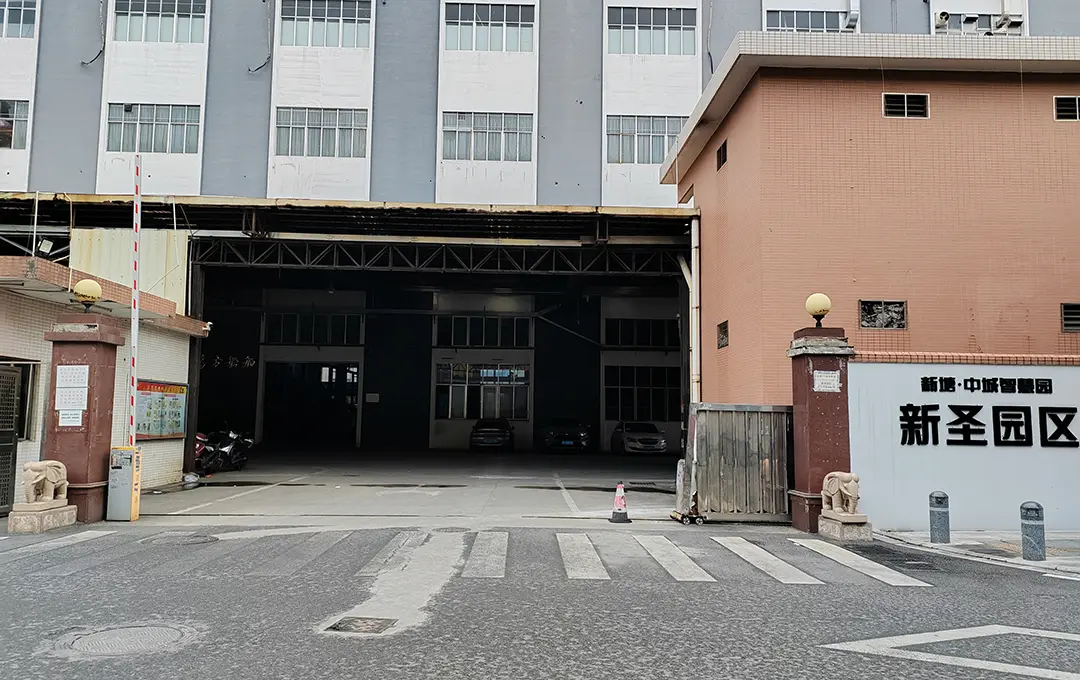
Our bonding solutions are systematically tested to survive extreme operational scenarios, ensuring long lifetimes in the field.
We cycle completed assemblies between low storage temperatures and high operational ranges. Our silicone-based OCR gels maintain flexibility without cracking, crystallization, or yellowing over extended lifespans.
Displays in outdoor kiosks undergo continuous exposure to UV light. Standard resins can yellow and degrade under solar loading. We utilize UV-stabilized adhesives that pass ASTM G154 weathering standards.
For systems installed on military vehicles, mining machinery, or aerospace cabins, we provide drop and shock dampening. The solid gel layer between layers spreads mechanical loads to prevent screen damage.
Innovation drives the next generation of touch displays. We continue to develop display solutions for evolving global demands.
Technical answers to help engineers evaluate our optical bonding display technologies.
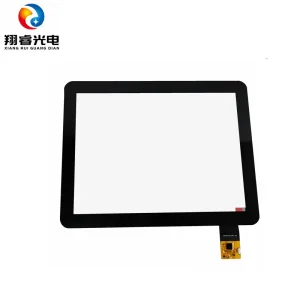
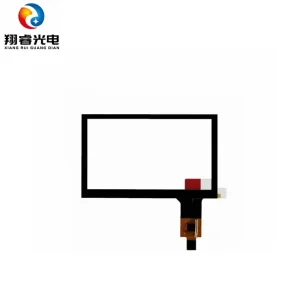
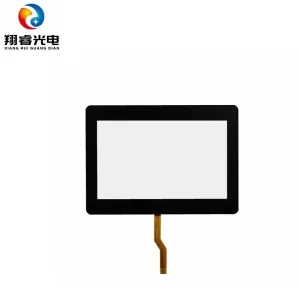
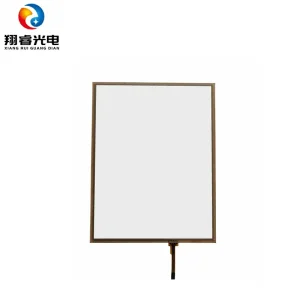
Browse more of our touch screens, featuring custom sizes, frame fittings, and high-reliability designs for industrial integrations.
 Xiangrui Optoelectronics