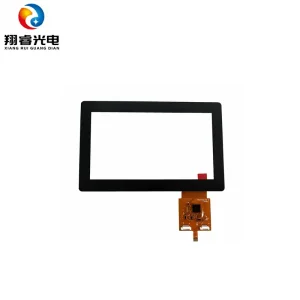
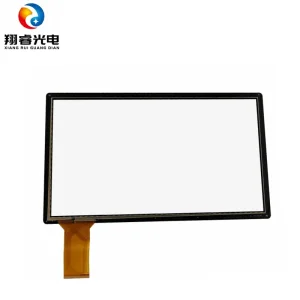
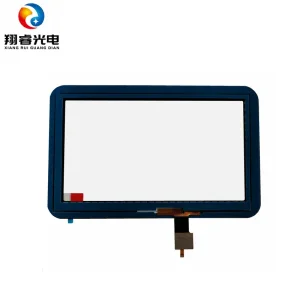
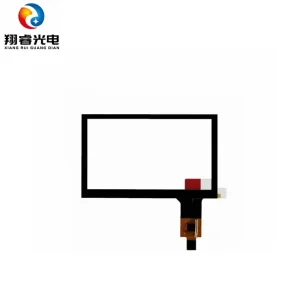
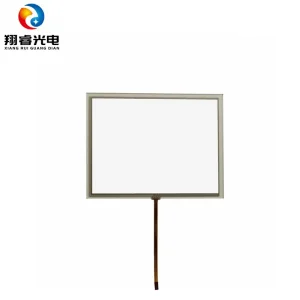
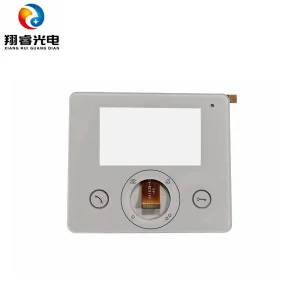
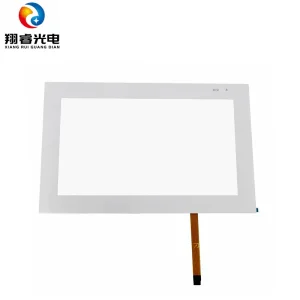
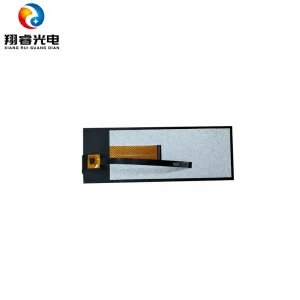
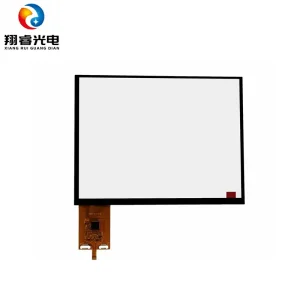
High-Quality 10.1 Capacitive Touch Screen Product & Products

Guangzhou Xiangrui Optoelectronics Technology: B2B Industrial Whitepaper on Premium 10.1-inch Projective Capacitive Touch Screen (PCAP) & Complete Customization Solutions

ISO 9001:2015 Certified Custom OEM/ODM Class 100 Dust-Free Bonded

Technical Whitepaper: 10.1 Capacitive Touch Screen Architecture

An in-depth look at Projective Capacitive (PCAP) technology, sensor layering, optical properties, and interface protocols for industrial integration.

Advanced PCAP Sensor Structures

Modern 10.1-inch capacitive screens rely on Glass-on-Glass (GG) or Glass-Film-Film (GFF) structures. Glass-on-Glass offers superior optical clarity, transmission rates exceeding 90%, and robust physical stability. GFF models excel in thinner form factors and are highly shock resistant, providing ideal flexibility for custom medical or outdoor terminal designs.

Industrial IC Control Boards

Integrating elite chipsets from EETI, Ilitek, and Cypress ensures electromagnetic compatibility (EMC). High-end controller firmware eliminates noise caused by power supplies, AC motors, or external wireless networks, allowing seamless operation even with thick leather gloves or when water droplets settle on the screen.

Optical Bonding & Treatments

We provide Liquid Optically Clear Adhesive (LOCA/OCR) bonding to fuse the touch sensor to the LCD panel. This eliminates the air gap, vastly improves contrast, reduces internal reflections, increases resistance to mechanical shock, and prevents condensation or dust infiltration in high-humidity environments.

Advanced Surface Cover Glass Engineering

A reliable 10.1 capacitive touch screen is defined by the physical chemistry of its top layer. Guangzhou Xiangrui customizes cover glass to handle the toughest outdoor, industrial, or medical environments, maximizing visibility and resilience.
  • Anti-Glare (AG) Treatment: Chemical etching scatter-reflects light, preventing harsh glare on screens positioned under overhead lighting.
  • Anti-Reflective (AR) Coating: Vacuum-sputtered layers increase light transmission from 90% to over 96%, critical for direct sunlight readability.
  • Anti-Fingerprint (AF) Layer: Oleophobic nano-coatings reduce smudge adhesion, making oil and sweat easy to clean.
  • Vandal-Proof IK10 Safety: Thermally tempered soda-lime or chemically strengthened aluminosilicate glass (Gorilla Glass) options up to 6mm thick.
10.1 Capacitive Touch Screen Glass Processing

China Manufacturing Edge: Guangzhou Xiangrui

Why global enterprise procurement departments choose our Southern China manufacturing facility to build, customize, and secure their touch panel supply chains.
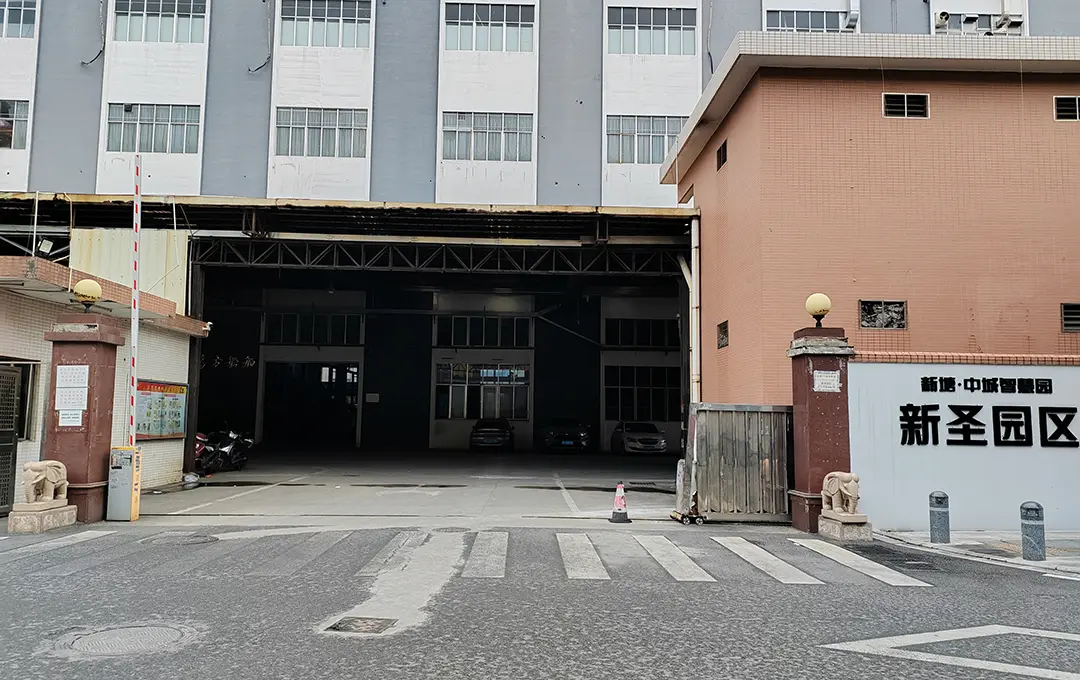
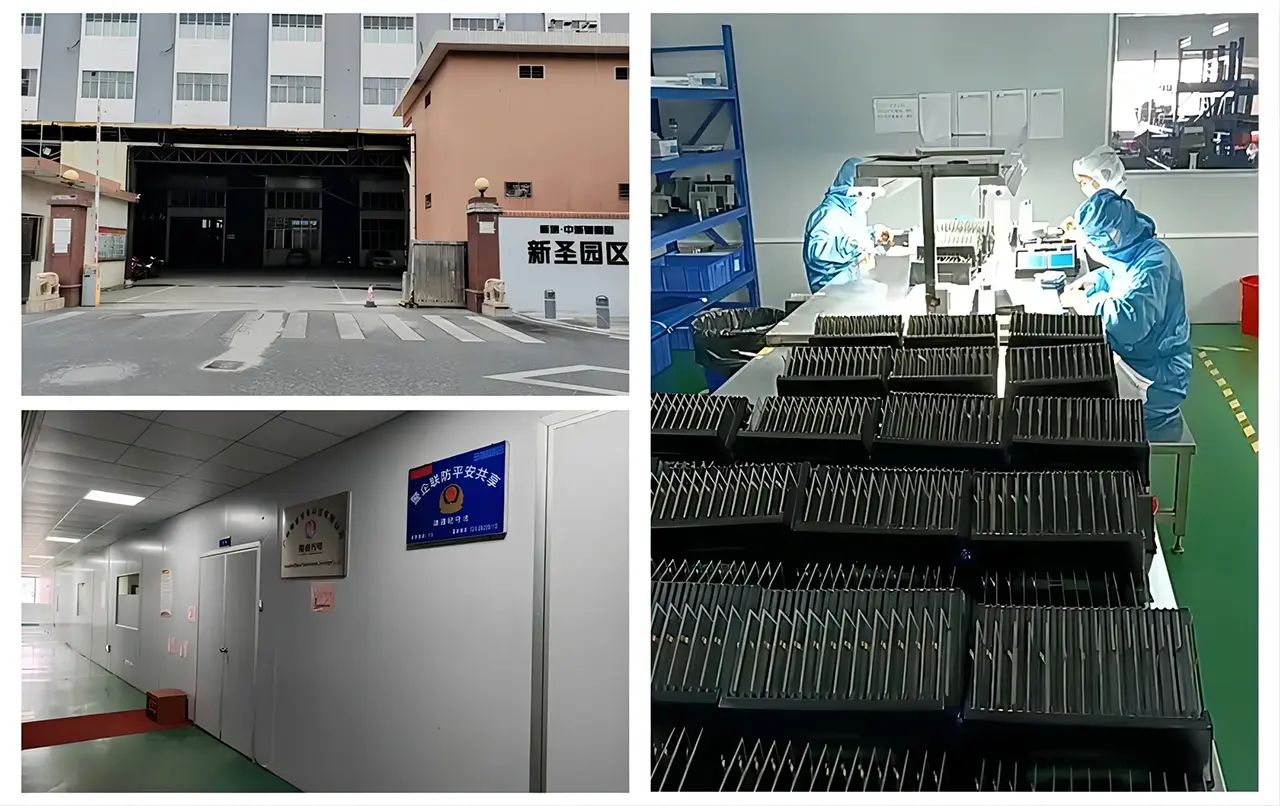
Guangzhou Xiangrui Advanced Production Cleanroom

High Precision & Cost-Efficient Production Ecosystem

Located in Guangzhou, the industrial hub of the Pearl River Delta, Guangzhou Xiangrui Optoelectronics Technology Co., Ltd. benefits from a world-class electronics component supply network. From display panel backlights to premium controller chipsets, local logistics allow us to slash lead times for prototyping and mass runs.

Our facility features a 3,000 square meter plant with Class 100, Class 1,000, and Class 10,000 dust-free cleanrooms. This pristine manufacturing environment is vital for optical bonding, ensuring zero particle contaminants disrupt touch sensing or display purity.

By leveraging advanced automation—including laser glass cutting, high-speed silver paste printing, and automatic FPC bonding machines—we deliver aerospace-grade repeatability with the pricing advantage of scale.

10+ Years
Manufacturing Experience
Founded in 2010 with deep touch-technology pedigree.
30+
Invention Patents
Proprietary developments in sensor patterns and interface noise filters.
10,000 m²
Factory Area
Fully integrated facility containing over 3,000 m² cleanrooms.
40+
Countries Reached
Reliable global shipping, custom clearance, and technical support.

Industrial Trends & 10.1" Touch Panel Applications

10.1 inches represents the Golden Ratio aspect ratio for embedded Human-Machine Interfaces (HMIs). See how macro-industry trends shape its application.

Medical Equipment HMIs

Critical care ventilators, patient monitors, and clinical lab equipment require touchscreens that resist harsh chemical sanitizers (isopropyl alcohol, bleach). Our 10.1 PCAP panels feature chemical-resistant cover glass and firmware tuned to detect inputs from surgical gloves, preventing false triggers from fluids.

Industrial Automation & CNC

Factory environments run hot, cold, and generate extreme EMI noise. Industrial CNC control hubs integrate 10.1 screens with IP65-rated bezels, surviving operating temperatures between -30°C and +80°C. They rely on EETI or Ilitek controllers to isolate touch inputs from motor frequency noise.

Smart Home & Building Automation

As central smart home hubs transition to high-definition visuals, 10.1" panels serve as elegant flush-mounted control stations. With optical bonding, narrow borders, and customized deep-black cover glass printing, they blend into residential interiors while remaining responsive 24/7.

Outdoor Kiosks & Palm Print Payment

High brightness, UV resistance, and rain immunity are mandatory for public charging piles and retail terminals. Advanced firmware distinguishes between palm print payment inputs, rain droplets, and vandalism attempts, providing reliable user authentication under outdoor conditions.

Global Procurement Guide & Customization Workflow

A structured outline of our B2B OEM/ODM manufacturing workflow designed to reduce risk, ensure regulatory compliance, and support rapid product deployment.

Tailored Technical Customization Stages

Every industrial project has unique electrical and mechanical needs. We follow a strict phase-gate development flow to translate your product specifications into qualified mass-production hardware:
  • Phase 1: Conceptual Design: Review cover glass shape, custom FPC routing, FPC shield layers, and target interface protocols (USB, I2C, RS232).
  • Phase 2: Sensor Mock-up & Simulation: Map sensor channels to match the active area of the chosen LCD display, avoiding touch latency.
  • Phase 3: Rapid Prototyping (12-15 days): Produce physical test samples, complete with cover glass printing and initial controller firmware calibration.
  • Phase 4: Verification Testing: Environmental chamber cycling (-40°C to +85°C), ESD discharge tests (up to 15kV air discharge), drop impact, and optical transmissive scans.
  • Phase 5: ISO-Conforming Mass Runs: Cleanroom production under ISO 9001:2015 controls, with automatic AOI inspections and pixel-level quality checks.
Guangzhou Xiangrui Product Engineering Layout

Our Commitment to Global Quality Standards

ISO certifications, advanced testing facilities, and transparent processes form the foundation of our engineering integrity.
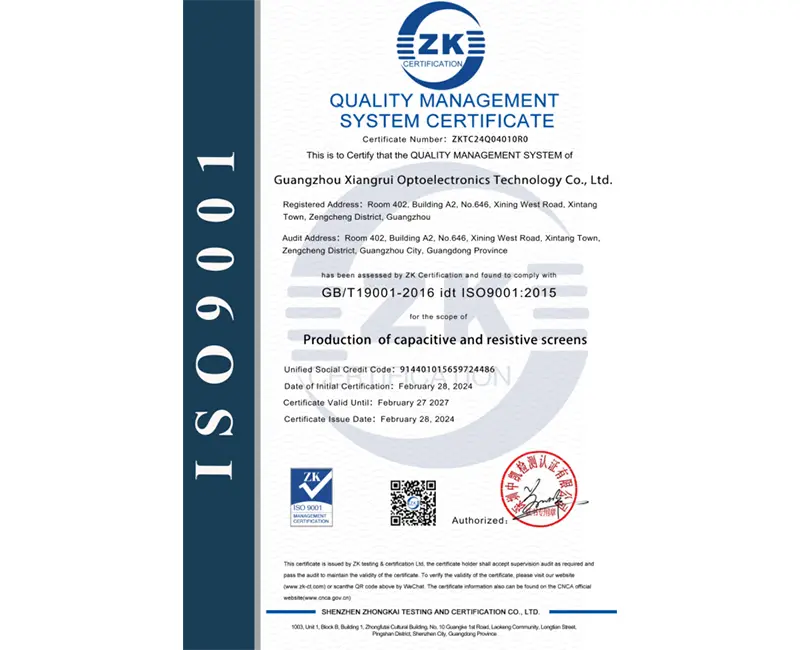
Guangzhou Xiangrui Quality Control Laboratory

Rigorous Testing & Regulatory Compliance

We believe that high-quality touch screens must survive real-world hazards. Under our ISO 9001 and ISO 14001 certified protocols, we implement exhaustive testing on every production batch to verify performance:

  • ISO 9001 & ISO 14001 Quality System: Ensures every stage, from raw ITO film receiving to final optical bonding, meets global standards.
  • Guangdong Province High-Tech Enterprise (2022): Recognizing our innovation in capacitive noise suppression and optical structure designs.
  • Robust Partnerships: We coordinate directly with Tier 1 display manufacturers and controller designers to ensure product longevity. We guarantee supply cycles of 5 to 7 years to secure long product lifecycles.

B2B Technical FAQ & Engineering Insights

Critical answers for hardware designers, sourcing managers, and systems integrators seeking to optimize 10.1-inch touch display systems.

Q1: What are the main benefits of choosing Optical Bonding (OCR/LOCA) over Air Bonding?
Optical bonding fills the internal air gap between the touch sensor and the LCD using optical adhesive. This eliminates refraction, boosting display contrast and readability in direct sunlight. Additionally, removing the air gap stops moisture condensation (fogging) in high-humidity zones and improves shock absorption, helping the unit survive drop impacts.
Q2: Can your 10.1 capacitive touch screen support thick gloved hands or water drop conditions?
Yes. By using advanced industrial-grade controller ICs (EETI or Ilitek) and calibrating the mutual-capacitance parameters, we can program the screen to recognize touch inputs from heavy rubber or leather gloves. The controller firmware also filters out touch signals from water droplets, preventing false inputs in outdoor or clinical environments.
Q3: Which controller IC brands do you use, and which interfaces are supported?
We primarily use EETI, Ilitek, and Cypress ICs for industrial and medical projects, and FocalTech or Goodix for cost-effective consumer devices. We support I2C, USB, and RS232 interfaces, and provide driver support for Windows, Linux, Android, and RTOS platforms.
Q4: What glass surface treatments are available, and how do they improve outdoor viewing?
We offer Anti-Glare (AG), Anti-Reflective (AR), and Anti-Fingerprint (AF) treatments. For outdoor displays, AR coating boosts light transmission from 90% to 96% to limit surface glare. AG treatment diffuses direct reflections, keeping the interface readable under bright outdoor sun or bright overhead factory lights.
Q5: What is the typical lead time for custom OEM samples and mass production runs?
Drawing and technical specifications are approved within 3 days. Prototypes and custom tooling samples are delivered within 12 to 15 business days. Once client verification is complete, standard mass production runs take 20 to 25 days depending on the volume and bonding complexity.
Q6: How do you handle electromagnetic interference (EMI) issues in noisy industrial environments?
To mitigate EMI, we design custom touch sensors with integrated shield patterns on the FPC. We also use controller boards with high voltage drive (up to 35V) and active frequency-hopping algorithms, which dynamically shift touch scanning frequencies to bypass noise from heavy industrial motors or nearby electronics.
Q7: Can you produce vandal-proof cover glass for unattended ticketing kiosks?
Yes. We offer chemically strengthened aluminosilicate cover glass and thermally tempered soda-lime glass in thicknesses from 2.0mm to 6.0mm. These setups satisfy IK10 impact protection requirements, safeguarding the display against deliberate damage in public terminals.
Q8: What specific inspection tests do you perform on each batch before shipment?
Every production batch undergoes 100% functional testing, including touch accuracy, coordinate linearity, power consumption, and optical clarity checks. We also perform reliability testing on samples, including thermal shock cycles (-40°C to +85°C), high-humidity aging (85°C/85% RH for 240 hours), and salt spray tests for outdoor models.