Explore our core product lineup developed in ISO 9001:2015 certified facilities, offering IP65 protection, optical bonding, and customized interfaces.
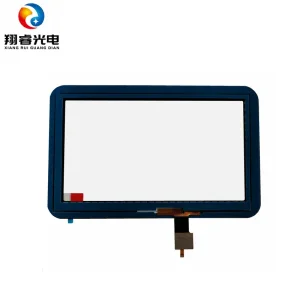
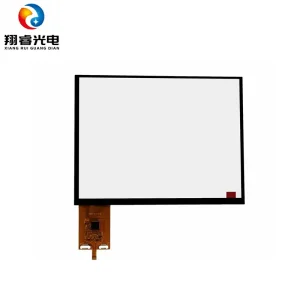
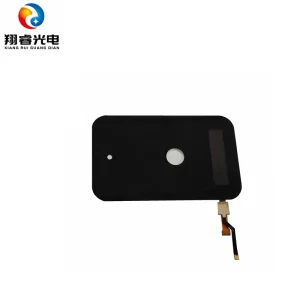
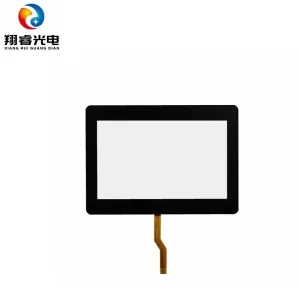
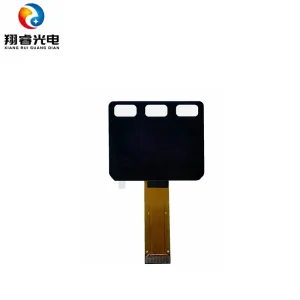
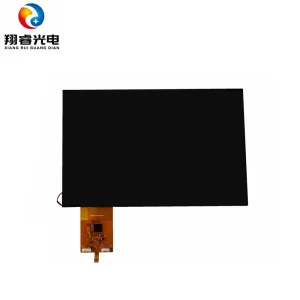
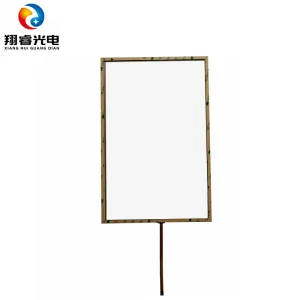
Why the 12.1-inch form factor remains the undisputed industry standard for legacy transitions and future-oriented HMI systems.
In the rapidly transforming landscape of human-machine interaction, the 12.1-inch touch screen occupies a critical strategic position. Offering the ideal aspect ratio (typically 4:3 or 16:10 widescreen variants) that balances visual real estate with compact spatial envelopes, it remains the prime option for retrofitting mechanical systems and powering next-generation smart terminals. Globally, the shift towards automation demands touch screens that do not just display information, but act as smart entry points under hostile environments.
As industrial architectures transit towards IoT and smart factories, the demand for both 12.1-inch 5-Wire Resistive and Projected Capacitive (PCAP) screens has surged. Key market drivers include:
An anatomical look at what engineering directors and procurement officers prioritize when selecting high-reliability display partners.
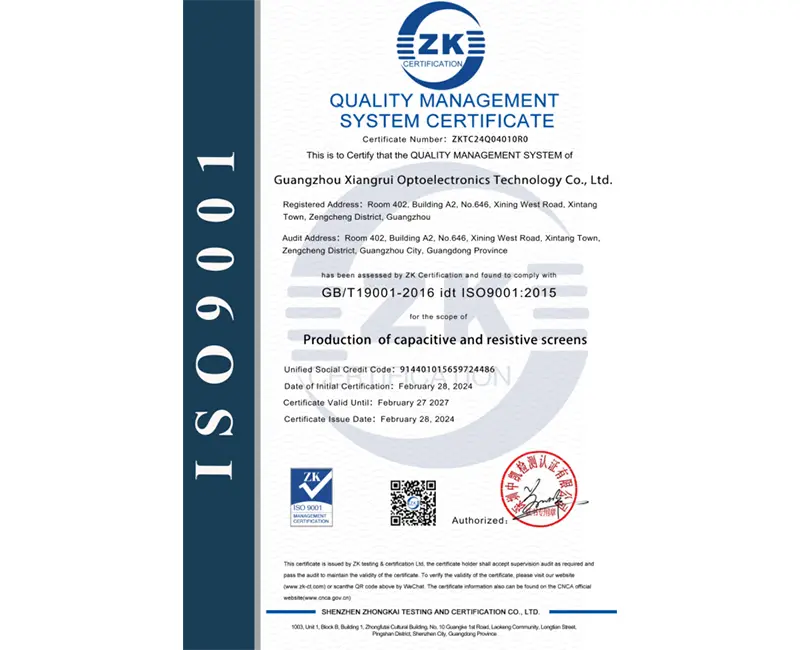
Compliance certification is non-negotiable. Top global firms seek factories that conform strictly to ISO 9001:2015 (Quality Management System) and ISO 14001:2015 (Environmental Management). Certifications prove the manufacturing runs follow controlled procedures, reducing failure rates to parts-per-million (PPM) levels.
Industrial terminals rarely accept out-of-the-box configurations. Procurement requires deep customization capabilities, including customized cover glass thicknesses (from 0.7mm up to 6mm chemically strengthened glass), customized FPC designs, custom interface configurations (USB, I2C, RS232, SPI), and custom silk-screen printing.
Industrial redesigns are cost-prohibitive. Global enterprises mandate touch panel manufacturers commit to component availability cycles of 5 to 10 years, ensuring replacements are form-fit-function compatible without demanding software or structural system overhauls.
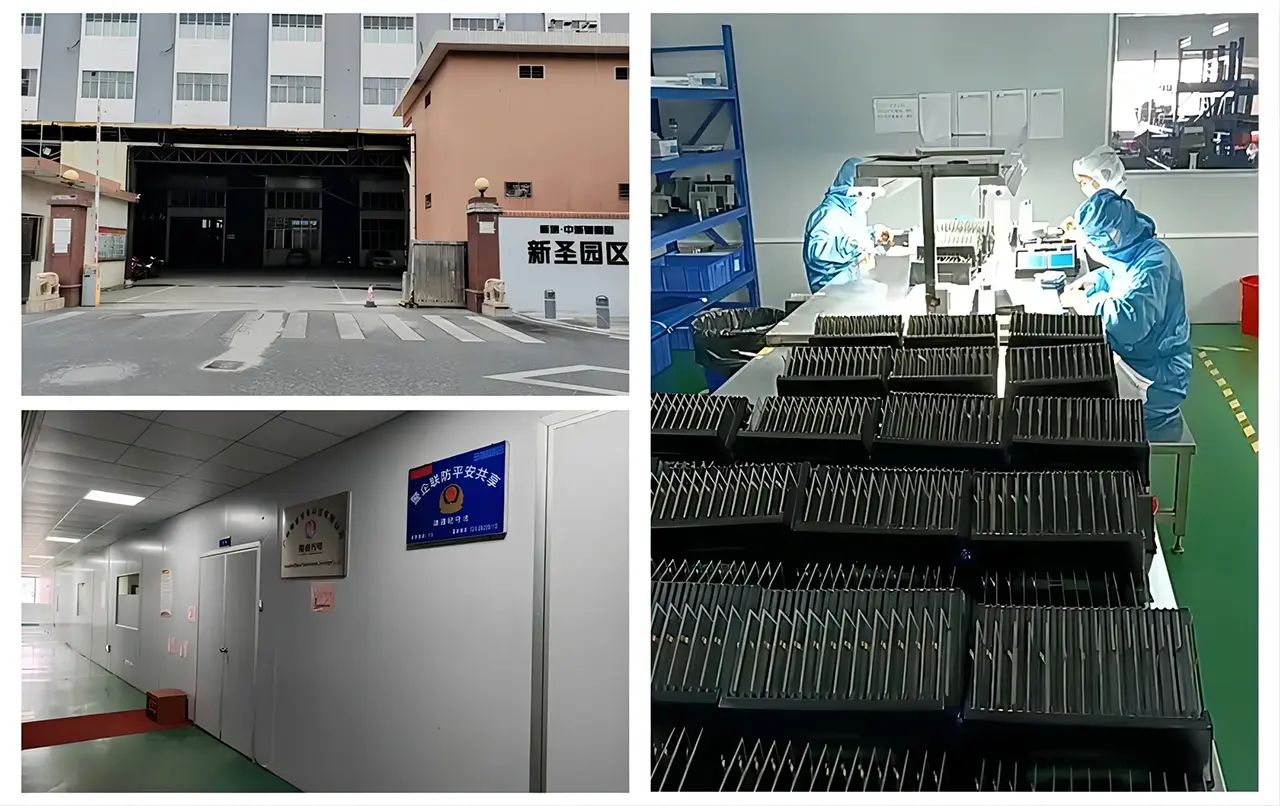
Inside the advanced production lines of Guangzhou Xiangrui Optoelectronics Technology Co., Ltd. - 3,000 m² Facility & Dust-Free Cleanrooms.
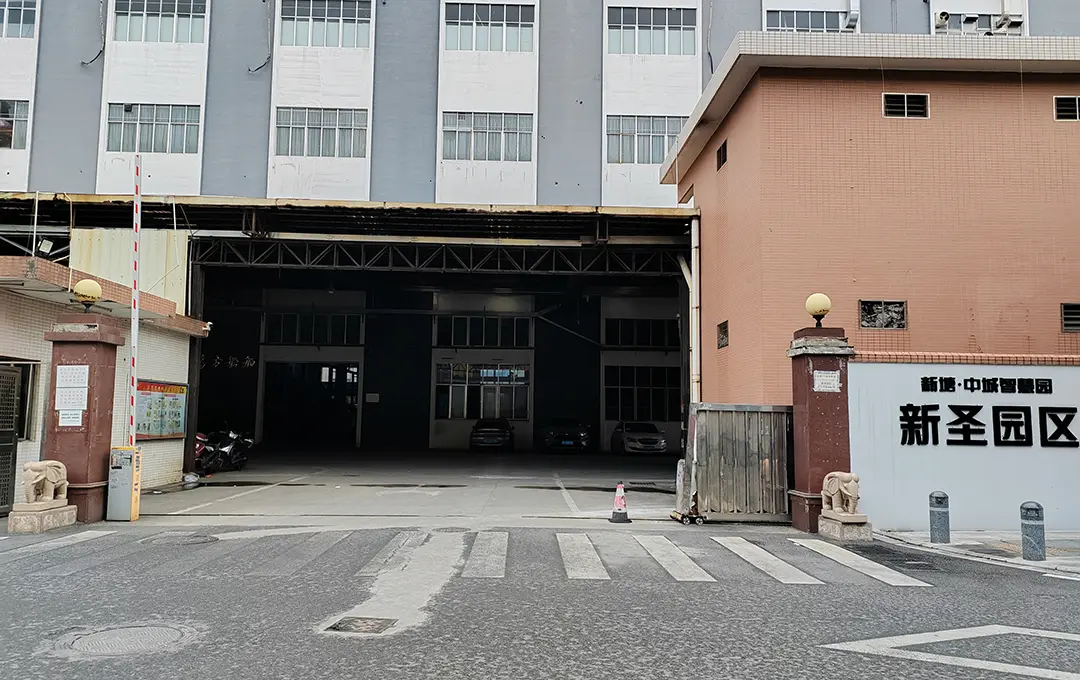
Guangdong’s high-tech manufacturing sector has undergone a massive evolution, shifting from basic assembly workshops to fully automated, digitally synchronized smart factories. As a pioneer in the capacitive and resistive touch panel industry, Guangzhou Xiangrui Optoelectronics Technology Co., Ltd. (established in 2010) exemplifies this transition.
Operating a dedicated 3,000 square meter facility equipped with Class 100, Class 1,000, and Class 10,000 dust-free cleanrooms, we control the production atmosphere to eliminate microscopic dust particles that can cause visual anomalies or ITO trace defects. By employing automated lamination, precision CNC glass cutting, and automatic optical inspection (AOI) technology, we guarantee consistent quality outputs across high-volume production runs.
This ecosystem grants unmatched supply chain resilience. Because raw glass processing, FPC bonding, sensor assembly, and module integration are managed in-house or within a close geographical cluster in Guangdong, lead times are dramatically reduced, insulating global clients against sudden logistics disruptions.
Analyzing the performance profile and integration methods of 12.1-inch touch screens in challenging operational environments.
In manufacturing environments, dust, oil splatters, and vibrations are constant. A 12.1-inch industrial resistive touch panel featuring IP65 rating provides reliable physical command execution. Physical pressure activation ensures operators can control complex machining centers with thick work gloves.
Clinical displays require maximum optical clarity and absolute electromagnetic compatibility (EMC) compliance. Here, 12.1-inch Projected Capacitive (PCAP) panels are integrated, enabling precise multi-touch commands for ultrasound equipment, anesthesia monitors, and patient tracking stations.
Salt fog, heavy humidity, and high ultraviolet exposure require highly robust screen assemblies. Integrating optically bonded screens prevents inner condensation, blocks UV rays via special surface films, and maintains legibility under direct sunlight through high-transmittance optical bonding.
As a certified enterprise recognized under Guangdong Province's high-tech enterprise designation in 2022, we maintain a steadfast commitment to technological superiority, production consistency, and client satisfaction.
We operate in strict conformance to ISO 9001 and ISO 14001 qualifications, ensuring that every touch screen from raw material incoming quality control (IQC) to final package validation meets rigorous global quality standards.
Led by a dedicated R&D division, we continuously develop innovative processes in sensor structures, FPC design, and optical laminations. Our efforts are backed by more than 30 utility and invention patents.
We maintain a long-term supply agreement with tier-1 material suppliers, offering optimal customization options and delivering custom orders with reliable, on-time schedules.
Direct, authority-driven answers to the primary engineering and implementation challenges faced by global integrators.
Projected Capacitive (PCAP) screens utilize electrostatic fields to detect touches, allowing multi-touch, gesture control, and smooth integration under flat glass front bezels (zero-bezel design). They offer high light transmission (typically >85%) and scratch resistance. Resistive screens use a flexible plastic cover sheet that deforms to make electrical contact with the bottom layer. They are single-touch only and feature lower light transmission, but are pressure-sensitive, meaning they activate reliably via fingernails, gloves, or pen styluses and are immune to EMI noise and surface water droplets.
Air bonding leaves a small air gap between the touch sensor panel and the underlying LCD panel. This air gap causes internal light refraction, degrading readability in bright conditions. It also allows dust and humidity to enter the display, leading to condensation. Optical bonding fills this gap with optical-grade silicone or acrylic adhesive (OCA/LOCA), matching the refractive index of glass. It improves sunlight readability, increases drop/vibration resistance by forming a solid laminate, and prevents moisture fogging entirely.
For environments with heavy motor drivers, welding machines, or high-power electronics, touch controller performance can degrade. We address this by incorporating industrial-grade controller ICs (EETI or ILITEK) designed with frequency-hopping algorithms and high signal-to-noise ratio (SNR) hardware. We also integrate specialized grounding routes, noise shielding layers, and customize sensor trace layouts to ensure stable multi-touch operations even in high-EMI installations.
We offer extensive customization for cover glass panels, including choosing chemically tempered soda-lime glass or specialized glass (e.g. Gorilla Glass) up to 6mm thick to pass IK08/IK10 impact testing. We apply Anti-Glare (AG) etching, Anti-Reflective (AR) coating, and hydrophobic Anti-Fingerprint (AF) coatings. Custom physical dimensions, rounded corners, bevels, customized physical buttons, and colored silk-screen printing are also available to align with your design requirements.
Complete your custom panel integration projects with our extensive catalog of capacitive, resistive, and optical bonding panels.
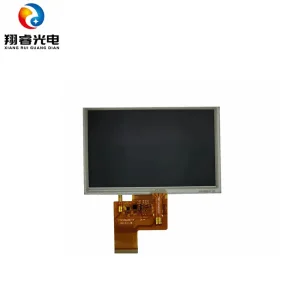
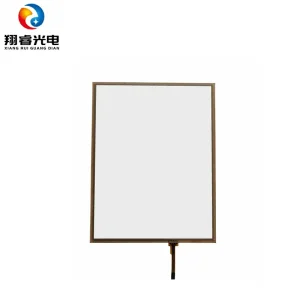
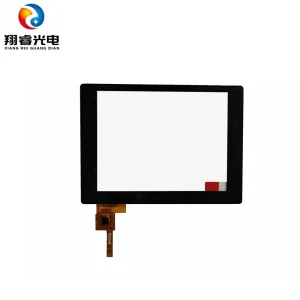
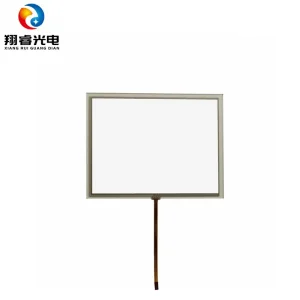
Explore the engineering workflows and quality control standards employed inside Guangzhou Xiangrui Optoelectronics.
The manufacturing process of any high-durability capacitive touch screen begins with processing quality Indium Tin Oxide (ITO) film or sensor glass. We cut raw ITO sheets under cleanroom conditions, followed by photo-etching to form the sensor electrodes. Our micro-etching lines ensure pattern integrity down to micrometric precision, keeping sensor resistivity uniform across the 12.1-inch active area. This step prevents dead spots or non-responsive areas, ensuring precise tracking.
The cover glass serves as the front barrier protecting the sensor stack against mechanical impacts, moisture, and chemical agents. Utilizing thermal hardening and chemical exchange processes (where small sodium ions in the glass are replaced by larger potassium ions), we modify the surface stress structure of the cover glass. This chemical strengthening process yields a surface hardness rating of 7H or higher, protecting the device from scratches, drops, and impact loads typical of manufacturing plants or warehouse terminals.
Flexible Printed Circuit (FPC) tails act as the data channel, bridging the capacitive sensor trace layers with the main controller board. Using precision anisotropic conductive film (ACF) bonding machines, our technicians align and laminate the FPC contacts with the ITO terminal leads under strict temperature and pressure profiles. This step prevents electrical drift, and helps panels maintain connection integrity despite years of constant thermal cycles and mechanical vibrations.
Before any shipment leaves our 3,000 square meter plant, every touch screen undergoes testing. Specialized automated testing jigs run sequence routines to map linearity, signal strength, noise immunity, and multi-point accuracy across the screen surface. For panels designed for wide temperature limits, we conduct environmental chamber cycling (from -30°C to +85°C) to ensure no optical or functional degradation occurs, confirming the reliability of our products.
 Xiangrui Optoelectronics