Explore our highly-requested capacitive and resistive touch panel matrices, manufactured to standard-setting industrial tolerances. Designed for medical diagnostics, HMI consoles, and commercial terminals.
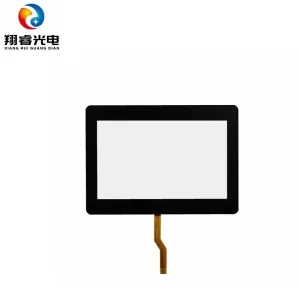
Type: 4-Wire Resistive Screen
Features: Glove Touch, Anti-EMI
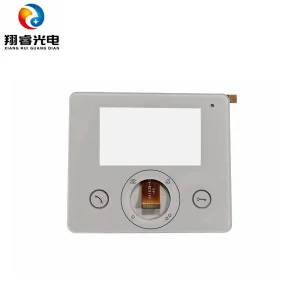
Type: Projected Capacitive Button
Interface: I2C / USB Support
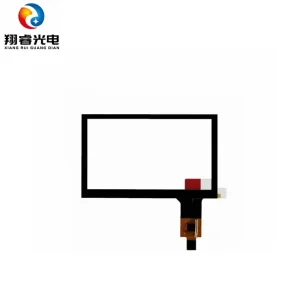
Type: Projected Capacitive (PCAP)
Bonding: Optical/Air Laminations
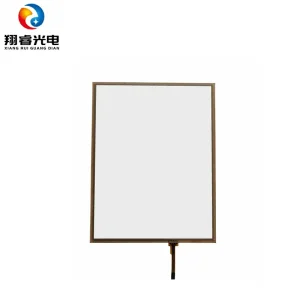
Type: 5-Wire Heavy Duty Resistive
Hardness: 3H Surface Rating
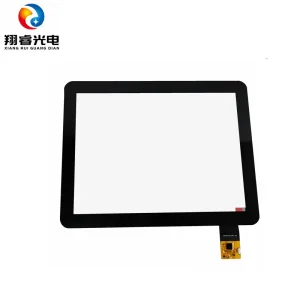
Type: High Resolution PCAP Matrix
Cover Glass: Custom Silk Screen Print
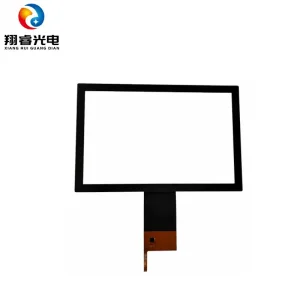
Type: 10-Point Multi-Touch PCAP
OS Support: Win/Linux/Android
Type: Ultra-Compact Resistive
Application: Wearables & Smart Appliances
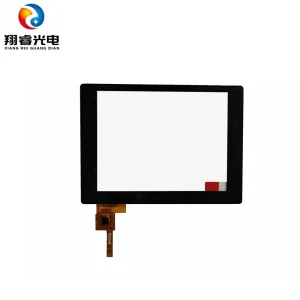
Type: High-Sensitivity PCAP
Water Resistance: Firmware Optimized
In the current landscape of human-machine interaction, the 22-inch form factor has crystallized as the default standard for professional, industrial, and clinical visualization systems. Balancing complex graphical layout density with precise human ergonomics, a 22-inch display running at 1920x1080 Full HD provides an interface surface area that naturally corresponds to an operator's arm reach. This minimizes shoulder fatigue while displaying high-density visual telemetry.
Industrial designers leverage 22-inch touch displays because they allow for native integration of multi-panel dashboard structures without resorting to confusing cascading menus. FromSCADA factory controls to real-time hospital diagnostics, this form factor ensures critical operational metrics are highly visible, legible, and immediately actionable.
Understanding the key procurement considerations for supply chain, production reliability, and custom engineering.
Global corporate procurement directors place system lifetime metrics above initial system cost. Hardware specifications typically call for a minimum Projected Capacitive (PCAP) touchscreen lifespan of over 50 million touchpoints. Choosing glass-on-glass designs ensures the screen can resist scratching from industrial tools and cleanroom chemicals without degrading performance.
Standard out-of-the-box configurations rarely satisfy specialized industrial specifications. We support custom glass treatments like 3mm to 6mm chemical strengthening for IK08/IK10 impact ratings, custom silk-screen printing for corporate branding, and tailored perimeter cuts. This ensures the touch panel fits flush into IP65-sealed system enclosures.
Total Cost of Ownership (TCO) is heavily dependent on component supply continuity. Industrial OEMs require 5-to-10-year component lifecycles to avoid the high costs of requalifying new touch controllers or screen dimensions. We use premium controllers like EETI, Ilitek, and FocalTech to guarantee long-term firmware and hardware availability.
Deploying 22-inch touch screen panels across diverse technical environments requires targeted engineering adaptions.
| Vertical Market | Operational Environment & Challenges | Recommended Tech Stack & Coatings | Compliance Standards |
|---|---|---|---|
| Industrial & CNC Automation | High electromagnetic interference (EMI), lubricants, grease, thick work gloves. | Projected Capacitive (PCAP) with EETI industrial noise-canceling controller ICs, or heavy-duty 5-wire resistive screens. | CE, FCC Class A, IP65 Front Panel Seal |
| Medical Telemetry & Imaging | Frequent disinfection, biological fluids, latex/nitrile gloves, need for clean display. | Optically bonded cover glass, Anti-Microbial treatments, Anti-Fingerprint (AF) chemical coatings. | IEC 60601-1 Medical Certification, IP65 protection |
| Smart Retail & Outdoor Kiosks | Direct sunlight glare, temperature swings, vandalism risks, high moisture. | High-brightness backlight (1000+ nits), Optical Bonding, Anti-Glare (AG) & Anti-Reflection (AR) films. | IK10 Vandal-Resistance, RoHS, REACH |
| Palm Print Payment Terminals | Precise touch registration, integrated optical scanners, variable ambient lighting. | Super-thin high-transmittance cover glass, chemically etched anti-glare finish, high-fidelity optical bonding. | EMV Compliant, ISO 9001 Manufactured |
Achieving optical clarity and durable performance requires selecting the right materials and assembly methods. We support two primary sensor technologies:
Projected Capacitive (PCAP): Utilizes a grid of micro-fine ITO (Indium Tin Oxide) sensors. Supports multi-touch (up to 10 points) and smooth gesture control. PCAP provides high optical transmittance (typically >88%) and can be sealed behind protective cover glass up to 10mm thick.
Resistive Touch Panels: Comprises a flexible top layer and a rigid bottom layer separated by insulating spacer dots. When pressed, the layers connect, completing the circuit. Resistive panels are highly pressure-sensitive, making them ideal for heavy glove operation and electromagnetically noisy environments.
For high-performance applications, we recommend Optical Bonding (LOCA/OCR/OCA). Rather than leaving an air gap between the touch sensor and the LCD display, we fill the gap with optical resin. This eliminates internal reflections, improves contrast by up to 300% under bright light, prevents condensation in damp environments, and increases mechanical strength against impact.
Enterprise profile, certified cleanroom manufacturing facilities, and patents portfolio.
Founded in 2010 and located in Guangzhou, China, we are a professional enterprise dedicated to the research, development, production, and service of touch screens and integrated display assemblies.
Our 3,000 square meter plant houses dedicated Class 100, Class 1,000, and Class 10,000 dust-free cleanrooms. This controlled environment is critical for maintaining high yields during optical bonding, cover glass lamination, and FPC bonding. Particulate pollution in the air is kept to a minimum to ensure defect-free touch panel manufacturing.
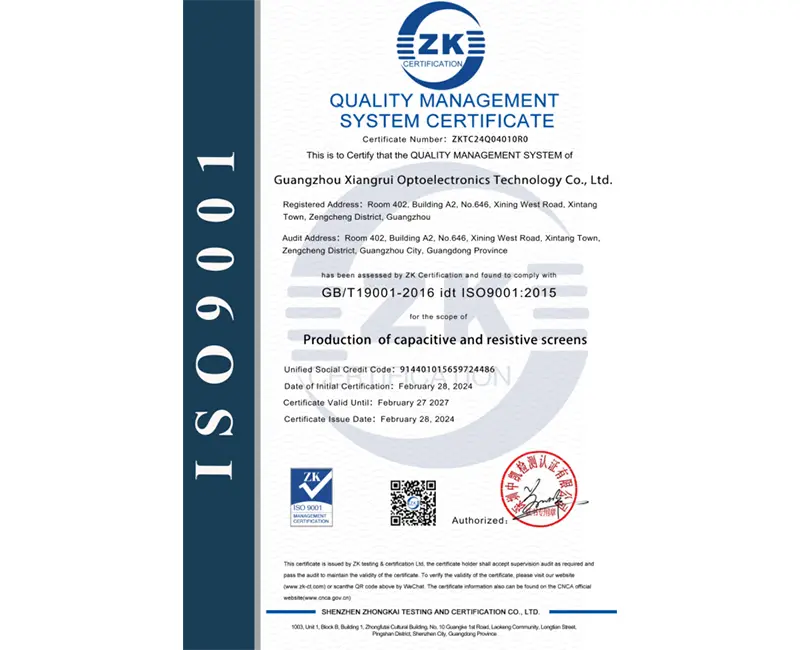
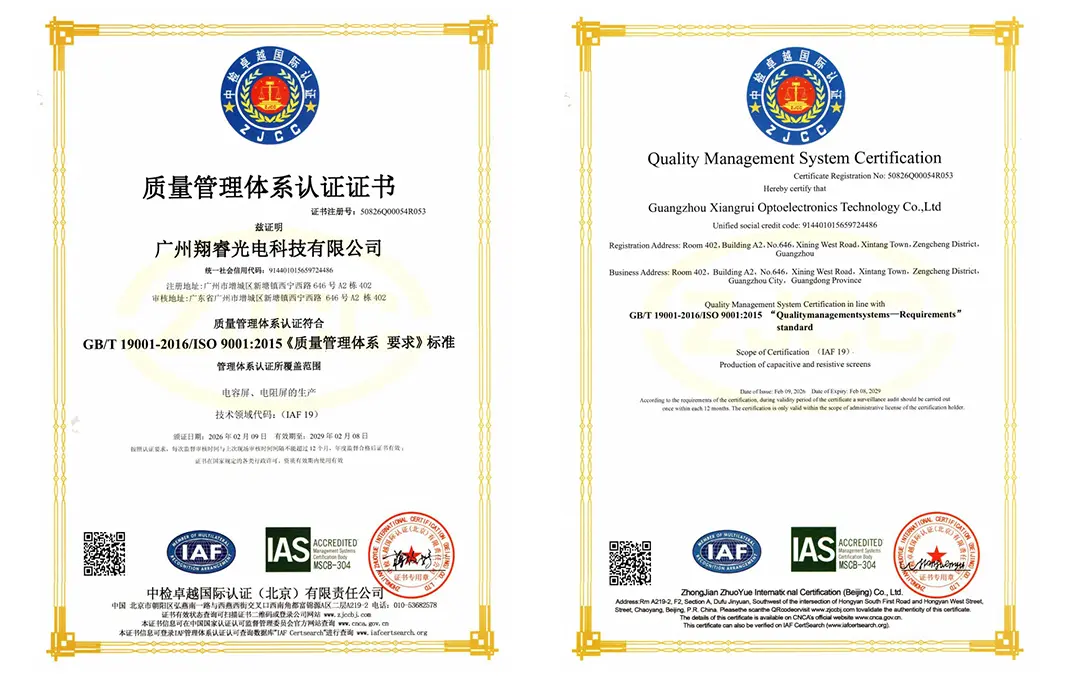
Guangzhou Xiangrui holds both ISO 9001:2015 and ISO 14001:2015 certifications. Our R&D division has developed over 30 patents, and our products are exported to over 40 countries. In 2022, we were officially designated a High-tech Enterprise of Guangdong Province.
For 22-inch touch screens, managing electrical noise is critical. As display sizes increase, the touch sensor acts as a larger antenna for electromagnetic interference (EMI) from sources like backlight inverters and nearby machinery. Our engineering team addresses this by using multi-stage frequency hopping, high-voltage drive options on our controllers, and shielding layers. This ensures responsive and error-free touch performance in challenging industrial environments.
International hardware deployment requires compliance with environmental and electrical regulations. Guangzhou Xiangrui designs and manufactures all touch panels to meet RoHS and REACH standards, ensuring chemical safety and restricted hazardous substances. Our panels undergo strict EMC testing to comply with CE, FCC, and VCCI certifications.
To support global clients, we offer localized engineering documentation, step-by-step firmware tuning kits, and layout files for fast integration. Whether you are integrating touch screens into custom kiosks in Western Europe or deploying industrial displays across North America, our FAE team provides active support from prototyping through mass production.
Browse our production catalog. We manufacture these models in our certified dust-free cleanrooms, using quality components for long-term reliability.
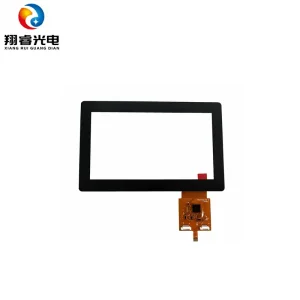
Type: Mid-Size Industrial PCAP
Controller: EETI/Ilitek Native
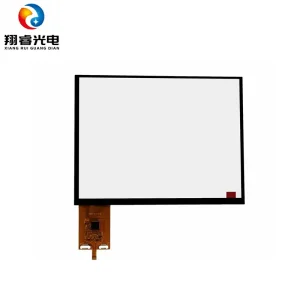
Type: 10.4" Premium PCAP
Customization: Glass Screen Printing
Type: Frame Assembly Integration
Cover Glass: Anti-Reflective Coating
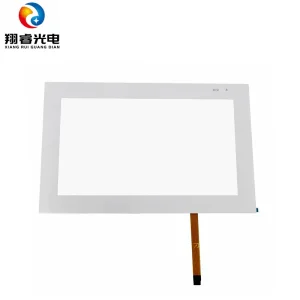
Range: -30°C to +80°C Temp
Protection: IP65 Dust/Waterproof
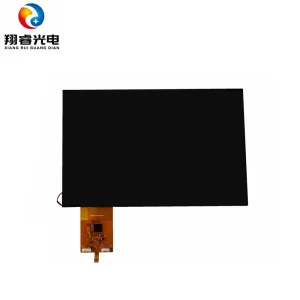
Bonding: OCR Full Optical Bonding
Ingress: IP65 Compliant Seal
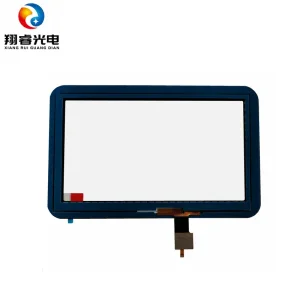
Type: High-Sensitivity PCAP
Customization: FPC Pinout/Shape
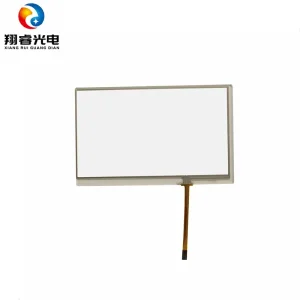
Type: 4-Wire Resistive Screen
Performance: High Precision Linear
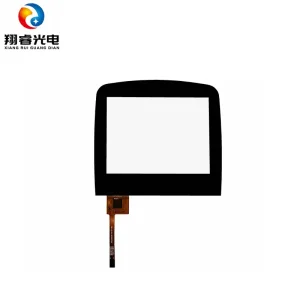
Type: Micro-Capacitive Sensor
Application: Handheld/Industrial Instruments
Answers to common engineering and sourcing questions about large-format touch screens.
We resolve water-induced false touches through both hardware and firmware updates. By using advanced controllers (such as EETI or Ilitek), we program the screen to recognize the difference between a real touch (conductive contact) and water (low-dielectric constant dispersion). Additionally, the controller alternates between mutual capacitance sensing (for multi-touch gesture accuracy) and self-capacitance sensing (for liquid resistance), preventing errors when water or condensation is present on the glass surface.
OCA bonding uses a pre-cured optical tape, which is ideal for smaller screens but can lead to air bubbles when applied to larger sizes like 22 inches. OCR (or liquid optical bonding) uses a liquid resin dispensed across the display, followed by UV curing. This process fills uneven surfaces, allows for easy rework if defects are found during production, and provides excellent shock absorption for high-vibration applications.
Thicker cover glass increases durability (3mm glass can achieve IK08 protection, while 6mm glass can meet IK10 standards to resist heavy impacts). However, thicker glass weakens the electrical signal reaching the ITO sensor array. To keep touch performance responsive with thick glass, our engineering team increases the drive voltage on the controller and adjusts the gain thresholds to maintain multi-touch sensitivity.
We use shielding layers on the back of the touch panel, integrate noise-filtering capacitors on the FPC board, and select industrial-grade controller ICs with narrow-band frequency scanning. This allows the system to identify and isolate electrical noise from machinery or high-voltage lines, maintaining touch accuracy.
Yes, our touch screens support glove use. Through custom tuning of the controller's firmware sensitivity thresholds, they work reliably with latex, nitrile, cotton, leather, and insulated gloves. This capability is widely used in medical cleanrooms and heavy industrial environments.
Our sourcing and supply chain management focus on component stability. We select components with long-term support plans from major suppliers. If a part enters End-of-Life (EOL), our team initiates a Product Change Notification (PCN) process at least 12 months in advance. We suggest compatible drop-in replacements or manage last-time-buy stock to protect your project's lifecycle.
 Xiangrui Optoelectronics