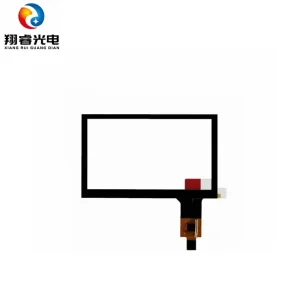
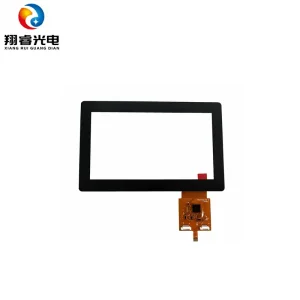
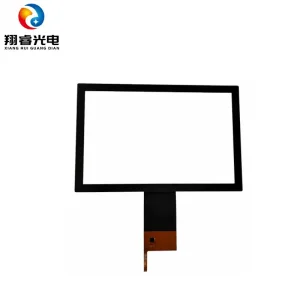
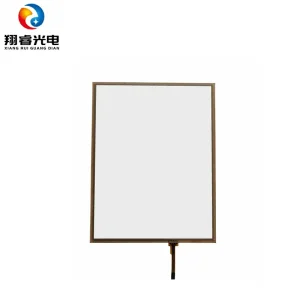
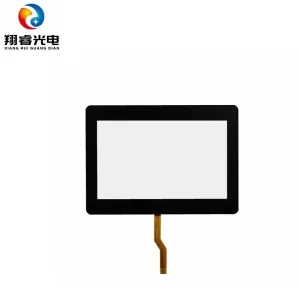
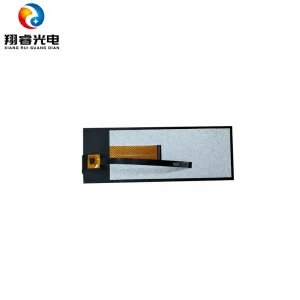
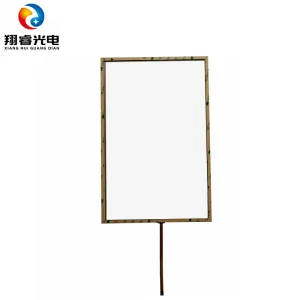
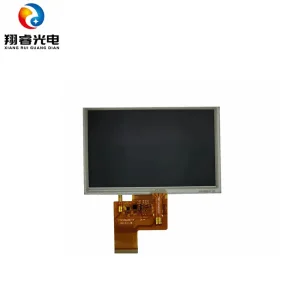
Explore our flagship capacitive and resistive touch panels featuring optical bonding, wide temperature operation, and IP65-rated surface protection.
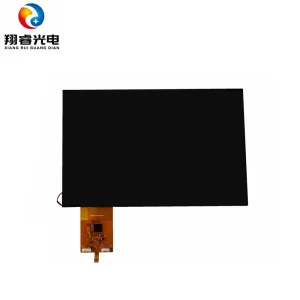
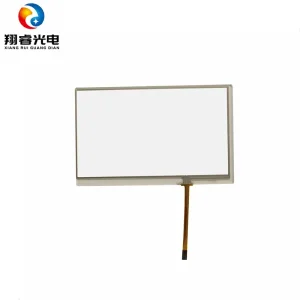
The industrial landscape is moving from basic physical panels to highly dynamic, visually clean Human-Machine Interfaces (HMIs). The 7-inch touch TFT LCD serves as the golden standard for mid-sized display architectures. Striking a balance between compact dimensions and sufficient information-carrying screen space, it is widely utilized across medical instrumentation, smart home hubs, industrial process controls, and commercial automotive cockpits.
At Guangzhou Xiangrui Optoelectronics Technology Co., Ltd., we combine state-of-the-art liquid crystal configurations with ruggedized touch overlays. By tailoring cover glass options, integration layers, and touch sensor structures (Resistive and Capacitive), we supply custom displays designed to meet the strict performance profiles required by international industries.
Whether your device demands multi-touch capabilities with optical bonding (LOCA) to combat reflection in bright sun, or resistive matrix layouts built for thick industrial work gloves and extreme noise conditions, our engineering team ensures stable operation with robust supply longevity.
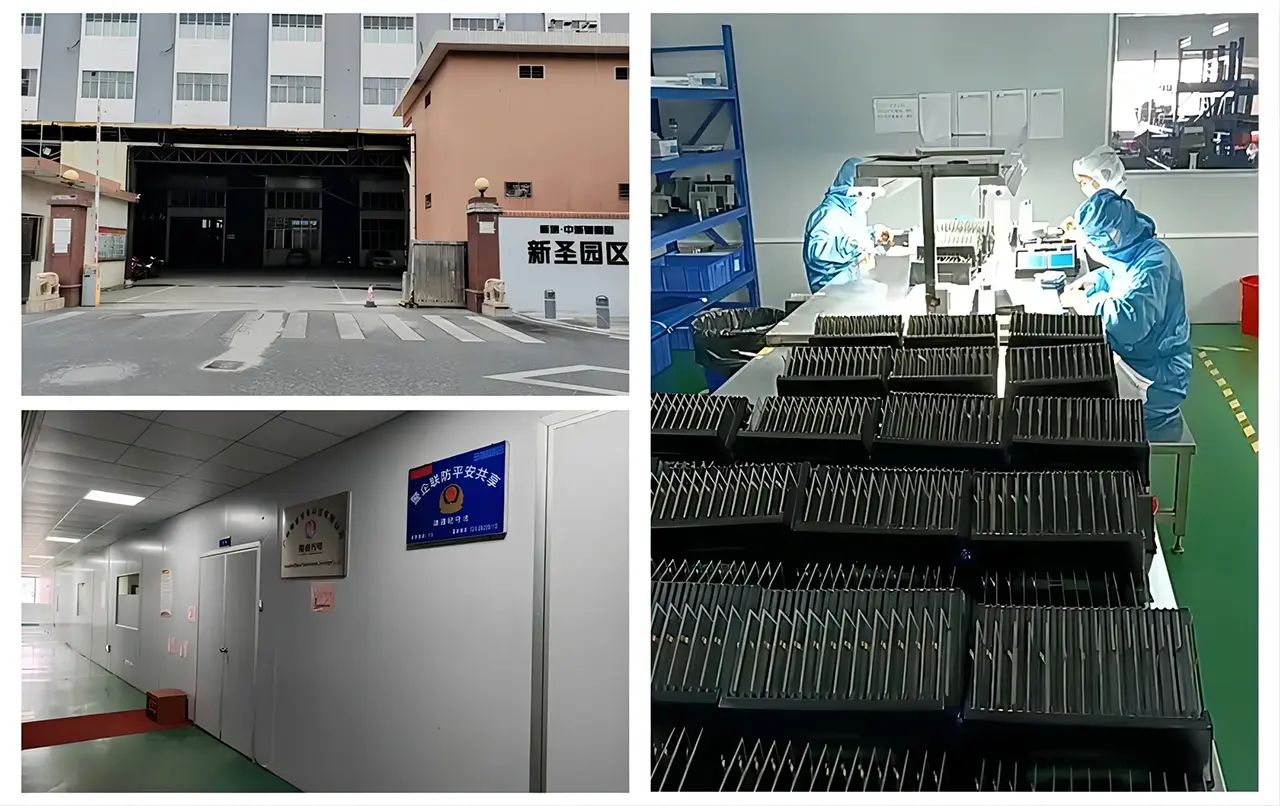
A trusted manufacturer with over a decade of dedication to research, development, and clean-room assembly of high-reliability touchscreen products.
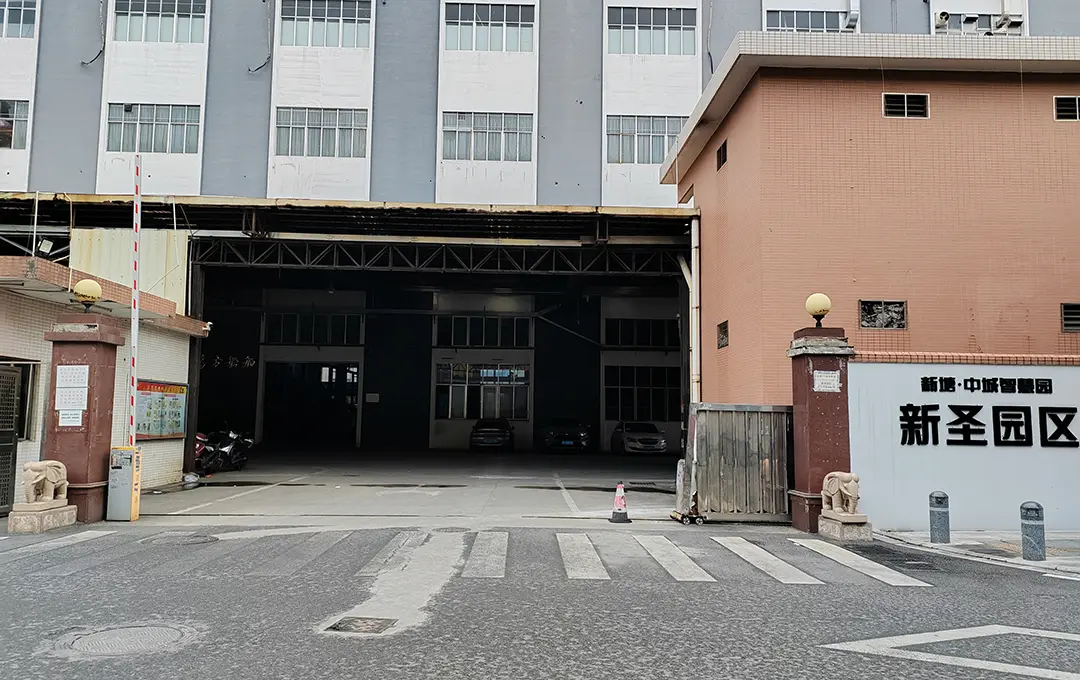
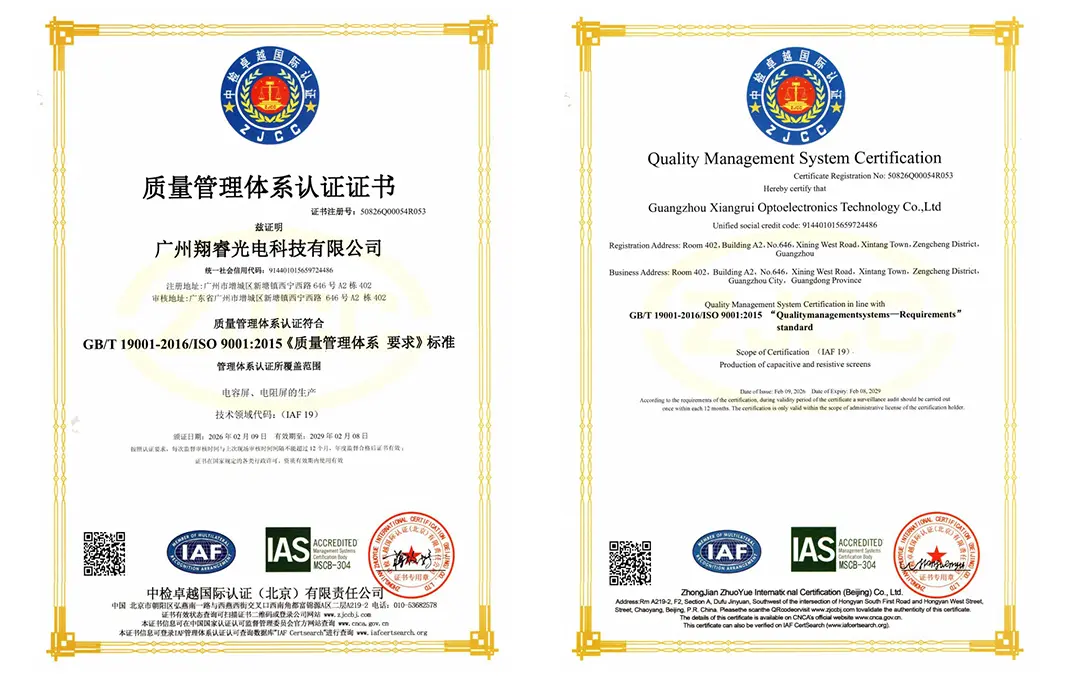
Founded in 2010 in Guangzhou, China, we have established ourselves as an ISO 9001:2015 and ISO 14001:2015 certified leader in touchscreen production. Our facility houses 3,000 square meters of specialized workspace, comprising Class 100, Class 1,000, and Class 10,000 dust-free environments to support high-yield laminations, optical bonding (LOCA), and clean-room sensor integrations.
With an IP65 protection rating available for demanding conditions, our customized touchscreen solutions are integrated into industrial automation panels, diagnostics, outdoor payment systems, and smart home networks worldwide. Operating with 30+ domestic and international patents, we are committed to delivering field-tested technology that performs reliably over long life cycles.
An in-depth technical comparison to help system design engineers choose the appropriate touch architecture for their applications.
| Performance Metric | Projected Capacitive (PCAP) Touch Panel | Analog Resistive Touch Panel |
|---|---|---|
| Touch Detection Method | Electrostatic field perturbation by finger or conductive stylus. | Pressure-induced mechanical contact of dual conductive layers (ITO). |
| Multi-touch Support | True Multi-touch (typically 10 independent points). | Typically Single-touch (Dual-touch supported via custom matrices). |
| Optical Clarity & Transmittance | High clarity (Up to 90%+ with optical bonding). | Lower clarity (Typically 75% - 82% due to air-gap structure). |
| Durability & Impact Resistance | Excellent. Protected by heavy tempered cover glass (up to IK10). | Moderate. Outer polyester (PET) film is susceptible to scratching. |
| Glove / Wet Operation | Supported with specialized controller tuning (wet hand, surgical glove). | Universally supported with any input device (gloved hand, plastic pen). |
| EMI Performance | Requires shielding and controller tuning to prevent noise issues. | Immune to electromagnetic noise interference. |
| Typical Applications | Medical tablets, outdoor self-service kiosks, modern smart-home panels. | Industrial CNC machinery, CNC workshops, marine bridges, POS. |
How 7-inch Touch TFT LCDs serve as a core component in different commercial sectors and specialized environments.
Designed in compliance with EN 60601-1 certification standards, our touch panels support clean-room environments. They operate reliably with latex gloves, withstand chemical sterilizing washes, and use optical bonding to prevent dust condensation behind the display glass.
Built to handle harsh machinery conditions, our panels provide electromagnetic compatibility (EMC), wide operating temperatures (-30°C to +85°C), and IP65-rated front faces. This protects the displays from heavy water jets, oils, metallic dust, and mechanical impacts.
Designed for constant outdoor use, our displays utilize high-nit LED backlighting (up to 1000+ nits) and ultraviolet (UV) blockers. Combined with anti-reflective (AR) surface treatments, they remain easily readable in direct sunlight while resisting yellowing and weathering.
Air-bonding processes leave a small physical gap between the LCD panel and the touch glass overlay, which can cause internal reflections, lower display contrast, and allow dust or condensation to accumulate.
Guangzhou Xiangrui utilizes automated, clean-room Optical Bonding (LOCA/OCA) to eliminate these performance issues. By filling the air gap with a refractive-index-matched optical resin, we create a unified display stack. This structure eliminates light reflection at internal boundaries, increasing display contrast by up to 400% in bright sunlight.
Optical bonding also provides mechanical support to the assembly. Under high impact or vibration, the unified display layers absorb forces more effectively, preventing damage to the underlying TFT cells. This process makes our 7-inch touch TFT LCD modules suitable for outdoor applications, military environments, and heavy transport equipment.
An overview of our upcoming HMI display innovations, supporting integration, lower power consumption, and enhanced physical durability.
By embedding the touch sensor array directly inside the liquid crystal matrix, we can reduce overall module thickness by 25% and optimize light transmittance for lower power consumption.
Integrating piezo-actuated haptics directly into the cover glass assembly to provide physical button-press sensations on flat capacitive surfaces for safer use in automotive and medical settings.
Developing low-power reflective TFT layers that utilize ambient light for display illumination, extending operating times for off-grid IoT sensors and mobile field hardware.
Answers to common design and engineering questions regarding 7-inch TFT displays and touch panel integration.
OCA (Optically Clear Adhesive) uses a dry, pre-cured film adhesive sheet, which works well for flat surfaces and standard display dimensions. LOCA (Liquid Optically Clear Adhesive) uses a liquid silicone or acrylic resin that is cured using UV light. LOCA is better suited for irregular or curved cover glass, larger panel assemblies, and products that need to withstand high thermal expansion stresses.
Yes. Our engineering team tunes the capacitive controller firmware (using ICs such as Ilitek, EETI, or FocalTech) to detect capacitance changes through heavy work gloves, leather gloves, and medical latex layers without causing false or phantom touches.
Our outdoor-grade touch assemblies feature UV-blocking filters in the cover glass stack. This helps protect the polarizer layers and liquid crystals from photochemical degradation and yellowing caused by solar exposure.
We provide cover glass customization with chemically strengthened chemically tempered glass (up to 9H hardness), custom dimensional cuts, silk-screened bezels, and specialized surface coatings: Anti-Glare (AG), Anti-Reflective (AR), and Anti-Fingerprint (AF).
Our entire manufacturing facility operates under ISO 9001 for quality systems and ISO 14001 for environmental management. Additionally, our raw materials and finished products are RoHS and REACH compliant to facilitate smooth export to EU and US markets.
We apply transparent ITO shielding layers and configure the touch controller firmware to frequency-hop away from typical electrical noise frequencies. This ensures stable touch sensing near heavy motors, relays, or high-power RF transmitters.
Standard analog resistive panels are designed for single-touch inputs. However, we can design multi-touch resistive setups by partitioning the resistive substrate into independent touch zones or utilizing matrix resistive architectures for industrial layouts that require physical force input.
Our industrial-grade white LED backlights are rated for an MTBF (Mean Time Between Failures) of 50,000 hours of continuous operation under normal temperature conditions before brightness drops to 50% of its initial value.
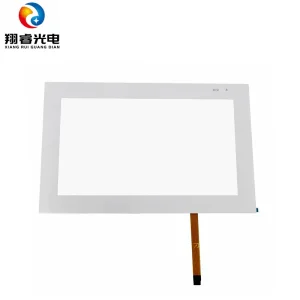
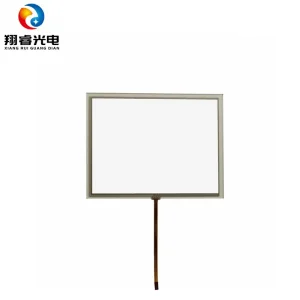
A wider range of capacitive and resistive panels, with various screen sizes and protective features, designed to meet your project specifications.
 Xiangrui Optoelectronics