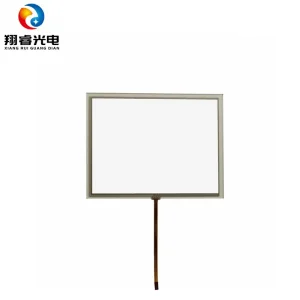
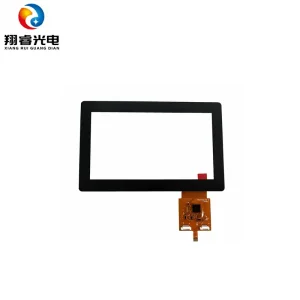
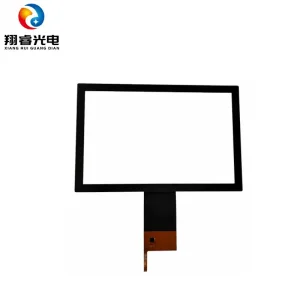
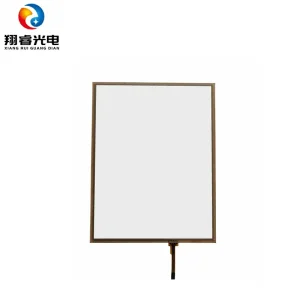
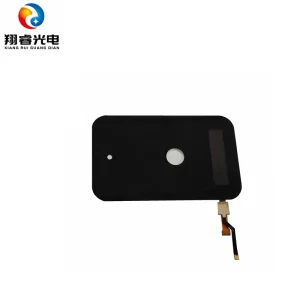
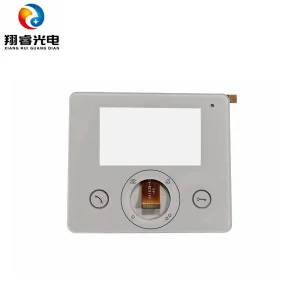
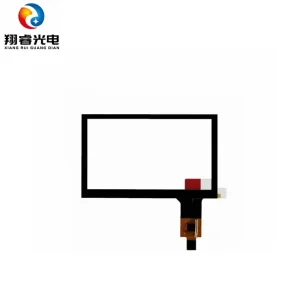
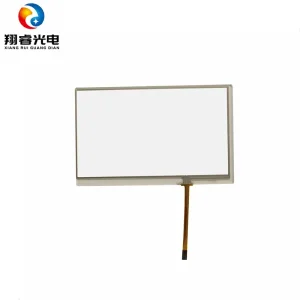
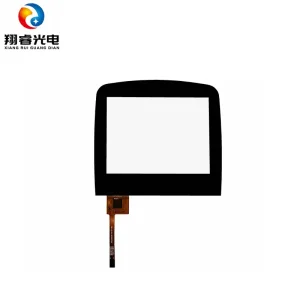
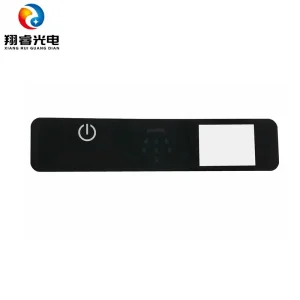
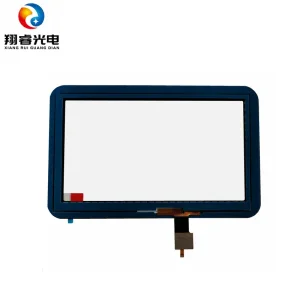
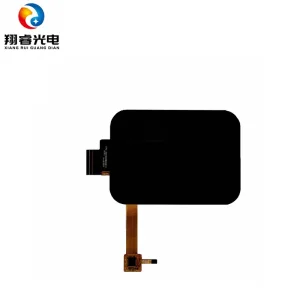
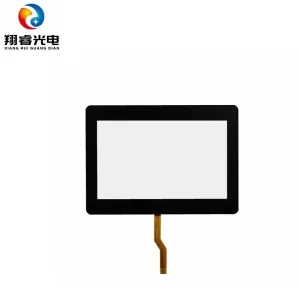
Explore our industrial-grade capacitive and resistive touch panels engineered for rugged performance and optical clarity.
Understanding the transition from basic touch controls to highly responsive, integrated human-machine interfaces (HMIs).
The global market for industrial and commercial displays is undergoing a significant evolutionary phase. Historically, resistive touch panels dominated industrial applications due to their low cost and ability to respond to pressure inputs from gloved hands or styluses. However, the modern smart-industrial ecosystem demands high optical clarity, multi-touch capabilities, gesture controls, and superior durability. This shift has positioned Projected Capacitive (PCAP) display technology as the primary design standard for premium HMI architectures.
Capacitive touch technology operates by sensing the electrical disruption caused by a conductive object (typically a human finger) interacting with the electrostatic field etched onto the display's sensor layer. Today, key global sectors—including Aerospace, Automotive, Healthcare, and Industrial IoT (IIoT)—are implementing PCAP touch modules to streamline user interactions, reduce operator error, and guarantee uninterrupted operations in challenging environments.
High-end manufacturing regions across North America, Europe, and Asia-Pacific are setting strict legislative and operational guidelines for HMIs. Device engineers are optimizing layouts to incorporate optical bonding technologies, anti-glare (AG) coatings, and electromagnetic interference (EMI) shielding to meet these demands.
Current industrial trends highlight the growing integration of curved protective glass, glove-compatible algorithms, wet-touch operational stability, and thickness optimization of chemically strengthened cover glass (reaching up to 10mm for vandal-proof applications).
Whether deployed in high-humidity food processing plants in Germany, cold-storage logistics systems in North America, or outdoor refueling terminals in the Middle East, our capacitive displays are customized to maintain baseline accuracy under severe thermal fluctuations.
How our capacitive touch display components solve real-world engineering challenges across demanding vertical fields.
Medical touchscreens must resist intensive chemical cleaning protocols and operate reliably when handled with saline-coated surgical gloves. By complying with the stringent ISO 13485 standards, our custom touch solutions utilize advanced controller algorithms that prevent phantom touches caused by liquids. Additionally, we integrate customized cover glass featuring antimicrobial and anti-reflective (AR) treatments to ensure optical clarity under bright operating theater lights.
Heavy machinery control panels face constant mechanical vibrations and high electromagnetic noise fields. Our capacitive touch displays are engineered with integrated active shielding and advanced frequency-hopping noise immunity algorithms. Certified to meet IP65 ingress protection, they keep industrial production lines moving smoothly, preventing unscheduled downtime caused by false touch inputs.
Outdoor systems must withstand continuous exposure to solar radiation, wide temperature changes, and potential vandalism. By utilizing chemically strengthened cover glass (IK08 to IK10 impact ratings), UV-blocking polarization films, and high-efficiency optical bonding, our displays deliver superior readability in direct sunlight. This integration prevents internal condensation and extends the operational lifetime of kiosks, parking terminals, and EV charging stations.
A trusted global partner in capacitive & resistive touch panel innovation, combining advanced engineering with ISO-certified manufacturing.
Founded in 2010 and located in Guangzhou, China, we are a professional enterprise dedicated to the research, development, production, and worldwide distribution of resistive touch panels, capacitive touch panels, cover glass, and complete liquid crystal module bonding solutions. We specialize in providing highly customized touch panels alongside comprehensive OEM and ODM services.
To ensure high standards of quality and ecological responsibility, our factories operate under strict compliance with the ISO 9001:2015 quality management system and the ISO 14001:2015 environmental management system. Our robust research and development initiatives have earned us over 30 utility and invention patents, and we were officially honored with the title of High-Tech Enterprise in Guangdong Province in 2022.
Our facilities span a total manufacturing footprint of 3,000 square meters, expanding up to a total factory site of approximately 10,000 square meters. These workspaces house dedicated Class 100, Class 1,000, and Class 10,000 dust-free workshops to meet the cleanroom standards required for precise optical bonding and film lamination processes.
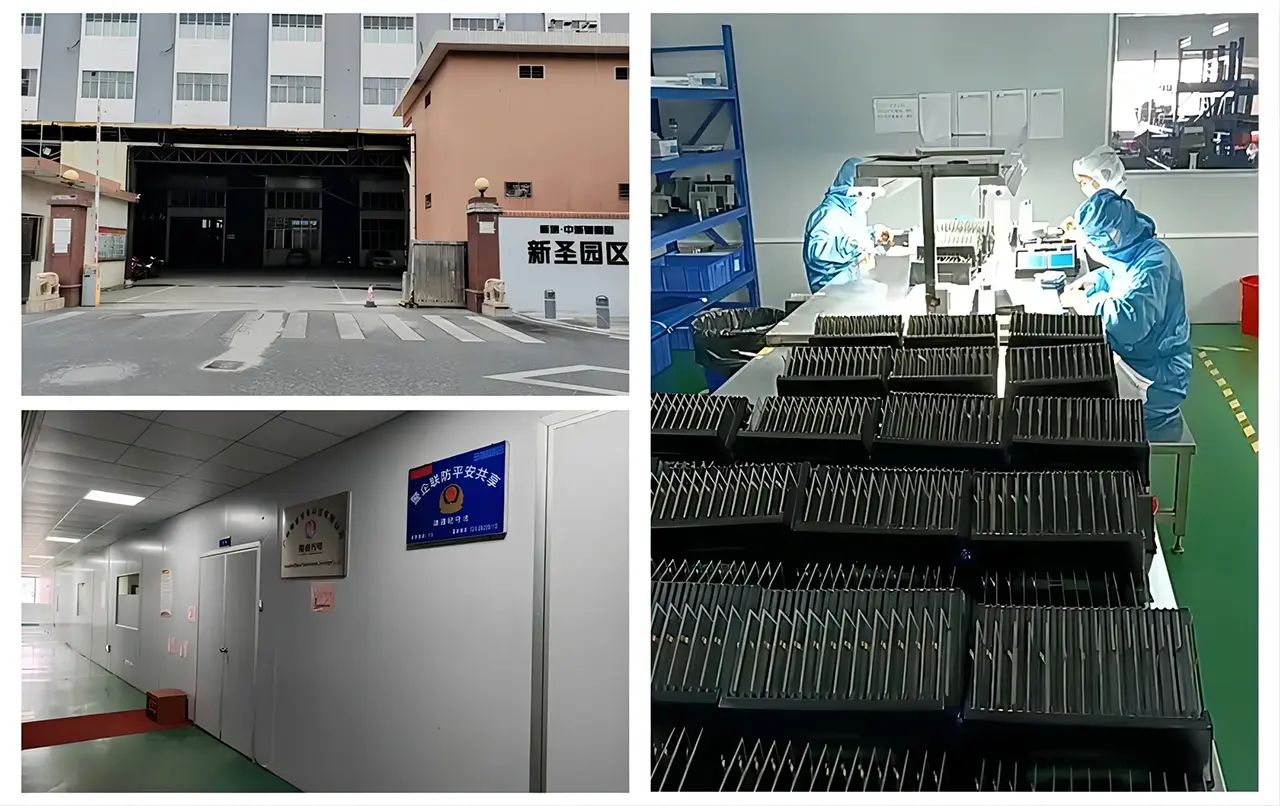
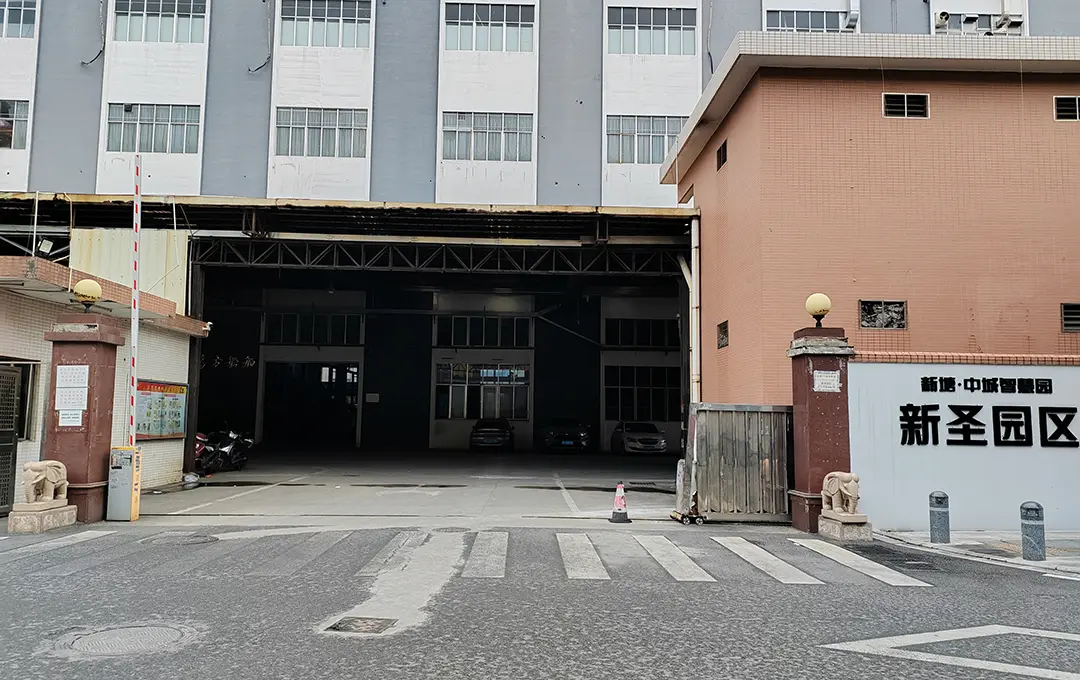
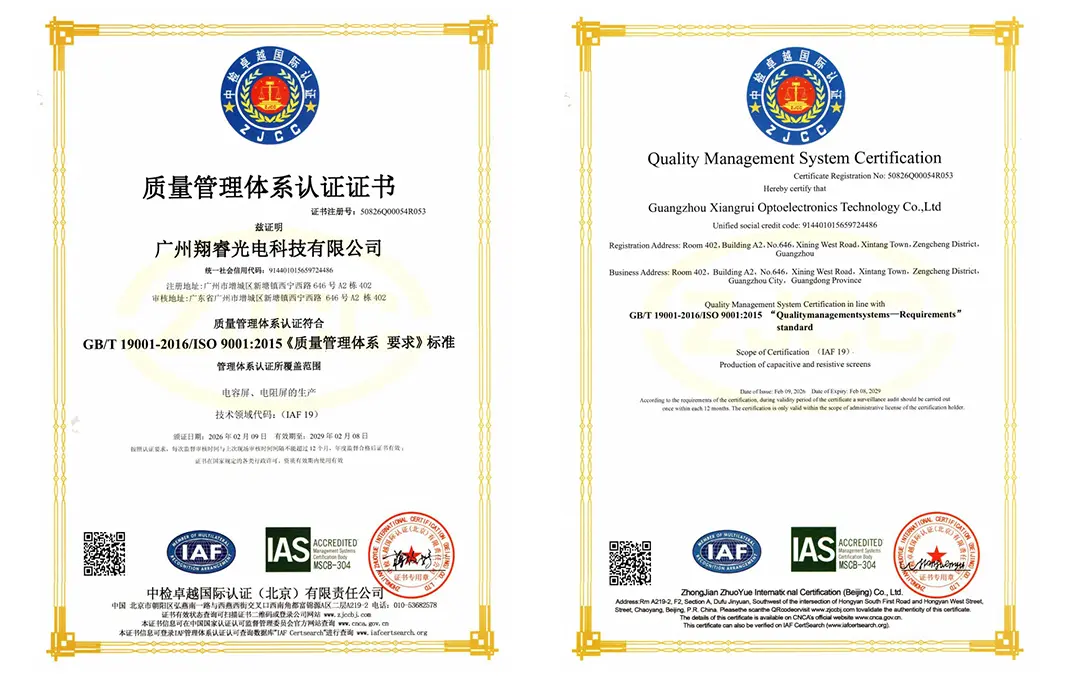
Maintaining a market-leading position requires a combination of strict quality control, research and development, and responsive technical support.
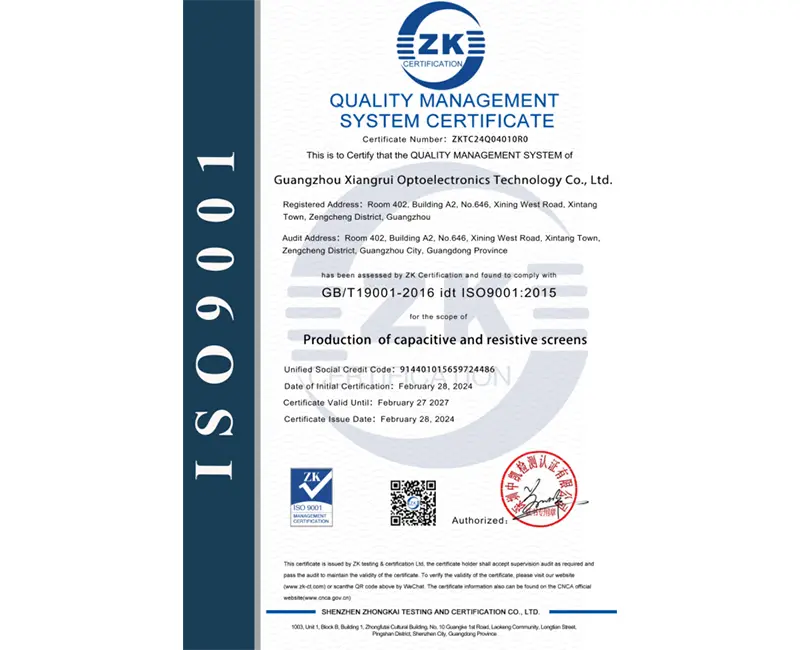
Our ISO 9001 and ISO 14001 certifications govern every phase of production. We ensure raw materials and finished display assemblies meet the highest quality standards before shipping.
Our production line features Class 100, Class 1,000, and Class 10,000 cleanrooms. This controlled environment ensures air-bonded and optically bonded displays remain free of dust and micro-particulates.
We work closely with leading brands and component suppliers to build long-term, mutually beneficial partnerships. Our technical team supports clients from the initial prototyping stage through to mass production.
A look at the technology advancements driving current and future capacitive touchscreen development.
Replacing the air gap between the touchscreen and the LCD panel with optical-grade silicone gel (OCR) or liquid clear adhesive (LOCA). This configuration minimizes internal light reflection, increases contrast ratios by 400%, and improves mechanical shock resistance.
We apply performance-enhancing chemical treatments directly to the cover glass. These include Anti-Glare (AG) to disperse reflections, Anti-Reflective (AR) to maximize light transmission, and Anti-Fingerprint (AF/Oleophobic) to resist oils and simplify cleaning.
By leveraging premium IC solutions (such as EETI, Ilitek, and FocalTech), we customize firmware profiles to handle thick cover glass (up to 10mm), glove-touch activation, wet-touch processing, and stringent EMI requirements.
Answers to common technical questions about capacitive display specifications, customization, and implementation.
Resistive screens rely on physical pressure to connect two conductive layer sheets, making them single-touch only and prone to wear. In contrast, PCAP screens detect electrical charge alterations via a non-contact sensor grid, which enables multi-touch gestures, offers high optical clarity (over 90%), and features a durable glass front sheet that resists scratching and surface damage.
Optical bonding fills the air gap between the touch sensor and the LCD panel with an optical adhesive. This eliminates internal reflective glass surfaces, significantly reducing ambient light reflection. It improves sunlight readability, eliminates internal condensation in humid environments, and increases mechanical impact resistance.
Yes. By tuning the controller firmware (such as EETI or Ilitek ICs), we can modify the sensitivity threshold. This calibration allows the sensor to detect capacitance changes through thick leather or rubber gloves while filtering out false touch inputs caused by water droplets or saline solutions.
We provide chemical strengthening (such as Corning Gorilla Glass or soda-lime glass) in thicknesses ranging from 0.7mm to 10mm. You can customize the cover plate with Anti-Glare (AG), Anti-Reflective (AR), or Anti-Fingerprint (AF) coatings. We also support custom shape cutting, physical bezel printing, and curved geometry profiles.
We integrate high-noise-rejection touch controllers and apply physical shielding layers, such as ITO shielding film, to the sensor stack. Our firmware uses frequency-hopping algorithms to shift scanning frequencies away from electromagnetic interference noise, ensuring consistent performance in demanding industrial settings.
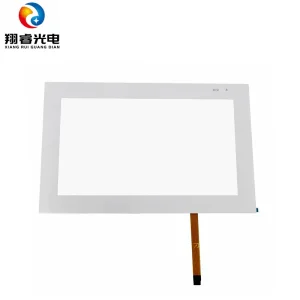
Review additional options from our high-performance capacitive and resistive product line, configured for immediate system integration.
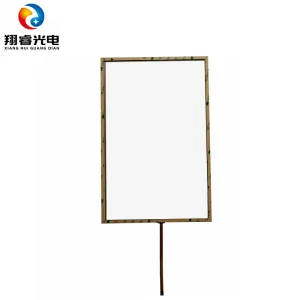
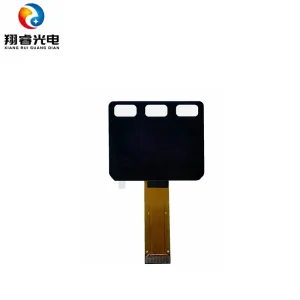
 Xiangrui Optoelectronics