Explore our premium range of industrial-grade resistive and high-precision capacitive touch screen panels designed for global commercial and industrial applications.
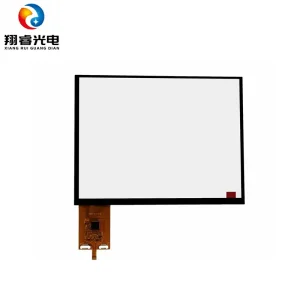
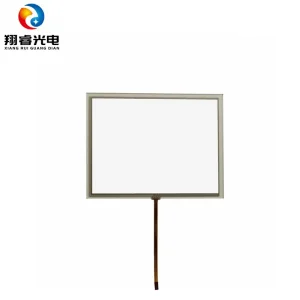
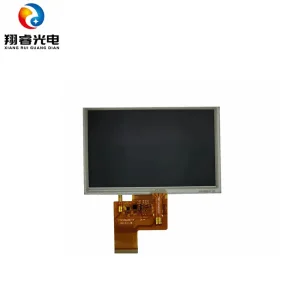
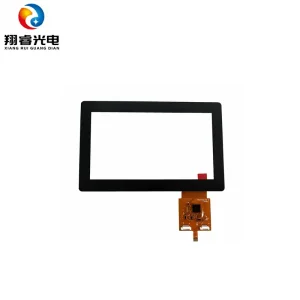
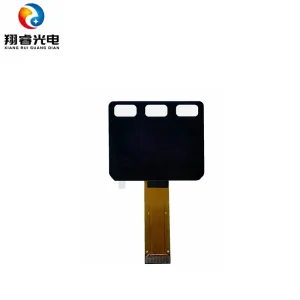
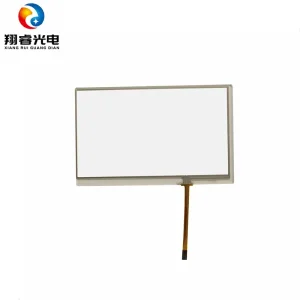
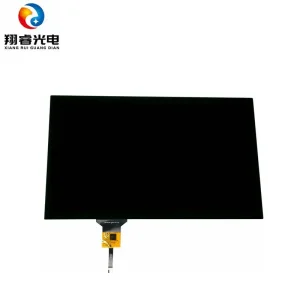
Despite the proliferation of consumer-centric capacitive screens, resistive touch buttons and panels remain the foundational backbone of global industrial, medical, and high-reliability commercial interfaces. Why? Because industrial settings do not mirror controlled living rooms. In manufacturing hubs, marine vessels, and clinical operating theaters, operators interact with machinery under harsh conditions—wearing thick protective gloves, facing liquid splashes, biological fluids, heavy particulate matter, and significant electromagnetic interference (EMI).
Resistive touch sensors operate based on physical pressure actuation. When pressure is applied to the outer flexible sheet, it flexes to make contact with the bottom conductive layer, registering an input. This pressure-based mechanical logic ensures 100% operation accuracy under conditions that completely disable capacitive systems, such as standing water, extreme humidity, or non-conductive mechanical styluses.
For modern engineering and procurement managers, selecting the right touch architecture is critical to avoiding field failures. Below is how the industrial demand breaks down globally:
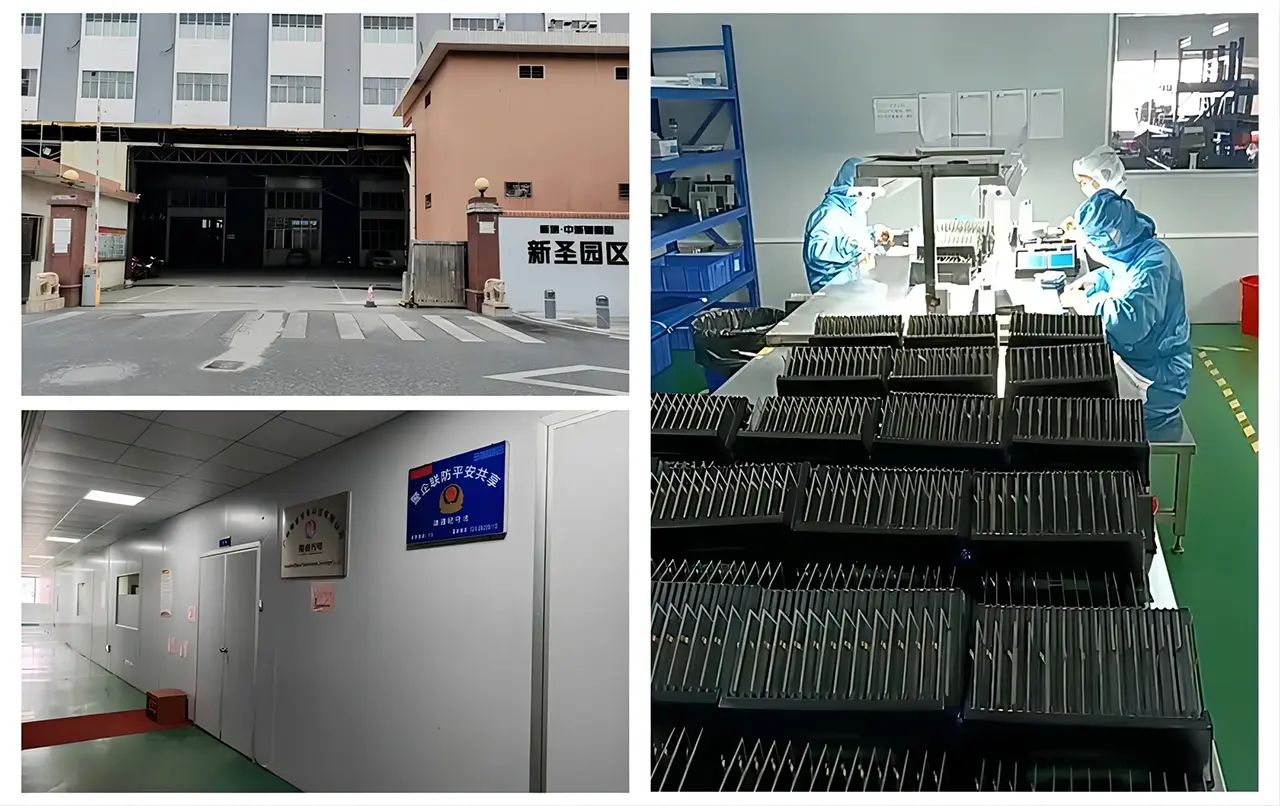
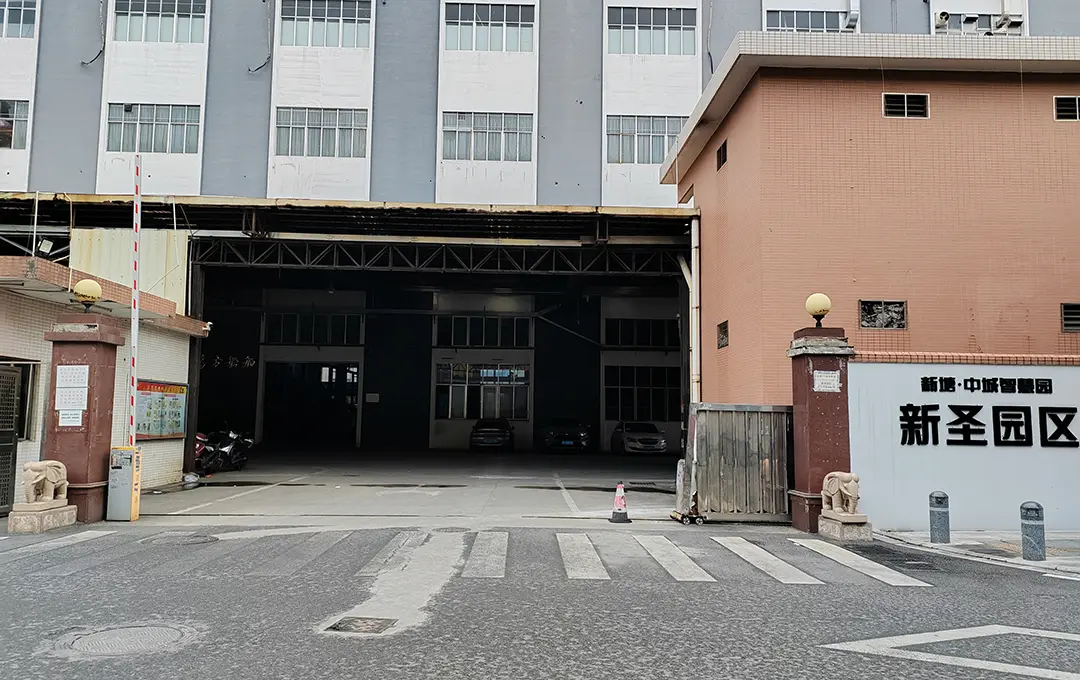
Established in 2010, we are a global leader in high-performance touch screen research, manufacturing, and customized system integration.
Operating a sprawling manufacturing footprint exceeding 3,000 square meters of specialized optical and electronic production floors, Guangzhou Xiangrui houses state-of-the-art Class 100, Class 1,000, and Class 10,000 dust-free isolation workshops. These controlled production atmospheres are strictly monitored for atmospheric particulates, relative humidity, and ambient temperature, satisfying the absolute highest dust-free lamination criteria for military, medical, and aerospace-grade touch screen components.
Our organization structure spans dedicated engineering R&D, Quality Control, Supply Chain Management, and specialized Customer OEM Support. By operating localized cleanrooms dedicated to optical bonding (LOCA/OCA) and mechanical dry-bonding, we ensure that every single glass layer, ITO layer, and customized backplate is sealed to absolute perfection without risk of particulate contamination or long-term delamination.
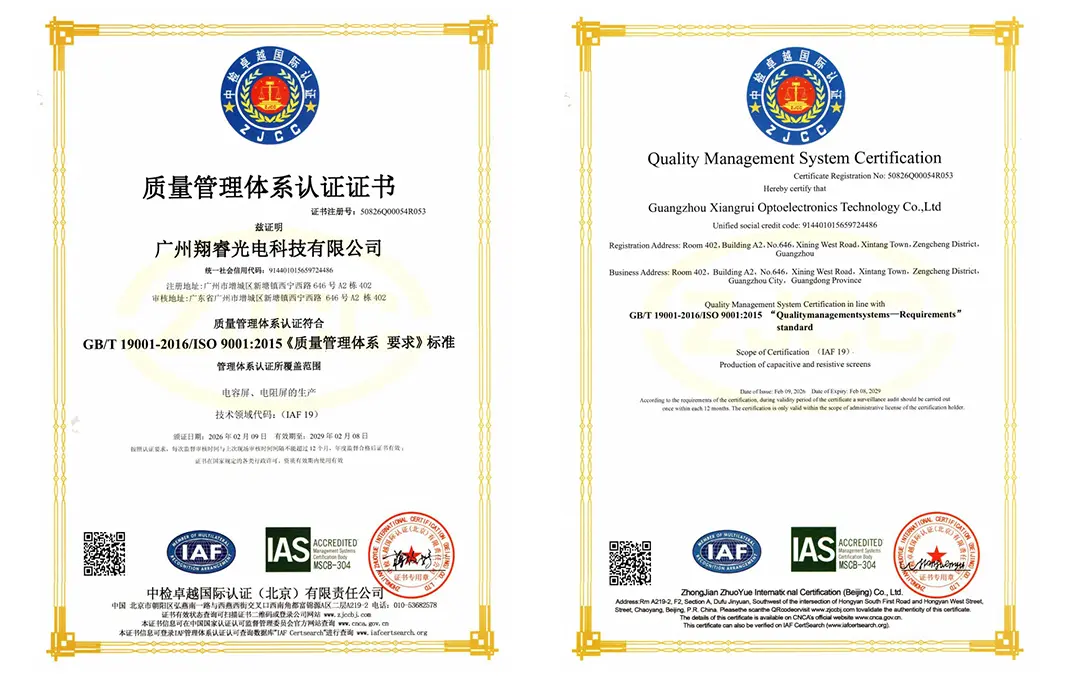
Strictly operating under accredited ISO 9001:2015 Quality Management and ISO 14001:2015 Environmental Management certifications, ensuring traceable, highly standardized fabrication processes.
Guangzhou Xiangrui holds over 30 utility patents and technological innovation certifications, repeatedly securing the prestigious "Guangdong High-Tech Enterprise" designation.
Understanding the unparalleled supply chain density, engineering agility, and cost-efficiency advantages that keep China at the heart of global HMI production.
In China's Pearl River Delta, raw material providers (high-grade ITO films, specialized PET sheets, custom cover glass, flexible flat cables, and controller IC chipsets) operate within a 50-mile radius. This unmatched local supply ecosystem allows us to procure raw components instantly, keeping lead times minimal and shielding global buyers from sudden supply chain shocks.
Our in-house R&D and CAD engineering teams can translate customer interface schematics into custom working touch screen prototypes in as little as 5 to 7 working days. Whether configuring specialized custom spacer dots, tailored tail routings, or integrating ruggedized custom tail shield designs, our fast validation feedback loop accelerates your product's Time-To-Market.
Through proprietary manufacturing automation and optical yields averaging above 98.5% across all laminations, we deliver significant unit cost savings back to our buyers. This efficiency allows us to execute extremely customizable low-volume, high-mix runs for niche medical or specialty industrial devices without price gouging.
Leverage this technical reference table to compare performance specs and select the ideal technology stack for your application environment.
| Performance Metric | Analog Resistive Touch Panels | Projected Capacitive (PCAP) Panels | Xiangrui Premium Custom Integrations |
|---|---|---|---|
| Actuation Medium | Any pressure-inducing item (Finger, Glove, Stylus, Pen) | Conductive element only (Bare finger, Conductive glove) | Hybrid controllers supporting dual interface designs |
| Environmental Shielding | Inherently impervious to dirt, dust, oil, and liquid condensation | Requires advanced FW algorithms to filter out liquid layers | Optically bonded interfaces reaching true IP65 / IP67 protection |
| Electromagnetic Noise (EMI) | Completely unaffected by surrounding radio/electrical noise | Requires hardware tuning to mitigate electrical interference | High-shielded FPC tail routing and specialized ground lines |
| Surface Durability | Flexible polyester (PET) top cover; subject to scratch wear | Tempered cover glass (up to 7H Mohs hardness scale) | Glass-Film-Glass (GFG) setups providing heavy anti-scratch armor |
| Optical Performance | Typically 75% to 85% light transmission due to internal air gap | Up to 90%+ light transmission with optical dry/wet bonding | AR (Anti-Reflective) & AG (Anti-Glare) index-matching coatings |
| Operating Temp Range | Standard: -20°C to +70°C | Standard: -10°C to +60°C | Ultra Wide: -30°C to +85°C (Military & Heavy Industry Rated) |
Modern touch integration projects require deep engineering adaptation to succeed in the field. Guangzhou Xiangrui's products are optimized for a highly diverse range of vertical industries worldwide:
Installed inside CNC controllers, automated assembly line monitors, and petrochemical control dashboards. Our 4-wire and 5-wire resistive interfaces operate continuously through oil residues, metallic particulate buildup, and heavy voltage oscillations.
Widely integrated into chemical analysis platforms, diagnostic imaging systems, and patient ventilation systems. Easy wipe-down sterilization and compatibility with latex surgical gloves make our touch panels a staple in clinical environments.
Engineered to withstand direct sunlight exposure and rain. Our touch screens feature customized UV block filters, preventing yellowing and delamination under intense sunlight, while retaining response sensitivity during rainstorms.
Future Trend Alert: The Rise of Glass-Film-Glass (GFG) & Optical Bonding
The global industrial market is rapidly transitioning toward GFG (Glass-Film-Glass) structures. By adding a thin micro-sheet of flexible glass over the top PET layer of a resistive sensor, engineers gain the scratch and chemical resistance of a capacitive glass front, while retaining the glove-friendly, noise-immune physical pressure activation mechanism of a resistive core. Guangzhou Xiangrui is at the forefront of this trend, utilizing advanced optical bonding (OCA/LOCA) in cleanrooms to eliminate internal air gaps. This reduces internal reflections, increases sunlight readability, and drastically improves structural impact survival rates.
Ensure critical operational compliance and standard validation when sourcing resistive touch panels and custom button assemblies.
To secure a reliable touch interface that operates error-free for years, the procurement team must demand strict validation metrics. At Guangzhou Xiangrui, our production incorporates the following quality checks:
We perform 100% active grid testing on our analog screen layers, guaranteeing deviations do not exceed ±1.5% across the active coordinate matrix.
Test units from every single production lot undergo high-temperature aging (85°C for 240 hours) and thermal shock testing (-40°C to +85°C cycles) to prevent adhesive failure.
Every switch layout is certified to withstand over 1 million single-point finger actuations without resistance drifting or layer breakdown.
All raw chemicals, inks, ITO films, and solder joints utilized across our manufacturing workflows conform fully with international green directives, including RoHS 3.0 (Restriction of Hazardous Substances) and REACH (Registration, Evaluation, Authorization and Restriction of Chemicals). This guarantees that your final devices pass import compliance audits and comply with regional environmental safety requirements in the European Union, United States, and Japan.
Our ISO 9001:2015 tracking system guarantees full transparency, providing raw material trace reports and component batch identification sheets for every production run we ship.
Get answers to common engineering questions regarding customization, interface compatibility, and performance optimization.
In a 4-wire resistive panel, both X and Y coordinate measurements are split between the top flexible film and the bottom glass layer. As the top PET film flexes, mechanical wear degrades its electrical resistance, causing calibration drift. In a 5-wire resistive panel, all coordinates are measured from the bottom glass layer, while the top film acts only as an electrical probe. This structural change increases the screen's operational life from 1 million to over 35 million actuations, making 5-wire screens the standard for high-traffic industrial equipment.
Yes, absolutely. By using specialized ITO films, high-density optical adhesives, and custom glass substrates, we design custom panels rated for extreme operating temperatures between -30°C and +85°C. These configurations prevent bubbles and delamination in freezing conditions or high-heat environments.
We offer both dry bonding (using OCA sheets) and wet bonding (using liquid LOCA silicones) inside our cleanrooms. Optical bonding fills the internal air gap between the touch sensor and the display module. This significantly reduces internal light reflections, enhances outdoor readability under direct sunlight, and prevents internal condensation in high-humidity areas.
Yes, all materials utilized across our manufacturing workflows conform fully with international green directives, including RoHS 3.0 and REACH. This guarantees that your final devices pass import compliance audits and comply with regional environmental safety requirements in the European Union, United States, and Japan.
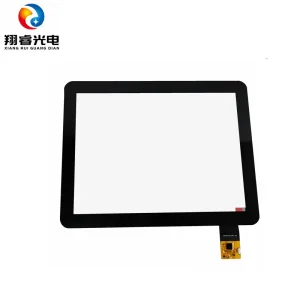
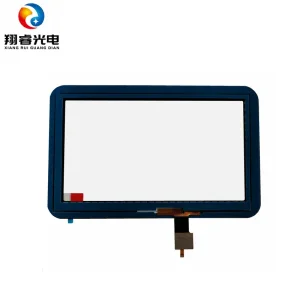
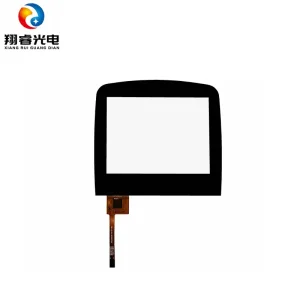
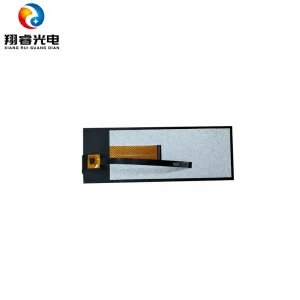
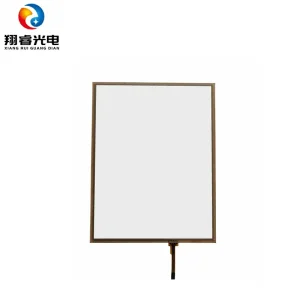
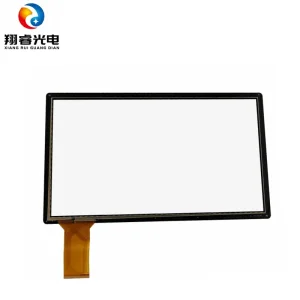
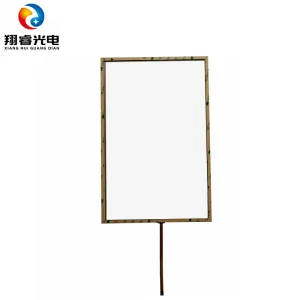
Complete custom options, various screen sizes, optical bonding configurations, and wide-temperature modules manufactured in China.
 Xiangrui Optoelectronics