The Technical Evolution of 10-Point Multi-Touch Interfaces
In modern Human-Machine Interfaces (HMIs), touch screens have transitioned from simple cursor manipulation tools to complex, highly reactive control hubs. The standard 10-point projected capacitive (PCAP) touch screen represents the modern apex of this evolution. Historically, resistive systems and early capacitive arrays were limited to single or dual-touch gestures, often struggling with noise interference, moisture, and operational wear. Today, multi-touch systems are baseline requirements for enterprise-grade commercial and industrial equipment.
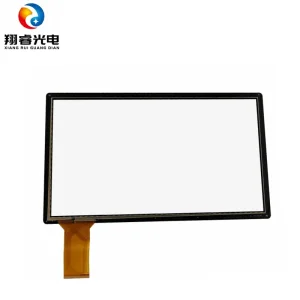
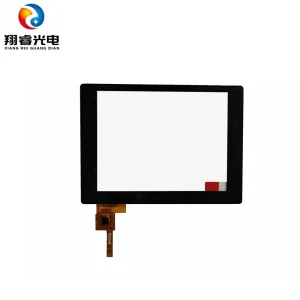
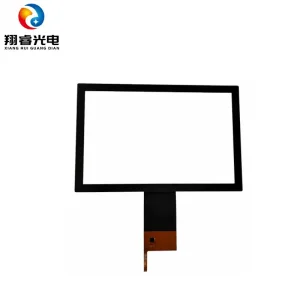
The architecture of a 10-point touch screen relies on a grid of microscopic electrostatic sensors embedded in a micro-engineered layer of Indium Tin Oxide (ITO). When a conductive input (such as a human finger) alters the electrostatic field at specific grid junctions, the controller chip (such as those designed by EETI, ILITEK, or Goodix) analyzes the mutual capacitance shift. By scanning this sensor matrix hundreds of times per second, the device can register and process up to ten discrete touch coordinates concurrently. This allows complex physical inputs like rotations, multi-finger pinches, swipes, and multi-user configurations to operate with sub-millisecond latency.
Additionally, modern controller firmware must execute complex real-world filtering algorithms. For instance, in outdoor environments, ambient moisture or heavy rain can mimic human touch commands due to the conductive nature of water. Advanced OEM touch controllers deploy smart water-rejection firmware that distinguishes between localized, dynamic finger capacitance signatures and uniform capacitive shifts caused by moisture layers, maintaining operational integrity in wet conditions.
True Multi-Touch Sensitivity
Simultaneous detection of up to 10 points with low latency (< 10ms), enabling complex multi-finger gestures and collaborative interfaces.
IP65 Waterproofing
Designed with physical optical bonding (OCA/OCR) and custom seals to prevent dust and heavy water ingress on outdoor machinery.
EMI/EMC Shielding
Incorporated design layers that filter high frequency electrical noise from industrial motors and welding units, eliminating ghost touches.
Global Enterprise Procurement Dynamics for Touch Screens
Procurement managers in the B2B tech space operate under stringent parameters: lifetime cost, environmental resilience, custom dimensions, and component longevity. The global supply chain now prioritizes OEM touch screen manufacturing services that provide extensive customization options (ODM/OEM) rather than off-the-shelf catalog parts. A product's operational life can stretch over 7 to 10 years in medical, aerospace, or industrial controls, making sourcing continuity a primary business concern.
Currently, the demand for custom optical bonding (OCR/OCA) has surged. Traditionally, air bonding (or tape bonding) left a thin air gap between the display panel and the touch screen glass. This air gap, however, presents optical and physical disadvantages: it refracts incoming light, reducing readability under bright sun, and creates a potential point of condensation and moisture trap in humid settings. By utilizing advanced optical bonding techniques—filling the gap with highly transparent optical silicone or resin—manufacturers dramatically increase drop-durability, impact resistance, and optical contrast under direct ambient sunlight.
Technology Layer
Tape / Air Bonding
Optical Bonding (OCA / OCR)
Key Industrial Benefit
Optical Clarity
~86% Light Transmission
>99% Light Transmission
High outdoor sunlight legibility
Impact Resistance
Standard mechanical resistance
Up to 3x higher absorption
IK08 to IK10 impact survival rates
Environmental Protection
Susceptible to condensation / dust
Hermetically sealed, no condensation
Stable performance in humid climates
Parallax Effect
Visible angle deviation
Zero parallax error
Critical for high-accuracy medical touch inputs
Guangzhou Xiangrui Optoelectronics: Over a Decade of Touch Screen Innovation
Established in 2010 in Guangzhou, China, Guangzhou Xiangrui Optoelectronics Technology Co., Ltd. has established itself as an industry leader in resistive touch panels, capacitive touch screens, cover glass custom treatments, and complete LCD module bonding products. Spanning a modern 3,000-square-meter facility, our manufacturing framework is optimized with high-grade dust-free purification environments, including specialized Class 100, Class 1,000, and Class 10,000 cleanrooms. This configuration ensures that every phase of laminating, bonding, and testing meets the stringent cleanliness standards required to eliminate dust micro-particles.
By maintaining strict adherence to ISO 9001:2015 quality management guidelines and ISO 14001:2015 environmental standards, Guangzhou Xiangrui ensures complete traceability from initial raw materials to completed, packaged systems. In recognition of our R&D performance and technical patents, the enterprise was officially awarded the prestigious title of "Guangdong Province High-tech Enterprise" in 2022.
2010
Company Established
Over 13 years of engineering excellence in capacitive & resistive touch structures.
30+
Invention Patents
Secured IP in cover glass chemical tempering and OCA lamination methods.
Shipping precision-engineered optical hardware to clients worldwide.
China Factory 4.0: Supply Chain Resilience & Agile Manufacturing
The integration of industrial automation under the China Industry 4.0 blueprint has altered how display electronics are manufactured. Guangzhou Xiangrui has integrated automated optical inspection (AOI) units, precision CNC glass routers, and robotic dispensers for liquid optically clear adhesive (LOCA/OCR). Automated lamination ensures high consistency across production runs, preventing issues such as air bubble defects, mechanical delamination, and yellowing, which often impact manually bonded screens over time.
Supply chain resilience is a key asset of Guangzhou Xiangrui’s geographic footprint in the Pearl River Delta industrial hub. By localizing raw materials—such as high-grade chemical strengthened aluminosilicate cover glasses, robust flexible printed circuit (FPC) tails, and controller ICs—we mitigate cross-border logistic challenges. This ensures stable production timelines and reliable lead times for international OEM buyers, regardless of global trade fluctuations.
Additionally, this localized ecosystem allows for agile prototyping. When a client requests custom physical modifications, such as a stepped cover glass for flush mount integration, chemical etching for anti-glare (AG) properties, or specialized light polarization treatments, we can quickly produce test samples, dramatically compressing product development lifecycles.
Diversified Applications and Technical Configurations
Modern 10-point capacitive touch panels must adapt to diverse, demanding environmental environments. To ensure consistent performance across industries, Guangzhou Xiangrui categorizes its custom solutions based on operational realities:
Medical Diagnostic & HMI Controls
In healthcare, display panels must support multi-point control while operators wear thick surgical gloves. Chemical resistance is crucial: screens are cleaned frequently with harsh disinfectants like isopropyl alcohol and hydrogen peroxide. Guangzhou Xiangrui addresses these needs by integrating anti-microbial treatments, chemical strengthening, and glove-compatible controller tuning.
Industrial Automation & Rugged Field PC
Heavy machinery generates massive electromagnetic fields, which can trigger "ghost touches" in poorly shielded PCAP displays. Guangzhou Xiangrui mitigates this electromagnetic interference (EMI) by incorporating custom grounding arrays, shielding meshes, and industrial-grade EETI controllers configured with high signal-to-noise ratio (SNR) thresholds.
Outdoor Kiosks & Palm Recognition Payments
Outdoor displays face exposure to varying climates, UV radiation, and physical vandalism. Our outdoor touch panels are engineered with UV-reflective layers to prevent yellowing, and thick, chemically tempered cover glass achieving up to IK10 impact ratings. The multi-touch systems are also optimized for high-security palm print scanners and automated vending screens.
Automotive & Smart Mobility Displays
Vehicle cabins experience extreme temperature fluctuations. Guangzhou Xiangrui designs wide-temperature automotive touch screen panels capable of operating continuously between -30°C and +85°C without sensor lag, mechanical warping, or optical degradation.
Technical FAQ: B2B Touch Screen Sourcing
Critical engineering answers to assist technical procurement, project managers, and systems integrators.
Q1: What are the main differences between OCA and OCR optical bonding for industrial displays?
Optically Clear Adhesive (OCA) uses pre-cured film tape, ideal for smaller, standardized displays requiring high optical precision. Optically Clear Resin (OCR), also known as liquid bonding, uses a liquid silicone or acrylic polymer that is UV-cured post-lamination. OCR is preferred for large displays, curved interfaces, or setups with variable thickness. It offers excellent vibration absorption and gap-filling performance.
Q2: How does Guangzhou Xiangrui design capacitive touch screens to operate reliably with industrial gloves?
We tune the controller chip's firmware (specifically EETI and ILITEK platforms) to increase the sensitivity gain. This configuration enables the sensor grid to detect the weaker electric field change caused by a finger through nitrile, latex, or thick leather work gloves, while retaining advanced palm rejection algorithms.
Q3: What cover glass surface treatments can be customized for outdoor sunlight-readable applications?
We offer three main treatments: Anti-Glare (AG), which chemically etches the glass surface to scatter specular reflections; Anti-Reflective (AR), a multi-layer magnetron sputtering coating that reduces light reflection to below 1%; and Anti-Fingerprint (AF), a hydrophobic and oleophobic coating that repels oils and sweat, making the surface easy to clean.
Q4: Can these panels support legacy OS installations like Linux and Windows Embedded?
Yes, our standard USB and I2C touch controller interfaces are HID-compliant. They support native plug-and-play functionality across current platforms, including Windows 10/11, Linux distributions (Ubuntu, Debian, RedHat), Android, and macOS. For legacy systems, we provide custom drivers and configuration utilities to map coordinates accurately.
Q5: What certifications do Guangzhou Xiangrui products hold for international export?
Our factory operates under ISO 9001 and ISO 14001. All products comply with international directives, including CE, FCC, RoHS, and REACH. For specialized medical or automotive orders, we assist clients in conducting complete testing protocols to meet industry-specific regulations.
Industrial Grade Capacitive & Resistive Screens
Highly durable interface units designed for heavy processing plants, medical equipment, and demanding transport networks.
 Xiangrui Optoelectronics