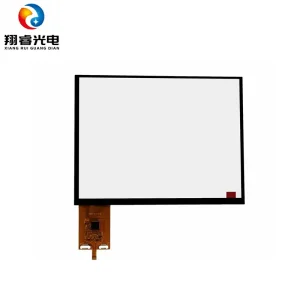
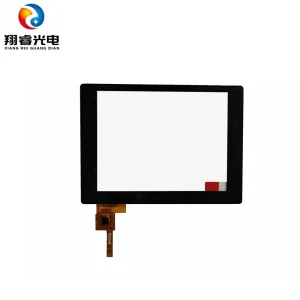
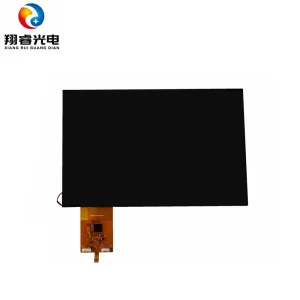
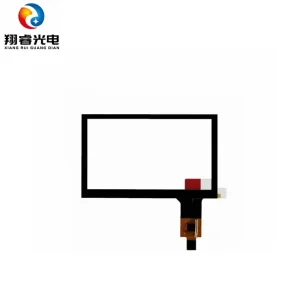
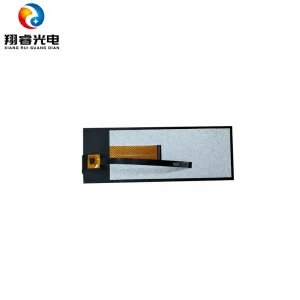
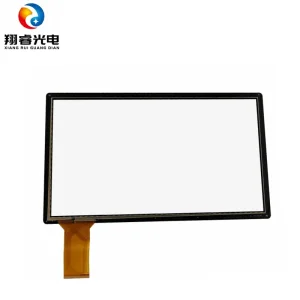
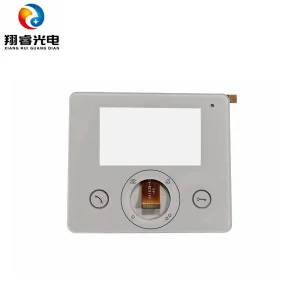
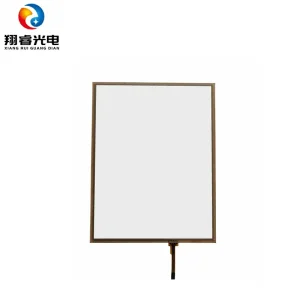
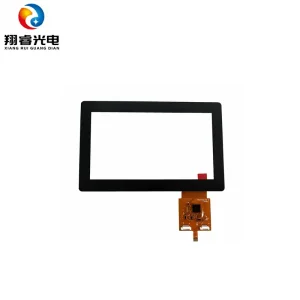
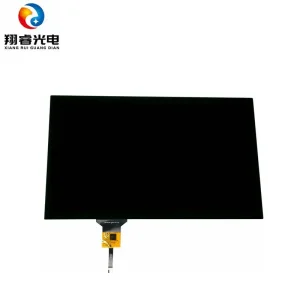
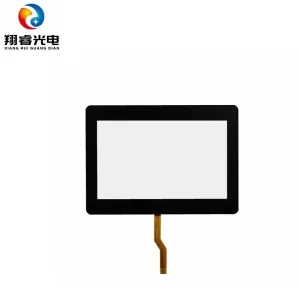
Explore our highly integrated engineering configurations, utilizing top-tier controller ICs, rugged cover glass, and specialized sensor alignments.
A comprehensive analysis of the shift towards high-reliability 17-inch form factors in modern human-machine interfaces.
The industrial display market has evolved from rudimentary, low-resolution push-button interfaces into highly interactive, data-dense control hubs. Among these developments, the 17-inch touchscreen has emerged as an industry-standard sweet spot. Offering a balanced aspect ratio (typically 5:4 or 16:10 widescreen variants) and sufficient surface area for complex graphical user interfaces (GUIs), it provides the spatial layout required to display multifaceted process schematics, diagnostic data, and simultaneous control sequences without overwhelming the operator.
As automation scales within Smart Manufacturing and Industry 4.0 paradigms, the demand for custom OEM touch assemblies has surged. Hardware designers face strict challenges: environments filled with electromagnetic noise, washdown procedures using harsh chemical solvents, fluctuating ambient temperatures, and the need for seamless interaction with heavy work gloves. Consequently, off-the-shelf capacitive and resistive products often fail to meet long-term durability metrics, highlighting the critical role of customized industrial-grade touch solutions.
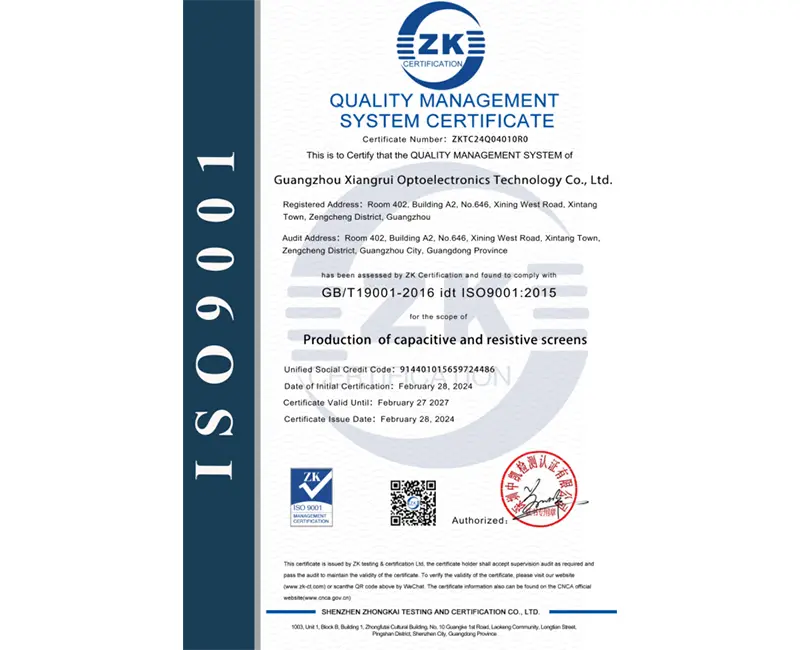
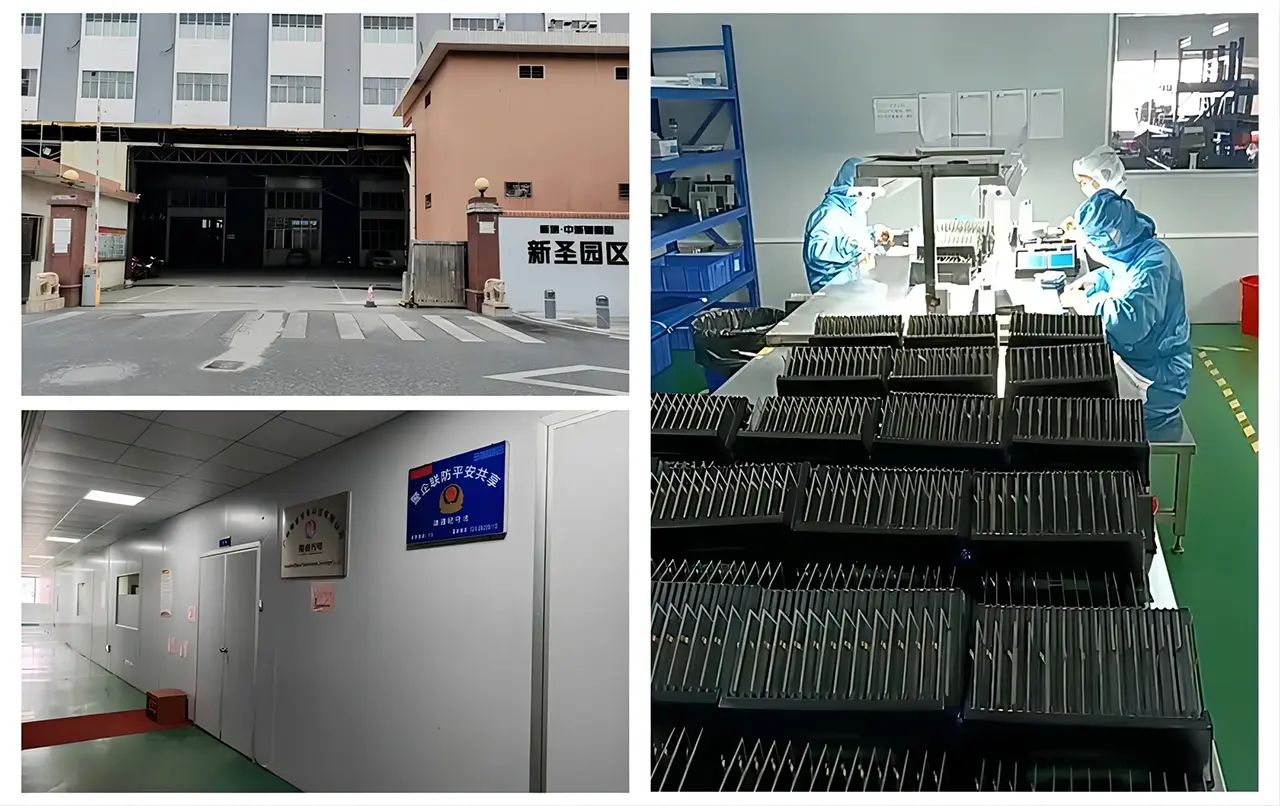
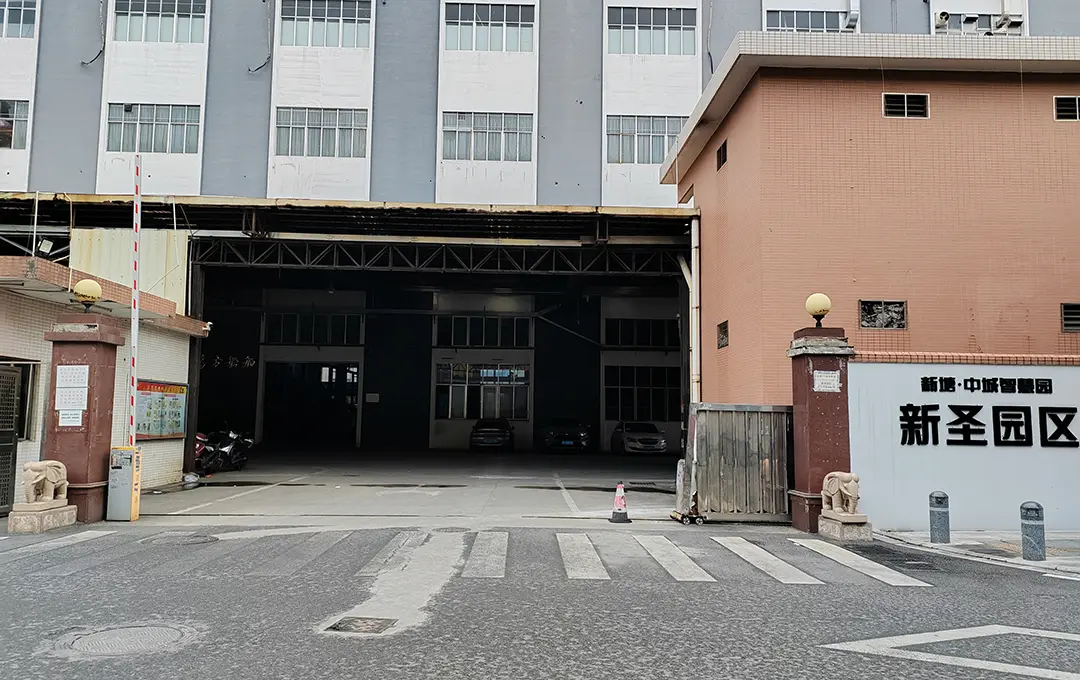
Founded in 2010 and located in Guangzhou, China, we are a company dedicated to the research and development, production, sales, and service of resistive touch panels, capacitive touch panels, cover glass, and module bonding products. We provide customized production of various touch screens, as well as OEM and ODM services.
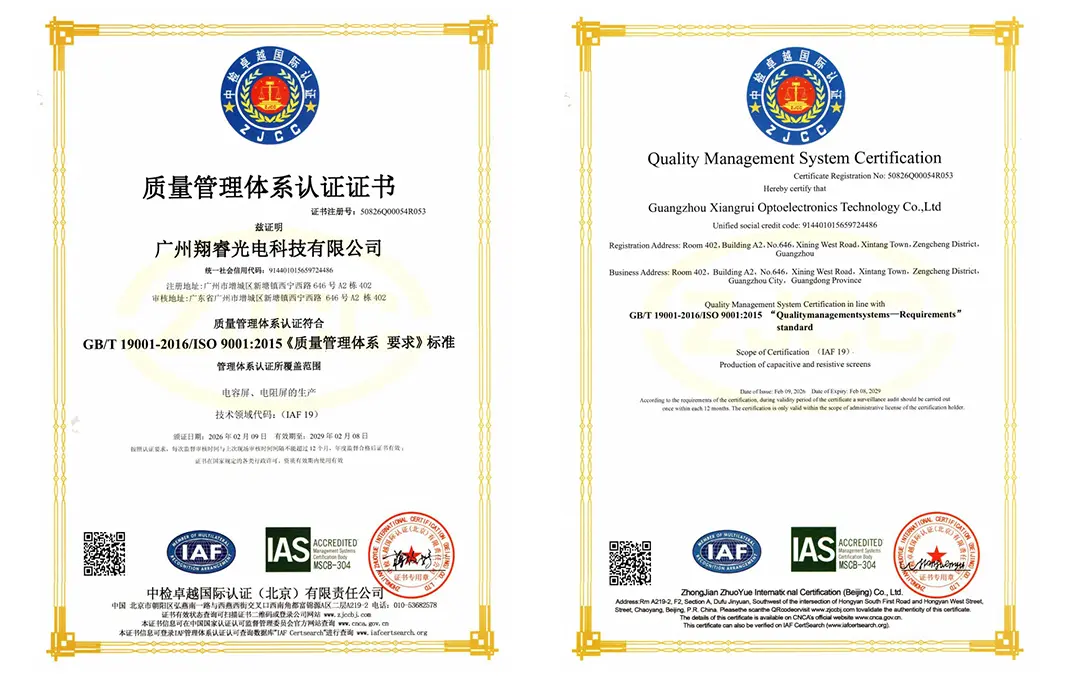
Our company has obtained the ISO 9001 and ISO 14001 certificates. Our products are widely used in fields such as industrial control, medical equipment, home appliances, smart home, outdoor products, and palm print recognition payment systems.
Our state-of-the-art facilities ensure dust-free execution of critical lamination processes and high fabrication yield.
Exploring the performance demands and engineering layouts across different high-stress environments.
Operating near factory machinery exposes systems to massive electromagnetic fields, vibration, and dust accumulation. A 17-inch industrial touchscreen must utilize a thick cover glass (IK08 or IK10 impact ratings) and advanced capacitive controller ICs (such as EETI or ILITEK) to filter out common-mode noise. This ensures accurate input tracing even with heavy industrial work gloves.
Sterile environments require screens that remain operational when wet with saline or water. The touch controller firmware must support water-rejection algorithms that distinguish between drop splashes and deliberate multi-finger gestures. The outer layer must also withstand repeated sanitation cycles using chemical disinfectants.
High-traffic commercial environments subject interactive kiosks to constant use and physical wear. A 17-inch touchscreen designed for self-service systems requires Anti-Glare (AG) or Anti-Reflective (AR) optical coatings to preserve readability under bright fluorescent lights, combined with Anti-Fingerprint (AF) coatings to maintain clean surfaces.
A proven track record in manufacturing quality, technical research, and reliable customer service.
We maintain the spirit of reputation first, customer first, quality satisfaction, delivery on time, and good faith cooperation. This focus drives hand-in-hand development with top enterprises and well-known manufacturers, sustaining successful, long-term partnerships.
We have passed the ISO 9001 quality management system and ISO 14001 environmental management system certifications. Highly standardized and regulated workflows ensure that all products, from raw materials to final packaging, meet rigorous quality standards.
Under the leadership of our R&D department, we have secured numerous utility model and invention patents. These efforts earned our factory the title of Guangdong Province High-Tech Enterprise in 2022.
By integrating cover glass customization, sensor manufacturing, and optical bonding under one roof, we eliminate intermediate shipping and alignment costs. This integrated model allows us to control the assembly environment, reducing particulates and maximizing light transmittance.
Whether your application requires optical bonding (OCA/LOCA) for outdoor readability, or custom silk-screened logos on the cover glass, our engineering team is equipped to handle structural customizations efficiently.
Understanding the design trends, materials, and processes shaping the next generation of industrial touch displays.
Traditional air bonding leaves an air gap between the touch sensor panel and the underlying TFT-LCD screen. This gap causes light refraction, resulting in glare and reduced display readability in high-ambient-light environments.
Optical bonding fills this gap with a optical-grade adhesive (LOCA or OCA), matching the refractive index of glass. This removes internal reflections, improves contrast by up to 400%, and increases physical impact resistance by up to 3 times. It also prevents internal condensation under high humidity or rapid temperature changes.
The core performance of a 17-inch touchscreen depends heavily on its controller IC. Leading setups from Cypress, EETI, and ILITEK utilize high-voltage driving circuits to achieve a high Signal-to-Noise Ratio (SNR). This allows the controller to separate touch signals from background noise, supporting features like multi-touch tracking, wet-finger tracking, and gloved operation.
How our localization in Guangzhou, China, helps reduce development cycle times and total cost of ownership.
Our facility in Guangzhou sits at the heart of the world's most concentrated optical and display hardware manufacturing corridor. This strategic positioning allows us to source raw materials, tempered glass, custom flex cables (FPC), and specialized driver chips locally.
By minimizing the logistics chain for components, we reduce production lag times, mitigate global shipping delays, and lower overall material costs.
We handle precision cover glass cutting, chemical tempering, sensor printing, cleanroom assembly, and testing in-house. This comprehensive control allows us to fast-track sample prototypes and manage strict quality control, preventing defective units from reaching shipping stages.
Our design-to-prototype workflow delivers customized cover glass shapes, printed borders, and FPC tail redesigns in 2-3 weeks, helping speed up product launch timelines for our clients.
Every touch panel batch undergoes rigorous testing, including thermal cycling (-30°C to +85°C), high-humidity storage, ESD electrostatic testing, and drop tests, ensuring compliance with industrial equipment requirements.
Ensuring your OEM components integrate smoothly into certified devices for international markets.
Selling industrial or medical equipment globally requires meeting strict regulatory certifications. Touch assemblies, which function as both user interfaces and structural seals, must comply with international standards to ensure safety and system reliability. Our manufacturing processes are designed to support clients in achieving these certifications.
All manufacturing processes use RoHS-compliant, mercury-free materials. We also supply components that support CE and FCC compliance at the system level.
Our touch screens support IP65, IP66, and IP67 front-panel protection when integrated into suitable enclosures. This guarantees resistance to water jets, dust ingress, and moisture.
To support industrial lifecycles, we offer form-fit-function replacement availability for up to 7-10 years, avoiding the disruption of premature redesigns.
Expert answers to common engineering and sourcing questions regarding capacitive and resistive touch systems.
Optical bonding uses a cleanroom process to fill the air gap between the touch sensor glass and the LCD panel with an optical adhesive (LOCA or OCA). This matches the refractive index of the components, removing internal reflections and improving screen contrast under sunlight. Air bonding, on the other hand, leaves an air gap, which can allow dust and moisture to accumulate between the display layers.
We address EMI by using high-quality touch controller ICs (such as EETI or ILITEK) that feature integrated noise-filtering algorithms. We also configure the controller firmware to use frequency-hopping techniques, enabling the system to bypass noise frequencies generated by nearby heavy machinery.
Yes, our projected capacitive (PCAP) touch sensors are configured with specialized firmware settings that support gloved touch and water rejection. The controller can distinguish between accidental water contact (like splashes or mist) and deliberate inputs from gloved fingers.
We offer several surface coatings to optimize usability: Anti-Glare (AG) to reduce reflections, Anti-Reflective (AR) to maximize light transmission in bright settings, and Anti-Fingerprint (AF/oleophobic) treatment to keep the screen clean from oils and smudge marks.
Our company operates under ISO 9001 quality management system and ISO 14001 environmental management system certifications. These standard operating guidelines cover our entire process from incoming raw material inspection through production to final shipping.
We support OEM/ODM designs. Our engineering team helps design and prototype cover glass profiles, silk-screened logos, FPC interfaces, and custom driver firmware, making it easier to evaluate designs before moving to volume manufacturing.
A selection of custom frames, optical bonding, and resistive touch products built for diverse human-machine interfaces.
 Xiangrui Optoelectronics