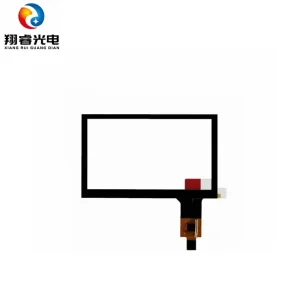
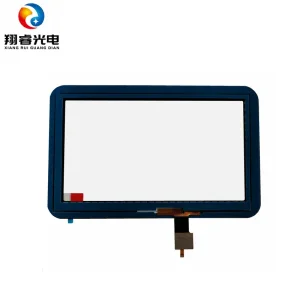
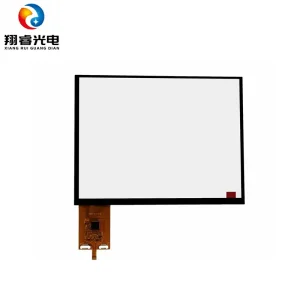
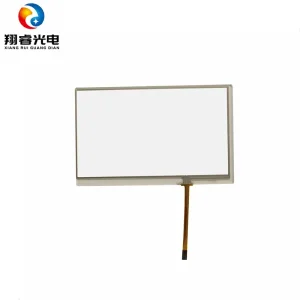
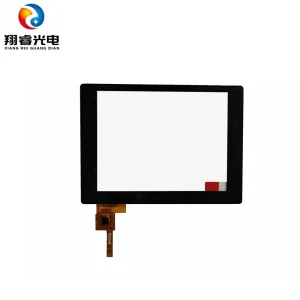
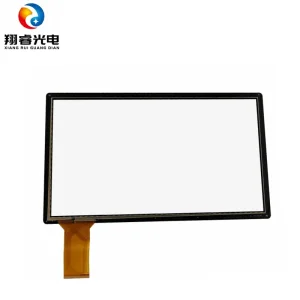
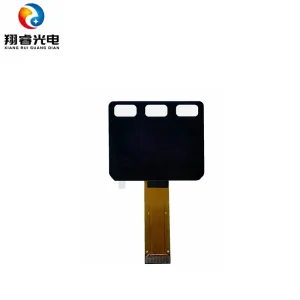
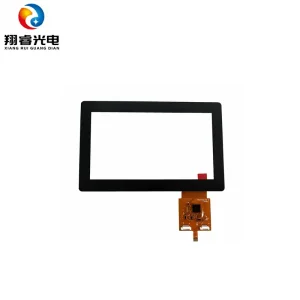
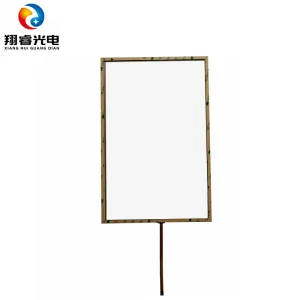
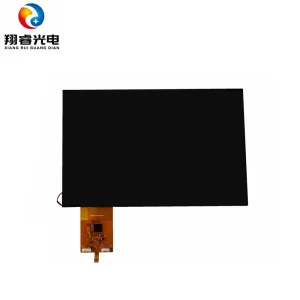
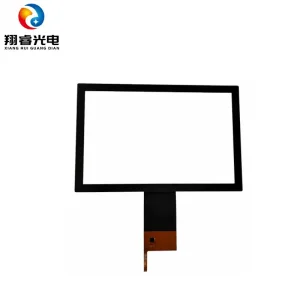
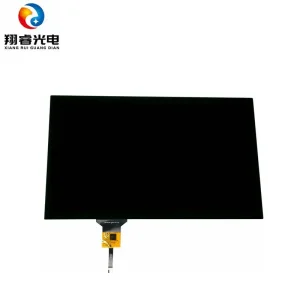
Explore our highly integrated capacitive and resistive assemblies, built to perform in rugged and custom industrial setups.
A Technical Deep Dive into Design, Panel Integration, and Customization Capabilities for Demanding Environments.
In the realm of modern human-machine interface (HMI) configurations, the 3.5 inch LCD display module stands out as a critical cross-industry sweet spot. Combining absolute spatial efficiency with high-definition rendering layouts, this display footprint is widely implemented in complex handheld hardware, medical diagnostic displays, critical smart grid interfaces, and marine instrumentation. Selecting an optimal OEM factory is not merely a question of sourcing raw glass panels; it represents a commitment to comprehensive technological co-development, cleanroom encapsulation integrity, and long-term lifecycle reliability.
As a leading OEM 3.5 Inch LCD display manufacturer, Guangzhou Xiangrui Optoelectronics Technology Co., Ltd. addresses the evolving technological paradigms. From choosing standard active-matrix thin-film transistor (TFT) structures to advanced In-Plane Switching (IPS) wide-view technologies, our manufacturing lines process raw substrates into application-specific display modules designed to maintain exceptional optical clarity under variable thermal stress.
Integrating high-transmission silicate cover glasses and durable chemically-strengthened materials with anti-glare (AG) and anti-reflective (AR) surface treatments for superior structural resilience.
Extensive engineering support for diverse configurations: SPI, RGB (24-bit/18-bit), MIPI DSI, and traditional MCU interfaces, ensuring seamless communication with host microcontrollers.
Optical bonding (using premium Liquid OCA/OCR resins) eliminates the inner air gap, minimizing internal reflections, optimizing contrast, and eliminating dust ingress vectors.
A decade of design innovation, manufacturing infrastructure, and quality assurance.
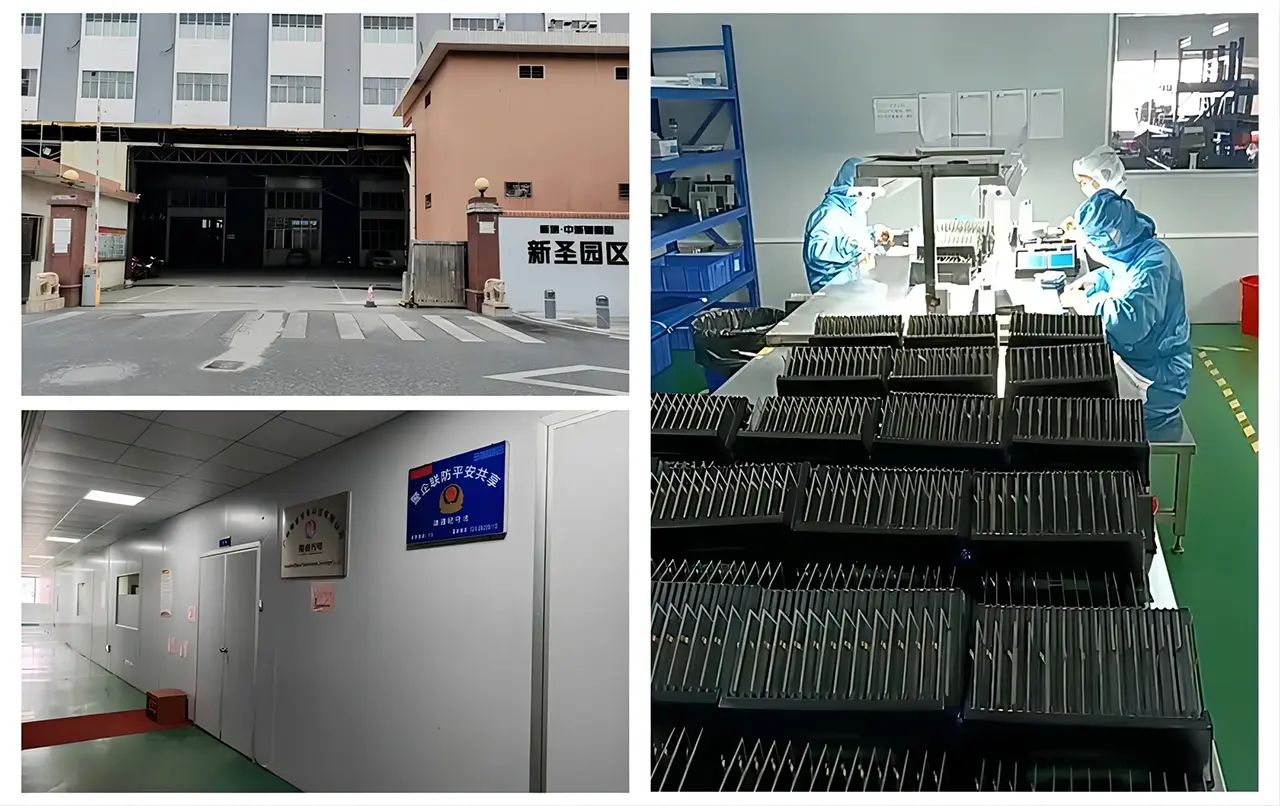
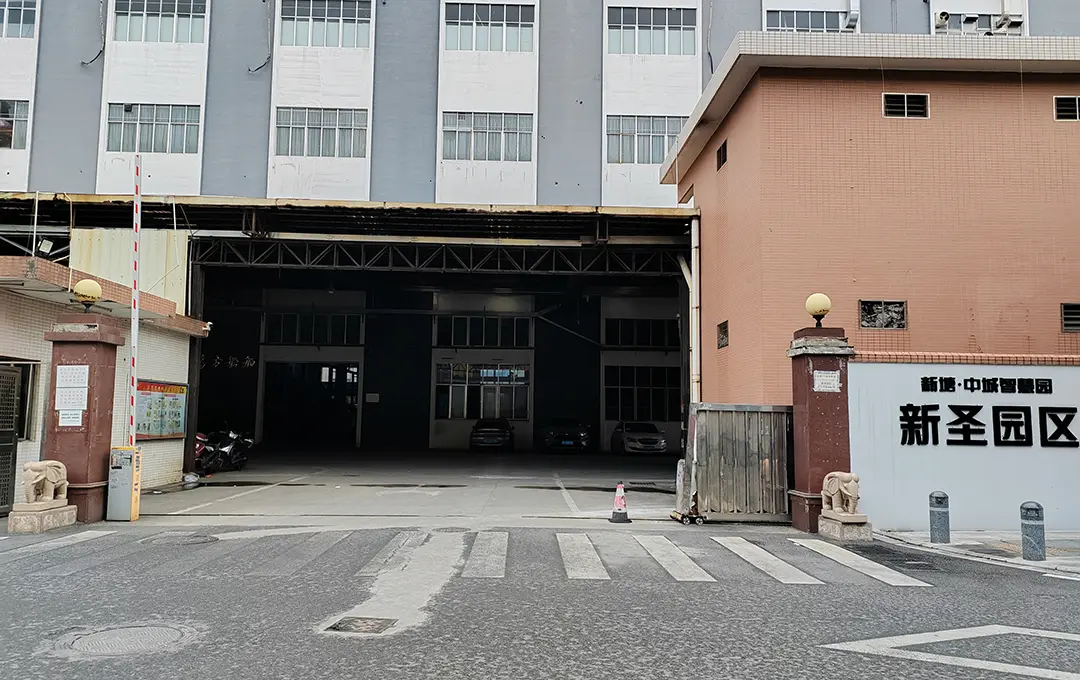
Founded in 2010 in Guangzhou, China, Guangzhou Xiangrui Optoelectronics Technology Co., Ltd. is a dedicated manufacturer specializing in resistive touch panels, capacitive touch panels, cover glass integration, and advanced display module bonding. We provide customized design, rapid prototyping, and scalable OEM & ODM services for touch/display solutions globally.
Spanning a modern 3,000 square meter facility, our factory houses state-of-the-art Class 100, Class 1,000, and Class 10,000 dust-free cleanrooms. These controlled environments ensure the high-level cleanliness required for precise optical bonding, lamination, and backlighting integration, preventing defect encapsulation and ensuring high yield rates.
Guangzhou Xiangrui is certified to ISO 9001:2015 (Quality Management) and ISO 14001:2015 (Environmental Management). Our persistent commitment to technological progress has yielded over 30 invention and utility patents, establishing us as a certified High-Tech Enterprise in Guangdong Province.
Our engineering teams focus on advanced HMI technology, developing new processes, optimizing optical stacks, and qualifying robust cover glass assemblies. Through rigorous in-house environmental tests—including thermal cycling (-40°C to +85°C), high-humidity storage, ESD resistance, and drop impacts—we ensure our customized modules exceed industrial requirements.
By maintaining a robust network of key raw material suppliers and running highly automated production lines, we ensure long-term manufacturing continuity, protecting global clients from early component obsolescence and supply chain disruptions.
Delivering high-performance customized touch and screen solutions since 2010.
Equipped with Class 100 to Class 10,000 dust-free cleanroom manufacturing lines.
Driven by continuous technology development, research, and technical design optimization.
Supplying high-reliability LCD and touch components to leading brands globally.
Analyzing key parameters that purchasing managers and hardware engineers use when selecting 3.5" LCD manufacturers.
Guangzhou's highly integrated electronics ecosystem allows us to source raw driver ICs, FPCs, polarizers, and backlights with minimal transit delays, shortening production schedules.
All modules conform to international standards, including RoHS, REACH, CE, and FCC. We coordinate with local labs for UL testing and compliance certification.
From initial mechanical CAD reviews and optical adjustments to FPC redesigns and localized technical support, we help minimize hardware integration delays.
For key hardware designs, standard consumer-grade screens often fail to meet long-term field stability requirements. The table below details the critical technical differences between standard and industrial-grade 3.5" LCD screen assemblies:
| Technical Features | Standard Commercial LCD | Industrial-Grade 3.5" LCD Module |
|---|---|---|
| Operating Temperature | 0°C to +50°C | -20°C to +70°C (Extended options: -30°C to +85°C) |
| Backlight Lifespan (MTBF) | 10,000 - 15,000 Hours | 30,000 - 50,000+ Hours (High-reliability LED arrays) |
| Luminance / Brightness | 200 - 350 nits | 600 - 1000+ nits (Sunlight-readable options with optical bonding) |
| Touch Sensor Technology | Thin Film / Standard G+F | Chemically strengthened G+G Cover Glass / Heavy-duty resistive controllers |
| Electromagnetic Compatibility (EMC) | Basic consumer grading | Industrial HMI compliant (ESD air 15KV, contact 8KV, low EMI signature) |
Where 3.5 inch LCD screen panels operate as the primary interface under challenging conditions.
Used in portable defibrillators, blood pressure monitors, and infusion pump interfaces. High-contrast IPS screens offer medical staff clear viewing angles at any orientation, while optical bonding allows for frequent chemical disinfection.
Designed for modern wall-mounted thermostats, building automation panels, and commercial security control systems. Low-power idle configurations and responsive capacitive touch surfaces enable seamless smart home control.
Integrated into programmable logic controllers (PLCs), field testing tools, and handheld rugged instruments. Robust resistive touchscreens support operation with gloved hands in environments exposed to moisture, oils, and vibrations.
High engineering standards, verified certifications, and client-focused support.
We prioritize long-term, stable relationships with leading global enterprises and system integrators by focusing on manufacturing transparency, consistent product quality, and reliable delivery timelines.
Our ISO 9001 and ISO 14001 certified workflows cover everything from incoming raw material inspection (IQC) to final functional tests (OQC), ensuring consistent quality standards across batches.
Guangzhou Xiangrui's engineering department regularly designs new utility models and panel-stacking innovations, earning the official High-Tech Enterprise status of Guangdong Province in 2022.
How technical shifts like smart feedback, low-power layouts, and robust designs are changing touch-screen integration.
The global demand for compact HMI modules is shifting toward smart, integrated devices. Modern product developers are moving away from simple displays, choosing instead to integrate multiple controls—touch sensors, display chips, protective glass, and physical control buttons—into unified, plug-and-play modules. This integration reduces assembly steps and helps prevent common alignment and dust ingress issues.
At the same time, power efficiency has become a critical design factor, driven by the growth of battery-powered IoT devices and handheld test equipment. Newer 3.5-inch LCDs use high-efficiency LED backlights and advanced driver circuits that dynamically scale power usage based on ambient light levels. This allows portable devices to maintain outdoor readability without draining their batteries.
Additionally, industrial environments demand improved mechanical durability. Modern cover glasses now feature specialized chemical treatments, including Anti-Glare (AG), Anti-Reflective (AR), and Anti-Fingerprint (AF) coatings. These technologies keep screens legible under bright light and prevent optical issues caused by grease, water, or heavy mechanical wear.
Answers to common technical, manufacturing, and integration questions from product development engineers and procurement teams.
For custom display modules, prototyping generally takes 3 to 4 weeks. This includes designing the Custom FPC layout, matching the backlight guide, and adjusting the touch cover glass. Mass production runs are typically completed within 4 to 6 weeks, depending on materials and cleanroom scheduling.
Your choice depends on your controller's processing capability and screen refresh requirements:
• SPI: Ideal for lower-cost microcontrollers with limited pins. Best for static or slow-updating interfaces.
• MCU: Best for 8-bit or 16-bit systems with built-in framebuffers, offering simple control for standard UI layouts.
• RGB: Recommended for real-time, dynamic interfaces. Requires a faster processor with dedicated LCD peripheral support to handle continuous data streaming.
Air bonding uses double-sided tape along the outer borders, leaving a thin air gap between the touch panel and the LCD. This cost-effective method works well for indoor devices. Optical bonding fills this gap with an optically clear adhesive (OCA or OCR), reducing internal reflections, improving outdoor contrast, and preventing condensation or dust ingress.
To protect outdoor displays, we design capacitive touch sensors with high-frequency noise filtering and use controllers optimized for wet conditions. Combined with chemically-strengthened, anti-reflective cover glass and IP65-rated sealing gaskets, these assemblies remain functional when exposed to rain, condensation, or direct sunlight.
We provide full customization for the outer cover glass, including thickness options from 0.7mm to over 4.0mm for impact resistance, customized printing for brand logos, physical cutouts for mechanical switches, and specialized surface treatments like Anti-Glare (AG), Anti-Reflective (AR), and Anti-Fingerprint (AF) coatings.
Yes. As an ISO 9001 and ISO 14001 certified manufacturer, we verify that all components, adhesives, FPC substrate materials, and solder alloys comply with the latest RoHS and REACH regulations, simplifying safety certifications for global markets.
We source key components, such as LCD glass and driver ICs, from long-term supply partners. If a component is phased out, our engineering team can adapt the controller software or redesign the FPC layout to keep the display's form, fit, and function identical, minimizing integration changes for our customers.
Resistive touch screens remain a reliable choice for industrial systems where operators wear heavy gloves or where severe electrical interference can affect capacitive touch performance. They offer simple, pressure-based touch inputs, low system overhead, and high resistance to electrical noise.
Explore our wide-temperature, high-protection touch panels and optical bonding solutions designed for demanding environments.
 Xiangrui Optoelectronics