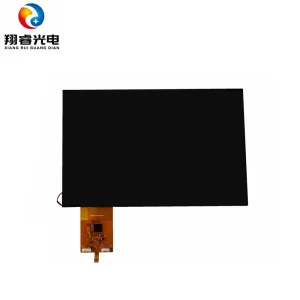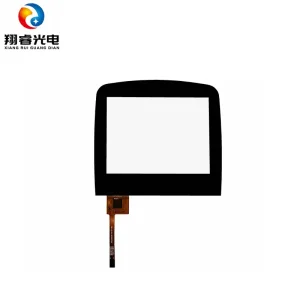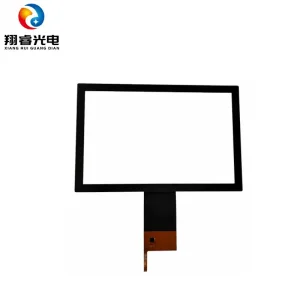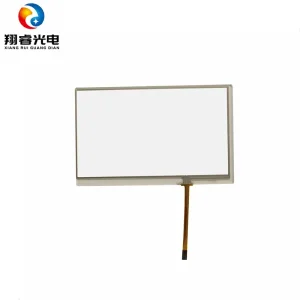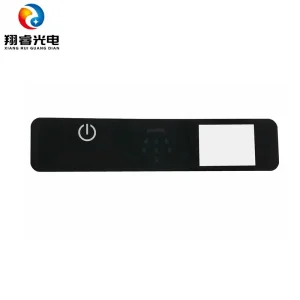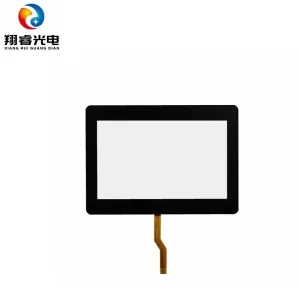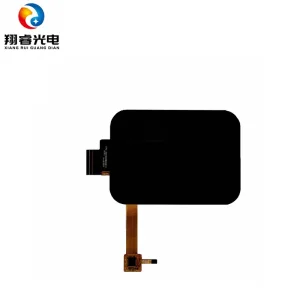
OEM Linux Touch Panel Manufacturers & Product Solutions

Custom industrial capacitive and resistive touch panel displays optimized for Seamless Linux Kernel Integration, high optical bonding, and harsh operating environment compliance.

Industrial Panel Production Line
Industry Whitepaper Executive Summary

Guangzhou Xiangrui Optoelectronics Technology Co., Ltd.

As industrial automation shifts toward advanced open-source architectures, embedded system developers increasingly favor Linux for Human-Machine Interfaces (HMIs). The critical interface for these platforms is the robust touch display. Seamless touch panel integration within Linux demands deep hardware-level compatibility, specialized kernel driver mapping, and high mechanical reliability.

Founded in 2010 in Guangzhou, China, Guangzhou Xiangrui Optoelectronics Technology Co., Ltd. is a dedicated manufacturer of customized resistive and capacitive touch screens. Operating from our ISO 9001 and ISO 14001 certified facilities, we combine cutting-edge technology with rigorous quality assurance to meet the needs of industrial, medical, smart home, and retail payment markets worldwide.

Engineering Scale & Manufacturing Power

A statistical summary of our manufacturing capabilities, quality assurance infrastructure, and global footprint.

10+ Years
Industry Expertise
Innovative R&D and manufacturing since 2010.
30+
Invention Patents
Proprietary touch screen controller integration & structures.
3000+ ㎡
Cleanroom Workshops
Class 100, 1000, and 10000 dust-free workspaces.
40+
Countries Supplied
Providing stable local supply chains globally.

Why Engineers Choose Our OEM Linux Touch Panels

Our capacitive and resistive panels are engineered for stability, environmental resilience, and simple system integration.

01

Native Linux Kernel Support

Plug-and-play compatibility with standard Linux input systems (e.g., evdev, libinput). Our panels integrate smoothly with USB-HID and I2C interfaces across major distributions, simplifying software driver configuration.

02

Industrial Protection & Optical Bonding

We offer dustproof, water-resistant IP65 panels with direct optical bonding. This design eliminates internal moisture condensation and improves daylight readability under harsh ambient lighting.

03

Custom Mechanical Design

We customize cover glass thickness, chemical treatments (AG, AR, AF), shapes, and corporate branding to match your application's aesthetic and functional requirements.

Linux Touch Screen Technical Integration Guide

Developing industrial Linux systems (such as Yocto, Debian, or Ubuntu) requires a reliable connection between input hardware and software. Industrial applications demand touch panels that process multiple touch points under electrical noise, water droplets, and while operators wear gloves.

1. Linux Input System and Driver Compatibility

Modern Linux systems handle touch input through the evdev driver and the libinput library, which convert hardware events into standardized protocol data. Our Projected Capacitive (PCAP) and Resistive touch panels are configured to communicate via standardized interfaces:

  • I2C Interface: Often used in low-power ARM architectures (e.g., NXP i.MX, Rockchip). These configurations use drivers like Goodix or Ilitek to send coordinate data directly to the Linux Kernel.
  • USB-HID Interface: Provides plug-and-play functionality on x86/x64 industrial PCs, mapping touch actions to standard HID device coordinates without custom kernel patches.
  • RS232/Serial Interfaces: Used primarily for legacy installations, connecting resistive touch panels through system utilities like inputattach.
Key Integration Advantage: Our technical team assists customers with Device Tree modifications and kernel configuration (via CONFIG_INPUT_TOUCHSCREEN) to ensure our touch panels integrate smoothly with your custom software build.

2. Optical Bonding vs. Air Bonding

In high-reliability applications, optical bonding uses liquid optically clear adhesive (LOCA) or optical gel sheets to bond the touch sensor directly to the LCD panel. This structure offers significant advantages:

Feature Optical Bonding Standard Air Bonding
Refractive Index Match Excellent (Eliminates air-glass boundaries) Poor (Creates light reflection and scatter)
IP Protection Optimized IP65/IP67 seal configurations Susceptible to internal condensation
Shock & Vibration resistance High (Solid unified structure) Medium (Relies on perimeter tape)
Daylight Visibility Superior (Anti-glare, Anti-reflective options) Standard (Prone to reflections in sunlight)

3. Specialized Glass Coatings & Surface Treatments

We offer specialized coatings to enhance display performance in challenging industrial environments:

  • Anti-Glare (AG): Etches the glass surface to scatter reflected light, improving readability in high-ambient-light environments.
  • Anti-Reflective (AR): Applies thin-film coatings to reduce surface reflections and maximize display brightness.
  • Anti-Fingerprint (AF): Uses hydrophobic and oleophobic layers to minimize grease buildup and make cleaning easier.
Global Procurement Trends & Linux Touch Screen Development

As businesses migrate to cloud-connected IoT systems, touch screens are evolving from basic display elements into smart system gateways. OEM buyers prioritize several key trends when sourcing hardware:

1. Multi-Touch in Harsh Environments

Modern capacitive screens must support gloved operation and multi-touch capabilities in wet conditions. Industries like marine transport, outdoor kiosks, and food processing require advanced controller tuning to filter out water droplets and prevent accidental inputs.

2. Compliance & Supply Chain Security

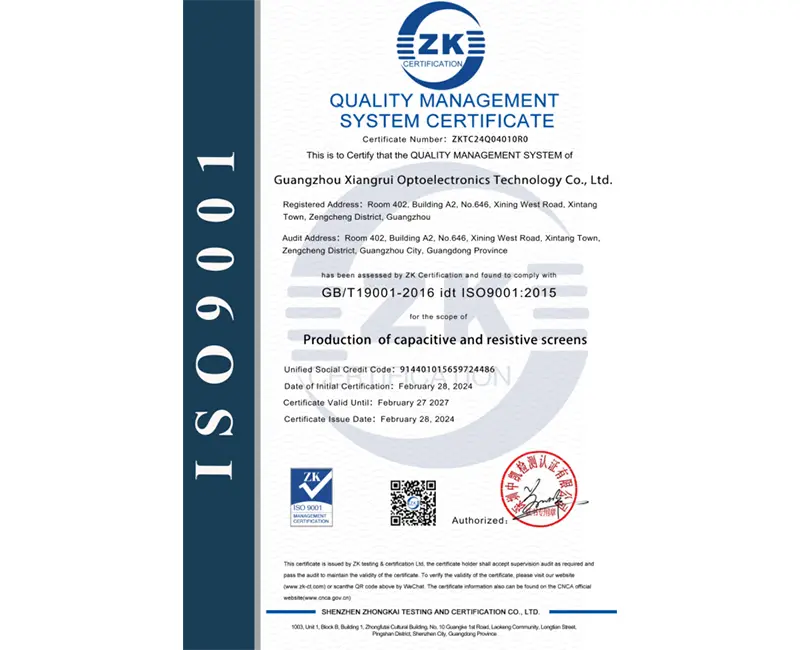
Industrial components must meet strict standards like RoHS, REACH, and CE/FCC requirements. Guangzhou Xiangrui maintains certified ISO 9001 and ISO 14001 production systems to ensure reliable, high-volume manufacturing that meets international regulatory compliance.

Xiangrui ISO Certified Facility Certification

3. Long-Term Availability

Industrial product designs often remain active for 7 to 10 years. Unlike consumer-grade hardware, our industrial touch panels are built with long-lifecycle components, reducing the need for frequent redesigns or system modifications.

Our OEM/ODM Custom Engineering Process

How we take your touch panel project from initial design to certified mass production.

A

1. Specification & CAD

We define the display sizes, cover glass options (such as chemical tempering), signal outputs (I2C/USB/RS232), and operating temperature ranges for your project.

B

2. Prototyping & Tuning

We build engineering samples in our cleanrooms and tune the touch controller firmware to support wet hands, gloved operation, and meet EMI compliance requirements.

C

3. Production & QC

Once prototypes are approved, we begin mass manufacturing. Each batch undergoes rigorous testing, including temperature tolerance, optical inspection, and electrical analysis.

Frequently Asked Questions

Clear answers to common questions about selecting, integrating, and maintaining OEM Linux touch screens.

Does your touch panel work plug-and-play with the mainline Linux kernel?
Yes, our USB-HID and I2C touch screens are compatible with standard Linux kernel drivers. They integrate directly with common drivers like Goodix, EETI, or Ilitek. This configuration allows you to connect the hardware and receive multi-touch input directly through /dev/input/eventX without compiling custom drivers.
What are the advantages of optical bonding over air bonding for outdoor systems?
Optical bonding fills the air gap between the touch sensor and the LCD panel with clear adhesive. This reduces surface reflections by up to 90%, improves readability in bright light, prevents internal condensation from temperature changes, and makes the screen more resistant to mechanical impact and vibration.
Can the touch screens be configured to work with thick gloves?
Yes, we customize and tune our touch controller firmware to support various glove types (including latex, nitrile, and thick work gloves). This ensures reliable touch detection even through protective glass layers up to 6mm thick.
What certifications do your manufacturing facilities hold?
Guangzhou Xiangrui Optoelectronics Technology Co., Ltd. is certified under ISO 9001 quality management and ISO 14001 environmental management systems. All of our products comply with RoHS and REACH standards to meet international import requirements.