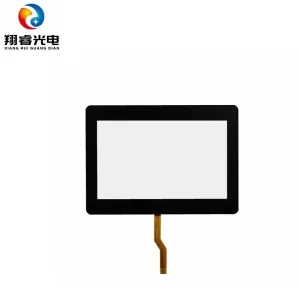
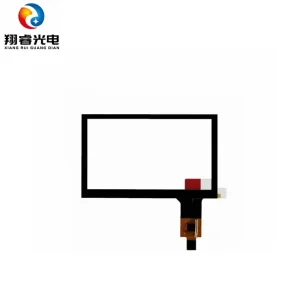
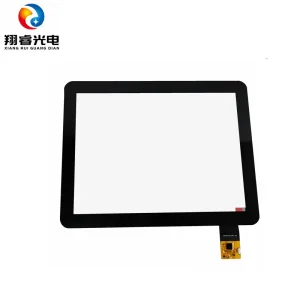
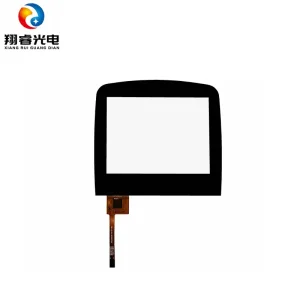
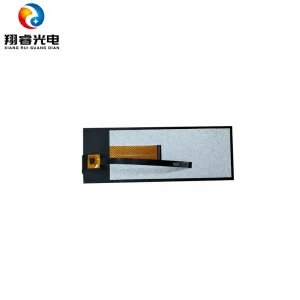
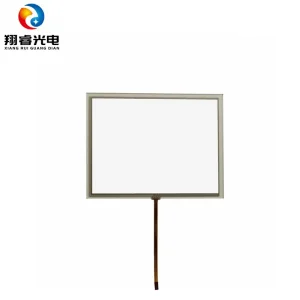
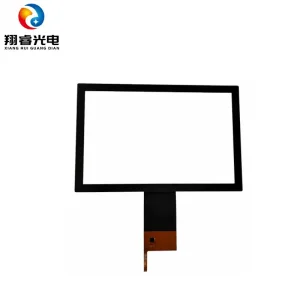
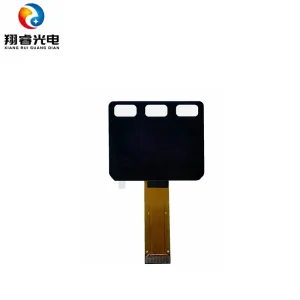
Analyzing the strategic demand, technology architectures, and quality frameworks governing global display ecosystems.
In the contemporary digital landscape, the production of display panels—spanning Resistive and Capacitive touch structures—has experienced exponential growth. Driven by the proliferation of automation, advanced medical instrumentation, smart retail platforms, and aerospace HMI (Human-Machine Interface) systems, the reliance on high-durability displays has never been higher. With this expansion, however, comes the critical necessity for robust, repeatable, and scientific **Monitor Panel Testing** systems. These processes ensure that displays operate flawlessly under variable thermal, mechanical, and electromagnetic conditions.
OEM display panel integration is no longer restricted to basic visual confirmation. Industry players require comprehensive verification protocols that encompass optical parameter analysis (luminance, contrast ratio, color gamut mapping, and viewing angles) as well as mechanical endurance assessments. Without standard validation methodologies, system integrators risk field failures, thermal delamination, or touch insensitivity, particularly in high-reliability applications like outdoor kiosks or intensive care medical displays.
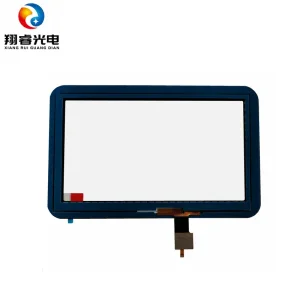
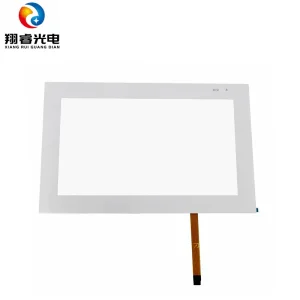
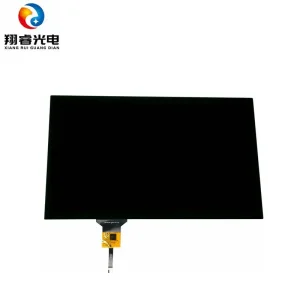
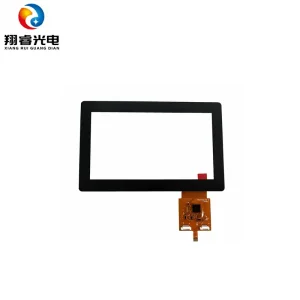
Modern touch panels utilize sophisticated multi-layer stacks containing cover glass, optical clear adhesives (OCA/LOCA), sensor layers (ITO on film or glass), and LCD/OLED matrices. The differences in thermal expansion coefficients among these layers mean that temperature fluctuations can cause high internal stress, resulting in optical distortion or structural delamination. Consequently, Tier-1 manufacturing mandates that display panel suppliers present qualified test certifications before vendor onboarding.
As a global OEM Monitor Panel Test Supplier & Service partner, Guangzhou Xiangrui Optoelectronics Technology Co., Ltd. addresses these requirements by integrating state-of-the-art diagnostics into our production flow. By controlling ambient dust, temperature, and static electricity, our testing procedures isolate defects such as ITO micro-cracks, bubbles, moisture ingress, and IC controller calibration errors, preventing them from reaching the final application environment.
Information Gain Insight: The cost of correcting a display panel failure post-installation in specialized medical or automotive systems can exceed the initial unit cost by up to 15 times. Investing in upfront, certified testing environments like class-rated cleanroom testing is a vital mitigation strategy for risk-averse purchasing directors.
The progression of touch screen validation from manual evaluation to AI-assisted automated optical inspection.
Testing panels for resistance against electrostatic discharge (ESD) up to 15KV and electromagnetic interference. This ensures continuous performance in proximity to high-frequency industrial machinery and electrical grids.
Spectroradiometer analysis for color consistency, ambient light reflection index, luminance uniformity, and high-transmittance verification. This is particularly vital for sunlight-readable outdoor terminal displays.
Exposing modules to rapid thermal transition loops (-40°C to +85°C), damp heat tests (95% relative humidity), and high-vibration simulation protocols to replicate extreme field environments.
The industry is rapidly shifting toward integrated smart sensor arrays and thin-film micro-structured panels. Key paradigms currently driving the technical roadmap include:
Utilizing high-speed digital imaging paired with machine learning algorithms to instantly detect micro-defects in cover glass, sub-pixel rendering faults, and surface micro-scratches at the micrometer level. This replaces manual optical checks and ensures uniform quality.
Calibrating latency response profiles and actuation consistency on capacitive screens that employ advanced haptic feedback, validating both pressure sensitivity (force sensing) and haptic output alignment.
Integrating optical properties validation that supports behind-glass palm-print recognition, a feature increasingly utilized in secure retail transactions and access control terminals.
Adapting touch panel testing to meet the regulatory, environmental, and physical demands of diverse industries.
Medical applications require precise multi-touch control, glove-compatible input, and resistance to chemical disinfectants. Testing protocols verify performance with liquids on the screen surface and validate EMC emissions to prevent interference with critical medical equipment.
Deployed in heavy manufacturing, oil rigs, and processing plants, HMI displays must withstand vibration, dirt, and high temperatures. Validation focuses on mechanical shock, impact ratings (IK codes), and long-term resistive grid accuracy.
These environments present high UV exposure, moisture, and extreme temperatures. Testing procedures prioritize optical bonding integrity, condensation prevention, IP65 waterproof rating verification, and anti-glare/anti-reflective coating performance.
Smart home controls and retail terminals require sleek profiles, high-definition optical clarity, and support for palm print recognition. Testing ensures clean cosmetic finishes, thin cover glass durability, and high touch sensitivity.
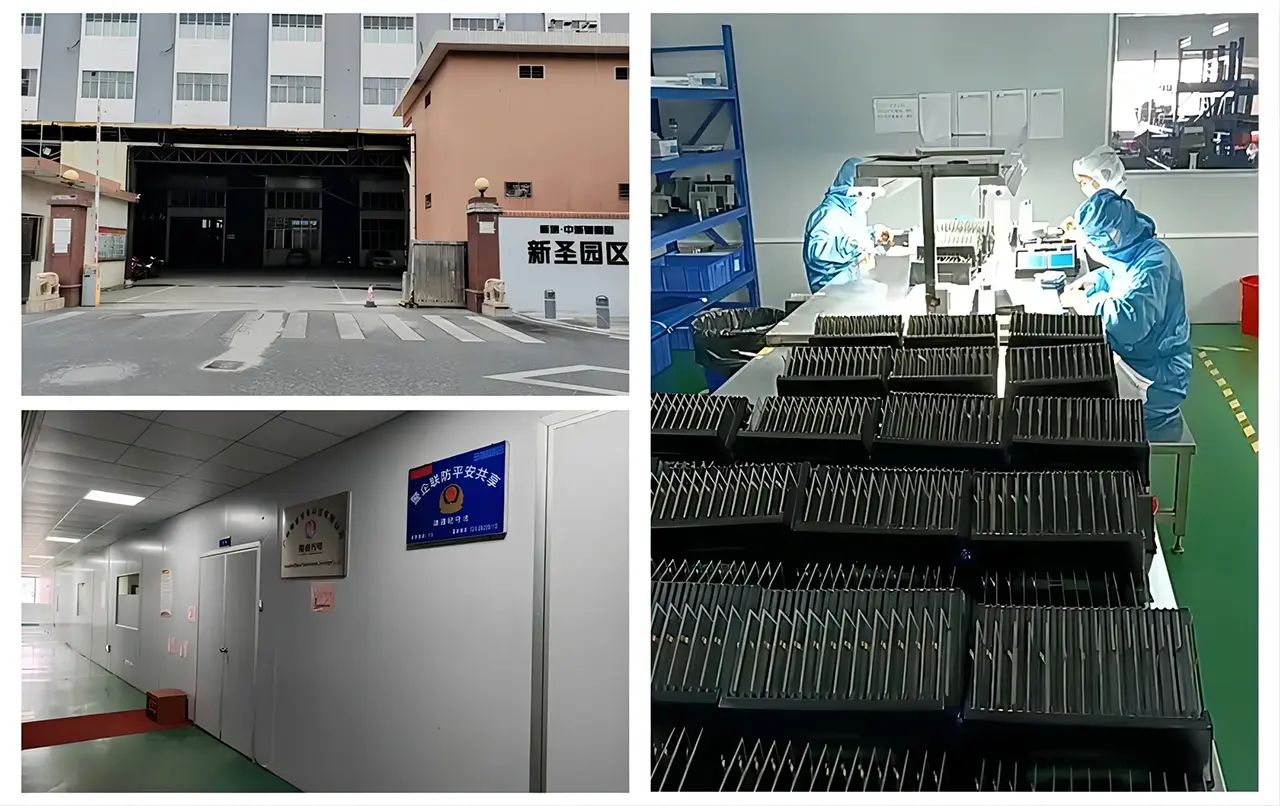
Founded in 2010 and located in Guangzhou, China, we are a company dedicated to the research and development, production, sales, and service of resistive touch panels, capacitive touch panels, cover glass, and module bonding products. We provide customized production of various touch screens, as well as OEM and ODM services.
Our company has obtained the ISO 9001 and ISO 14001 certificates. Our products are widely used in fields such as industrial control, medical equipment, home appliances, smart home, outdoor products, and palm print recognition payment systems.
To support high-yield, premium-grade panel manufacturing, our facility is equipped with dedicated Cleanroom environments ranging from Class 100, Class 1,000, to Class 10,000. These workspaces isolate airborne contaminants during sensitive optical bonding (OCA/LOCA) and touch sensor lamination phases, ensuring clean glass surfaces and bubble-free laminations.
Under the leadership of our specialized R&D department, we continuously develop new products, processes, and materials. Our engineering focus has earned us the official designation of "High-Tech Enterprise in Guangdong Province" in 2022, supported by more than 30 utility model and invention patents.
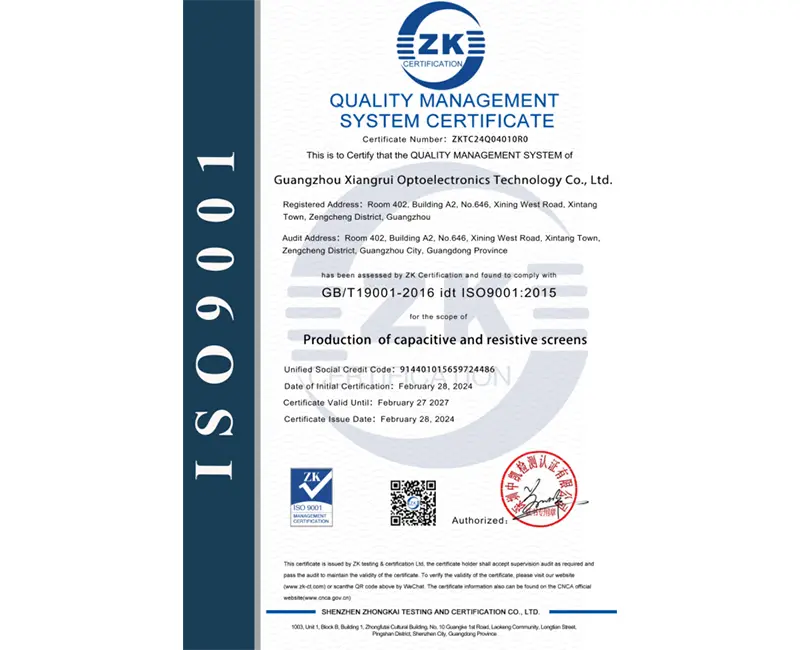
Expert answers addressing the key design, testing, and implementation questions from display engineers and purchasing managers.
 Xiangrui Optoelectronics