Explore our diverse range of engineering-grade capacitive and resistive multi-touch modules engineered for resilience, optics clarity, and precise positioning.
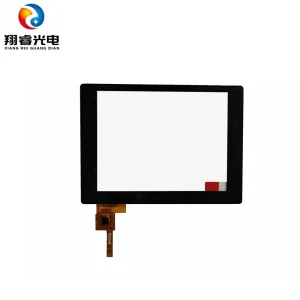 High-Quality 5.7 inch Capacitive touch panel Supplier, Suppliers
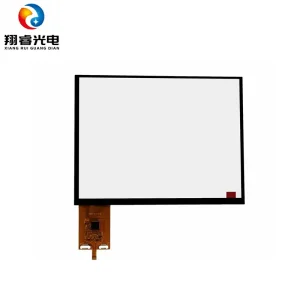 OEM 10.4 inch Capacitive touch panel Manufacturers, Products
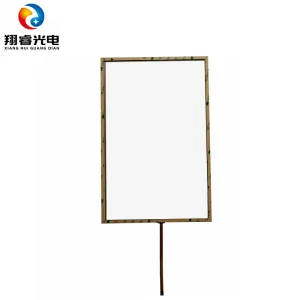 China 12.1 inch wide-temperature industrial-grade Resistive touch panel(IP65 protection rating) Factories, Products
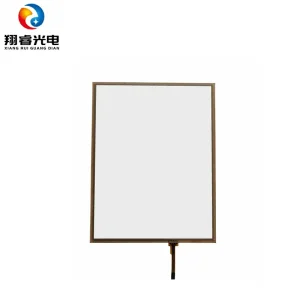 OEM 10.4 inch Resistive touch panel Manufacturers, Service
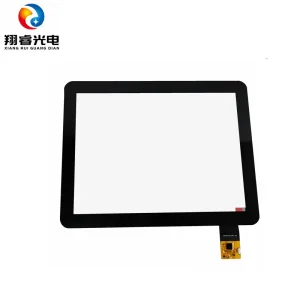 Custom 15.0 inch Capacitive touch panel Factories, Service
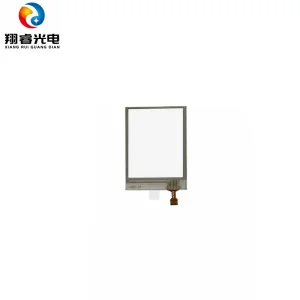 OEM 1.77 inch Resistive touch panel Suppliers, Service
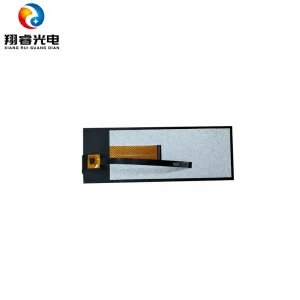 High-Quality 6.86 inch wide-temperature industrial-grade Capacitive touch panel optical bonding (IP65) Manufacturer, Service
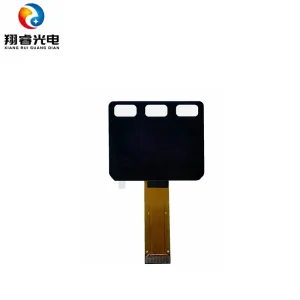 High-Quality 1.54inch Capacitive touch panel optical bonding Manufacturers, Products
Human-Machine Interfaces (HMI) have evolved from tactile physical buttons to rich, tactile multi-touch panel arrays. As automation scales across heavy industries and smart consumer endpoints require robust physical durability, the demand for custom OEM multi touch panels has reached unprecedented levels.
Modern multi-touch panels are no longer basic overlay sensors. They are advanced optical systems combining customized cover glass engineering, multi-layer sensor patterning (ITO/Metal Mesh), and high-reliability controller firmware tuning to filter electrical noise, reject water droplets, and enable operation with thick work gloves.
Choosing the correct touch technology requires evaluating physical environmental factors, optical properties, controller interfaces, and mechanical stress profiles.
PCAP panels function by establishing an electrostatic field across an Indium Tin Oxide (ITO) grid pattern. When a conductive object (such as a finger) contacts the screen, it changes the local capacitance. The onboard controller IC analyzes this delta to calculate coordinates.
Resistive touch screens rely on physical pressure to deform a flexible top layer, pressing it against a conductive bottom layer. This creates a mechanical contact, registering a voltage drop analyzed by the controller.
| Feature Parameter | Projected Capacitive (PCAP) | Resistive Touch (4/5/8-Wire) | Impact on OEM System Integration |
|---|---|---|---|
| Touch Input Modes | Multi-touch (10+ fingers), gestures, glove (tuned firmware), active stylus | Single-touch (primarily), pressure activated, any pointer object | PCAP offers modern mobile-like swipe & zoom interfaces. |
| Optical Transmittance | 88% – 92% (LOCA bonding reaches up to 95%) | 75% – 82% (higher reflection interfaces) | Higher transmittance translates to lower backlight power requirements. |
| Mechanical Durability | Excellent (Scratch proof: Mohs 7H+ cover glass) | Susceptible to scratches (PET top layer 3H) | PCAP avoids degradation in vandal-prone public kiosks. |
| Environmental Sensitivity | Requires tuning for water mist, rain, condensation | Unaffected by liquids, dust, and heavy contamination | Resistive performs well in harsh petrochemical, milling environments. |
| Controller Interfaces | USB, I2C, SPI (EETI, Ilitek, Goodix, Microchip controllers) | USB, RS-232, Analog controllers | Modern embedded chips support fast I2C & USB plugin. |
How the raw touch sensor is integrated with the LCD module determines visual performance under direct sunlight and resilience against mechanical impact.
In air lamination, the touch sensor and display panel are joined using double-sided adhesive tape around the perimeter. This leaves an air gap in the center. While highly cost-effective, the interface air layer refracts light, causing internal reflections (~8-9% reflectivity) and risking moisture condensation inside the display in high-humidity zones.
We utilize Liquid Optically Clear Adhesive (LOCA) or Optically Clear Resin (OCR) to fill the gap between the cover glass and LCD panel. This eliminates the air layer, reducing light reflections to less than 0.5%. Optical bonding improves sunlight readability, structural drop-test performance, and prevents dust or water ingress.
To enhance HMI performance in varying lighting conditions, we apply custom coatings to the cover glass: Anti-Glare (AG) to disperse specular light, Anti-Reflective (AR) coatings to minimize reflection, and Anti-Fingerprint (AF) hydrophobic layers to prevent sweat and oils from smudging the screen.
Different industrial systems require custom configurations. We supply multi-touch panels designed specifically for these conditions.
Operating rooms and diagnostics systems demand high-precision touch panels. Our designs support gloved hands and withstand standard chemical disinfectants, including isopropyl alcohol and bleach.
ISO 13485 StandardsHigh-voltage machinery generates significant electromagnetic noise. We integrate advanced controller ICs (EETI/Ilitek) with noise filtering firmware to prevent ghost touches under high vibration.
IP65 WaterproofingHigh foot-traffic retail environments require impact-resistant structures. We manufacture cover glass ranging from 2.0mm to 10.0mm in thickness, meeting IK8 to IK10 impact requirements for public safety.
IK10 Impact Rating
Founded in 2010 and located in Guangzhou, China, we are a dedicated manufacturer specializing in the research, development, production, and service of resistive touch panels, capacitive touch panels, cover glass, and display module bonding.
Our production facilities feature Class 100, Class 1000, and Class 10000 dust-free cleanrooms designed to control air particulates, temperature, and relative humidity. This controlled environment ensures dust-free lamination, reducing defects and micro-bubbles in our high-end touch screen products.
Guangzhou Xiangrui Optoelectronics operates as a vertically integrated manufacturer. We manage the entire lifecycle of our touch panels, from initial design and cover glass CNC profiling to sensor patterning, FPC bonding, lamination, and final testing.
By localizing our supply chain in the Guangdong-Hong Kong-Macao Greater Bay Area, we secure key materials like glass substrates, ITO coatings, and controller microchips with minimal lead times. This allows us to scale production while maintaining consistent quality standards.
We implement quality control procedures to ensure performance stability in demanding application environments.
Our production facility operates under ISO 9001:2015 and ISO 14001:2015 quality and environmental management standards. Every production stage is audited and documented for full traceability.
ISO 9001 & ISO 14001 RegisteredTo prevent particle contamination in the optical path, our lamination processes are completed in Class 100 and Class 1000 cleanroom areas, meeting strict dust-free requirements.
Class 100 / 1000 CleanroomsWe offer product lifecycles of 5 to 7 years for industrial applications, helping clients avoid obsolescence and complex re-qualification testing.
Extended Lifecycle SupportTechnical information and engineering guidelines for integration, debugging, and manufacturing custom touch panels.
For standard projected capacitive (PCAP) multi-touch panels, the sensor can detect finger capacitance through cover glass up to 10mm thick. Thick cover glass configurations are commonly used in outdoor kiosks and marine environments to prevent vandalism. To ensure reliable performance at these thicknesses, the controller IC firmware (such as EETI or Ilitek) must be tuned to increase drive voltage and signal gain.
Moisture or condensation on the display surface can cause electric field distortion, resulting in ghost touches. We address this using two approaches. First, we apply specialized firmware coding to the controller IC that recognizes and filters out uniform wet layers, registering only the distinct, localized input from a finger. Second, we recommend using optical bonding (LOCA/OCR) to eliminate the air gap behind the cover glass, preventing moisture condensation in humid operating environments.
We provide full customization, including custom cover glass dimensions, thicknesses, and silk-screened logos. Clients can choose from chemical surface treatments such as Anti-Glare (AG), Anti-Reflective (AR), and Anti-Fingerprint (AF). We also offer customized Flex Printed Circuits (FPC) and tailored controller parameters configured for specialized gloves, stylus pens, or wet environments.
We use automated alignment, dispensing, and UV curing systems inside our cleanrooms to ensure uniform lamination. Our ISO 9001 process controls require testing at key stages of production, including ITO sensor pattern verification, pre-lamination functional checks, and post-assembly optical analysis using automated optical inspection (AOI).
Select specialized resistive and capacitive touch screens for medical HMIs, industrial automation, and custom handheld applications.
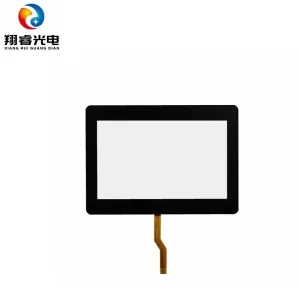 OEM 5.0 inch Resistive touch panel Supplier, Factories
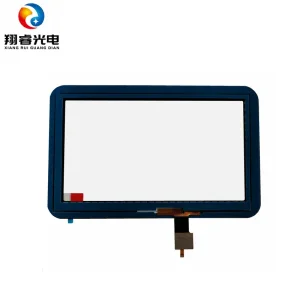 High-Quality 8.0 inch Capacitive touch panel Supplier, Factories
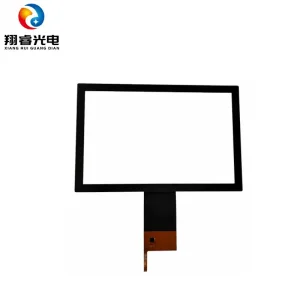 OEM 10.1 inch Capacitive touch panel Service, Products
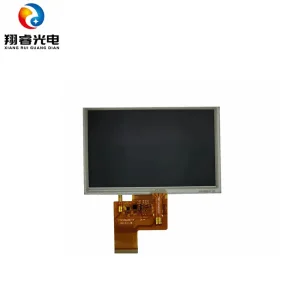 OEM 5.0inch Resistive touch panel frame fitting Manufacturers, Supplier
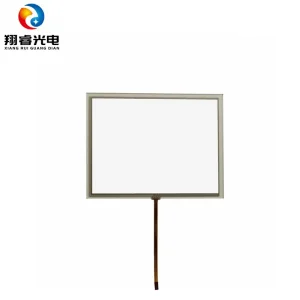 OEM 8.0 inch Resistive touch panel Manufacturer, Service
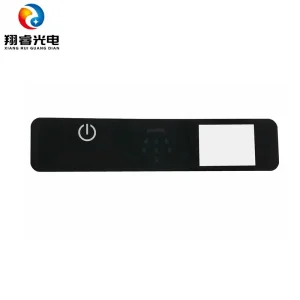 OEM 2.8 inch Capacitive touch button Suppliers, Product
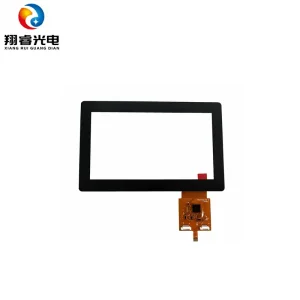 OEM 7.0 inch Capacitive touch panel Manufacturer, Factories
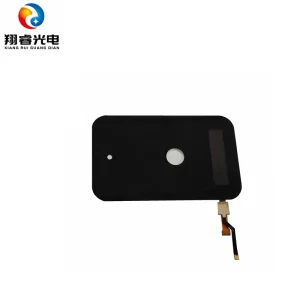 China 2.1inch Capacitive touch panel optical bonding Suppliers, Products
 Xiangrui Optoelectronics