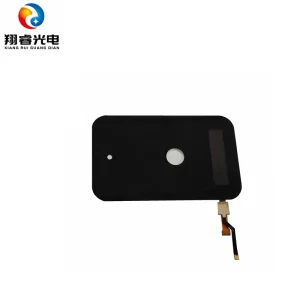
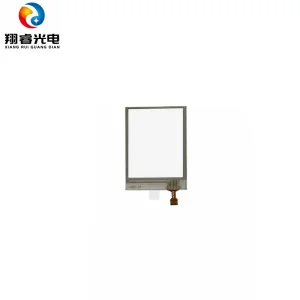
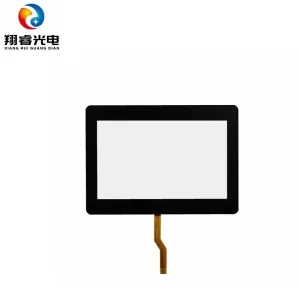
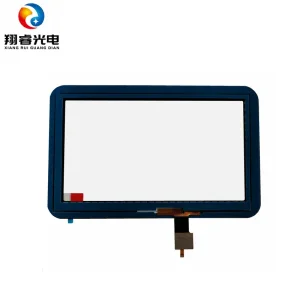
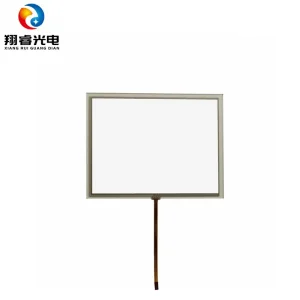
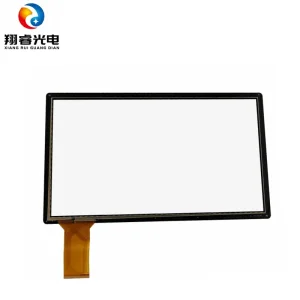
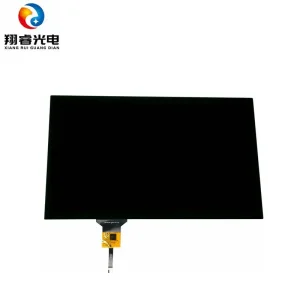
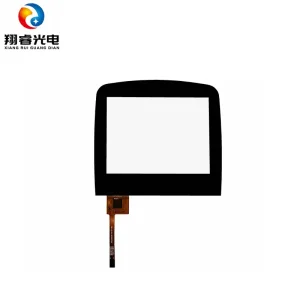
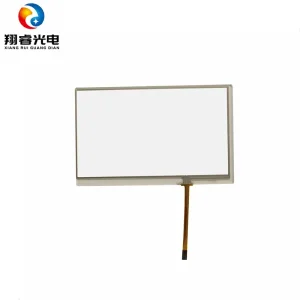
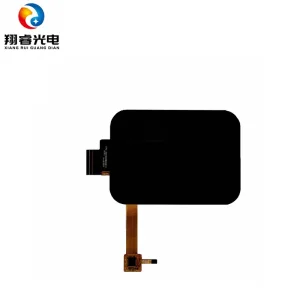
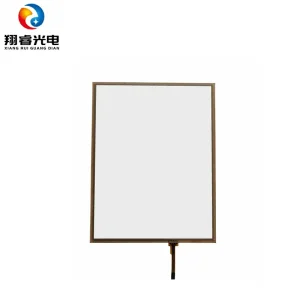
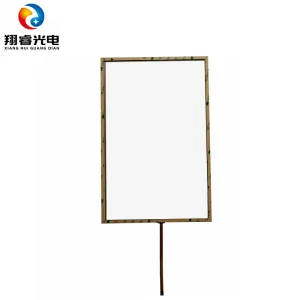
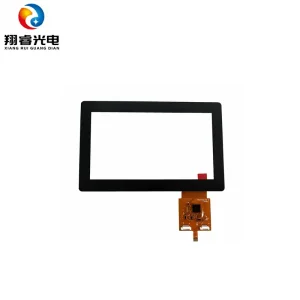
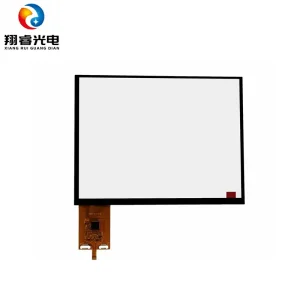
Explore our high-performance optical bonding capacitive screens and resistive overlays engineered for diverse HMI display controllers.
Within the human-machine interface (HMI) industry, the 15.6-inch form factor stands out as the standard for interactive screens. It bridges the gap between smaller handheld controllers and larger display units, offering the ideal layout area for detailed software interfaces while maintaining a footprint small enough for standard mounts, control panels, and portable terminals.
Using a 16:9 widescreen layout, 15.6-inch displays align with standard high-definition software interfaces, reducing the need to crop or alter user layouts. This shape has become standard across industries, including clinical diagnostics, manufacturing control terminals, commercial self-service retail, and public transit stations. However, deploying interactive displays in these environments requires more than just standard consumer parts. System integrators need reliable, long-lasting hardware tailored to their specific applications, which is where specialized OEM manufacturing comes in.
We use OCA (Optically Clear Adhesive) and OCR (Optically Clear Resin) vacuum bonding to eliminate the internal air gap. This reduces internal reflection by up to 90%, preserving clarity, contrast, and outdoor readability.
We apply chemical tempering and custom coatings like Anti-Glare (AG), Anti-Reflective (AR), and Anti-Fingerprint (AF) to protect cover plates against physical impacts, chemicals, and intense daily wear.
Our touch sensors use advanced ICs from EETI and Ilitek. This hardware supports multi-touch, gloved-hand interaction, water-rejection firmware, and provides high immunity to electromagnetic noise (EMI).
Your Trusted Manufacturing Partner for Custom Touch Solutions Since 2010.
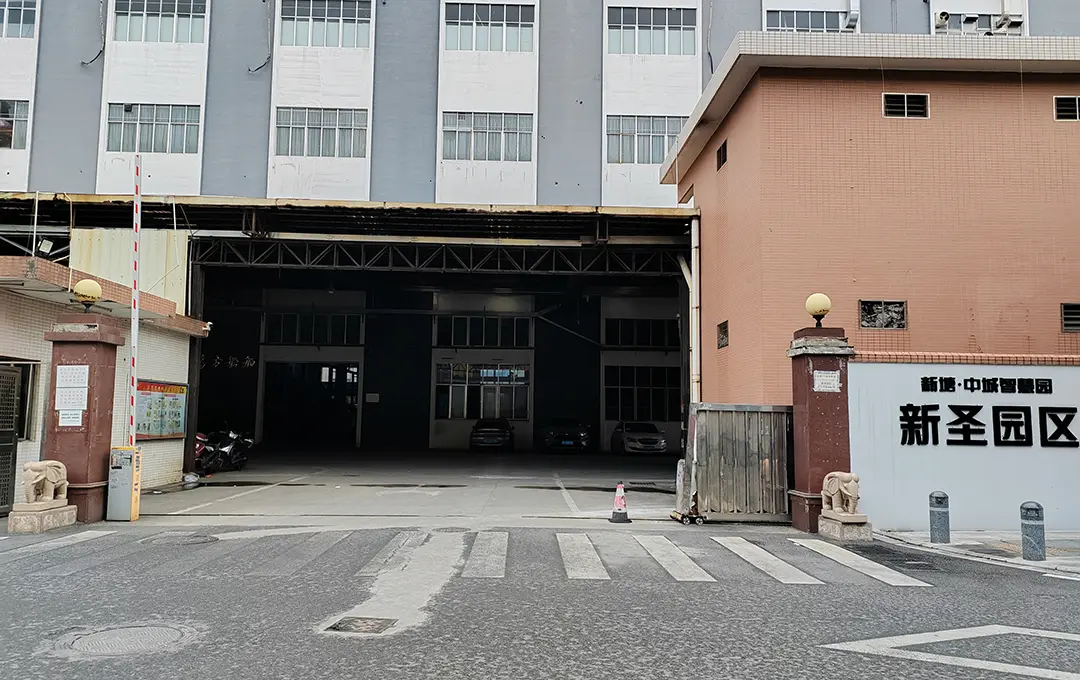
Established in 2010, Guangzhou Xiangrui Optoelectronics Technology Co., Ltd. has developed into a leading Chinese developer, manufacturer, and supplier of high-end resistive and capacitive touch screens, custom cover glass, and complete liquid crystal display (LCD) assembly modules. Located in the high-tech electronics manufacturing cluster of Guangzhou, China, our business focuses on providing custom OEM and ODM products to global clients.
We work with a wide range of industries, producing touchscreen solutions that meet strict medical certifications, industrial requirements, and outdoor durability standards. Our engineering team designs custom sensor patterns, works with specialty materials, and integrates specialized controller ICs to ensure every panel operates reliably in its end-use environment.
Choosing the right touch technology is critical to the lifespan and performance of your system. In the 15.6-inch size range, the choice usually comes down to Projective Capacitive (PCAP) or Resistive touch. Our engineering team designs and manufactures both varieties, matching options to your application's environmental and operational demands.
| Technical Characteristic | Projected Capacitive (PCAP) | Resistive Touch (4-Wire/5-Wire) |
|---|---|---|
| Working Principle | Electrostatic field alteration by human body capacitance | Pressure-activated physical contact between flexible layers |
| Multi-touch Support | True multi-touch (up to 10 points), gestures (zoom, swipe) | Single-touch only (limited custom dual-touch solutions) |
| Optical Transmission | Excellent (>88%, up to 92% with optical bonding) | Good to moderate (78% - 82% due to air layers) |
| Surface Hardness & Durability | Very high (typically 7H Mohs, customizable to 9H) | Moderate (3H, vulnerable to scratches from sharp tools) |
| Operational Lifespan | Virtually limitless (no physical mechanical wear) | ~10 to 35 million strokes on a single spot before degradation |
| Environmental Tolerance | Resistant to surface dirt; requires firmware tuning for water | Immune to ambient water and dirt; works with any input device |
Our PCAP touch screens use a multi-layer stack-up consisting of a protective cover glass, a sensor substrate (either Glass-Glass (GG) or Glass-Film-Film (GFF)) carrying the Indium Tin Oxide (ITO) coordinate matrix, and a bonded flexible printed circuit (FPC) tail featuring the controller chip. When a user approaches the screen, the localized electrostatic field is altered. The controller IC analyzes changes across both columns and rows to calculate the precise touch coordinate.
For demanding environments, we tune the controller's firmware to adapt to water droplets, salt spray, and extreme temperatures. Using frequency-hopping algorithms, the controller filters out electromagnetic interference (EMI) from nearby motors, power supplies, and communication radios.
Resistive touch screens remain a reliable, cost-effective choice for harsh industrial settings. The sensor is built from a glass base layer and a flexible polyester top layer, both coated with thin, conductive ITO films separated by tiny spacer dots. When pressure is applied to the screen, the top layer flexes to contact the bottom layer, creating a physical circuit.
Because they react to pressure rather than capacitance, resistive screens can be operated with standard gloves, styluses, pens, or tools. They are naturally immune to dust, moisture, and chemical splashes, making them ideal for heavy industrial machinery, warehouse operations, and rugged outdoor equipment.
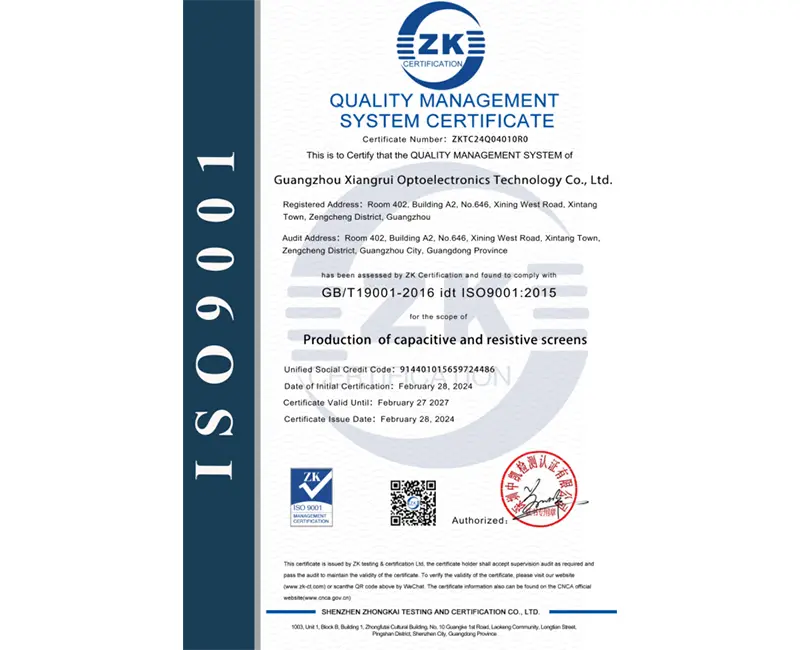
By partnering with Guangzhou Xiangrui Optoelectronics, clients benefit from the strengths of Southern China's advanced electronics supply chain. Located in Guangzhou, we have direct access to raw materials, display components, specialized cover glass, and controller chipsets. This allows us to keep lead times short and scale production quickly.
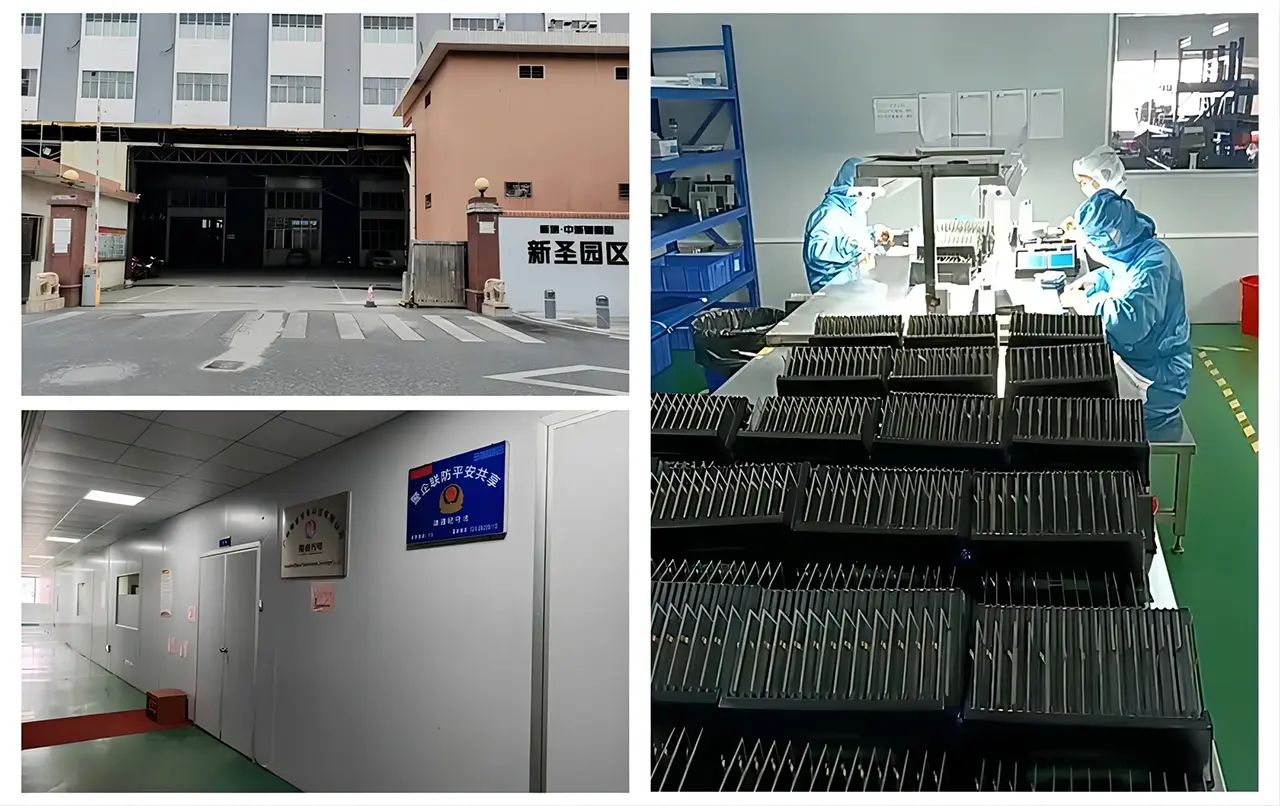
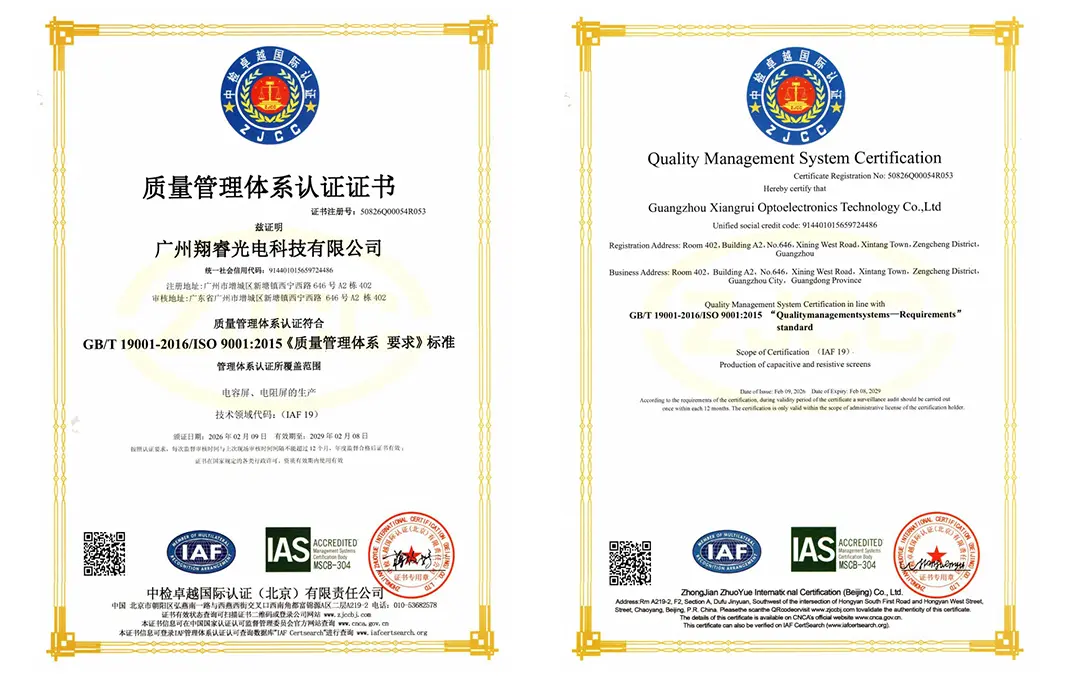
Our 3,000 square meter facility operates under ISO 9001 and ISO 14001 standards to maintain strict quality control. By housing cover glass cutting, chemical tempering, screen printing, sensor lamination, and final optical bonding under one roof, we eliminate external logistical steps. This unified manufacturing flow reduces the risk of dust contamination, keeps production costs competitive, and ensures consistent quality.
From initial design to mass production, our engineering teams collaborate closely with your technical departments. We quickly produce working prototypes for evaluation, helping shorten your development cycles and get your products to market faster.
Interactive displays continue to evolve, driven by demands for smarter, more durable, and more integrated human-machine interfaces. To keep our clients competitive, Guangzhou Xiangrui Optoelectronics focuses on several key technology areas:
We are integrating Metal Mesh and Silver Nanowire (AgNW) technologies to improve flex tolerance and reduce sheet resistance in larger, flexible touch panels.
We are developing ultra-thick (up to 10mm) cover glass that passes strict IK10 impact testing, designed for vandal-resistant outdoor kiosks and public terminals.
Our upcoming touch panels will feature built-in health monitoring, reporting real-time wear, noise interference, and sensor drift directly to the system software.
Guangzhou Xiangrui Optoelectronics touch screens are used across a range of international industries. We configure each product to meet the physical and regulatory requirements of its destination market.
In medical settings, touchscreens must handle regular cleaning with harsh chemical disinfectants and function reliably when operated with medical gloves. Our 15.6-inch medical-grade touch panels use specialized cover glass that resists chemical staining and micro-cracking, paired with high-performance controllers programmed to detect gloved touch inputs accurately.
Manufacturing environments subject screens to vibration, dust, grease, and electromagnetic interference from heavy equipment. Our industrial PCAP and resistive touch modules feature robust shielding and wide temperature ratings (-30°C to +85°C) to prevent false touches and physical failure on busy factory floors.
Kiosks, ticketing systems, and POS terminals are exposed to direct sunlight, heat, and moisture. We use high-performance UV-cut filters to prevent the LCD from yellowing and optical bonding to eliminate internal moisture condensation, keeping screens readable and functional in outdoor environments.
We help simplify international import procedures by designing our products to meet key global regulations. Our components are RoHS and REACH compliant, and we provide documentation for FCC and CE testing, helping streamline the certification process for your completed systems.
Technical answers to help system designers and purchasing managers select the right touch panel technology.
Optical bonding uses an optically clear adhesive to fill the air gap between the touch sensor and the display module. This significantly reduces internal reflections, improving clarity and contrast by up to 400% in bright sunlight. Additionally, eliminating this air gap prevents moisture condensation inside the screen and makes the overall display assembly more resistant to mechanical impact.
Yes. Our engineering team tunes the sensitivity thresholds of the EETI or Ilitek controller ICs to detect touch inputs through gloves. We can program the controller to work with latex, nitrile, leather, or heavy insulated industrial gloves based on your specific requirements.
Anti-Glare (AG) uses chemical etching to scatter reflected light, reducing mirror-like reflections on the screen. Anti-Reflective (AR) coatings apply thin optical layers to cancel out reflected light wavelengths, improving light transmission. Anti-Fingerprint (AF) uses a hydrophobic coating that resists oils and moisture, making the glass easier to clean and keep clear.
We offer extensive customization, including custom cover glass shapes and dimensions, screen-printed brand logos, specific cutouts for buttons or cameras, custom sensor flex tail paths, and targeted controller tuning for specialized environments.
We run all raw materials and finished products through a rigorous testing process inside our ISO-certified facility. This includes environmental testing in thermal chambers, humidity exposure tests, optical inspections, electrostatic discharge (ESD) testing, and automated coordinate accuracy verification across the active touch surface.
Standard design prototypes are typically delivered in 2 to 3 weeks, depending on the complexity of the cover glass and tooling. Once prototypes are approved, volume mass production orders are generally completed in 4 to 6 weeks, supported by our local supply chain in Guangzhou.
Explore our larger formats, rugged industrial-grade designs, and specialty bonding touch panels.
 Xiangrui Optoelectronics