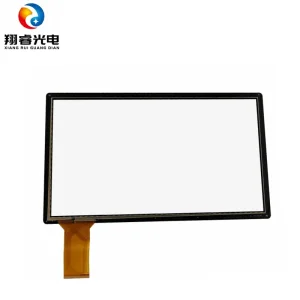
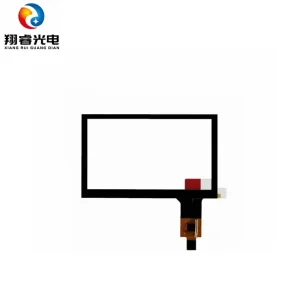
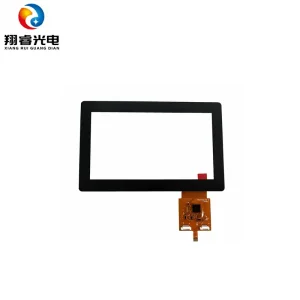
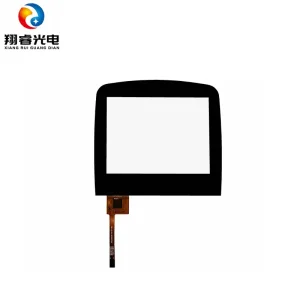
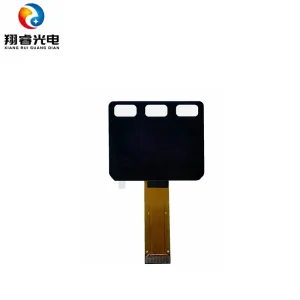
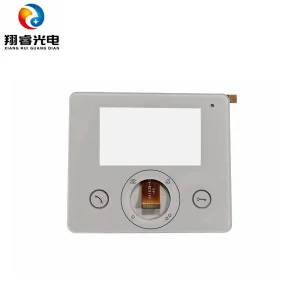
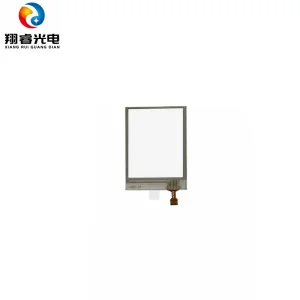
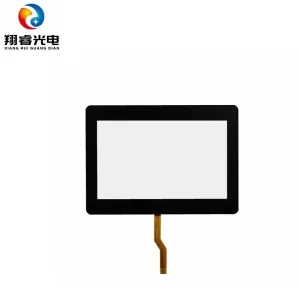
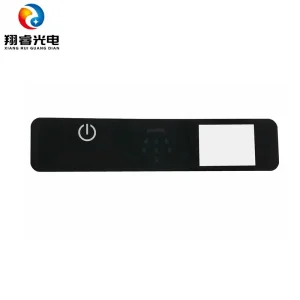
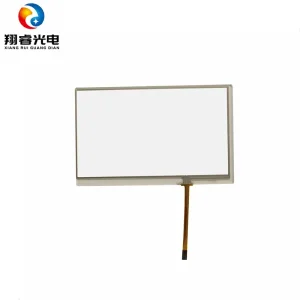
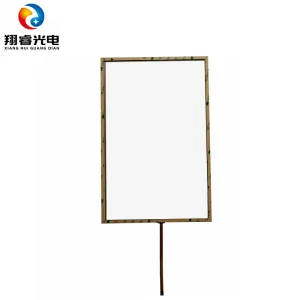
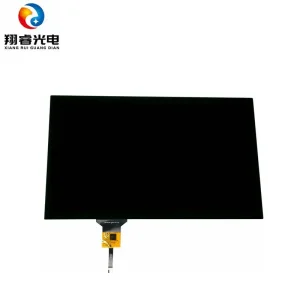
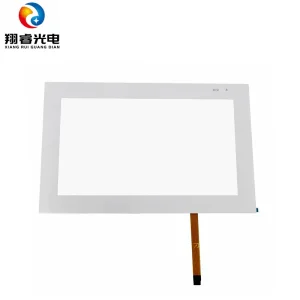
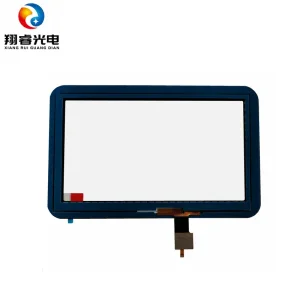
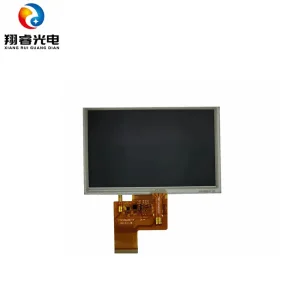
Explore our premium grade capacitive and resistive touch panels engineered for rugged runtime execution, industrial reliability, and seamless integration.
Founded in 2010 in the manufacturing and technological hub of Guangzhou, China, Guangzhou Xiangrui Optoelectronics Technology Co., Ltd. has established itself as an industry-leading manufacturer specializing in the research, development, production, and distribution of high-performance resistive touch panels, capacitive touch panels, customized cover glass, and state-of-the-art optical module bonding solutions.
We work at the intersection of quality and execution, offering comprehensive OEM and ODM customization services to meet the rigorous demands of diverse global industries. Underpinned by a firm commitment to manufacturing excellence, our processes strictly conform to globally recognized standards, certified under the ISO 9001:2015 Quality Management System and ISO 14001:2015 Environmental Management System.
Our solutions cater directly to systems integrators and equipment manufacturers spanning across demanding applications, including advanced industrial control systems, medical diagnostics, high-reliability smart home automation, outdoor public terminals, and highly secure palmprint recognition verification systems.
In the contemporary landscape of Industry 4.0, the Human-Machine Interface (HMI) serves as the critical node connecting human operations to complex cyber-physical machinery. As automated systems scale rapidly, industrial operators confront increasingly challenging environments: extreme thermal variances, electromagnetic noise from heavy motor drives, exposure to corrosive chemical residues, and the constant threat of impact damage. These forces demand that standard consumer-grade touchscreens be bypassed in favor of robust, highly optimized industrial touchscreen units designed for longevity, high performance, and deterministic reliability.
Modern industrial architectures depend on robust touchscreens that maintain performance despite environmental challenges. The transition from simple button controls to complex multi-touch displays requires careful mechanical and electrical tuning. OEM manufacturers must address critical design criteria to ensure equipment stability:
A central decision in designing industrial equipment is selecting the appropriate touch architecture. Different applications require specific touch technologies. The comparative analysis below outlines the performance characteristics of both systems:
| Performance Metric | Projected Capacitive (PCAP) | Resistive Touch Panels (Analog 4/5-Wire) |
|---|---|---|
| Operational Mechanism | Electrostatic field perturbation via conductive human touch or specialized stylus. | Physical deformation of outer film to establish contact between conductive ITO layers. |
| Input Versatility | Supports gloved hands (conductive/industrial gloves), bare fingers, stylus. | Responds to all mechanical inputs: any glove type, plastic pen, tools, fingernails. |
| Clarity & Optical Transmission | High (typically >88% to 92% with Optical Bonding). | Moderate (typically 75% to 82% due to double-layer film assembly). |
| Scratch & Chemical Resistance | Exceptional. Chemically strengthened glass top layer provides high Mohs scale hardness (up to 7H). | Vulnerable. Outer PET film can be punctured by sharp tools or eroded by solvents. |
| Multi-Touch & Gesture Controls | Fully supports multi-touch, zoom, rotate, and swipe interfaces (up to 10 points). | Single touch point registration only. |
| Liquid Resistance | Requires advanced controller firmware tuning to ignore water droplets or runoffs. | Inherently immune to liquid pooling; functions reliably under water spray or mud. |
For applications such as palmprint recognition payment systems and diagnostic medical devices, Projected Capacitive (PCAP) panels are preferred for their high optical clarity, ease of cleaning, and multi-touch functionality. Conversely, for heavy machinery controls, mining consoles, and marine systems where operators wear thick heavy-duty gloves, Resistive touch screens remain a practical choice due to their pressure-activated sensing and reliability in harsh conditions.
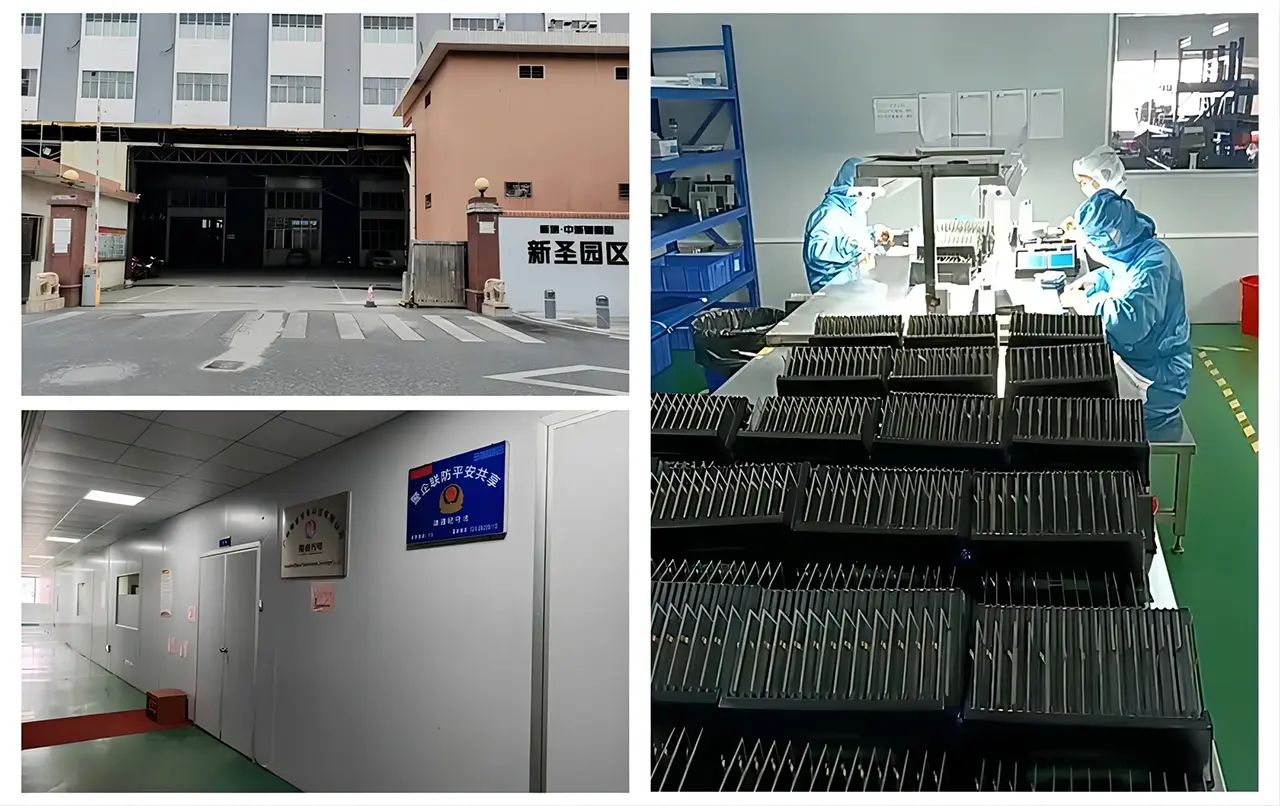
A touch panel's optical clarity depends heavily on environmental control during lamination and optical bonding. Guangzhou Xiangrui Optoelectronics Technology Co., Ltd. operates a 3,000-square-meter facility containing dedicated, positive-pressure Class 100, Class 1,000, and Class 10,000 dust-free cleanrooms.
In the optical bonding process, a single airborne microparticle can cause visible optical defects, air bubbles, or electrical leakage, leading to panel failure. By maintaining a dust-free environment under strict ISO guidelines, we ensure that every lamination layer—including Cover Glass (CG), Film-Sensor-Film (FSF), or Double-Film (GFF) configurations—meets high industrial standards.
Our direct bonding process uses premium index-matched liquid optically clear adhesive (LOCA) or solid OCA to fill the air gap between the LCD panel and the touch screen sensor. This minimizes internal reflections, increases display contrast by up to 400% in direct sunlight, and eliminates potential internal condensation.
We provide chemical tempering and optical surface treatments directly in our factory. This includes Anti-Glare (AG) to reduce reflections, Anti-Reflective (AR) to maximize brightness, and Anti-Fingerprint/Anti-Smudge (AF/AS) coatings to prevent oil accumulation.
Our CNC machining centers produce custom glass cuts, rounded corners, drop holes, and complex stepped profiles. Custom logos and border colors are printed using robust, high-temperature ceramic inks to ensure durability under UV exposure.
OEM integration requires strict adherence to quality and environmental certifications. Because Guangzhou Xiangrui Optoelectronics touch panels are deployed in medical devices, industrial displays, and automotive controls worldwide, our products meet key international standards:
Our quality verification processes utilize automated inspection machinery. We perform reliability tests including thermal shock testing (cycling between -40°C and +85°C), high-humidity aging (60°C at 90% RH for 240+ hours), ESD tests (air discharges up to 15KV), and mechanical stress tests to ensure long-term stability in field conditions.
Explore our wide-temperature resistive touch screens, optical-bonded PCAP panels, and compact touch buttons designed for reliable operation in challenging industrial environments.
Industrial displays must perform reliably in specific, demanding environments. Our custom configurations are tailored for key industries:
For factory floors and SCADA monitoring terminals, our displays feature chemical resistance and wide temperature tolerance. They prevent false triggers from oil, water, or vibration, maintaining stable operation in heavy industrial zones.
Our medical touchscreens support input from surgical gloves, resist harsh chemical cleaning, and meet strict EMI standards to prevent interference with sensitive monitoring equipment.
Designed for ticketing kiosks and electric vehicle chargers, our outdoor displays feature UV-resistant films and high-impact cover glass. Enhanced optical bonding allows readability in high-ambient, direct sunlight conditions.
The industrial HMI market is shifting toward smarter, more responsive interfaces. Our research and development focuses on three primary technologies:
Explore technical answers regarding engineering parameters, optical options, and OEM service capabilities.
A: Optical bonding fills the air gap between the touch panel and the display with a refractive index-matched liquid adhesive (LOCA) or solid gel (OCA). This reduces light reflection by up to 90%, improves readability in sunlight, increases mechanical impact resistance, and prevents internal condensation in humid or variable-temperature environments.
A: Yes. By tuning the sensitivity parameters and signal-to-noise ratio (SNR) in the controller IC firmware (e.g., EETI or Ilitek), we can calibrate the touch sensor to detect input through thick latex, nitrile, leather, or heavy winter gloves, as well as work in wet conditions.
A: We offer custom glass thicknesses from 0.7mm to over 6mm, shaped profiles (including circular cuts, internal holes, and curved edges), chemical strengthening, custom screen-printed logos, and surface treatments like Anti-Glare (AG), Anti-Reflective (AR), and Anti-Fingerprint (AF/AS) coatings.
A: We integrate controller ICs designed for high noise environments, use physical shielding layers, and apply proprietary firmware filters to suppress noise from nearby industrial equipment, ensuring stable touch registration.
A: Our factory is certified under the ISO 9001:2015 Quality Management System and the ISO 14001:2015 Environmental Management System. All products comply with RoHS and REACH standards for international export.
 Xiangrui Optoelectronics