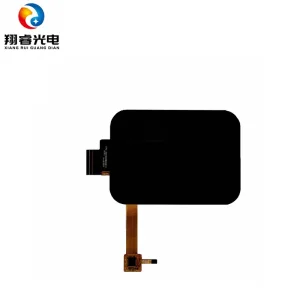
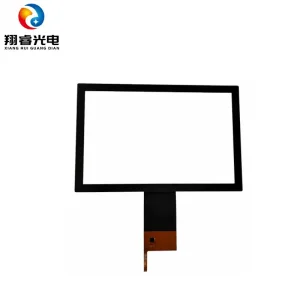
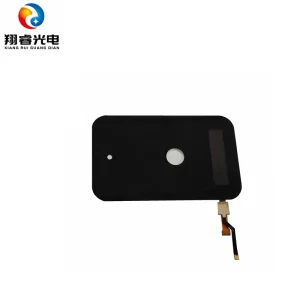
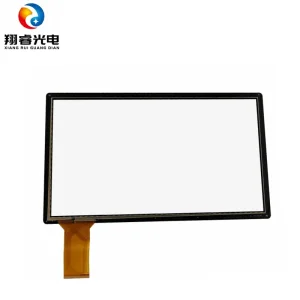
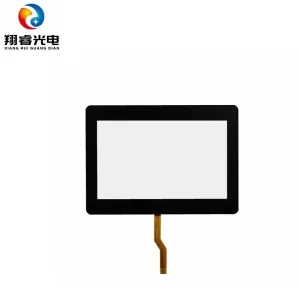
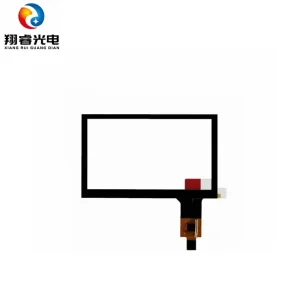
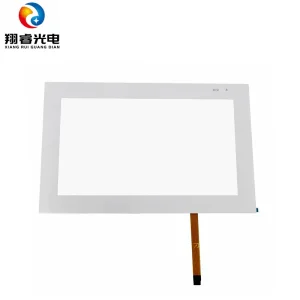
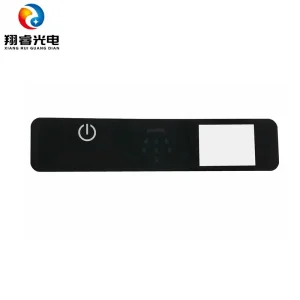
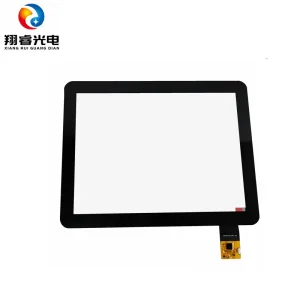
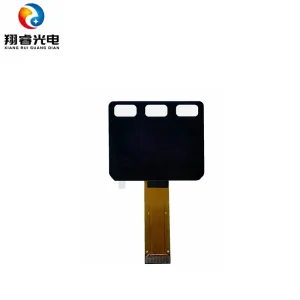
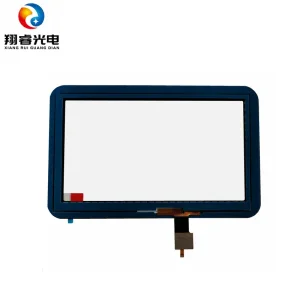
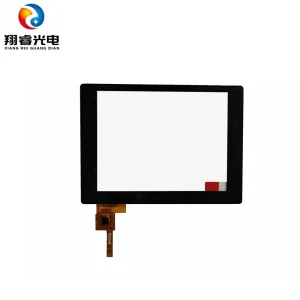
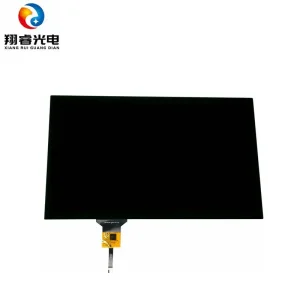
Explore our engineering-ready touch display modules featuring advanced capacitive and resistive layers for high-reliability applications.
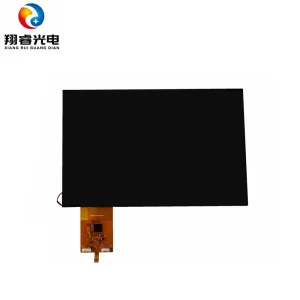
Founded in 2010 in Guangzhou, China, we are a high-technology enterprise specializing in the research, design, production, and distribution of premium resistive touch panels, projected capacitive (PCAP) touch modules, cover glass solutions, and complete optical bonding assemblies. Over more than a decade of focused operations, we have established a highly vertically-integrated manufacturing model designed to serve the global OEM display and wireless HMI markets.
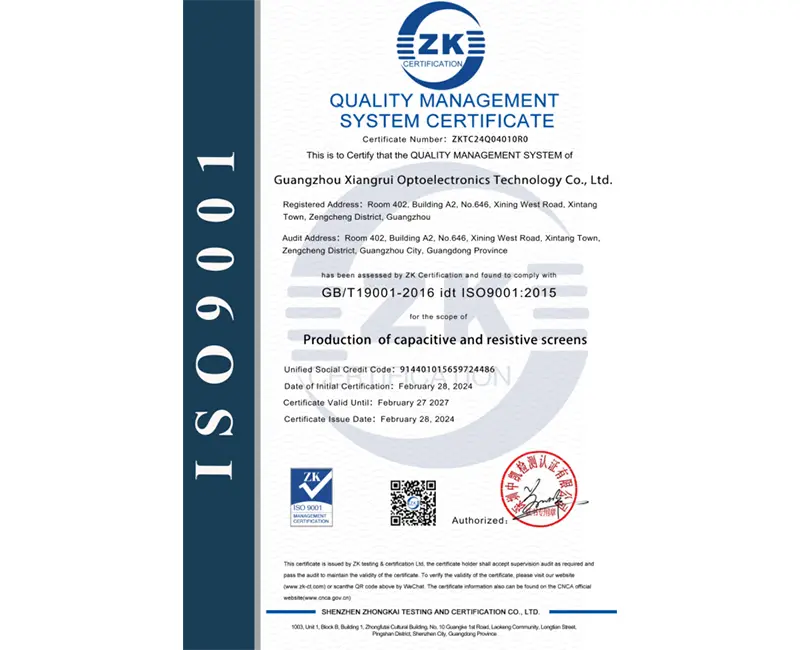
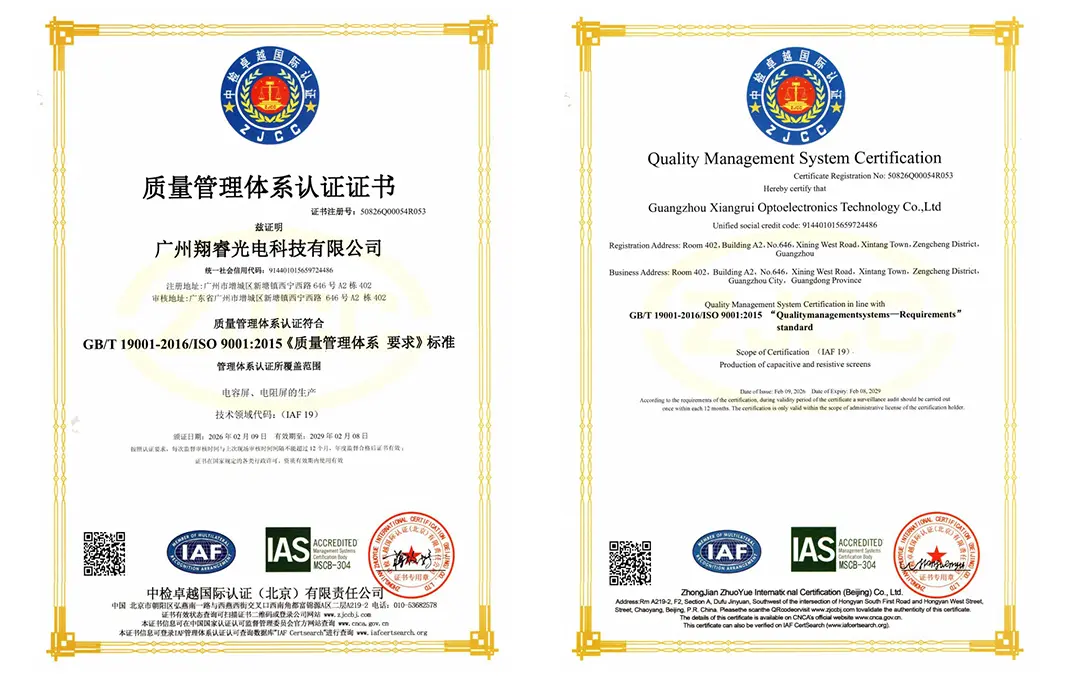
Our operation is engineered to meet standard and custom specifications, offering flexible ODM configurations. We maintain an engineering ecosystem equipped with ISO 9001 and ISO 14001 certifications. Our products support high-performance operations in demanding fields including medical instrumentation, heavy industrial HMIs, smart automation systems, outdoor displays, and retail kiosks.
From custom anti-glare (AG) and anti-reflective (AR) surface treatments to high-durability optical bonding, our modules form the essential human-machine interface for modern wireless-enabled display products worldwide.
A statistical summary of our global production and research capability.
The integration of high-reliability wireless protocols with modern touch panel layers.
As modern installations decouple physical computing units from displays, wireless touch panels rely on industrial-grade protocols like Wi-Fi 6E/7, Bluetooth 5.4, and Ultra-Wideband (UWB). We coordinate touch sensor chipsets to guarantee that radio frequency (RF) paths do not interfere with sensor signals, maintaining clean performance even in high-EMI environments.
Wireless setups require low latency. Utilizing high-performance touch controller ICs from leading silicon partners (e.g., EETI, Ilitek), our touch screens support customized driver configurations. These configurations optimize data packet sizes, keeping display-to-touch response times within critical latency thresholds for wireless environments.
Modern wireless displays are surrounded by diverse electromagnetic waves. Our capacitive sensors utilize hardware-based frequency hopping and differential sensing layouts to distinguish true touch inputs from ambient wireless electromagnetic noise, ensuring reliable operation without false touch triggers.
Technical Foresight: The industry is transitioning from tethered control interfaces to wireless, power-optimized smart display portals. By implementing ultra-thin touch stacks and high-transmittance optical bonding, Guangzhou Xiangrui is providing the physical foundation that helps engineers build low-power, high-response wireless touchscreen panels for medical, industrial, and retail fields.
How our custom capacitive and resistive display layers perform in key global markets.
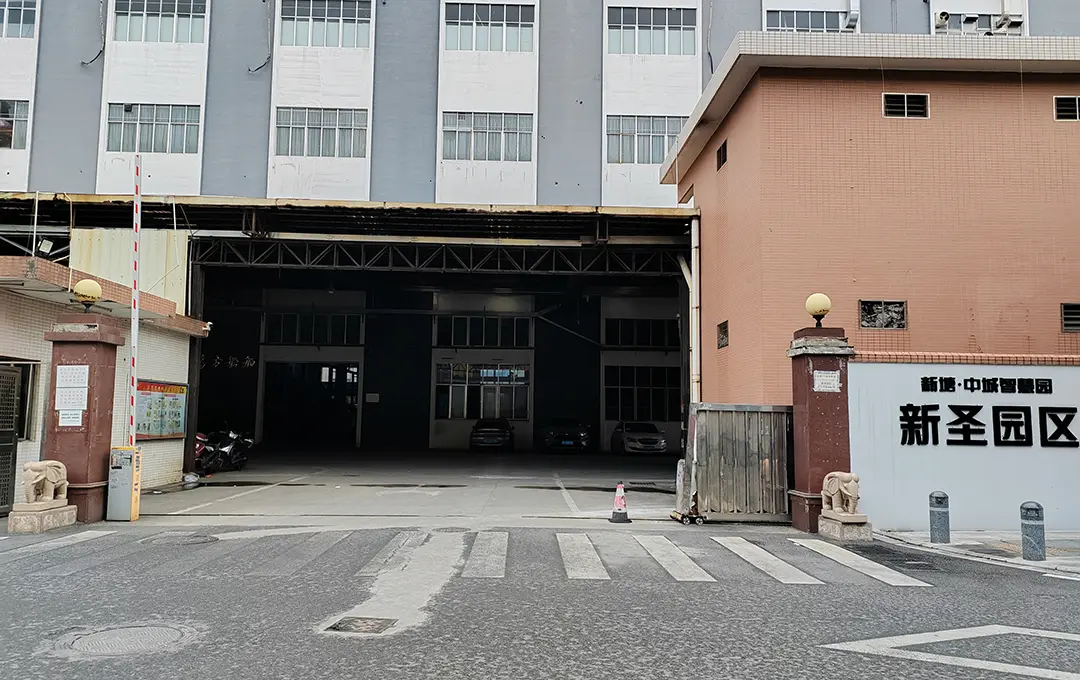
A look into our manufacturing capabilities and quality control infrastructure in Guangzhou.
Quality optical lamination demands a controlled environment. We operate cleanroom spaces classified under ISO Standards: Class 100 for high-end optical bonding and sensor placement, and Class 1,000 to Class 10,000 for secondary assembly and frame fitting. This ensures our touch panels are sealed free of dust, particles, or micro-bubbles that could degrade optical clarity and touch performance over time.
By managing cover glass processing (CNC cutting, chemically strengthening, chemical polishing), sensor patterning, flexible printed circuit (FPC) bonding, and final module assembly under one roof, we minimize production vulnerabilities. This vertical control allows us to offer shorter lead times and adapt to custom engineering change orders (ECOs) quickly.
| Manufacturing Stage | Cleanroom Class | Critical Controls | Technological Standard |
|---|---|---|---|
| Cover Glass Processing | Class 10,000 | Micro-scratch detection, flat-edge polishing | CNC precision cutting, chemical strengthening |
| Sensor Array Assembly | Class 1,000 | ITO routing analysis, alignment check | Fine-pitch FPC bonding, automated optical inspection (AOI) |
| Optical Bonding (OCA / OCR) | Class 100 | Aerosol control, UV curing stability | Direct lamination, autoclave degassing |
| Final Inspection & Quality Control | Class 10,000 | Touch accuracy, wide-temperature cycling | Fully automated sensor functional tests |
A reference checklist for display procurement managers and system integrators.
Select Projected Capacitive (PCAP) touch panels for modern, flush-bezel interfaces, multi-touch gestures, and high optical performance. Choose Resistive panels for single-point setups, heavy glove usage, or cost-sensitive industrial machines operating in simple environments.
Protect screens in bright or outdoor environments by applying Anti-Glare (AG) chemical etching to scatter reflections, Anti-Reflective (AR) coatings to maximize light transmission, or Anti-Fingerprint (AF) coatings to resist finger oil accumulation.
For outdoor, humid, or high-vibration applications, specify Optical Bonding (OCR/OCA). This process fills the internal air gap between the touch layer and LCD, eliminating internal reflections, improving thermal transfer, and preventing moisture condensation.
Typical ranges for customized projects manufactured at Guangzhou Xiangrui.
| Parameters | Capacitive Touch Panels (PCAP) | Resistive Touch Panels |
|---|---|---|
| Available Sizes | 1.54 inches to 32 inches+ (Custom design supported) | 2.0 inches to 22 inches+ (Standard & Custom) |
| Touch Points | 1 to 10 points (Multi-touch, customizable firmware) | Single point / Dual touch options |
| Controller Interface | I2C, USB, RS232 | 4-wire, 5-wire, 8-wire (analog or USB board) |
| Cover Glass Thickness | 0.5mm, 0.7mm, 1.1mm, 2.0mm, 3.0mm, 4.0mm, 5.0mm (Tempered) | Typically PET film layer (0.188mm) on glass substrate |
| Light Transmission | ≥ 85% (Tape bonded), ≥ 90% (Optically bonded) | ≥ 78% to 82% (Depending on stack design) |
| Operating Temperature | -30°C to +85°C (Industrial controller configurations) | -20°C to +70°C (Wide-temp options available) |
Exporting to over 40 countries requires adherence to rigorous testing standards and regulatory frameworks. We maintain environmental compliance and design products to meet international standards, helping your final products pass local certifications smoothly:
Essential technical answers for design engineers, product managers, and procurement professionals.
We manufacture the high-performance optical touch-display modules that serve as the interface for wireless display terminals. By optimizing touch sensor layouts, integrating high-frequency noise-rejection ICs (EETI/Ilitek), and managing electromagnetic shielding (EMI), we ensure our screens work seamlessly alongside Wi-Fi, Bluetooth, and cellular modules without interface interference.
OCA (Optically Clear Adhesive) uses a dry pre-cured film, making it highly suitable for medium-sized displays with flat profiles. OCR (Optically Clear Resin) uses a liquid gel formulation, making it preferred for larger screen form factors, curved surfaces, and high-reliability industrial modules. We configure both methods in our Class 100 cleanroom depending on the project's mechanical requirements.
Yes, our projected capacitive (PCAP) controllers can be tuned via firmware to support custom parameters. This allows the screen to work through water droplets or mist, and detect touch inputs from medical gloves, leather gloves, or heavy industrial work gloves.
We provide full customization for the outer cover glass. This includes chemically strengthening the substrate for impact resistance (IK rating), custom silk-screened bezels or branding, chemical etching for Anti-Glare (AG), thin-film deposition for Anti-Reflection (AR), and hydrophobic coatings for Anti-Fingerprint (AF) performance.
We run automated functional testing on all touch panel layers, alongside environmental stress tests. Our panels undergo thermal cycling, humidity chambers, and mechanical flex tests, ensuring our assemblies meet the long-term reliability required for industrial control and medical monitoring.
A second curation of our production-ready optoelectronic touch panels and button layers.
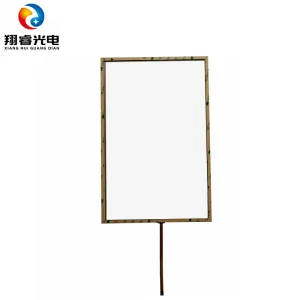
 Xiangrui Optoelectronics