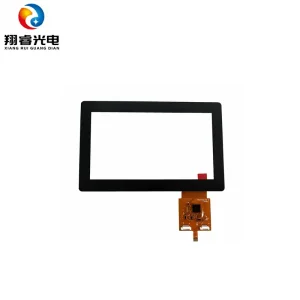
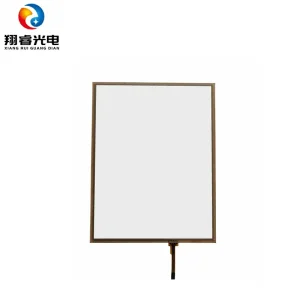
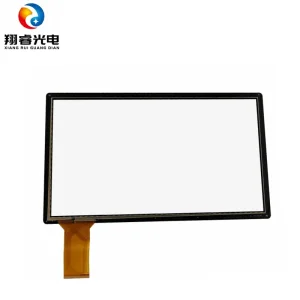
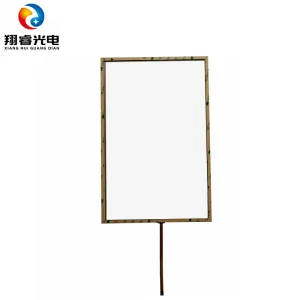
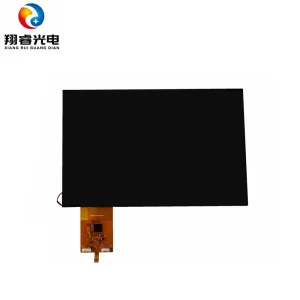
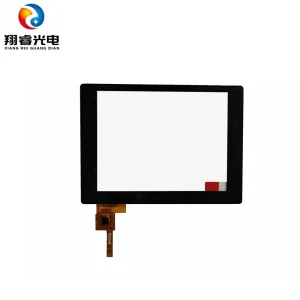
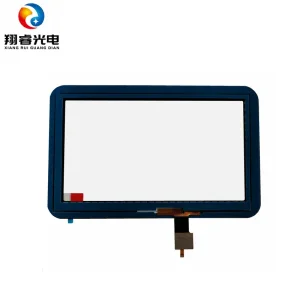
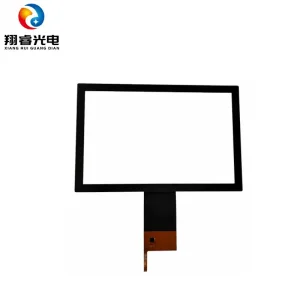
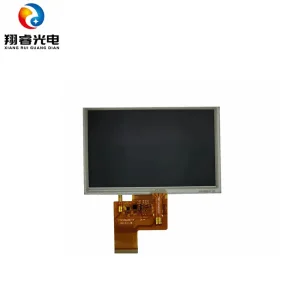
Explore our high-performance display overlays, featuring state-of-the-art optical bonding and robust architectures engineered to withstand rigorous daily application.
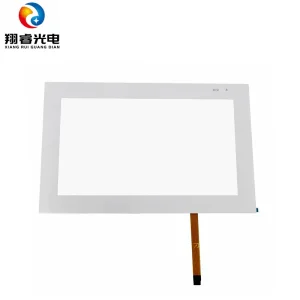
In the fields of Human-Machine Interface (HMI) and interactive terminals, the 15-inch standard (specifically including sizes like 15.0", 15.6" widescreen, and adjacent dimensions) represents a vital golden ratio. This form factor offers an optimal balance between display real estate and architectural design footprint. It is large enough to display dense structural schematics and sophisticated dashboard UI/UX applications, yet compact enough to sit flush within rack mount enclosures, medical consoles, and self-service transactional kiosks.
Today’s industrial buyers face a fundamental choice between Projected Capacitive (PCAP) and Resistive Touch Screen Technologies. Selecting the correct implementation requires looking closely at environmental thresholds, user demographics (such as gloved operation), and long-term lifespan requirements.
Modern 15-inch touch panels are no longer simple components; they are complex optoelectronic assemblies. The implementation of Optical Bonding (OCR/LOCA) has revolutionized readability by eliminating the internal air gap between the touch sensor and the liquid crystal display (LCD). This reduces internal reflections by up to 90%, yielding crystal-clear readability in high-ambient light environments, while simultaneously improving mechanical drop resistance and thermal performance.
| Feature / Metric | Projected Capacitive (PCAP) Touch Panel | Resistive Touch Panel (5-Wire/8-Wire) |
|---|---|---|
| Operating Principle | Electrostatic field measurement via ITO grid layers | Pressure-sensitive mechanical contact of flexible layer |
| Optical Clarity | Excellent (typically >90% light transmittance) | Moderate (typically 75% - 85% light transmittance) |
| Scratch & Impact Resistance | Very high (IK08+ rated chemically strengthened cover glass) | Susceptible to surface scratching (typically PET top sheet) |
| Water & Fluid Immunity | Requires advanced firmware calibration to filter water droplets | Inherently immune to fluids; works reliably wet or dry |
| Input Flexibility | Bare finger, conductive stylus, thin surgical gloves | Any input medium: fingers, heavy work gloves, stylus, pen |
| Operational Lifespan | Virtually unlimited contact cycles (no mechanical wear) | Approx. 10 - 35 million activations in a single spot |
For enterprise procurement officers, engineering managers, and supply chain directors across North America, Europe, and Asia-Pacific, selecting a touch panel partner is a critical decision that directly affects project delivery schedules and field failure rates.
Sourcing teams prioritize manufacturers with robust quality infrastructure, notably certified ISO 9001 quality management systems and ISO 14001 environmental frameworks. These certifications guarantee structural repeatability across custom batches.
Industrial projects have lifecycles of 7 to 10+ years. Procurement requires guarantees that form-fit-function touch assemblies remain available without requiring redesigns, preventing unscheduled product revisions.
True cost optimization looks past the unit price. Savvy global buyers calculate field failures, warranty replacement shipping overheads, and the system integration complexity when evaluating touch panel partners.
Highly reliable optoelectronic integration requires a partner with deep manufacturing experience. Choosing a certified partner with an established cleanroom setup, verifiable utility model patents, and documented raw material traceabilty (such as ITO film transparency, cover lens strength, and controller IC chips) ensures you avoid premature sensor failures or optical issues.
At the heart of the global electronics supply chain, Southern China—particularly Guangzhou and Shenzhen—has transitioned from basic assembly to advanced Factory 4.0 engineering. This integration brings key advantages: cover glass custom machining, sensor deposition, flexible printed circuit (FPC) design, controller tuning, and optical cleanroom assembly are situated within a tight geographical hub.
This robust ecosystem enables Guangzhou Xiangrui Optoelectronics Technology Co., Ltd. to optimize raw material flows, shorten custom tool production times, and scale manufacturing lines quickly when global demand spikes.
Our cleanrooms are engineered to handle the rigorous standards required for dust-free laminations. Airborne dust levels are strictly monitored to ensure optical laminations are completely free of visual artifacts.
15-inch touch panels serve as critical interfaces across varied industrial and commercial environments.
Deployed on factory floor consoles and CNC interfaces. Touch panels must handle mechanical vibrations, chemical exposure, and gloved input. Resistive or thick-glass PCAP solutions are commonly utilized here.
Used in patient monitors, ventilators, and surgical control centers. These installations require high electromagnetic compatibility (EMC) to avoid interfering with sensitive monitors, alongside resistance to harsh disinfectant cleanings.
Found in retail environments, transit hubs, and outdoor vending points. These systems rely on high-brightness, impact-resistant cover glass (IK09/IK10) paired with palm-rejection algorithms to secure seamless user interactions.
For demanding environments, off-the-shelf panels rarely suffice. Industrial engineering starts at the top sheet: the glass cover. Standard options include chemically strengthened soda-lime glass or high-durability aluminosilicate glass. We adjust glass thicknesses from 0.7mm up to 6.0mm or 10.0mm for explosion-proof safety requirements.
Anti-Glare (AG) chemical etching reduces glare by scattering reflected light, crucial for outdoor control terminals. Anti-Reflective (AR) thin-film coatings use destructive interference layers to optimize light transmission, raising screen viewability to 95%+.
Integrating touch screens into parent systems often requires layout modifications. We provide comprehensive customization of the Flexible Printed Circuit (FPC) tail, adapting trace routing, length, bend radii, and connector interfaces (such as ZIF, board-to-board, or custom solder points).
On the communication layer, we support standard industrial protocols:
Answers to critical integration, manufacturing, and operational questions commonly raised by system engineers.
Review our secondary selection of specialized display panels, covering custom sizes and controller options engineered for challenging industrial settings.
Established in 2010 in Guangzhou, China, we are a high-technology optoelectronics manufacturer specializing in the research, development, custom manufacturing, sales, and service of resistive touch screens, projected capacitive touch panels, cover glass overlays, and complete module bonding assemblies.
Our state-of-the-art facility features a 3,000-square-meter plant layout integrating R&D, production, marketing, and quality assurance. Our advanced dust-free rooms (maintaining Class 100 to Class 10,000 purity standards) ensure our optical components meet strict requirements for clarity and performance.
We are committed to delivering tailored custom solutions along with OEM and ODM services. Our assemblies are widely implemented across industrial control displays, medical monitoring equipment, smart home systems, outdoor information displays, and palm-print payment systems.
 Xiangrui Optoelectronics