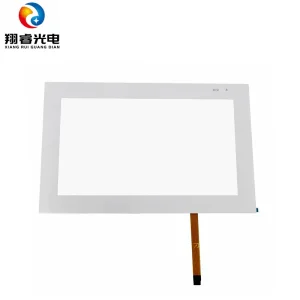
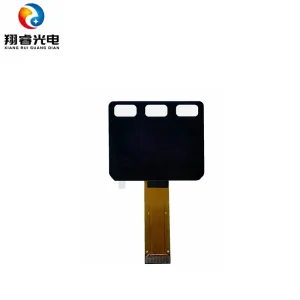
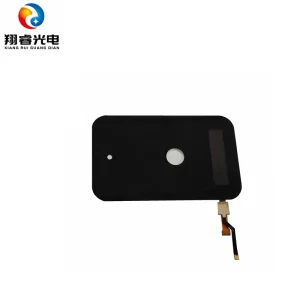
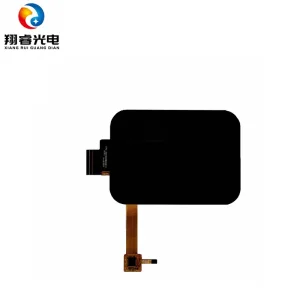
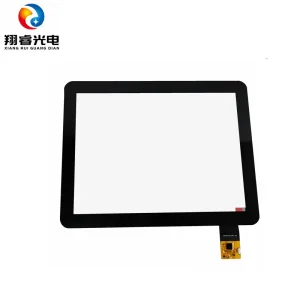
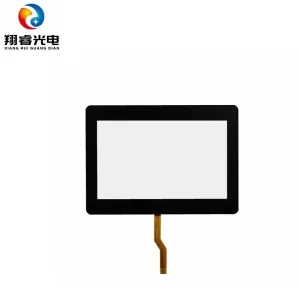
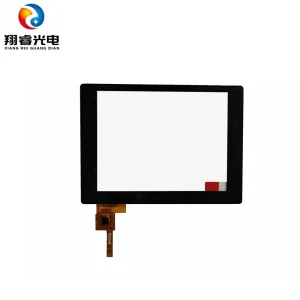
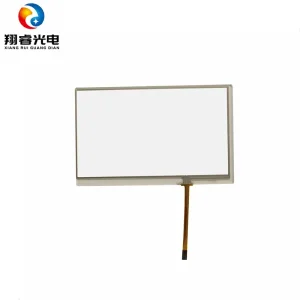
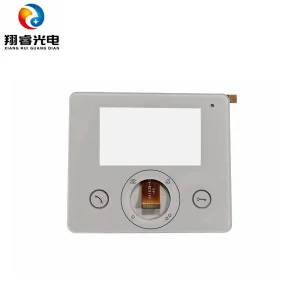
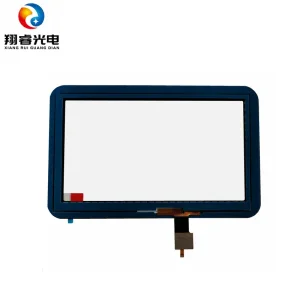
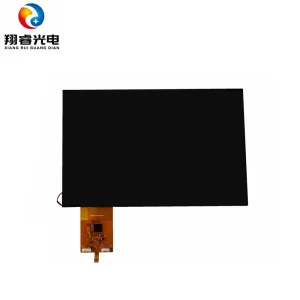
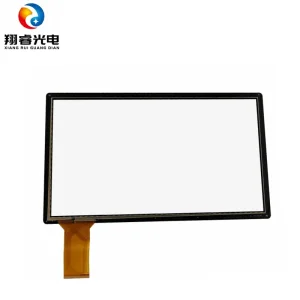
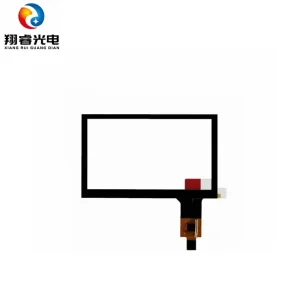
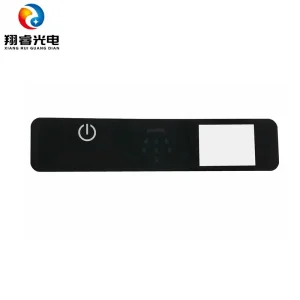
Industrial grade display surfaces, featuring premium bent glass engineering and optical performance lamination.
In the evolving landscape of Human-Machine Interfaces (HMIs), flat glass substrates are no longer the design limit. Modern smart panels, outdoor kiosks, medical diagnostic systems, and smart home control consoles increasingly demand 3D curved and bent glass designs. This structural transformation maximizes visual comfort, prevents glare, conforms beautifully to curved ergonomic equipment housings, and provides superior durability against impact.
By blending mechanical aesthetics with optical transparency, bent glass designs offer a premium touch sensation while maintaining the high sensitivity of capacitive sensors. However, shaping glass at a micron level while maintaining chemical core strength requires meticulous thermal processing, precise chemical strengthening, and absolute surface control.
Founded in 2010 and based in Guangzhou, China, Guangzhou Xiangrui Optoelectronics Technology Co., Ltd. is a leading specialist in the engineering, R&D, and custom fabrication of high-reliability resistive touch panels, capacitive touch panels, cover glass, and full-assembly optical bonding modules.
We work closely with global design engineers to produce tailored bent glass shapes, integration frames, and optical coatings. Operating out of our specialized 3,000 square meter facility, we have implemented state-of-the-art cleanliness chambers spanning Class 100, Class 1,000, and Class 10,000 protocols. This strictly limits environmental contaminants during glass processing, cleaning, screen-printing, and optical bonding. This rigorous micro-particle management maximizes yields and ensures optical clarity across all custom 3D glass designs.
Ensuring compliance, chemical resistance, and performance standards across demanding industrial operations.
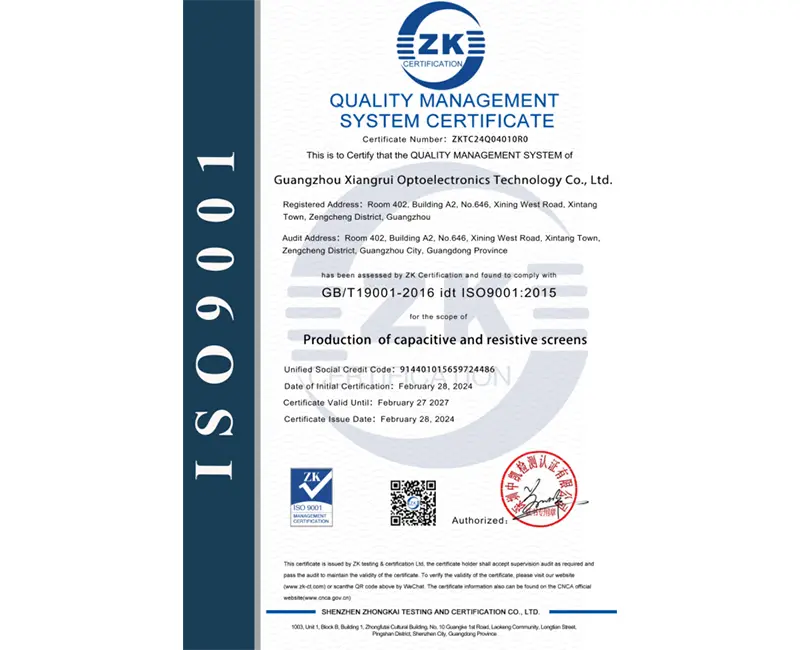
Our manufacturing and environmental protocols fully align with ISO 9001:2015 and ISO 14001:2015 standards. This guarantees that each batch of custom cover glass and bonded displays maintains structural integrity from raw silicate to the finished, hardened device.
We provide full-spectrum optical surface control, including Anti-Glare (AG), Anti-Reflective (AR), and Anti-Fingerprint (AF) chemical vapor deposition. This ensures readability in outdoor terminals and industrial cleanrooms, even under intense overhead lighting.
To eliminate air gaps, moisture condensation, and internal light refraction, we employ dry (OCA) and wet (OCR) optical bonding. Our processes are designed to follow curved geometric glass contours without generating mechanical stress anomalies on the display panel.
Partnering with a specialized Chinese glass fabricator like Guangzhou Xiangrui offers distinct supply chain advantages. We help streamline your product lifecycle from concept to scale through:
How 3D bent glass designs and advanced capacitive displays are shaping next-generation interfaces.
Seamlessly integrated touch panels featuring bent glass profiles match the organic aesthetics of modern smart thermostats, appliance control centers, and voice-assistant hubs. The curved surface provides tactile guidance, making touch controls intuitive and natural.
Medical monitors and rugged factory controllers require robust, crevice-free surfaces for hygienic washdowns and high impact resistance. Utilizing chemically strengthened bent glass protects systems from moisture pooling, liquid chemical spills, and heavy impacts.
Modern commercial transaction points, including palm-print scanning devices, rely on custom bent glass lenses to guide hand placement. Correct positioning ensures optical clarity for high-precision sensor scans while standing up to high daily usage.
Essential technical insights for procurement managers and design engineers.
Thermal bending processes raw float glass at high temperatures (above the glass transition point, typically ~600°C) using custom molds. This method creates tight radii and complex 3D contours. Cold-bending curves chemically strengthened glass at room temperature, bonding it directly to a curved display chassis. Cold bending keeps processing costs lower but is limited to larger bend radii to prevent stress fractures.
Applying coatings to curved glass requires precise application control. Anti-Glare (AG), Anti-Reflective (AR), and Anti-Fingerprint (AF) chemical vapors must be applied uniformly to prevent optical distortions. We utilize automated spray systems and physical vapor deposition (PVD) chambers to ensure uniform layer thickness across 3D surfaces and curved edges.
Yes. Flexible sensor structures (such as metal mesh or silver nanowire ITO films) can be laminated to the inside surface of 3D cover glass. Using optical bonding adhesives (OCA/OCR) inside our dust-free cleanrooms prevents air bubbles, ensuring responsive capacitive touch across the entire display area.
Our design and manufacturing systems are certified to ISO 9001 and ISO 14001 standards. For structural safety, we offer chemical tempering that enables glass assemblies to meet IK07 to IK10 impact protection levels and pass ball-drop tests, depending on glass thickness and construction.
Typically, tooling fabrication and prototype delivery take 3 to 4 weeks. This phase includes CAD drawing verification, mold milling, thermal cycle profiling, and initial sample production. Mass production starts once samples are tested and approved.
Select from our standard configurations, or request a custom modification tailored to your system requirements.
 Xiangrui Optoelectronics