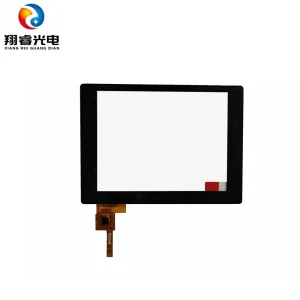
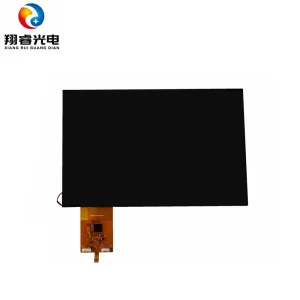
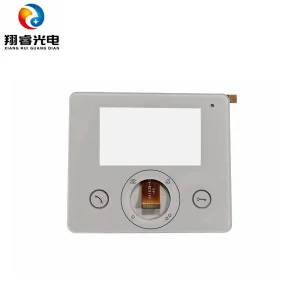
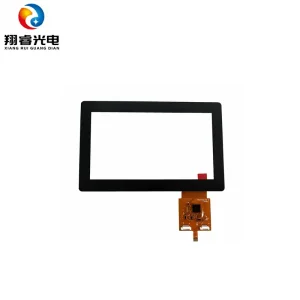
Engineered for extreme reliability, industrial compatibility, and precise multi-touch sensing.
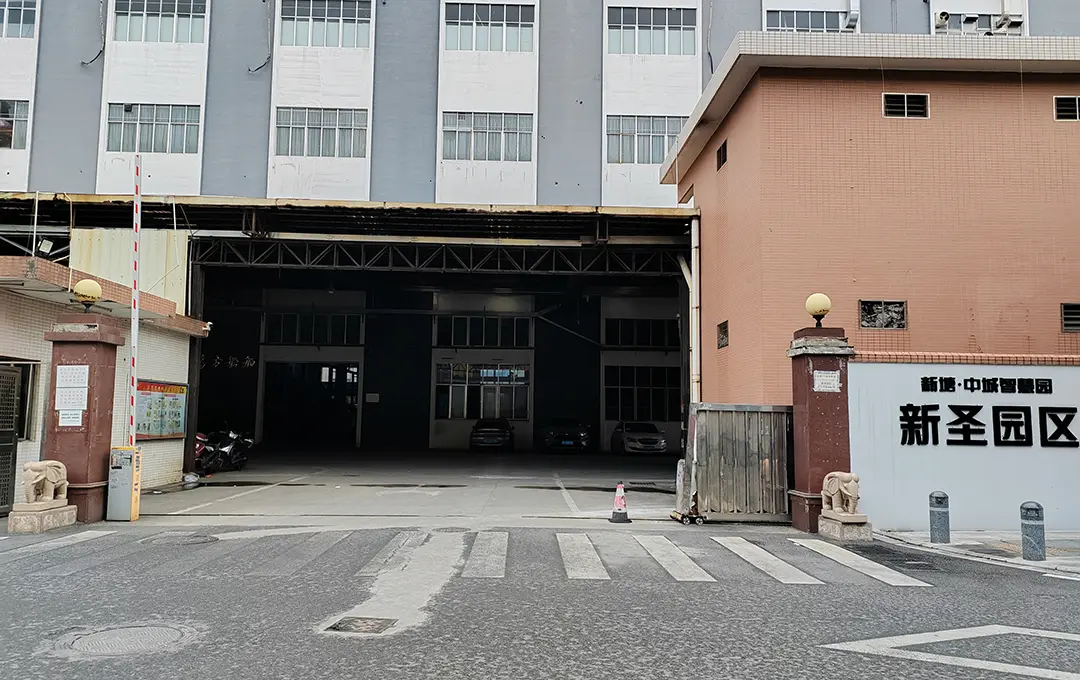
Founded in 2010 and strategically located in Guangzhou, China, Guangzhou Xiangrui Optoelectronics Technology Co., Ltd. is a high-tech pioneer specialized in the research, development, production, and distribution of robust resistive touch panels, projected capacitive touch panels, cover glass customizations, and comprehensive OCA/LOCA module bonding products.
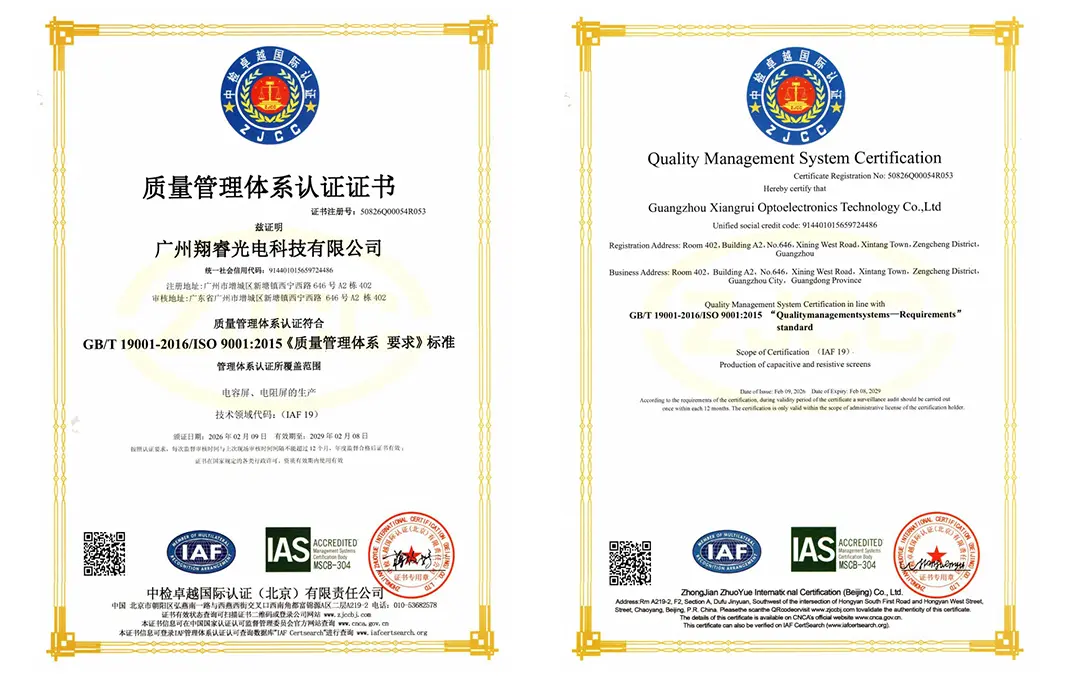
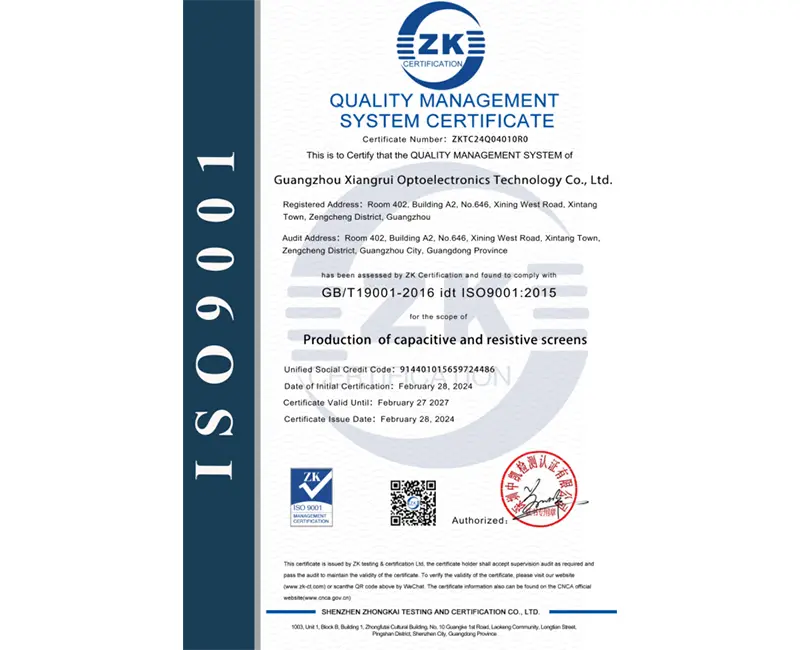
Over the past decade, we have established ourselves as an essential node in the global display supply chain, holding certified compliance with ISO 9001:2015 and ISO 14001:2015 frameworks. By focusing on customized OEM and ODM services, we bridge the gap between design theory and real-world deployment, supporting key verticals including industrial automation, medical diagnostics, smart home controls, rugged outdoor kiosks, and next-gen biometric palm-print payment systems.
Our commitment to continuous innovation is backed by over 30 utility patents, ensuring every overlay panel meets global benchmarks for sensitivity, durability, and optical precision.
Translating procurement requirements into structural display engineering. How we optimize overlays for cross-border integration.
B2B buyers face choices between 4-wire/5-wire resistive overlay assemblies (optimized for low-cost, pressure-based touch inputs, and EMI-heavy settings) and projected capacitive (PCAP) multi-touch panels (supporting gestures, high optical clarity, and robust front glass up to 10mm thickness).
To ensure legibility under direct sunlight and high ambient illumination, we configure touch surfaces with chemical vapor deposition (CVD) coatings: Anti-Glare (AG) to reduce reflections, Anti-Reflective (AR) to maximize light transmission, and Anti-Fingerprint (AF) to prevent grease buildup.
Procuring for rugged public infrastructure requires IK8 to IK10 impact ratings, achieved through chemically tempered cover glass (e.g., Corning Gorilla Glass or Soda-Lime). We integrate firmware algorithms that reject droplets, ensuring accurate touch tracking even when wet.
Industrial applications often suffer from touch jitter due to electromagnetic interference (EMI) from surrounding machinery, variable power supplies, or moisture. Our engineering team addresses this by pairing custom sensor grids with high-performance controller ICs (EETI, Ilitek, Goodix). By implementing custom firmware tuning directly on the controller, we optimize the Signal-to-Noise Ratio (SNR), allowing reliable glove operation (up to 5mm thick industrial gloves) and complete operation under running water.
A comparative overview designed for hardware engineers, systems integrators, and procurement directors.
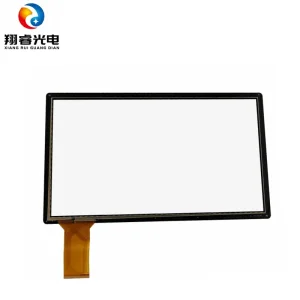
PCAP overlays represent the state of the art for interactive user interfaces. Operating via mutual or self-capacitance, these sensors detect the electrical charge disruption caused by the proximity of a human finger or specialized stylus. The sensor consists of a matrix of ultra-fine ITO (Indium Tin Oxide) conductive traces laminated to a glass substrate.
Ideal for: Medical HMIs, Outdoor Smart Kiosks, Retail Terminals, Marine Navigational Displays, and POS units requiring flush, modern edge-to-edge aesthetics.
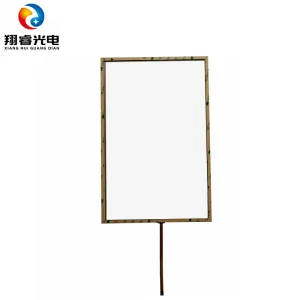
Resistive overlays detect inputs via physical pressure, forcing a flexible top layer (PET film) to touch a rigid bottom substrate (glass). The voltage drop measured at the contact point determines the coordinates. Because they do not rely on electrical capacitance, they function reliably in electrically noisy environments and accept inputs from any stylus, pen, gloved finger, or tool.
Ideal for: CNC machinery controls, warehousing handheld scanners, heavy mining equipment dashboards, and military installations requiring electromagnetic silence.
Different operating environments present unique challenges that standard touch displays cannot handle. Our manufacturing lines adapt touch overlays to perform under challenging conditions:
An overview of our production standards and quality control protocols.
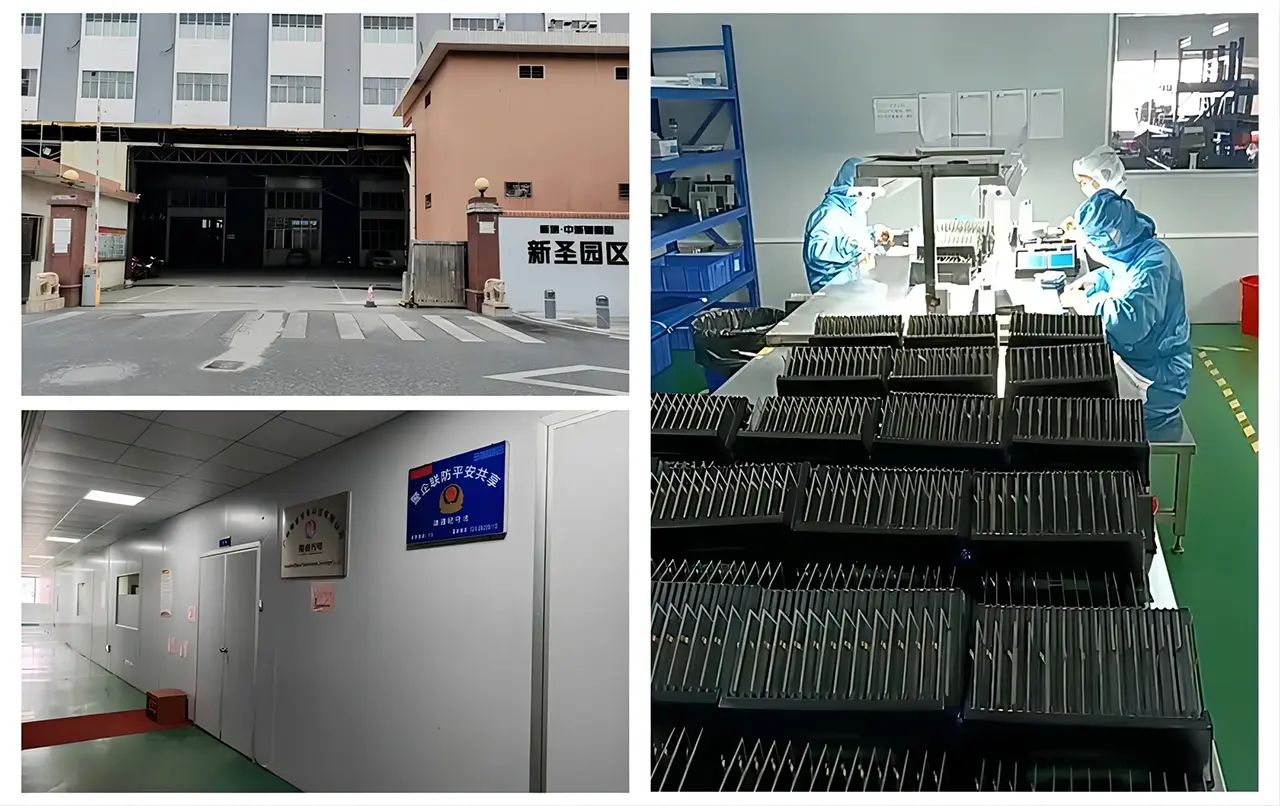
Maintaining a dust-free environment is critical when manufacturing high-performance touch screen overlays. Our facility features dedicated cleanroom sections designed to prevent contamination:
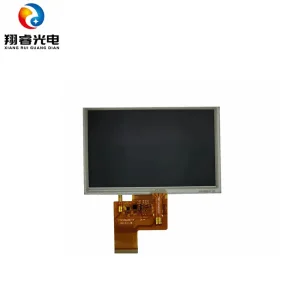
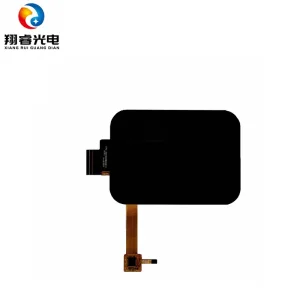
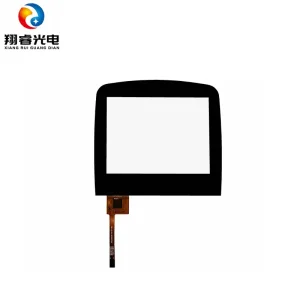
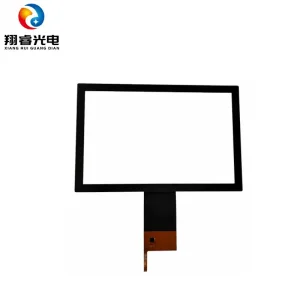
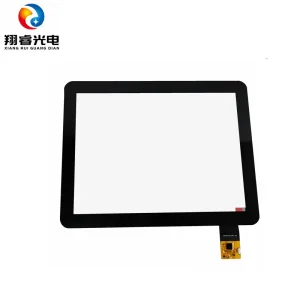
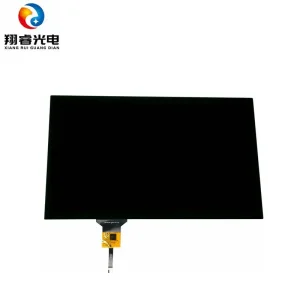
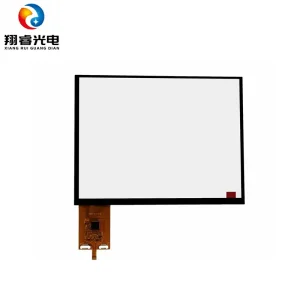
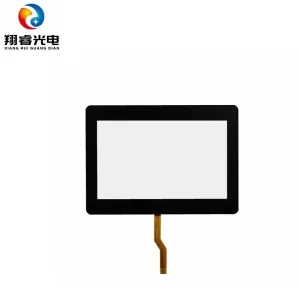
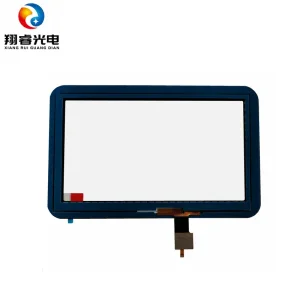
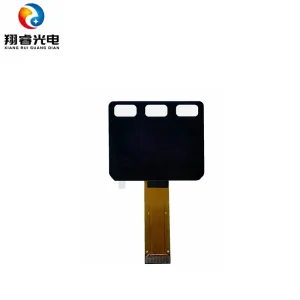
Explore our production-ready and customizable touch screen overlay models.
How we are adapting our production lines to meet the requirements of next-generation HMI projects.
As screen sizes grow (beyond 27 inches up to 86 inches), traditional ITO film faces conductivity limitations. We are investing in Metal Mesh and Silver Nanowire (AgNW) printing lines, enabling faster response times and lower resistance for large-format interactive boards.
With curved displays becoming more common in automotive cockpits and consumer products, our R&D team is developing flexible PCAP touch foils that conform to curved structures without losing sensitivity.
By integrating micro-actuators behind the touch screen overlay stack, we can simulate physical button presses. This allows machine operators to feel mechanical clicks on a completely flat, sealed screen, improving safety and precision.
Managing B2B sourcing risks with certified quality compliance and dependable logistics.
International sourcing requires meeting strict environmental and quality regulations. Every product manufactured by Guangzhou Xiangrui Optoelectronics is engineered for compliance with standard B2B frameworks:
From initial specification review to delivery, our engineering-centric onboarding process keeps project timelines on track:
Answers to technical and commercial questions from our global customers.
Air bonding mounts the touch screen panel to the outer bezel of the LCD screen, leaving a small air gap. Optical bonding uses an optically clear adhesive (OCA or liquid LOCA resin) to completely fill the air gap. This enhances optical clarity, eliminates internal condensation, and significantly increases resistance to physical impact.
Yes. By utilizing industrial-grade controller ICs from EETI or Ilitek and writing custom firmware, we adjust the sensor's sensitivity thresholds. This allows the screen to work reliably when operated with thick industrial gloves (up to 5mm) or when water is present on the surface.
We provide full customization, including custom dimensions, thicknesses (0.5mm to 15mm), chem-tempering or thermal tempering, drilled holes for mechanical buttons or cameras, rounded edges (2.5D or 3D), and custom silk-screen printing in solid or gradient colors.
Our facility runs under ISO 9001 and ISO 14001 guidelines. Key steps like touch sensor lamination and optical bonding are performed in Class 100 and Class 1000 cleanrooms. Each production run undergoes automated optical inspection (AOI), along with testing for thermal shock, humidity, and ESD limits.
 Xiangrui Optoelectronics