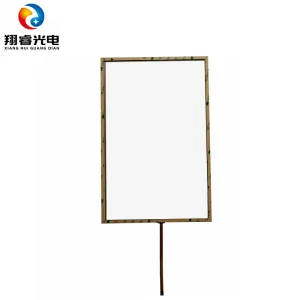
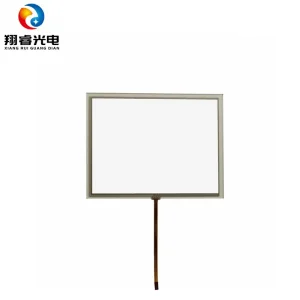
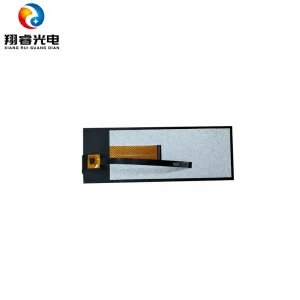
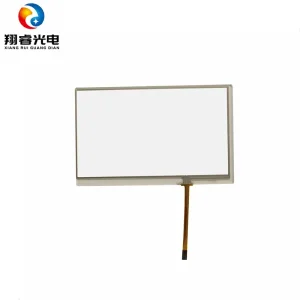
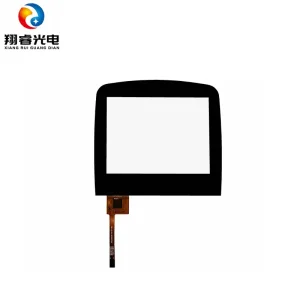
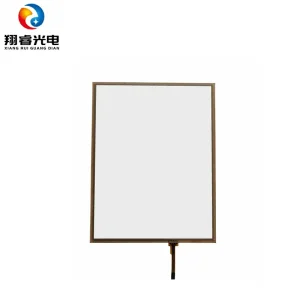
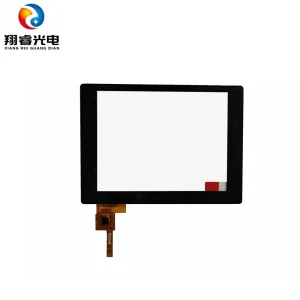
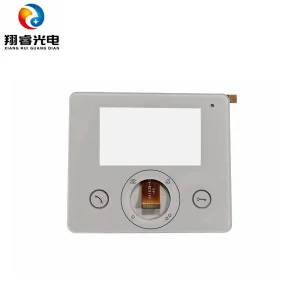
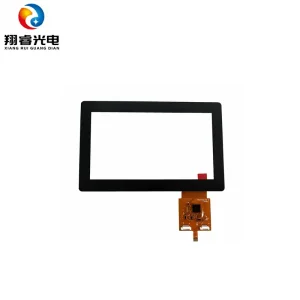
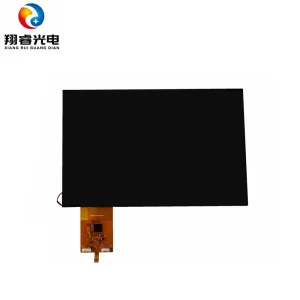
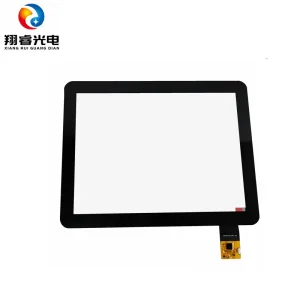
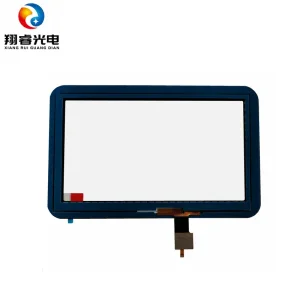
Explore our industrial resistive & capacitive touch panels custom-designed for critical environments, boasting optical bonding options and ruggedized ratings.
A rigorous industrial perspective on when to specify resistive overlay films and how they integrate into high-reliability HMI environments.
In high-reliability industrial automation, choosing the correct input mechanism determines the life cycle and safety margins of Human-Machine Interfaces (HMIs). While consumer applications have normalized the use of projected capacitive (PCAP) screens, critical systems such as CNC machinery, medical ventilators, and maritime operations continue to mandate resistive touchscreens. This structural preference stems from the fundamental difference in input physics.
Resistive touch screens function by utilizing physical pressure to unite two conductive coatings—typically Indium Tin Oxide (ITO) layers separated by minuscule spacer dots. Because operation relies on physical mechanical deflection rather than electrical capacitance, resistive systems are completely immune to electromagnetic interference (EMI), high moisture, chemical residues, and work with any stylus, gloved hand, or mechanical tool. In contrast, PCAP designs rely on detecting small capacitance variances, which can trigger erratic behaviors when exposed to conductive water droplets or heavy electrical noise from nearby high-voltage variable frequency drives (VFDs).
From an engineering standpoint, modern industrial projects require customized resistance networks (usually 4-wire or 5-wire resistive systems) integrated with customized controller units to maintain long-term linearity. 5-wire resistive panels, for instance, configure the lower conductive glass layer with X and Y voltage axes, while the upper conductive film acts as the sensing layer. This ensures that localized damage to the outer plastic film does not degrade the accuracy of the overall display grid—a key requirement for self-service payment terminals and remote off-highway vehicles.
Operates under physical pressure, guaranteeing reliable inputs for operators wearing thick safety gloves, without requiring touch-optimized gloves. Impervious to water, oil, dust, and non-conductive grit.
Complete resistance to high electromagnetic interference (EMI) fields found in electric arc environments, aerospace cockpits, and automated manufacturing lines. High noise immunity prevents critical process failures.
Utilizing high-end optical adhesives (LOCA/OCR), we close the internal air gaps to increase light transmission from 80% to over 90%, reduce internal reflection, and eliminate condensation issues under wide-temperature conditions.
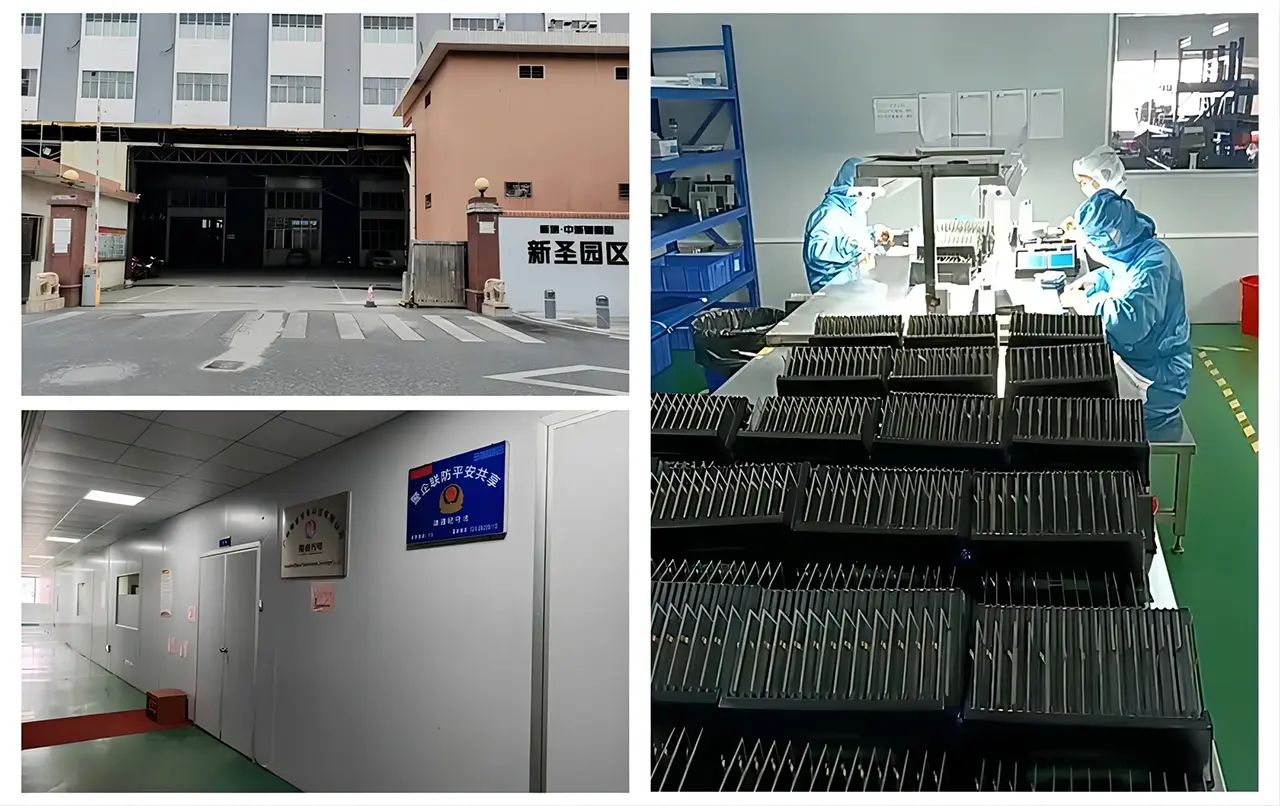
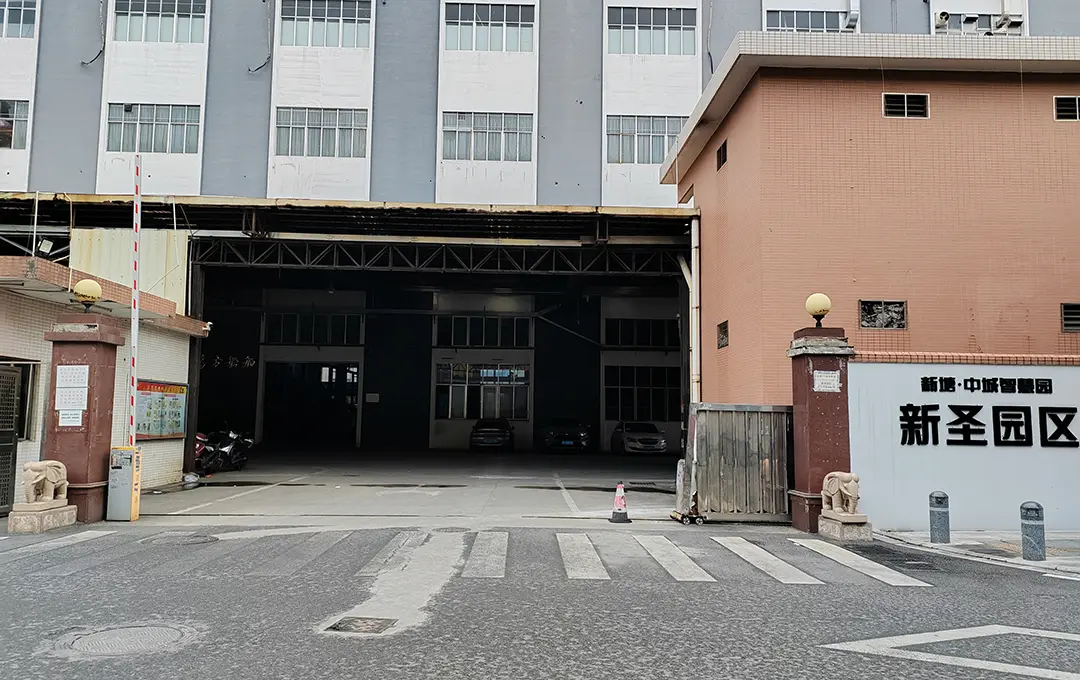
Welcome to learn about our enterprise.
Founded in 2010 and strategically located in Guangzhou, China, we are a high-technology enterprise dedicated to the research, development, engineering, manufacture, sales, and service of top-tier resistive touch panels, capacitive touch panels, customized cover glass, and full-module optical bonding solutions. With over a decade of deep industry expertise, we specialize in delivering OEM and ODM services custom-tailored to strict industrial requirements.
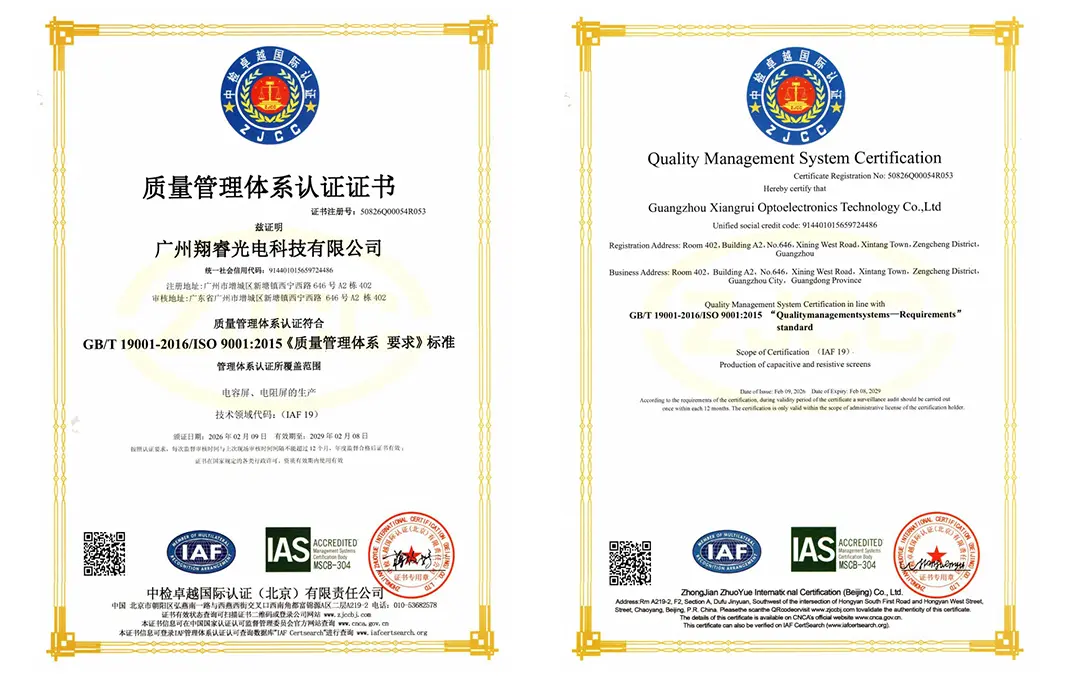
Our commitment to rigorous design parameters has earned us both ISO 9001 and ISO 14001 certifications. We maintain specialized Class 100, Class 1000, and Class 10000 dust-free cleanrooms across a 3,000 square meter facility, ensuring that every optical lamination phase is free of microscopic dust. Our product lines serve critical equipment globally, including medical instrumentation, heavy machinery controls, rugged consumer terminals, home automated panels, and secure palm-print payment systems.
How Xiangrui touch panels are integrated within global industrial environments, medical setups, and public transaction frameworks.
Modern CNC machine tools generate substantial electrical noise and are frequently covered in coolants, cutting oils, and dust. Guangzhou Xiangrui’s 5-wire wide-temperature resistive touch panels maintain stable calibration under constant mechanical vibration, ensuring precise coordinates and zero false inputs during manual control operations.
Ventilators, drug infusion systems, and hospital diagnostic monitors require touch screens that function under surgical latex gloves and remain unaffected by harsh cleaning solutions. Our custom capacitive screens and IP65-rated resistive touch overlays stand up to continuous chemical wipes and biological fluids.
Integrating security scanners and high-traffic POS kiosks requires custom-tempered cover glass with anti-glare (AG) coating and optical bonding. This minimizes solar glare for outdoor ticketing kiosks and payment stations while shielding the underlying sensor against physical vandalism and environmental damage.
For outdoor marine electronics and industrial control interfaces, screen legibility under direct sunlight is vital. We provide customized cover glass configurations from 1.1mm to 6mm thick, incorporating various surface modifications:
Driving the expansion of next-generation HMI touch panels through advanced material science and automated lamination processes.
As industrial demands shift toward multi-touch operations, resistive touchscreen designs are transitioning from basic analog grids to advanced configurations. By deploying Analog Multi-Touch Resistive (AMR) layouts, OEMs can achieve dual-touch functionality (such as pinch-to-zoom and rotational gestures) while preserving the rugged environmental protection inherent to resistive technology.
Furthermore, standard Indium Tin Oxide (ITO) layers are being supplemented by next-generation conductive polymers and silver nanowire (AgNW) networks. These material advancements offer improved flexibility, higher light transmission, and lower surface sheet resistance. This permits thinner film-on-glass stacking that can withstand millions of cycles without degradation or localized resistance drift.
Blending flexible micro-thin glass with multi-touch resistive structures to prevent film yellowing and scratching under continuous outdoor exposure.
Refining liquid optically clear adhesives (LOCA) to minimize outgassing and bubbling under wide thermal shifts (-40°C to +90°C).
Replacing traditional ITO layer arrays with AgNW to support extreme-bend flex circuits and large-format industrial resistive panels.
Embedding long-lasting antimicrobial compounds directly into the surface glass/film layers for hospital and public payment hardware.
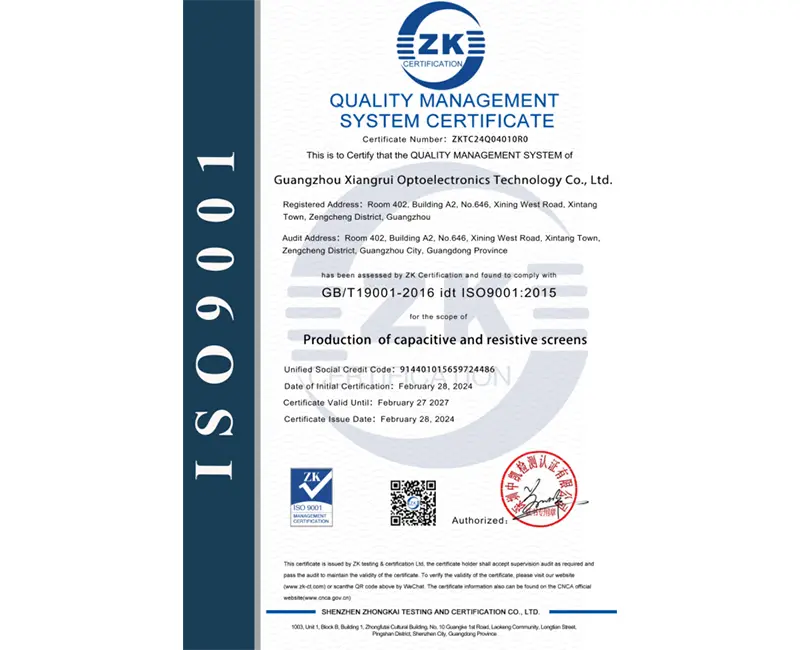
High capacity, local sourcing clusters, and strict quality control.
Guangzhou’s highly integrated electronics ecosystem allows us to source raw materials—including optical-grade glass substrates, flexible flat cables (FPCs), and controller chipsets—directly from localized suppliers. This tight cluster reduces logistical delays and guarantees material trace-ability from raw stock to finished touchscreen. By optimizing our internal automated laminators, cleanrooms, and testing facilities, we keep production lead times short without compromising on reliability.
Our Quality Assurance system includes:
1. ISO 9001:2015 certification covering incoming raw material inspection (IQC) through final shipping audit (OQA).
2. ISO 14001:2015 environmental certification for sustainable and clean operations.
3. Continuous automated optical inspection (AOI) to eliminate dust and air inclusions.
4. Environmental chamber testing spanning temperatures from -40°C to +85°C, humidity cycling, and electrostatic discharge (ESD) isolation.
Providing custom engineering services and strict regulatory compliance for global product deployments.
At Guangzhou Xiangrui, we recognize that global integration requires robust engineering support. We provide localized integration support for engineering teams in Europe, North America, and the Asia-Pacific region, assisting with controller tuning, FPC design, and bezel mounting configurations. Our products comply with RoHS, REACH, CE, and FCC standards, ensuring smooth import clearance and compliance with safety and environmental regulations.
Whether you require a custom tail length, specialized EMI shielding, frame-fitting, or complex optical bonding, our dedicated engineering team collaborates directly with your design engineers to optimize the touch panel system. We provide 3D CAD modeling, material compatibility analysis, and rapid prototyping services, significantly shortening your time-to-market.
Detailed answers to help you select, integrate, and optimize your resistive and capacitive touchscreen systems.
In 4-wire resistive panels, touch signals are routed through both the upper ITO film and lower ITO glass layers. The continuous flexing of the upper film eventually degrades the conductive coating, causing linear drift. A 5-wire resistive touch panel maps all coordinate voltages directly on the lower glass layer, while the upper film acts solely as a voltage sensor. This preserves touch precision even if the upper film becomes scratched or torn.
Standard frame fitting leaves a small air gap between the touch layer and the LCD screen. This gap causes light refraction at the glass-air-glass boundaries, leading to surface reflections and reduced contrast. Liquid Optically Clear Adhesives (LOCA/OCR) eliminate this air gap, matching the refractive index of glass to increase light transmission to over 90% and prevent internal condensation.
Yes. We support customized interface configurations including USB, RS232, and standard I2C buses. We supply driver software and source code tailored for Windows, Linux, Android, and various RTOS platforms to ensure trouble-free integration with legacy systems.
Every design undergoes environmental stress testing, including thermal storage (-40°C to +85°C), relative humidity testing (90% RH at 60°C), steel ball drop tests for cover glass resistance, and mechanical wear cycles exceeding 35 million finger drops for resistive variants.
Browse our advanced capacitive touch screens, optical bonding configurations, and custom control buttons.
 Xiangrui Optoelectronics