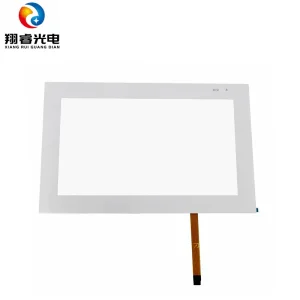
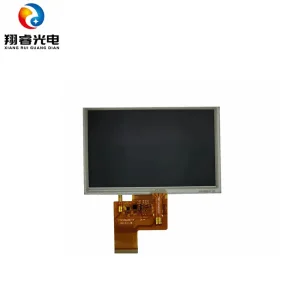
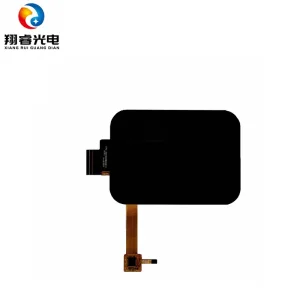
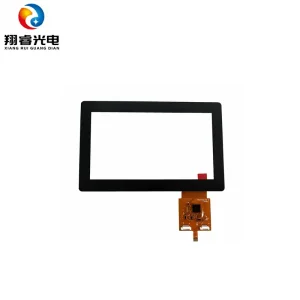
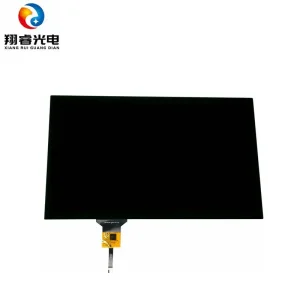
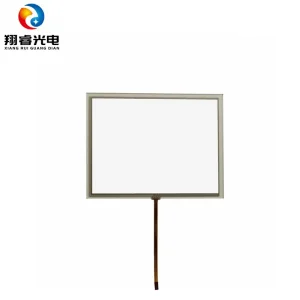
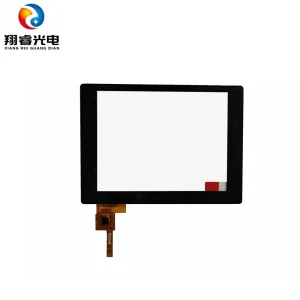
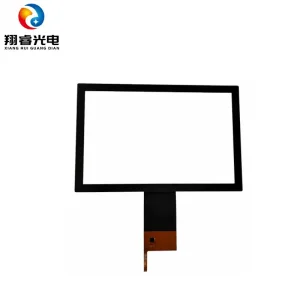
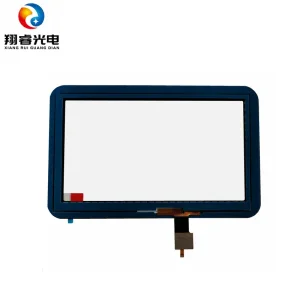
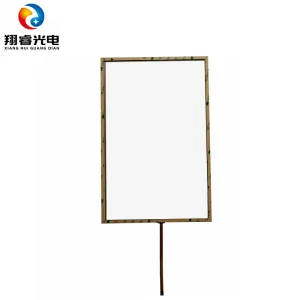
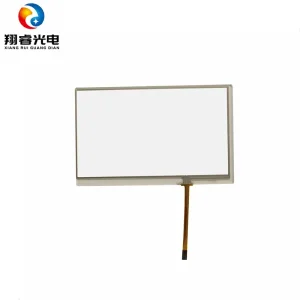
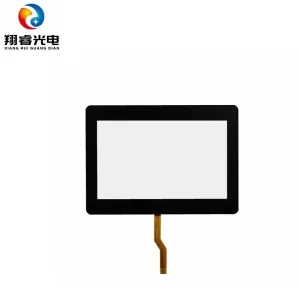
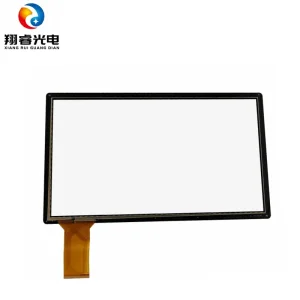
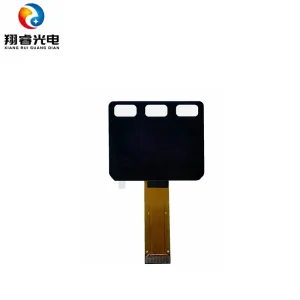
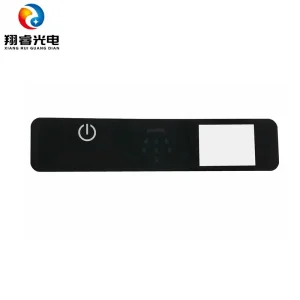
Our core manufacturing capabilities cover custom touchscreen architectures, varying in dimensions, dielectric substrates, bonding mechanisms, and sealing treatments to match rigorous application requirements.
Within human-computer interface (HMI) optimization, the geometrical choice of the capacitive or resistive sensor array plays a significant role in determining signal integrity, ergonomic compatibility, and board layout efficiency. Conventional square or circular sensors face operational issues, including sharp electric field concentration at the corners and inefficient spatial usage when clustered.
Oval touch buttons leverage a curvilinear active sensor area. This shape distributes the capacitive electric charge lines evenly, resulting in an optimal signal-to-noise ratio (SNR). By eliminating the sharp corner geometries characteristic of rectangular button arrays, custom oval touch buttons significantly reduce electromagnetic interference (EMI) hotspots. This design allows engineers to place buttons closer together without risking touch crosstalk or accidental activation.
Furthermore, human tactile dynamics are naturally ellipsoidal. When a fingertip contacts a surface, the footprint expands horizontally rather than uniformly in all directions. Designing touch buttons to conform to this natural oval morphology increases the target acquisition area. Consequently, this geometry yields a high-reliability interface that minimizes inputs and operator fatigue in high-stress control environments.
Modern global industries are moving rapidly from physical rotary dials and mechanical pushbuttons to integrated, sealed solid-state capacitive surfaces. This architectural pivot is driven by the need for washdown-tolerant, wear-resistant, and aesthetically flexible interfaces. Custom oval touch buttons serve as a key component across multiple vertical markets:
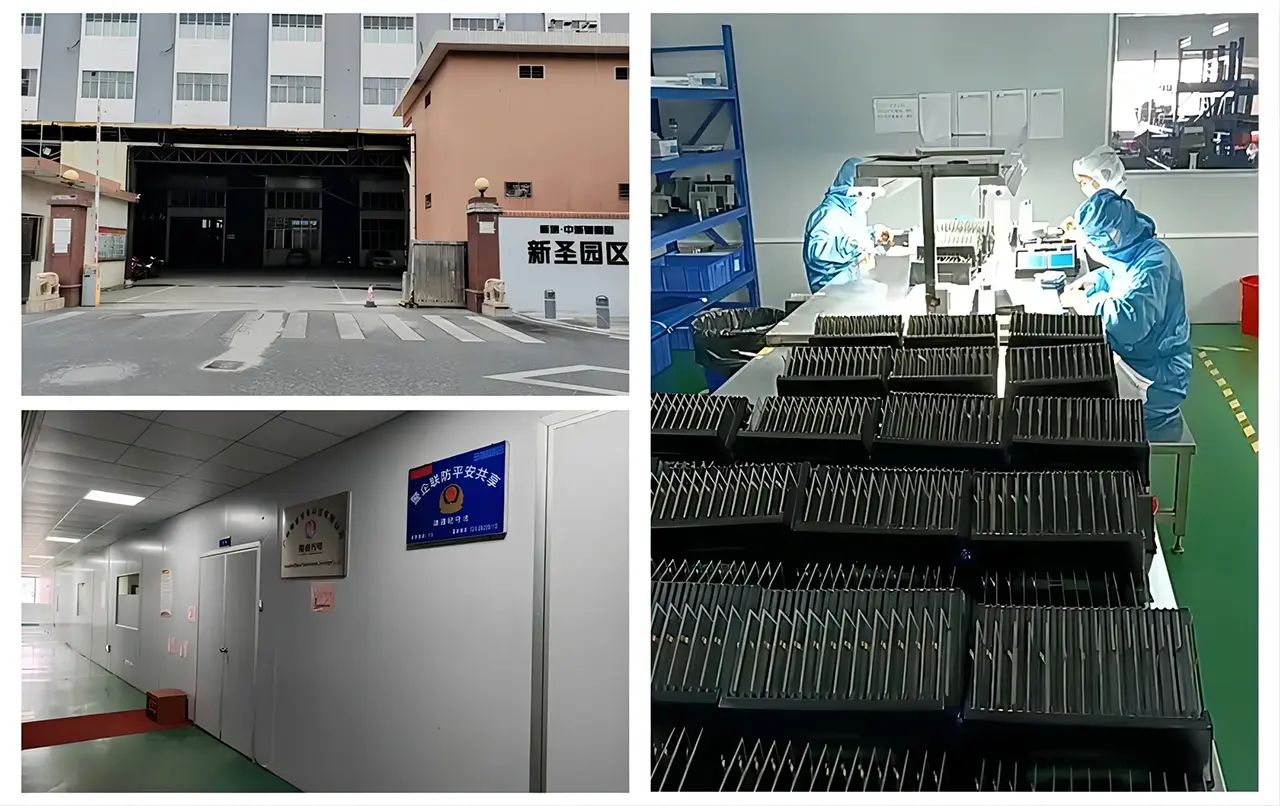
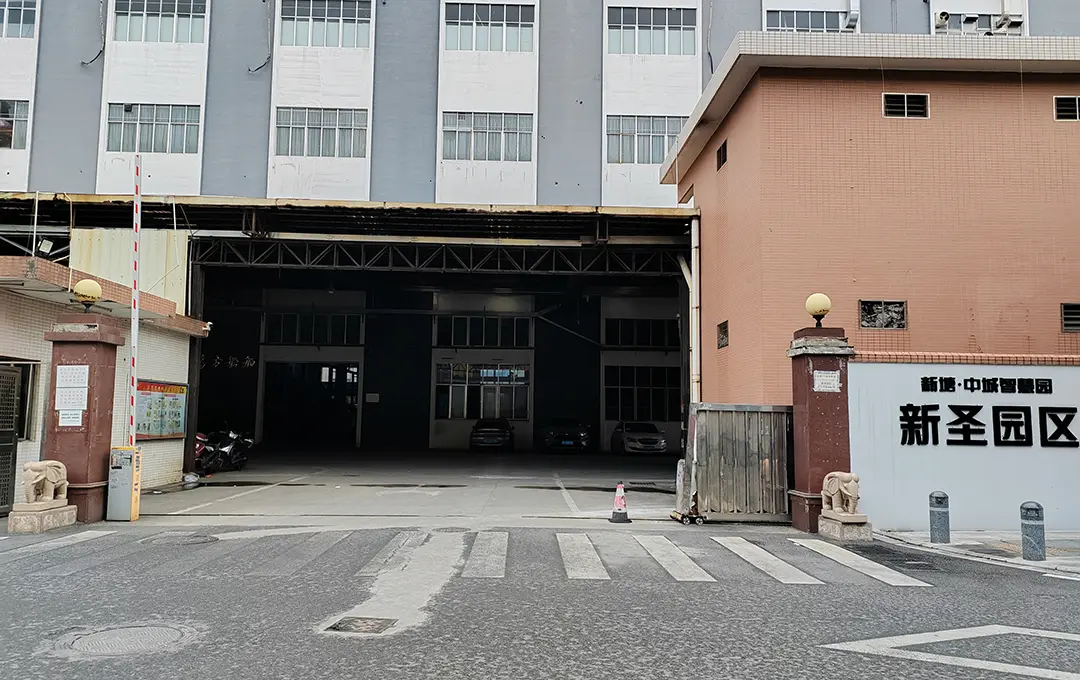
Founded in 2010 in Guangzhou, China, we are an established enterprise focused on the research, development, production, and distribution of high-performance resistive touch panels, projected capacitive touch panels, customized cover glass surfaces, and integrated display module bonding systems.
Over more than a decade of development, we have established an engineering-first culture. Our production plant spans approximately 3,000 square meters, housing a specialized layout of Class 100, Class 1,000, and Class 10,000 dust-free cleanrooms. This environment keeps particulates minimal, ensuring high optical yield and reliability during key processes, including ITO patterning, FPC bonding, and optical laminations.
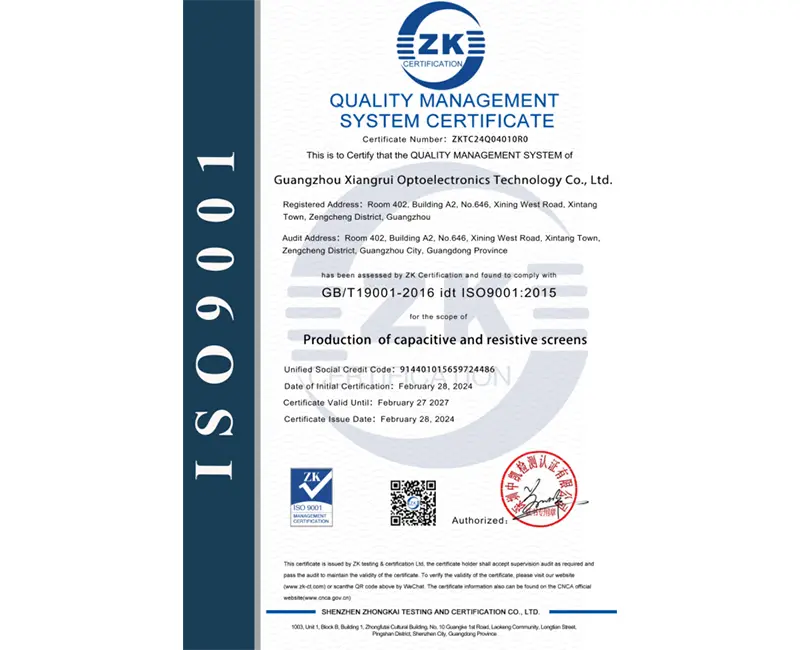
We are certified to ISO 9001 and ISO 14001 quality and environmental management systems. Additionally, we hold over 30 patents for proprietary designs and processing techniques, enabling us to support custom requests from overseas OEMs and ODMs looking to implement complex interface designs.
Our operation is built on precision manufacturing, strict quality control, and a strong global service footprint. Our numbers reflect our dedication to industrial engineering excellence:
Developing high-quality custom touch buttons requires tailored material selection and structural design. We optimize every layer of the interface stackup to ensure stable performance under varying environmental conditions:
Our position as a trusted global manufacturer relies on these core practices:
To successfully integrate touch panels into equipment sold worldwide, meeting regional regulatory standards is essential. All custom products manufactured by Guangzhou Xiangrui Optoelectronics comply with international environmental and electrical requirements, including RoHS, REACH, CE, FCC, and UL.
We understand that deploying products globally requires accessible engineering support. Our technical team works alongside clients' engineers during the product design phase. We assist with: FPC trace routing, bezel design, ESD grounding design, and tuning controller gain settings to resolve local electrical noise issues quickly. Whether you are scaling production in Europe, the Americas, or Asia, our engineers help ensure compliance and fast time-to-market.
Next-generation HMIs will require interfaces that extend beyond flat, rigid glass. Our R&D pipeline focuses on several evolving interface trends:
Discover our range of custom display and control panels, designed for applications ranging from compact handheld devices to large industrial consoles.
 Xiangrui Optoelectronics