Explore our precision-engineered tactile touch screens and sensor overlays designed for harsh environments, specialized electronics, and seamless user experiences.
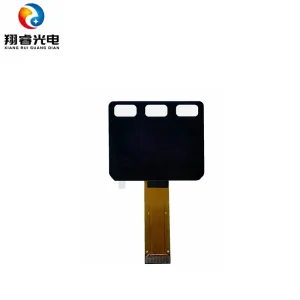
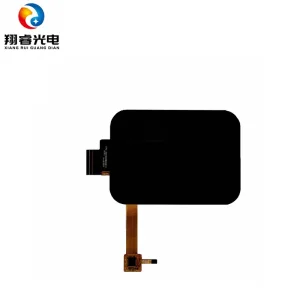
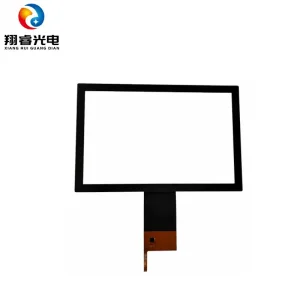
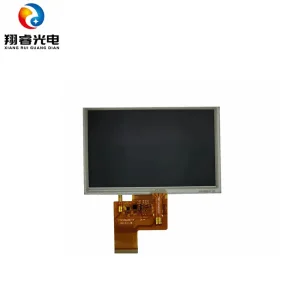
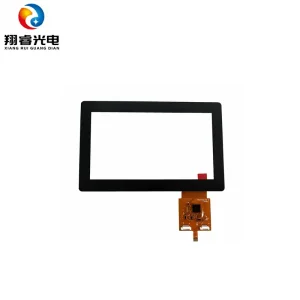
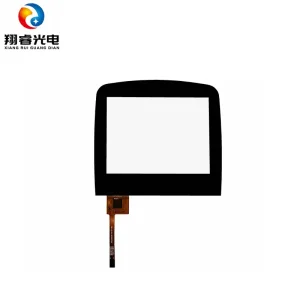
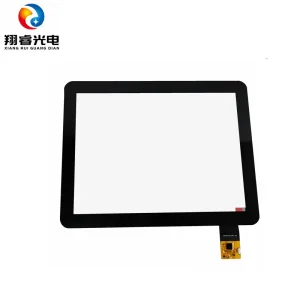
In modern human-machine interface (HMI) design, the transition from mechanical switches to solid-state touch button sensors has revolutionized product lifespan, aesthetics, and environmental resilience. Touch button sensors rely on capacitive or resistive changes detected when an operator interfaces with the surface layer. Unlike physical tactile keys, these sensors operate behind seamless overlay panels, eliminating ingress paths for dust, liquid, and chemical contamination.
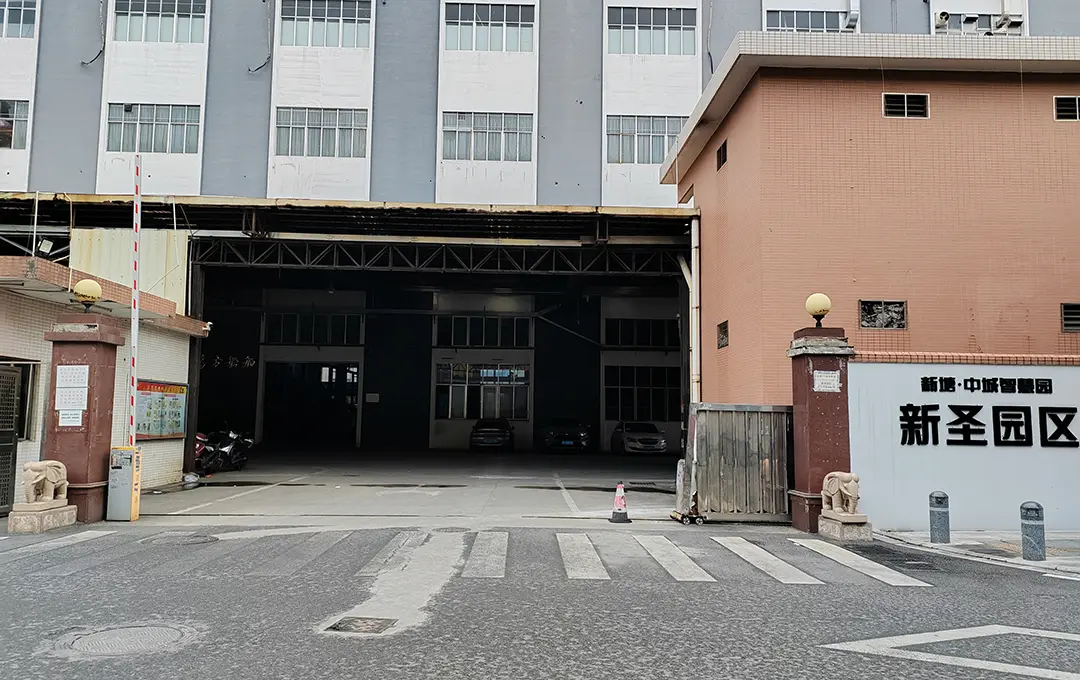
As a leading provider in South China's high-tech manufacturing corridor, Guangzhou Xiangrui Optoelectronics Technology Co., Ltd. has spent over a decade developing highly integrated capacitive touch panels and resistive overlays that incorporate integrated virtual buttons, custom sliders, and dedicated key layouts. We bridge the gap between complex hardware configurations and intuitive industrial controller firmware to deliver robust, fail-safe touch modules.
Founded in 2010 and based in Guangzhou, China, we are an established enterprise specialized in the research, development, custom layout design, validation, and volume fabrication of resistive touch panels, capacitive touch panels, ultra-durable cover glass coatings, and optical module bonding products. Over the past decade, we have honed our design pipeline to offer top-tier OEM and ODM services to global manufacturing brands.
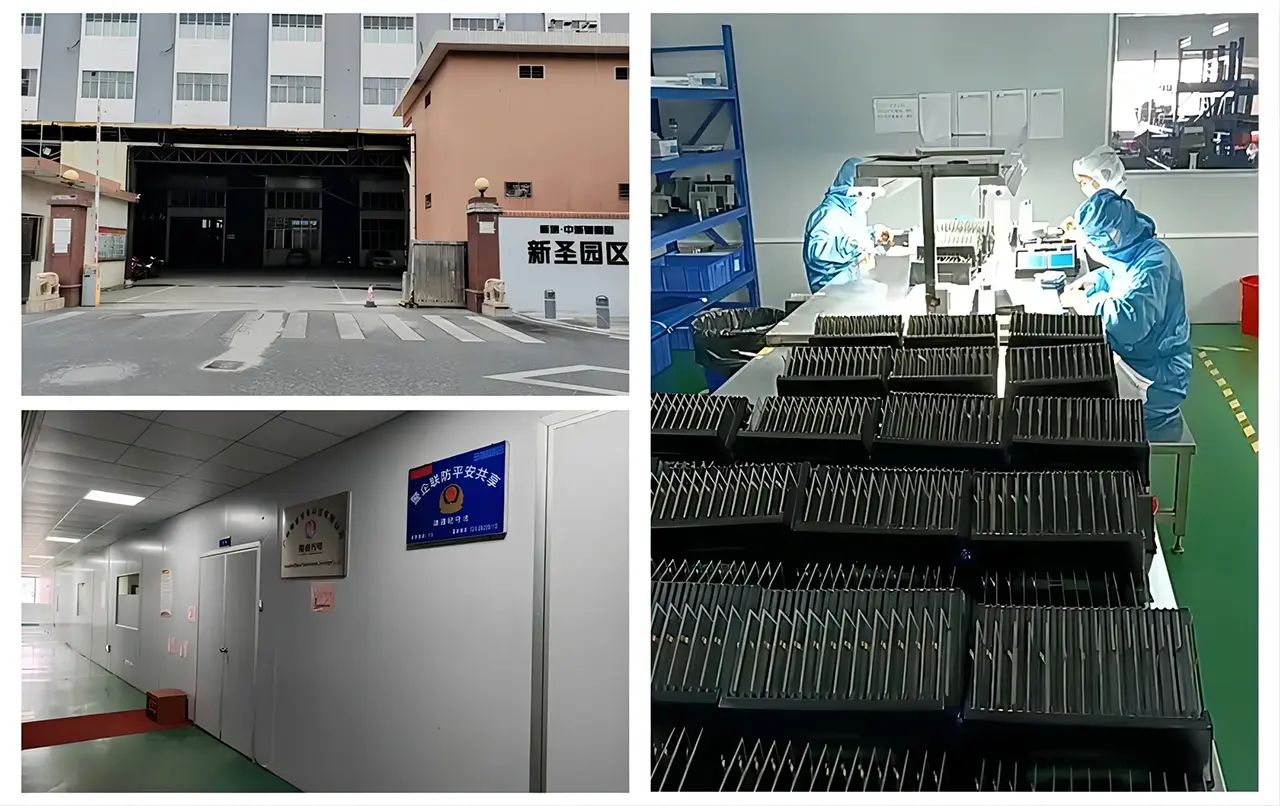
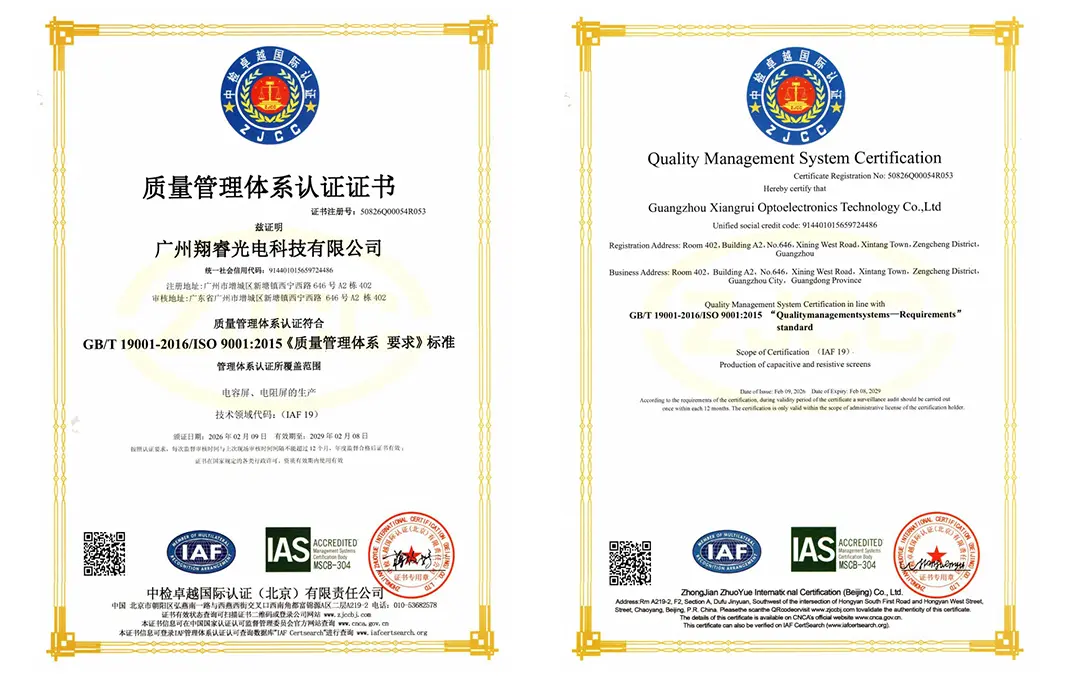
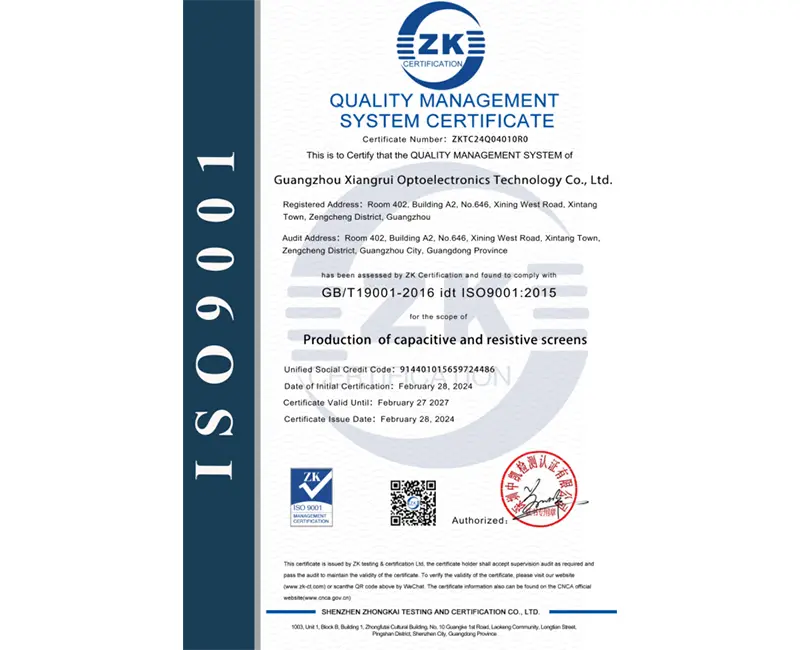
Our state-of-the-art facilities are certified under ISO 9001:2015 quality management systems and ISO 14001:2015 environmental compliance standards. We feature cleanrooms scaled up to Class 100, Class 1,000, and Class 10,000 ratings, ensuring optimal yield rates for optical clear adhesive (OCA) applications and liquid optical clear adhesive (LOCA) bonding. This enables our products to reliably perform in mission-critical deployments.
Our corporate capabilities and global export scale demonstrate our status as a reliable manufacturing partner.
Established in 2010, driving advancements in touchscreen and touch button sensor matrices.
Recognized as a High-Tech Enterprise in Guangdong Province (2022) with proprietary technologies.
Supplying systems to electronic engineering hubs across Europe, North America, and East Asia.
Specialized plant site with dedicated cleanrooms (up to 10,000 sqm overall group infrastructure capacity).
Integrating touch panels and custom button layouts requires access to a complete supply chain. China-based manufacturers provide specialized integration capabilities at scale.
From raw Indium Tin Oxide (ITO) sputtering targets to specialty cover glass (such as Corning Gorilla Glass, Asahi Glass, and Schott), South China's supply chain offers immediate access to critical components. This enables rapid procurement of specialty films, high-bond optical adhesives, and custom flexible printed circuits (FPCs) with minimized lead times.
Our facility handles micro-pattern sensor etching, customized electrode layouts, and protective surface treatments on-site. We apply specialized coatings, including Anti-Glare (AG), Anti-Reflective (AR), and Anti-Fingerprint (AF) finishes, allowing engineers to customize light transmission and tactile properties for indoor or outdoor applications.
Capacitive touch button sensors must operate reliably near electrical interference, high humidity, and changing temperatures. By leveraging advanced controller chips (such as Cypress, Goodix, FocalTech, and EETI) and tuning firmware locally, we achieve high levels of electromagnetic compatibility (EMC) and water rejection.
Our custom touch button sensors and bonded screen modules are deployed across diverse industries, each requiring specific design features to handle distinct operating environments.
Factory-floor terminals require reliable operation through thick working gloves and resistance to machine vibration, grease, and high-voltage electrical noise. Our custom industrial-grade touch buttons are configured to register only intentional inputs, preventing accidental triggers. With wide operating temperature profiles (-30°C to +85°C) and robust optical bonding, these displays resist condensation and internal fogging.
In clinical environments, touch surfaces must withstand continuous chemical cleaning with isopropyl alcohol and bleach. Because our capacitive touch sensors reside behind flat, sealed glass overlays, they eliminate crevices where bacteria can accumulate. This enables clinical devices to maintain an IP65 protection rating, support latex-gloved operation, and run reliably near surgical tools without electromagnetic interference.
For smart appliances, touch controls must look modern and resist kitchen grease, water droplets, and high temperatures. Our integrated panels support virtual touch wheels, multi-touch sliders, and backlighting options, allowing designers to create cohesive control panels for stoves, refrigerators, and smart home hubs.
In POS terminals and modern biometric palm scanners, optical clarity and high durability are critical. We produce custom touch overlays with optimized index matching to reduce surface reflections. This ensures that camera systems can capture scan details accurately through the glass while providing a smooth interactive touch surface for users.
Sourcing custom electronics involves addressing technical details early in the design cycle. We align our manufacturing practices with these requirements to support procurement teams.
Transitioning from a 2D CAD design to a production-ready glass sensor requires layout review and validation. We work with engineering teams on sensor routing, tail shielding, and tail bending radius parameters to minimize signal loss and physical stress.
We provide complete material traceability, including inspection certificates for raw glass sheets, ITO films, and controller ICs. In addition, we offer quality reports covering reliability testing, humidity storage, thermal shock cycles, and ESD resistance.
We offer diverse configurations, including custom cover plate shapes, chemically strengthened glass up to 10mm thick, PMMA/polycarbonate materials, bespoke printing colors, integrated touch button layouts, and custom flexible printed circuits.
As automation and smart devices evolve, touch interface technology is moving toward higher durability and better visual integration.
By combining traditional capacitive sensors with micro-deflection strain gauges or pressure-sensitive layers, modern systems can distinguish between light taps and intentional, firm presses. This reduces accidental activations in heavy industrial environments.
Automotive and high-end consumer appliance brands are shifting from flat screens to curved profiles. By utilizing flexible ITO films and thermoformed cover panels, we can laminate complex 2.5D and 3D shapes to match curved modern enclosures.
Public kiosk screens and clinical systems increasingly require antimicrobial protection. Using advanced vacuum deposition, we can apply thin layers of silver ions and hydrophobic elements to control bacteria growth and simplify surface cleaning.
Common technical questions from electronics designers and procurement specialists regarding capacitive touch button sensors and custom panel assemblies.
Air bonding attaches the touch panel to the LCD screen using double-sided adhesive tape along the border, leaving a small air gap in the center. Optical bonding (using OCA or LOCA) fills the entire space between the touch layer and the LCD display with optical clear adhesive. Optical bonding eliminates internal reflections to improve outdoor readability, increases physical impact resistance, and prevents condensation or moisture from entering the gap.
Yes, our capacitive touch controllers can be tuned to detect gloved fingers. By adjusting the sensitivity thresholds and using controllers with high signal-to-noise ratios (such as Cypress or EETI), we can calibrate the system to operate through nitrile, latex, leather, and heavy working gloves.
Water films can act as conductors and cause false touch events on standard capacitive screens. We address this using two main techniques. First, we use controllers that support mutual capacitance scanning alongside self-capacitance sensing to distinguish between water droplets and actual finger touches. Second, we apply hydrophobic coatings to prevent water from forming large, conductive films on the surface.
We offer customized glass profiles to match your enclosure design. Options include chemical strengthening (up to 7H hardness), custom dimensions and shapes, screen-printed border colors, camera cutouts, anti-glare (AG) etching, anti-reflective (AR) treatments, and anti-fingerprint (AF) coatings.
Yes. Our factory operates under ISO 9001 and ISO 14001 quality management systems. Our touch panel assemblies can be configured to comply with RoHS, CE, and FCC requirements. We also provide panels built to meet IP65 and higher dust and water protection ratings when properly sealed into enclosures.
Typical prototype design and sample fabrication takes between 2 to 3 weeks after technical drawing approval. For mass production runs, standard lead times are typically 3 to 4 weeks, depending on component availability and ordering volumes.
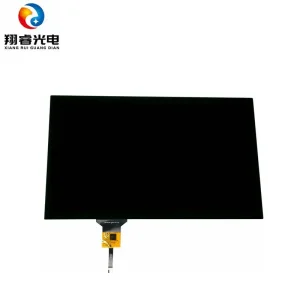
We provide specialized touch screen assemblies designed for industrial and outdoor applications, featuring wide operating temperature ranges and robust environmental sealing.
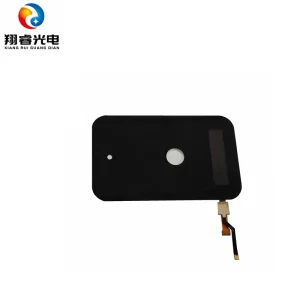
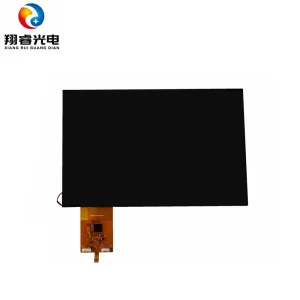
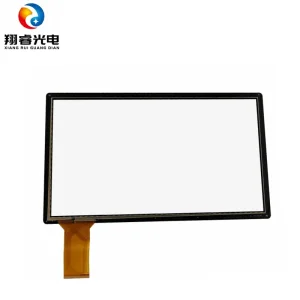
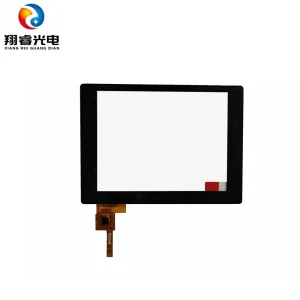
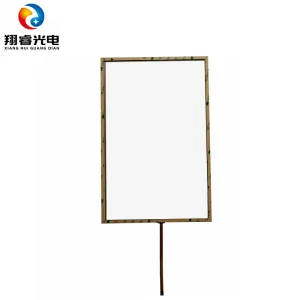
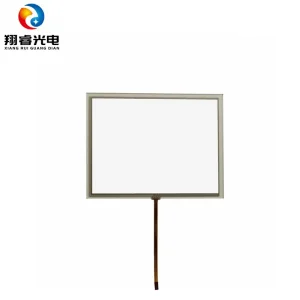
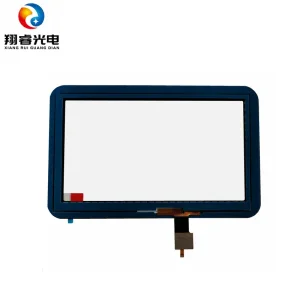
At Guangzhou Xiangrui Optoelectronics Technology Co., Ltd., we combine technical experience with modern manufacturing practices to deliver reliable touch solutions. Whether you require standard touch screen designs, specialized custom cover glass, or optical bonding services for your display assembly, our engineering team is here to assist with design and validation.
Contact us today to review your project specifications, request mechanical CAD evaluations, or request engineering prototypes.
 Xiangrui Optoelectronics