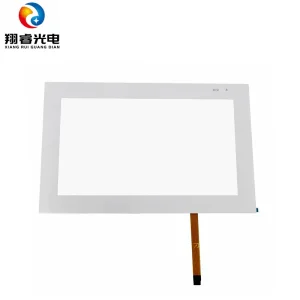
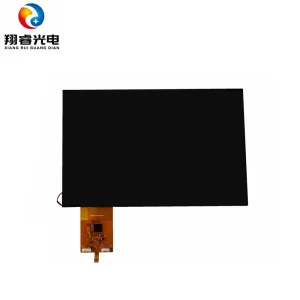
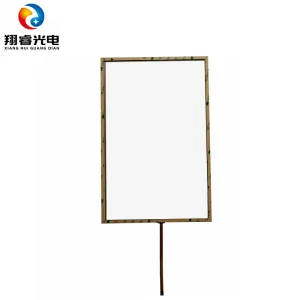
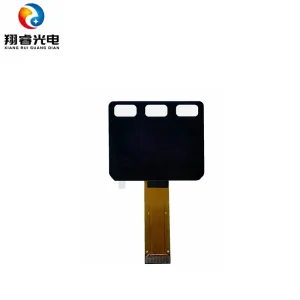
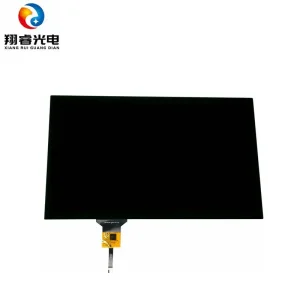
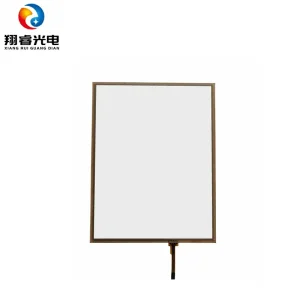
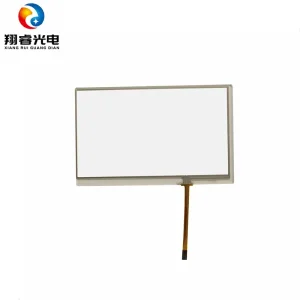
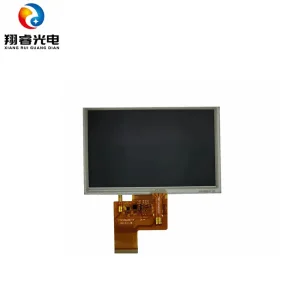
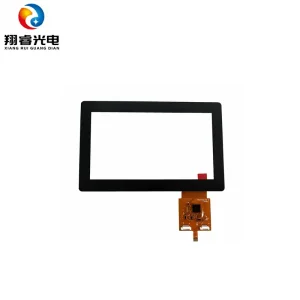
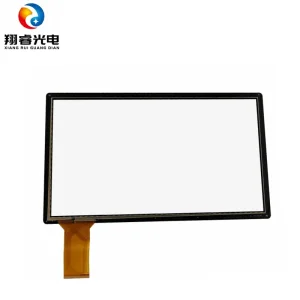
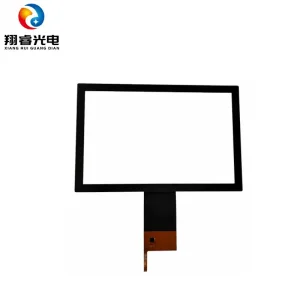
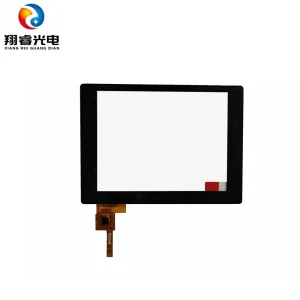
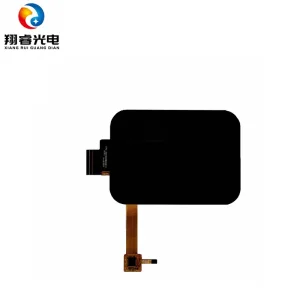
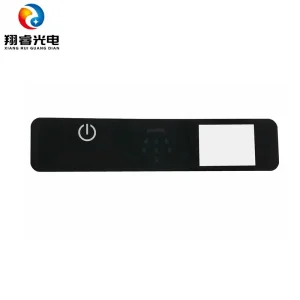
Custom Touch Panel Overlay Manufacturer & Products

High-reliability resistive & capacitive touch solutions engineered for critical industrial, medical, and commercial environments.

Who Are We: Guangzhou Xiangrui Optoelectronics

Founded in 2010, Guangzhou Xiangrui Optoelectronics Technology Co., Ltd. has developed into a leading global pioneer in custom touch panel engineering. Based in Guangzhou, China, our company integrates deep material science research, hardware development, state-of-the-art production processes, and end-to-end quality assurance systems.

Our core capabilities center on custom touch screen development, covering resistive touch panels, projective capacitive (PCAP) touch screens, custom cover glass designs, and advanced optical module bonding. Guided by an engineering-first culture, we serve as a vital OEM and ODM partner for enterprises worldwide seeking highly customized human-machine interfaces (HMIs).

We operate from an ISO 9001 and ISO 14001 certified campus spanning a total facility footprint of approximately 10,000 square meters, featuring dedicated cleanroom manufacturing environments designed to limit contamination to negligible metrics.
Guangzhou Xiangrui Optoelectronics Facility

Our Global Manufacturing Standards

Engineered for low-particle optical lamination and long product lifecycles in critical operating parameters.

Our main factory building houses over 3,000 square meters of specialized assembly zones. These are strategically divided into Class 100, Class 1,000, and Class 10,000 cleanroom workshops, meeting the dust-free environmental standards required for optical lamination, bonding, and defect-free ITO sensor production.

10+ Years
Industrial Authority
Delivering advanced human-machine interfaces since 2010.
30+
Invention Patents
Proprietary control algorithms, sensor layouts, and laminations.
100+
Product Breakdowns
Diverse designs customized across a wide spectrum of formats.
40+
Countries Served
Exporting high-reliability overlays across Europe, Americas & Asia.

Global Corporate Procurement Demands

Navigating the complex technical requirements for HMI hardware in mission-critical applications.

Environmental Resilience

Procurement specifications for outdoor and heavy industrial usage demand strict environmental resistance. Typical requirements include a wide operating temperature range (-30°C to +85°C) and resistance to UV degradation, thermal shock, moisture, dust ingress (IP65, IP67, or IP68), and mechanical impacts (IK08 to IK10 ratings).

Electromagnetic Compatibility

In automation, medical engineering, and military deployment, electromagnetic interference (EMI) can trigger false touch inputs. Procurement engineers look for specialized sensor designs and shielding materials that comply with strict EMC regulations (such as IEC 60601-1-2 for medical devices).

Supply Chain Stability & EOL Support

Industrial designs typically require long product availability cycles (often 7 to 10+ years). Procurement teams require guarantees of component longevity, strict Change Control Processes (PCN), and reliable End-Of-Life (EOL) support to protect their engineering and testing investments.

Macro Industry Solutions

How Guangzhou Xiangrui Optoelectronics addresses specialized touch challenges across key industrial sectors.

Medical Diagnostic & Surgical Monitors

Medical HMIs require high precision, glove touch capability (even with thick surgical gloves), and resistance to biological fluids and harsh chemical cleaners.

  • Supports fluid-rejection touch algorithms.
  • High chemical resistance (IPA, chlorine, hydrogen peroxide).
  • Fully flush, easy-to-clean bezel-free cover glasses.
  • Anti-Glare (AG) and Anti-Reflective (AR) coatings for operating room lighting.

Industrial & Outdoor HMIs

Machinery environments subject equipment to vibration, grease, high humidity, and physical impacts. Our designs prioritize mechanical ruggedness and noise immunity.

  • Resistive touch overlays (pressure-activated, immune to dust and oils).
  • Projected Capacitive (PCAP) with high noise-immunity ICs.
  • Thick cover lenses (up to 6mm or 10mm glass) for IK10 impact protection.
  • Optical bonding prevents internal condensation and condensation build-up.

Smart Kiosks, Retail POS & Palm-Print Terminals

Public installations experience constant usage and potential vandalism. The primary design goals here are wear resistance, readability, and multi-touch performance.

  • Anti-Fingerprint (AF) and hydrophobic surface treatments.
  • Hardness ratings up to 7H (Mohs scale) to prevent key or coin scratches.
  • High optical clarity (>90% light transmission) for vibrant digital signage.
  • Integrated multi-touch support for zoom, drag, and drop gestures.

Smart Home & Integrated Control Panels

Modern smart appliances and high-end home control units rely on sleek, curved surfaces, dead-front optics, and fast, low-latency responsiveness.

  • Custom printed borders with organic or ceramic ink options.
  • Slim profile capacitive buttons and slider controls.
  • Thermal tempering (physical or chemical) for thermal gradient safety.
  • Seamless mechanical integration into plastic or metal housings.

Technology Roadmap & Future Horizons

Advancing human-machine interfaces through continuous material science and controller innovations.

Today

Optical Bonding & Anti-Glare (AG/AR/AF) Integration

We specialize in optical bonding using liquid optical clear adhesive (LOCA) or dry sheet adhesive (OCA). This method eliminates the air gap between the touch sensor and the LCD, reducing internal light reflections by up to 90%, improving contrast ratio, and eliminating internal condensation. Advanced surface treatments are standard, ensuring high visibility under bright ambient light.

2026-2027

Flexible ITO-Free Sensor Development

Transitioning to alternative conductive layers, such as Metal Mesh or Silver Nanowires (AgNW). These materials provide lower sheet resistance, support curved and flexible overlay structures, and offer higher mechanical flex life for next-generation smart surfaces.

2028 & Beyond

Haptic Feedback & AI-Assisted Edge Controls

Integrating micro-actuators directly into the touch panel overlay stack-up to deliver localized physical click sensations to users. This technology is paired with on-board edge controllers that run filtering algorithms to eliminate invalid touch signals from water splashes or vibration.
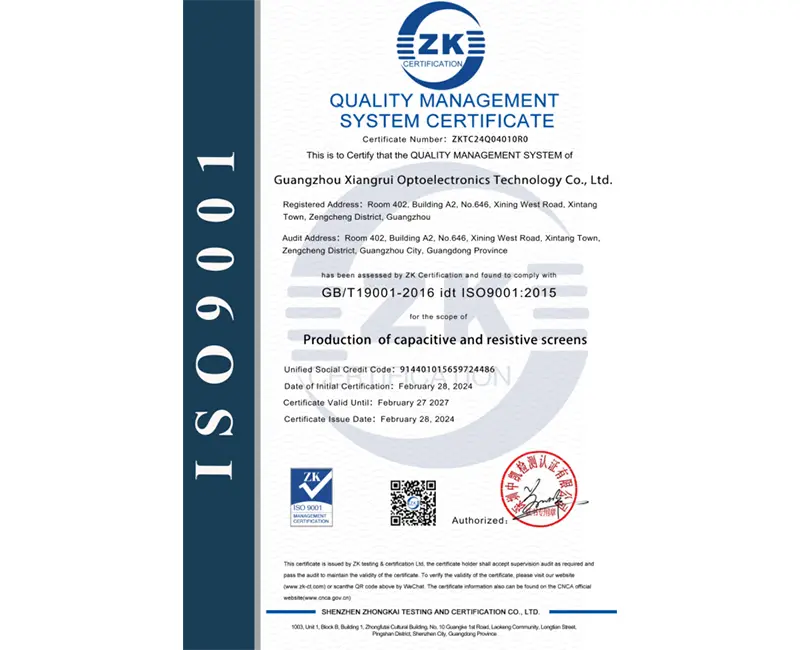
Xiangrui Optoelectronics Quality Inspection

Why Partner with Guangzhou Xiangrui

Guangzhou Xiangrui Optoelectronics Technology Co., Ltd. operates with a core philosophy: reputation first, customer satisfaction, stable quality, on-time delivery, and long-term partnership. We maintain strategic relationships with component suppliers to ensure reliable, long-term support for our products.

01. ISO 9001 & ISO 14001 Certification Our manufacturing processes follow strict quality standards. Every step, from incoming raw materials (glass, sensor layers, flexible printed circuit cables, controller ICs) to final optical inspection, is fully documented.
02. Patented Designs & Technology Awards Supported by our engineering R&D department, we hold more than 30 utility model and design patents. This innovation led to our recognition as a official High-Tech Enterprise in Guangdong Province in 2022.
03. Full Customization Capabilities We offer customizable glass thickness, custom borders, physical drill holes, special corner cuts, double-sided anti-glare coatings, and high-impedance resistive sensors for specialized medical or aerospace controls.

Global Compliance & Engineering Support

To support international system integrators, we provide products that comply with RoHS, REACH, CE, and FCC standards. Our touch panel overlays are designed and certified to meet the technical standards of global markets, ensuring easy integration into your final products.

RoHS Compliant REACH Certified CE Certified EMC Shielding IP65 Front Rated

Technical FAQ & Knowledge Base

Clear, direct answers to common engineering, integration, and design questions regarding touch screen overlays.

1. What is the main difference between resistive and capacitive touch panel overlays? +
Resistive touch screens are pressure-activated, using two conductive layers separated by spacer dots. They work with any input device—gloves, pens, styluses, or bare fingers—and are highly resistant to water, dust, and electrical interference. Capacitive touch screens (PCAP) detect the change in capacitance when a finger makes contact. They offer multi-touch capabilities, high optical clarity (>90%), and thin cover glass designs, making them ideal for high-visibility commercial and medical applications.
2. What is optical bonding, and when is it recommended for touch screen panels? +
Optical bonding is the process of laminating the touch panel directly to the LCD screen using index-matched adhesives (LOCA or OCA), eliminating the air gap. We recommend it for outdoor displays, medical equipment, and marine electronics. It improves daylight readability, increases impact resistance, and prevents condensation or dust build-up under the glass.
3. Can your touch screen overlays support operation with thick industrial or surgical gloves? +
Yes. For capacitive (PCAP) overlays, we tune the controller IC firmware (e.g., ILITEK, EETI, or FocalTech) to increase sensitivity and recognize the touch profile of thick gloves. For resistive overlays, because they are pressure-activated, they naturally support any glove thickness without special firmware adjustments.
4. How do you protect touch screens from physical impact and vandalism? +
We use chemically tempered or physically tempered cover glass. We can design and laminate cover lenses up to 6mm, 8mm, or 10mm thick over capacitive sensors to meet IK08, IK09, or IK10 impact ratings, protecting the underlying LCD.
5. Which glass surface treatments do you offer for anti-reflection and glare? +
We offer three main surface treatments: Anti-Glare (AG), which scatters reflected light to reduce glare; Anti-Reflective (AR), which uses thin-film coating to increase transmission and reduce reflections; and Anti-Fingerprint (AF), which creates a hydrophobic/oleophobic surface that resists smudge marks and is easy to clean.
6. Do you support custom shape cutting and custom border printing? +
Yes. Our CNC glass cutting, milling, and printing systems allow us to produce custom shapes, curved profiles, bevels, and printed borders. We can print logos and match specific RAL or Pantone colors using high-temperature ceramic or epoxy inks.
7. What certifications does your factory hold? +
Guangzhou Xiangrui Optoelectronics is certified under ISO 9001 (Quality Management System) and ISO 14001 (Environmental Management System). Our products also comply with RoHS and REACH regulations to meet international safety and environmental standards.
8. How do you control dust contamination during high-precision bonding? +
We manufacture in controlled environments. Our facility houses Class 100, Class 1,000, and Class 10,000 cleanroom workshops. We use laminar flow benches and automated cleaning systems during the assembly process to prevent particles from being trapped between the display and the touch glass.
9. What interface controllers and communication options do you support? +
Our touch screens support standard interfaces, including USB, I2C, and RS232. We design custom flexible printed circuits (FPC) to match your layout and provide plug-and-play drivers for Windows, Linux, Android, and various RTOS platforms.
10. What is your process for supporting custom prototypes? +
We start with a consultation to review your technical requirements (mechanical dimensions, optical performance, and environmental conditions). Our engineering team then creates a CAD drawing for your approval. Once approved, we build a custom sample using dedicated tools to verify fit, finish, and performance before moving to high-volume production.