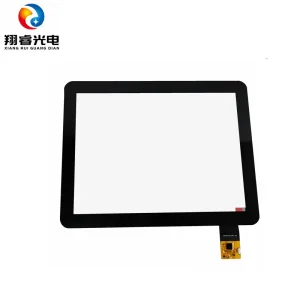
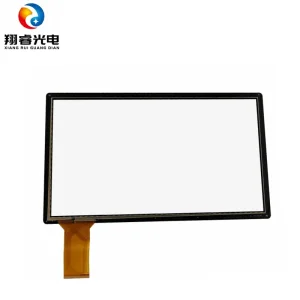
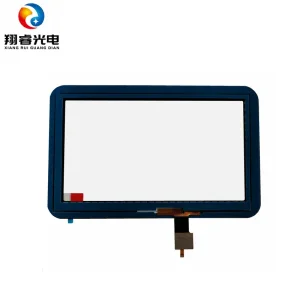
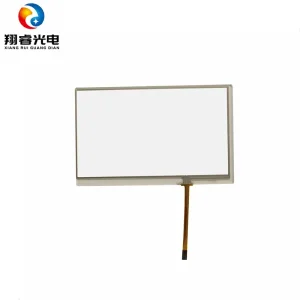
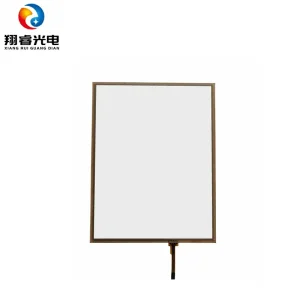
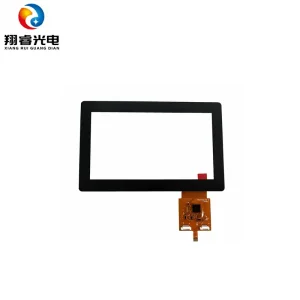
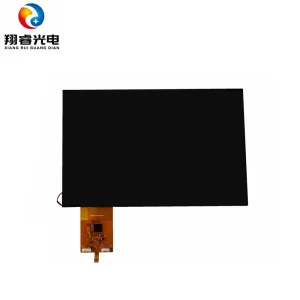
Explore our engineering-focused product portfolio featuring advanced surface coatings and custom controller setups.
Founded in 2010 in Guangzhou, China, we are an industry-leading enterprise dedicated to the R&D, design, advanced manufacturing, and marketing of high-precision resistive touch panels, projected capacitive touch panels, robust cover glass configurations, and integrated optical module bonding solutions.
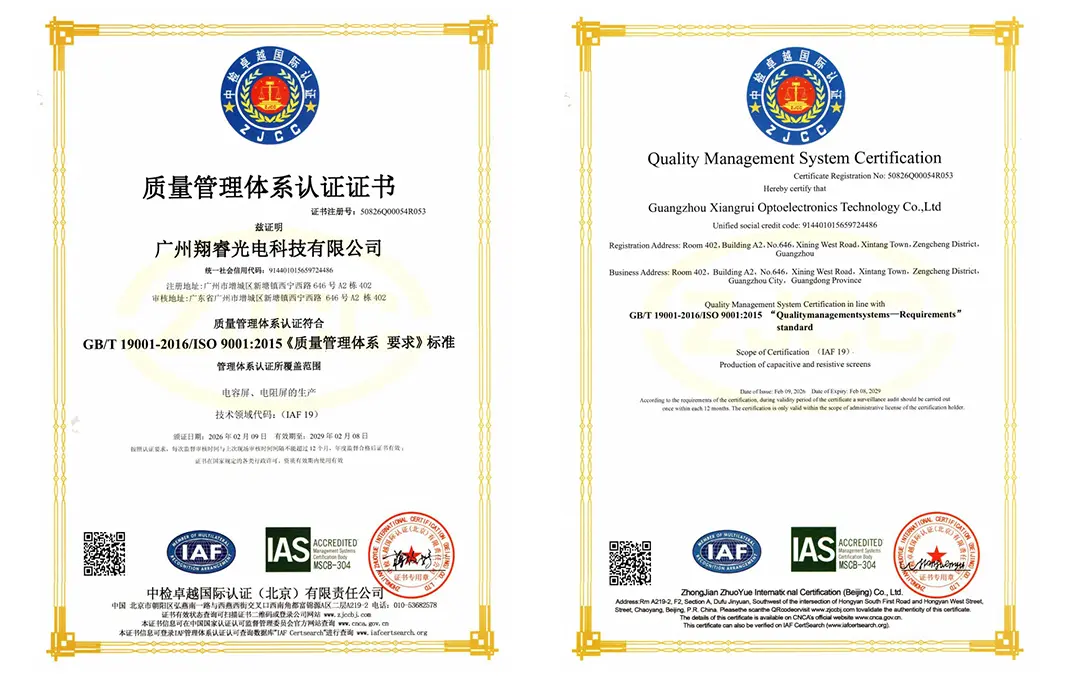
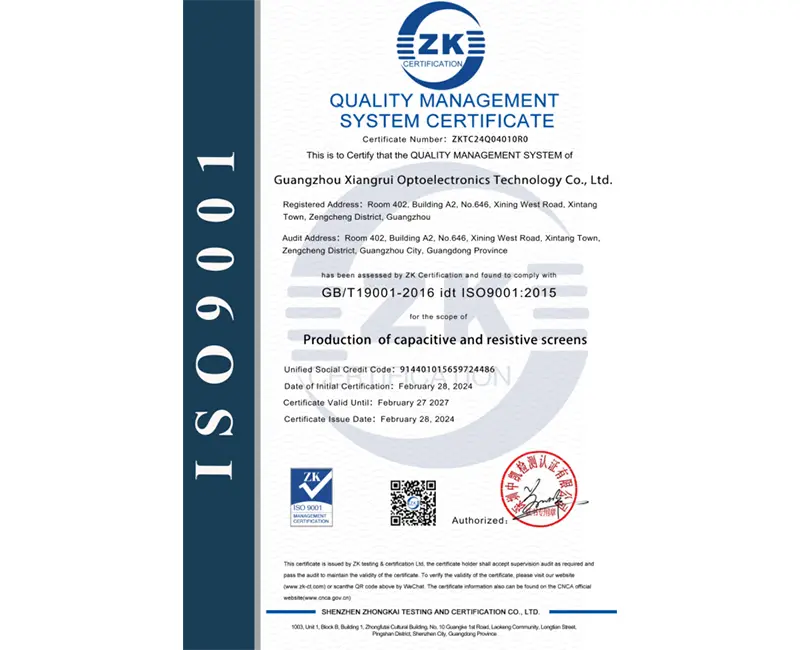
Our commitment to rigorous processes has earned us ISO 9001 and ISO 14001 certifications. By combining state-of-the-art cleanroom environments with expert manufacturing engineering, we serve as a premier OEM/ODM partner for multinational brands deploying products across demanding vertical sectors.
A comprehensive technical breakdown of sensor architectures, glass treatments, and integration processes for modern industrial interfaces.
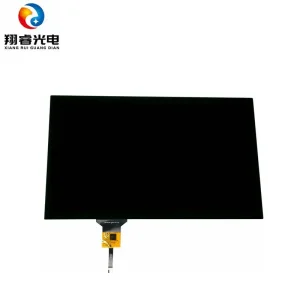
As human-machine interaction transitions from passive output to dynamic input, the 15.6-inch form factor has emerged as the definitive industry standard for wide-aspect displays. Balancing portability with functional canvas area, it provides an optimized layout for medical monitors, retail point-of-sale systems, avionics interfaces, and complex industrial PLCs. However, deploying a touchscreen in these challenging environments requires engineering choices that standard consumer electronics cannot satisfy.
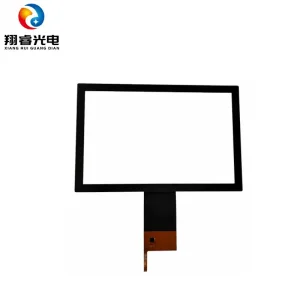
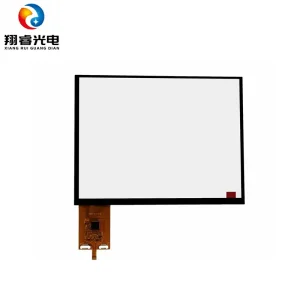
Projected Capacitive (PCAP) multi-touch displays utilize Mutual Capacitance or Self-Capacitance configurations, providing up to 10 simultaneous touchpoints, thick gloved input, and moisture immunity.
Optical bonding (utilizing LOCA or OCA) eliminates the internal air gap between the LCD panel and the touch sensor, enhancing light transmittance, eliminating glare, and preventing condensation.
We apply customized chemical treatments including Anti-Reflective (AR), Anti-Glare (AG), and Anti-Fingerprint (AF) coatings. This ensures clear legibility and durability under direct sun or indoor lighting.
| Performance Parameter | Air Bonding Configuration | Optical Bonding (OCA / LOCA) | Industrial Grade Requirement |
|---|---|---|---|
| Light Transmittance | 86% - 89% | 94% - 98% | > 92% (High Readability) |
| Internal Reflection | High (Double Reflection Boundary) | Near Zero (< 0.5%) | Minimal for Outdoor Use |
| Impact Shock Resistance | Moderate (Air gap leaves display vulnerable) | Exceptional (Solid elastomer dispersion) | IK08 to IK10 Rating Compliance |
| Moisture/Dust Condensation | Possible in high humidity | Physically impossible | Required for IP65/IP67 seals |
How 15.6 inch touch displays are configured to solve challenging environmental variables across critical industrial verticals.
Industrial floors subject systems to chemical cleanings, heavy vibrations, and airborne conductive dust. Our 15.6-inch screens feature industrial controllers (EETI / Ilitek chips) configured with noise-filtering firmware to reject phantom touches caused by electromagnetic interference (EMI) and moisture.
To prevent hospital acquired infections, clinical touch displays must tolerate daily sanitization with harsh disinfectants (such as isopropyl alcohol or bleach). We engineer cover sheets with chemical resistance and support gloved operation (latex, nitrile, neoprene) without sacrificing accuracy or touch registration speeds.
Self-service payment kiosks require high-impact cover glass and UV resistance to prevent yellowing. We customize soda-lime or aluminosilicate cover glass up to 6mm thick to meet IK08+ impact requirements, complete with anti-graffiti and anti-abrasion coatings to extend field service life.
Operating a modern facility in Guangzhou, Guangdong, Guangzhou Xiangrui Optoelectronics Technology Co., Ltd. utilizes advanced automation and quality control processes to deliver reliable touch solutions.
By integrating material sourcing, sensor fabrication, FPC assembly, custom controller tuning, and optical cleanroom bonding into one location, we reduce supply chain risk and control costs for our clients.
Ensuring absolute alignment with global environmental, electrical, and quality frameworks for seamless integration.
Our touch screens are built in accordance with RoHS 2.0 and REACH environmental standards. This ensures restricted substances like lead, mercury, and cadmium are absent, allowing for smooth importation and compliance across European and North American markets. Each batch undergoes rigorous testing to verify safety and environmental friendliness.
From the intake of raw materials (such as high-grade ITO film and glass sheets) to the final shipping inspection, our workflows adhere strictly to our certified ISO management frameworks. This structured approach helps ensure reliable lot-to-lot consistency and minimizes defect rates.
Industrial systems and medical diagnostics projects often remain in service for a decade or more. Understanding the costs of redesigns, we select chipsets and controllers (e.g., EETI, Ilitek) that feature guaranteed 5-to-10-year lifecycles. If a component reaches end-of-life, we provide backwards-compatible alternatives to minimize integration impact.
Browse our additional high-temperature, wide-voltage, and optical bonding panels configured for specialized applications.
Get answers to critical integration, environmental, and material questions to support your project planning.
Glass-on-Glass (G+G) bonds a glass touch sensor to a glass cover lens. It offers excellent optical clarity, high durability, thermal stability, and long life, making it suitable for industrial HMIs and outdoor applications. Glass-Film-Film (G+F+F) uses flexible PET film sensors instead. While G+F+F features a slightly thinner profile and lower tooling costs, it has lower light transmittance and shorter lifecycles under extreme high or low temperatures compared to G+G.
This is managed by combining hardware design and firmware tuning. We use controllers from industry partners like EETI and Ilitek. The firmware is configured with specialized algorithms to distinguish between the static capacitance of water droplets and the dynamic capacitance of a finger or glove. Additionally, we increase the drive voltage (up to 30V or higher) to boost the signal-to-noise ratio, allowing the sensor to detect touches through thick gloves (nylon, leather, latex) and ignore surface water.
We provide comprehensive customization, including chemical tempering (strengthening), physical thermal tempering, and precision CNC edge profiling. Surface treatments include Anti-Glare (AG) chemical etching to diffuse reflections, Anti-Reflective (AR) magnetron sputtering coatings to boost visibility, and Anti-Fingerprint (AF) hydrophobic coatings to minimize smudging. Cover glass thickness can range from 0.7mm up to 6.0mm to satisfy varying impact resistance targets.
For custom CAD layouts and tooling (including customized cover glass printing and FPC lengths), drawing approval typically takes 3-5 days. Prototypes are delivered within 2-3 weeks after design approval. Mass production runs generally range from 3 to 4 weeks depending on the order volume and material requirements, with all processes managed in our ISO-certified facilities.
Our quality process utilizes cleanrooms (Class 100, 1000, 10000) for all bonding and lamination steps to prevent dust ingress. We perform 100% optical and electrical testing, AOI (Automated Optical Inspection), and environmental thermal cycling. This ensures each unit operates reliably within specified industrial temperature limits before shipping.
 Xiangrui Optoelectronics