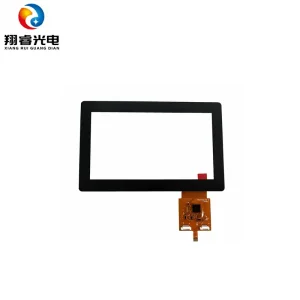
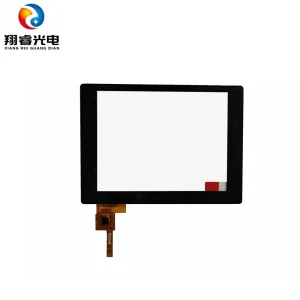
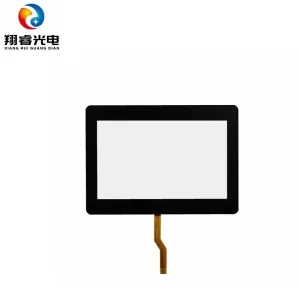
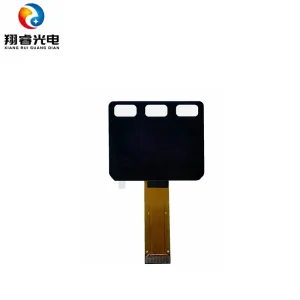
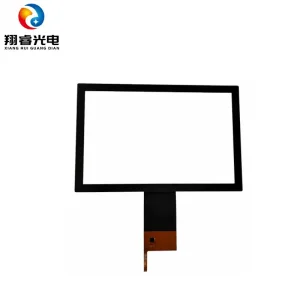
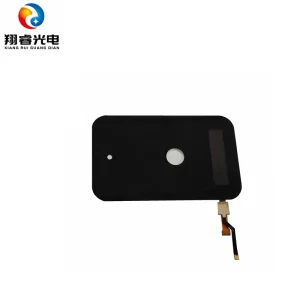
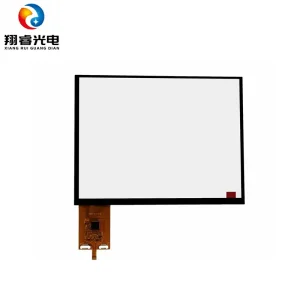
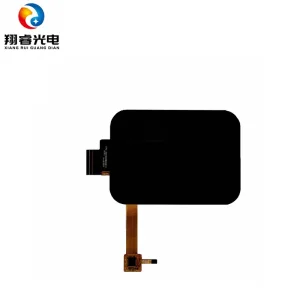
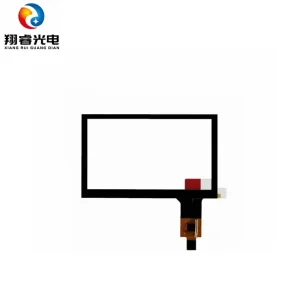
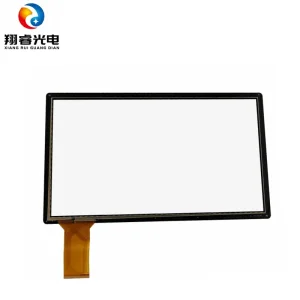
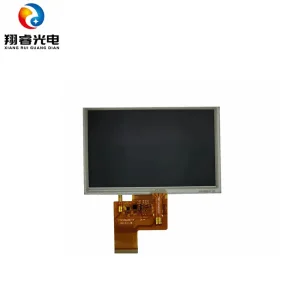
Explore our industrial and commercial grade touchscreen systems, manufactured under strict ISO quality controls with optimized optical performance.
Founded in 2010 and strategically located in Guangzhou, China, Guangzhou Xiangrui Optoelectronics Technology Co., Ltd. has established itself as an industry-leading pioneer in the touch display vertical. We are fully committed to the research, development, custom engineering, and mass production of advanced resistive touch panels, capacitive touch panels, high-durability cover glass, and state-of-the-art optical module bonding solutions.
With dual certifications in ISO 9001:2015 (Quality Management System) and ISO 14001:2015 (Environmental Management System), we adhere to strict international manufacturing standards. Our custom OEM and ODM platforms deliver robust, optically optimized interactive touch layers to sectors requiring extreme environmental stability, including medical diagnostic devices, heavy industrial HMIs, smart home control hubs, rugged outdoor terminals, and cutting-edge palm-print recognition payment terminals.
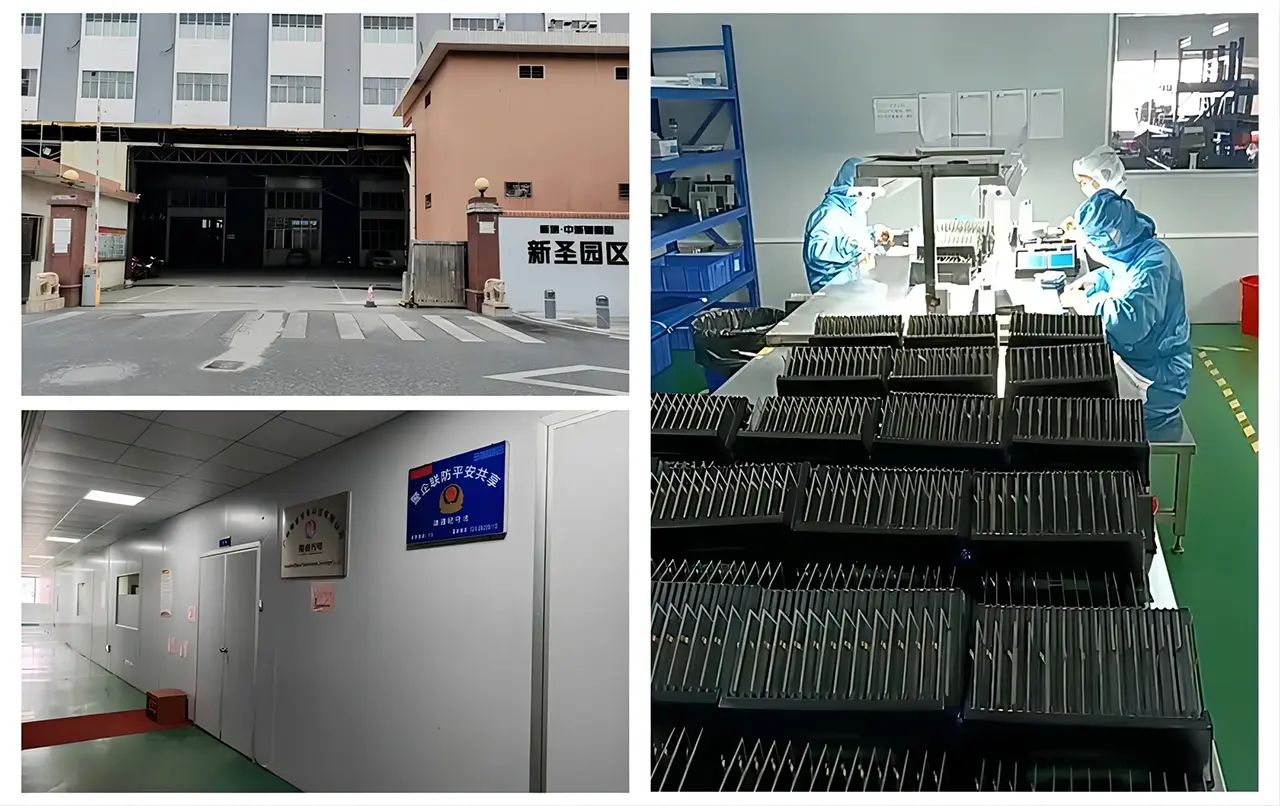
Operational infrastructure designed to minimize defects, optimize optical transmissivity, and assure long-term product lifecycle stability.
A comprehensive engineering guide to understanding display bonding methodologies, material integrity, and industrial applications.
In modern human-machine interface (HMI) design, choosing between Projective Capacitive (PCAP) and Resistive touch panels dictates the operational envelope of the end device.
Projected Capacitive (PCAP) Touch Panels: These devices rely on the electrostatic field deformation created by a conductive object (typically a human finger) interacting with a micro-fine conductive grid etched onto an Indium Tin Oxide (ITO) layer. Our PCAP panels support multi-touch capabilities (up to 10 points), provide exceptional light transmission (>88%), and feature superior scratch resistance, rated up to 7H on the Mohs scale using chemically strengthened cover glass. By utilizing advanced controller ICs (such as EETI, Ilitek, and Goodix), our capacitive displays filter electromagnetic interference (EMI) and support gloved-hand or water-droplet operation.
Resistive Touch Panels (4-Wire, 5-Wire): Relying on mechanical pressure to bring two conductive layers (ITO film and ITO glass) into contact, resistive panels are highly cost-effective and immune to electrical noise. They are the ideal choice for legacy equipment, heavy industrial tools where operators wear thick insulated gloves, and environments where absolute signal noise isolation is required.
Conventional "air bonding" leaves a small air gap between the touch layer and the LCD panel. This refractive index mismatch causes internal reflections, leading to poor outdoor contrast and susceptibility to condensation. Our factory specializes in Optical Bonding using both OCA (Optically Clear Adhesive) and OCR (Optically Clear Resin). By matching the refractive index of the glass (n ≈ 1.5), optical bonding reduces reflection from 8.5% down to less than 0.5%, significantly improving readability under direct sunlight and enhancing physical shock resistance by up to 300%.
The global display industry relies on rapid scaling, component compatibility, and robust logistics. Manufacturing in Guangzhou, China, allows Xiangrui Optoelectronics to leverage a localized ecosystem.
Every application environment imposes unique challenges on the surface of an optical touch screen. We offer customized optical stack-ups tailored to your project:
| Treatment Type | Technical Mechanism | Primary Application Benefits |
|---|---|---|
| Anti-Glare (AG) | Chemical etching or spray coating to diffuse specular reflection. | Improves screen readability in high ambient light environments, preventing glare-induced fatigue. |
| Anti-Reflective (AR) | Vacuum deposition of multi-layer metal oxides to reduce light reflection. | Boosts screen transmission from 88% to over 95%, critical for outdoor displays and medical diagnostics. |
| Anti-Fingerprint (AF/AS) | Hydrophobic and oleophobic fluorocarbon coating applied via PVD. | Repels oils, moisture, and fingerprints, making the touch panel easy to clean and sanitize. |
| IK Rating Reinforcement | Thermally or chemically tempered glass (up to 10mm thickness). | High-impact protection (up to IK10) against physical vandalism or heavy industrial accidents. |
How we align with standard technical specifications, manufacturing controls, and international regulatory frameworks.
We operate Class 100, Class 1000, and Class 10000 dust-free workshops to maintain critical particulate counts during the lamination and bonding phases. Every batch undergoes rigorous inspection, including optical testing, environmental chambers (-40°C to +85°C), and electrostatic discharge (ESD) immunity verification.
Industrial and medical programs operate on 5-to-10-year lifecycles. We guarantee component longevity and backward compatibility. When critical components (such as display driver ICs) reach end-of-life, we provide drop-in replacements to prevent expensive system redesigns.
All custom assemblies comply with RoHS, REACH, and CE standards. Our materials are fully traceable from chemical tempering, through ITO deposition, to final protective coatings, ensuring seamless integration into strict international distribution pipelines.
Optimizing touch integration across high-reliability operating environments.
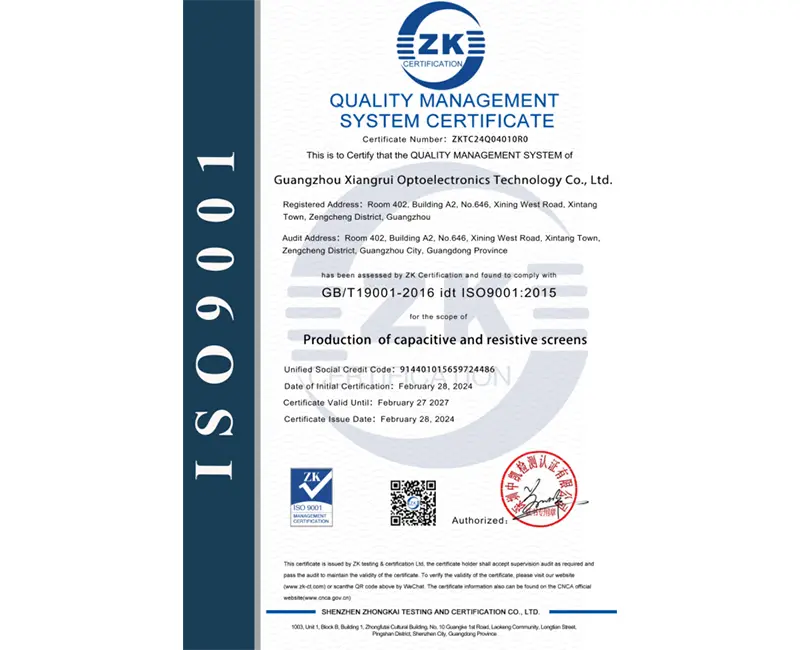
Our optical touch screens are engineered to address the specific performance requirements of key industries:
Technical answers to common engineering and sourcing questions regarding optical touch panels.
A: Air bonding secures the touch panel to the LCD module using double-sided adhesive tape around the perimeter, leaving a gap of air. Optical bonding fills this entire gap with a clear adhesive (OCA or OCR), matching the refractive indices of the glass. This eliminates internal reflection, improves contrast ratio in bright light, prevents internal condensation, and enhances impact resistance.
A: Yes, our PCAP touch panel controllers can be tuned via firmware to adjust the sensitivity threshold. This enables multi-touch functionality even when operators are wearing heavy industrial, surgical, or thermal gloves.
A: We support screen sizes from 1.54 inches up to 80 inches. Customization options include custom cover glass shapes, chemically strengthened glass thickness (up to 10mm), FPC design and orientation, surface treatments (AG/AR/AF), custom bezel printing, and custom touch controller firmware tuning.
A: Standard design verification and drawing approvals take 3-5 working days. Tooling and prototype fabrication typically require 2 to 3 weeks, followed by sample delivery. Mass production runs depend on order volume but generally ship within 3 to 4 weeks.
A: We maintain fully documented, traceable quality flows under our ISO 9001 and ISO 14001 certifications. Raw materials are audited upon receipt, and production processes are monitored within our Class 100 to Class 10000 cleanrooms. Additionally, we run 100% automated optical inspections (AOI) alongside manual visual inspections before final packaging.
Browse our selection of high-durability capacitive and resistive panels designed for robust performance in industrial, medical, and consumer devices.
 Xiangrui Optoelectronics