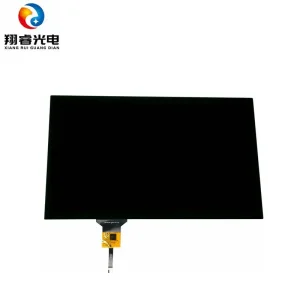
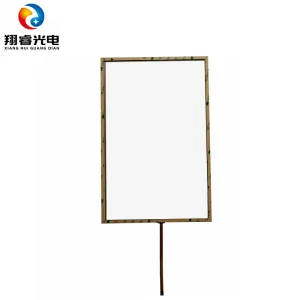
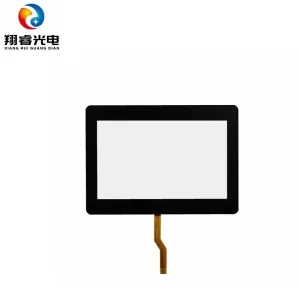
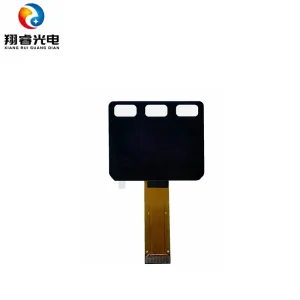
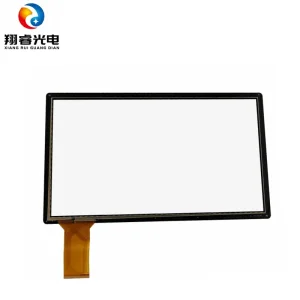
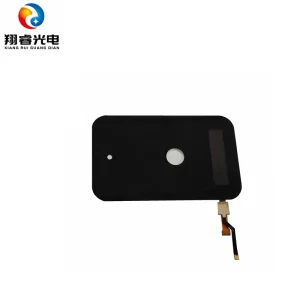
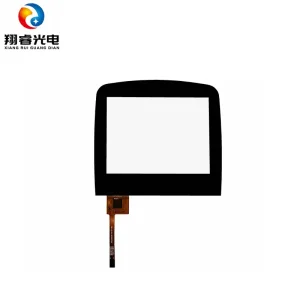
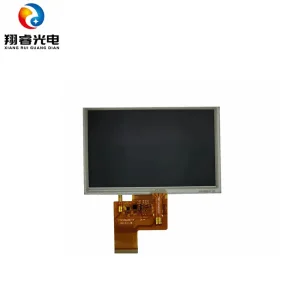
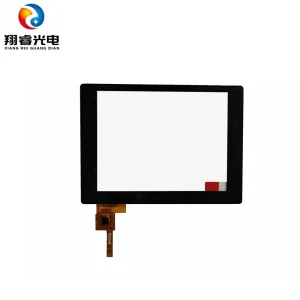
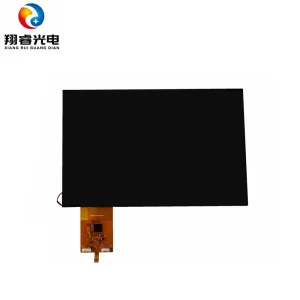
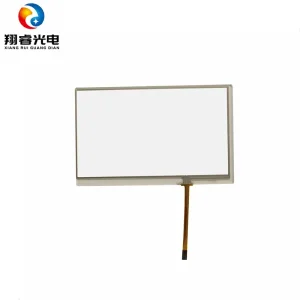
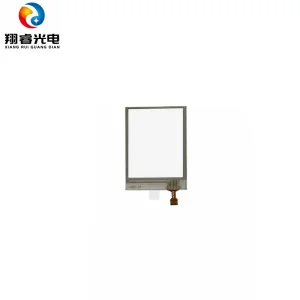
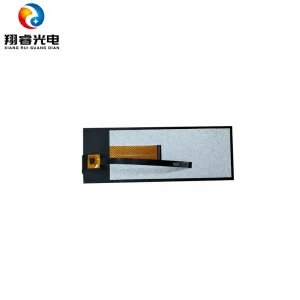
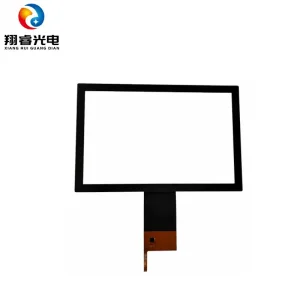
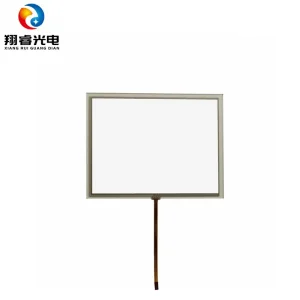
Our engineered assemblies combine the reliability of traditional tactile interfaces with advanced capacitive and resistive layers, delivering robust optical performance under extreme temperatures.
Modern Human-Machine Interfaces (HMIs) demand a complex synthesis of tactical response and optical clarity. Historically, industrial machinery relied exclusively on isolated mechanical switches or rudimentary resistive displays. Today, the global manufacturing paradigm has shifted toward sophisticated integrated panels that incorporate Push Button Touchs (capacitive touch switches integrated alongside custom cover glass assemblies). As a pioneer in touch technology, Guangzhou Xiangrui Optoelectronics Technology Co., Ltd. stands at the forefront of this industrial evolution, delivering advanced engineering solutions that balance structural durability with multi-finger input precision.
Founded in 2010, Xiangrui Optoelectronics has spent over a decade perfecting the integration of touch sensors, cover glass processing, and display module bonding. Headquartered in the high-tech manufacturing hub of Guangzhou, China, we operate as a fully integrated enterprise dedicated to the research, development, custom manufacturing, and global distribution of resistive and capacitive touch systems. Our facility bridges the gap between raw scientific material processing and application-specific OEM/ODM services, ensuring that every touch panel we deliver aligns with international quality benchmarks.
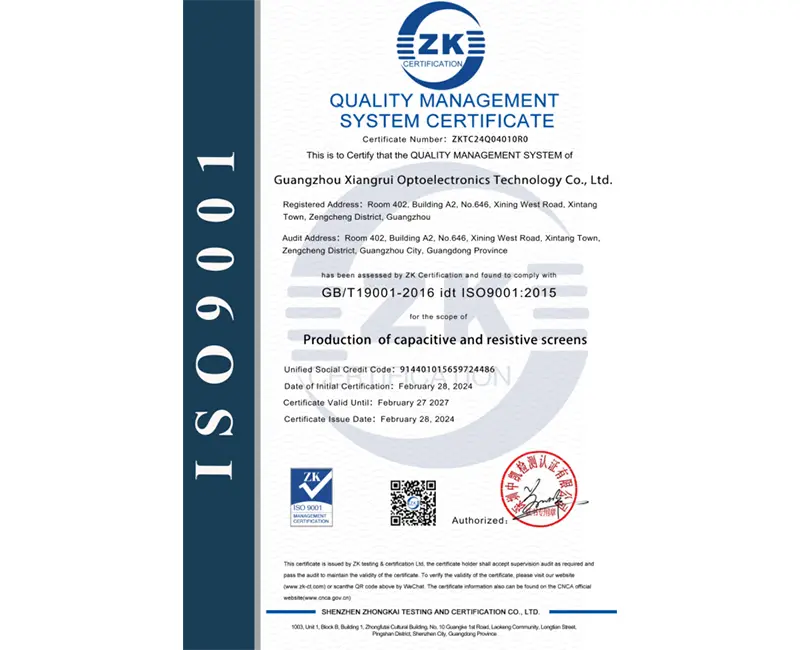
We believe that high-performance touch controls must withstand the harshest operations. Therefore, our panels undergo rigorous environmental trials—testing tolerance against high humidity, chemical exposure, electrical noise (EMC), and broad thermal fluctuations. Our ISO 9001 and ISO 14001 certifications validate our commitment to standardized manufacturing workflows and conscious environmental management.
Developing high-reliability interfaces requires an understanding of how sensor mechanics interface with their operational environments. While consumer electronics favor thin-film projected capacitive sensors (PCAP), industrial applications require a diverse spectrum of options, including multi-touch capacitive sensors, ultra-rugged resistive panels, and physical "push button" switch integration.
Utilizing high-precision multi-touch IC controllers (like EETI, Ilitek, and FocalTech), our capacitive touch screens allow for multi-touch inputs, gesture controls, and input through gloves. Configured with thick chemical-strengthened cover lenses, they support IK08 to IK10 impact ratings without sacrificing sensitivity.
Our 4-wire and 5-wire resistive touch panels are pressure-activated. This renders them immune to electromagnetic interference (EMI) and liquid splashes. They remain the premier selection for legacy industrial automation, remote terminals, and critical field systems where gloves of all thicknesses are standard.
We offer both Optical Bonding (using liquid optical clear adhesive/LOCA or solid OCA sheets) and traditional Frame Fitting (air gap bonding). Optical bonding eliminates the internal air gap between the touch sensor and the TFT-LCD panel. This decreases reflection by up to 90% and enhances impact protection.
In outdoor HMI installations (like marine navigation systems or smart EV chargers), temperature swings lead to internal condensation. Air-gap frame fitting allows moisture to enter the air space, causing display fogging. By selecting optical bonding, you fill this space with index-matching clear adhesives, eliminating moisture ingress, enhancing display contrast ratios under direct sunlight, and providing mechanical reinforcement to withstand high-vibration environments.
Global electronics procurement requires balancing fast turnaround times, high compliance standards, and competitive unit economics. Xiangrui Optoelectronics leverages a specialized manufacturing system in Guangzhou that utilizes localized vertical integration of touch panel processes. From chemical glass strengthening and screen printing to laser-etching ITO and FOG/COG (Film-on-Glass / Chip-on-Glass) automated bonding, all critical steps are handled in-house.
Quality control for high-resolution displays requires minimal particulate interference. Even a 5-micron dust particle can cause optical distortion or electrical bridging in capacitive sensor arrays. Our facility features class-partitioned workspaces:
As standard touch panels struggle with environmental extremes, custom-configured touchscreens are essential. Below is an overview of how we customize our resistive and capacitive configurations to satisfy distinct industry standards.
Medical interfaces must resist aggressive sanitation liquids (such as isopropyl alcohol, bleach, and hydrogen peroxide). Our capacitive touch covers use specialty silicate glasses coated with anti-fingerprint (AF) and anti-bacterial films. Our panels support glove operations for healthcare professionals.
Factory environments run hot, vibrate constantly, and generate heavy electromagnetic noise. We engineer wide-temperature assemblies capable of running within -40°C to +85°C. Combined with high-immunity controllers (EETI or Ilitek), our screens minimize false touches from electrical noise.
Outdoor terminals require robust UV protection and rain-tolerant capacitive performance. We design cover glasses with ceramic border screen prints, infrared and UV reflective properties, and index matching to prevent displays from overheating or degrading from solar radiation.
As display and control technology advances, the boundaries between physical push buttons and capacitive glass sensors continue to blur. Xiangrui's R&D department is focused on three primary areas for future product design:
By pairing capacitive sensors with piezo-electric actuators, we are developing panels that mimic the feel of physical mechanical switches. When a user presses a virtual screen button, localized micro-vibrations provide immediate tactile confirmation, combining design flexibility with the utility of classic buttons.
To support next-generation flexible and curved touch systems, we are expanding beyond traditional Indium Tin Oxide (ITO). Utilizing nano-silver wire arrays and copper metal mesh, we can create flexible touch panels with low sheet resistance (<10 ohms/square) for curved console displays.
Direct sunlight visibility remains a challenge for outdoor systems. We are testing vacuum magnetron sputtering techniques that apply multi-layer metal oxide stacks directly onto the cover glass. This reduces reflections to less than 0.5% across the visible spectrum.
Exporting to over 40 countries requires a strong focus on certification and supply chain tracking. Xiangrui ensures all customized and catalog touch panels comply with global environment and safety directives, facilitating seamless integration into your final products.
All touch panels, cover glass materials, and FPC components are lead-free and conform to the RoHS (Restriction of Hazardous Substances) and REACH directives. Our systems carry CE, FCC, and UL certifications, reducing international trade friction. Each product batch undergoes optical testing via spectrophotometer systems and mechanical testing using salt spray, key life-cycle fatigue, and temperature cycling chambers.
We work directly with your engineering department, helping resolve common HMI design challenges:
Find technical answers to common integration questions regarding resistive, capacitive, and optical bonding touch panels.
Standard and customizable capacitive and resistive panels built for demanding industrial applications.
 Xiangrui Optoelectronics