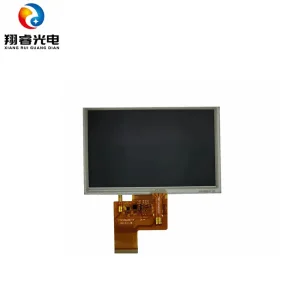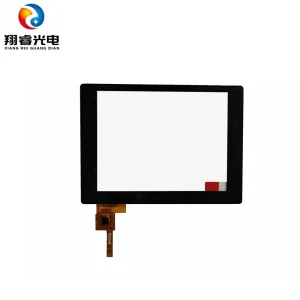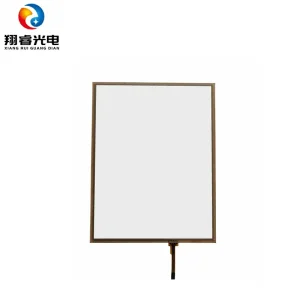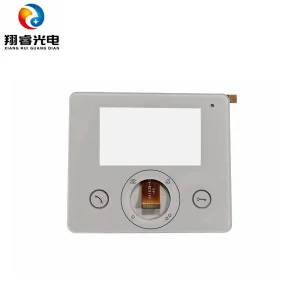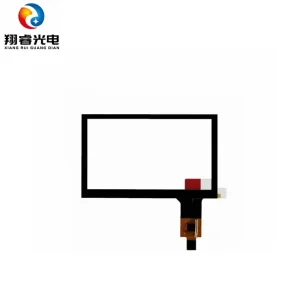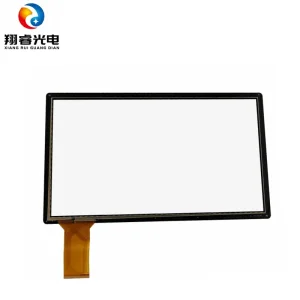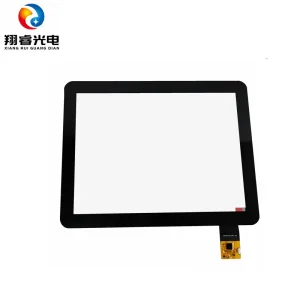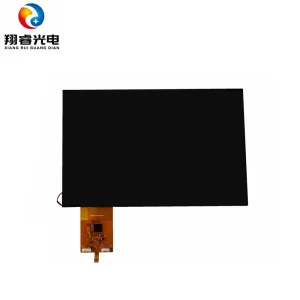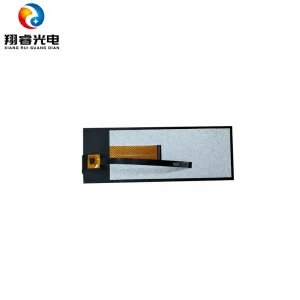
Founded in 2010 and based in Guangzhou, China, Guangzhou Xiangrui Optoelectronics Technology Co., Ltd. is a dedicated manufacturer specializing in the research, development, production, and distribution of resistive touch panels, projected capacitive (PCAP) touch screens, cover glass custom treatments, and complete liquid crystal module (LCM) optical bonding assemblies.
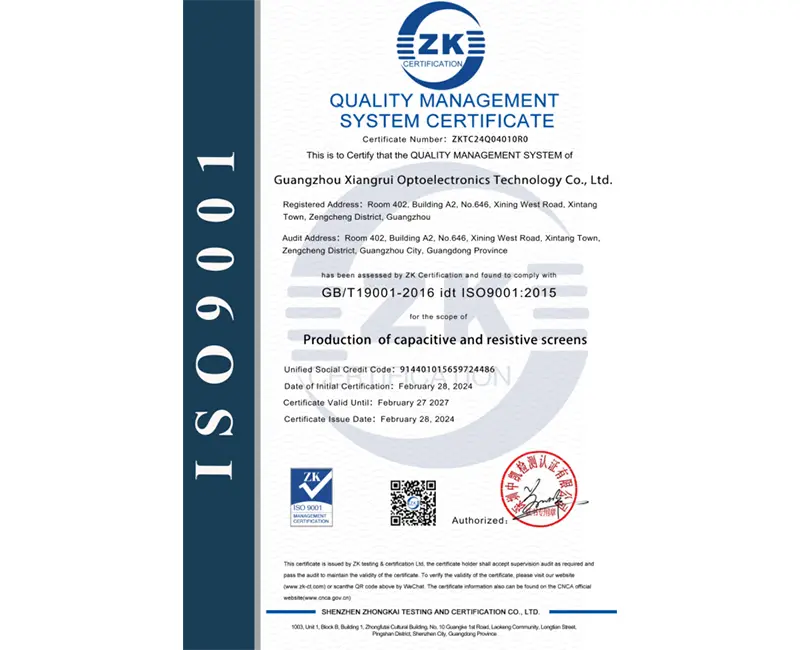
With a comprehensive supply chain and advanced cleanroom technology, we offer both turnkey and custom OEM/ODM solutions. Over the past decade, we have established ourselves as a reliable strategic partner for companies requiring robust HMI interfaces that perform in critical environments. Our manufacturing operations strictly conform to ISO 9001 and ISO 14001 certification frameworks, ensuring every component meets high standards of reliability and durability.
Leveraging over 3,000 square meters of specialized cleanroom environments (spanning Class 100, Class 1,000, and Class 10,000 certifications), our production facilities are designed to eliminate airborne contaminants, ensuring defect-free bonding and lamination for high-reliability touch systems.
Our dust-free facilities operate with automated printing machinery, high-precision laser glass cutting tables, FOG (Film-on-Glass) and COG (Chip-on-Glass) bonding systems, and autoclave bubble removal lines. This infrastructure ensures flat bonding lines, minimal optical refraction, and robust mechanical structures.
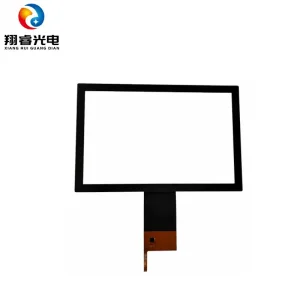
Modern capacitive interfaces utilize mutual capacitance patterns etched onto complex ITO (Indium Tin Oxide) film layers or metal mesh grids. Unlike simple self-capacitance layouts, mutual capacitance supports true multi-touch inputs (up to 10 simultaneous points) and sophisticated gesture tracking through thick cover lens configurations.
Standard LCD interfaces use double-sided adhesive tape (Air Bonding) to link the LCD cell and touch sensor, creating an air gap that degrades outdoor viewability. We resolve this using optical bonding (via LOCA/OCR compounds), which eliminates the air gap to reduce internal reflections by up to 90%, enhance structural durability, and prevent condensation under extreme temperature shifts.
To ensure visibility and wear-resistance in harsh environments, our cover glass treatments include: Anti-Glare (AG) etching to disperse light reflections; Anti-Reflective (AR) optical coatings to improve light transmission; Anti-Fingerprint (AF) hydrophobic/oleophobic coatings; and high impact resistance up to IK10 standards.
Custom touchscreen solutions must address specific application dynamics. Our engineers configure touch panels to operate reliably across a variety of demanding fields.
Designed to withstand heavy industrial environments. Integrated touch systems offer electromagnetic compatibility (EMC/EMI protection), operation with work gloves, and high resistance to dust, chemicals, and industrial fluids.
Engineered for hygiene and patient safety. Supports biological compliance, chemical resistance to strong hospital disinfectants, and touch sensitivity tuned for surgical latex gloves.
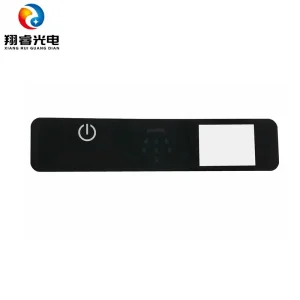
Sleek, scratch-resistant cover glass designed to integrate cleanly with home automation, smart security systems, and high-end home appliances. Supports dead-front printing for hidden-until-lit layouts.
Optimized for continuous public use. Our high-transmittance, multi-touch screens are integrated with optical security filters and biometric palm print sensors to support secure transactions.
For international supply chain managers and system designers, selecting a touch panel partner requires careful verification of quality systems and technical compliance. Guangzhou Xiangrui maintains structured testing protocols and environmental standards, making it easy to integrate our screens into your final assemblies.
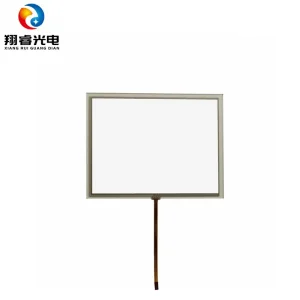
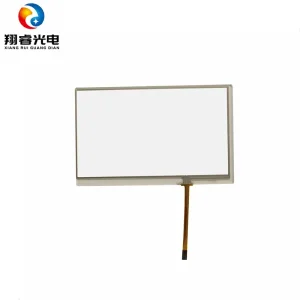
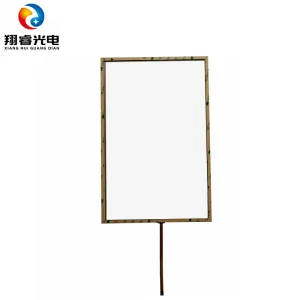
Projected capacitive (PCAP) touch screens use electrostatic fields to detect touches and support multi-touch inputs, gesture controls, and highly durable cover glass. Resistive touch screens rely on physical pressure to connect conducting layers. While resistive screens support single-touch inputs and work with any stylus or gloved hand, they are generally less scratch-resistant than PCAP screens.
Yes. We optimize our capacitive controller firmware (using chipsets from EETI, Ilitek, and Cypress) to support precise touch sensing through cover glass up to 10mm thick. This helps protect screens in rugged outdoor kiosks and public terminals.
Optical bonding uses liquid OCR or sheet OCA gel to eliminate the air gap between the LCD and touch panel. This reduces light reflections, improves outdoor readability, boosts mechanical impact resistance, and prevents condensation or dust build-up under the screen.
Our cleanroom facility is structured into Class 100, Class 1,000, and Class 10,000 zones. Critical steps like FOG/COG bonding and optical lamination are done in Class 100 zones, where strict air filtration limits particulate contamination.
Yes, we provide full ODM services. We customize glass shapes, apply custom border printing, cut dynamic display holes, and apply specialized anti-glare (AG), anti-reflective (AR), and anti-fingerprint (AF) surface coatings.
 Xiangrui Optoelectronics