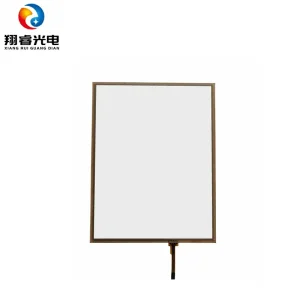
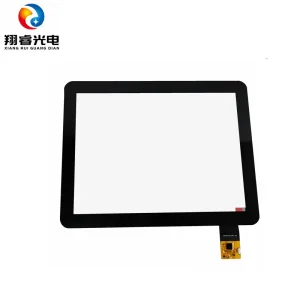
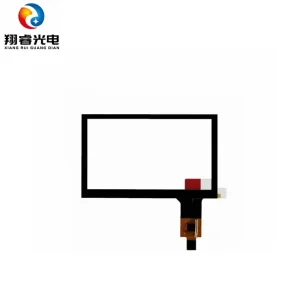
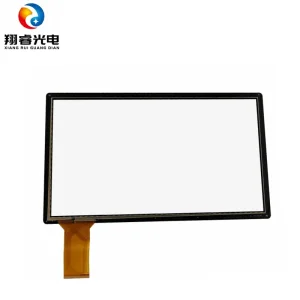
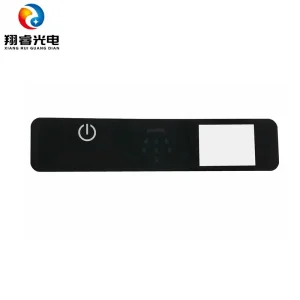
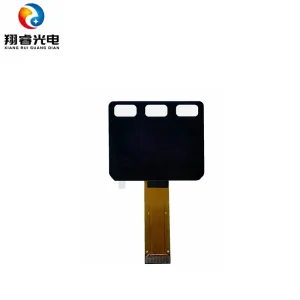
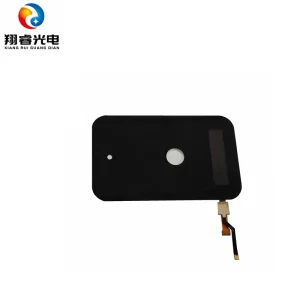
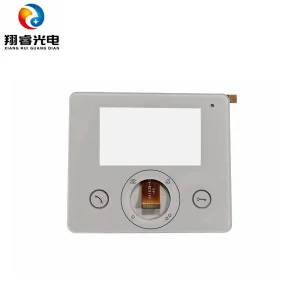
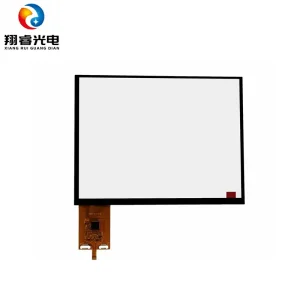
Explore our premium grade selection of industrial capacitive touch interfaces, resistive overlays, and integrated panel solutions.
Modern industrial and medical machinery requires interface controls that are resilient, user-friendly, and capable of operating under harsh environment conditions. Traditional physical push-buttons, while providing mechanical click feedback, are highly susceptible to dust infiltration, moisture build-up, and mechanical wear and tear. This is where OEM Push Button Touch systems represent a critical paradigm shift in interface architecture.
By integrating capacitive touch elements under durable cover glasses, manufacturers are creating rugged touch surfaces that replicate standard controls while ensuring total environmental sealing up to IP65, IP67, and IP69K ratings. Utilizing multi-touch structures and optical bonding technologies, these state-of-the-art panels prevent dust and moisture from entering between the layers, enhancing visibility and touch accuracy under direct sunlight or damp operations.
According to research, the transition toward capacitive touch panels with integrated capacitive touch buttons has grown by over 35% across industrial control systems and medical diagnostic monitors due to strict hygienic and disinfection requirements.
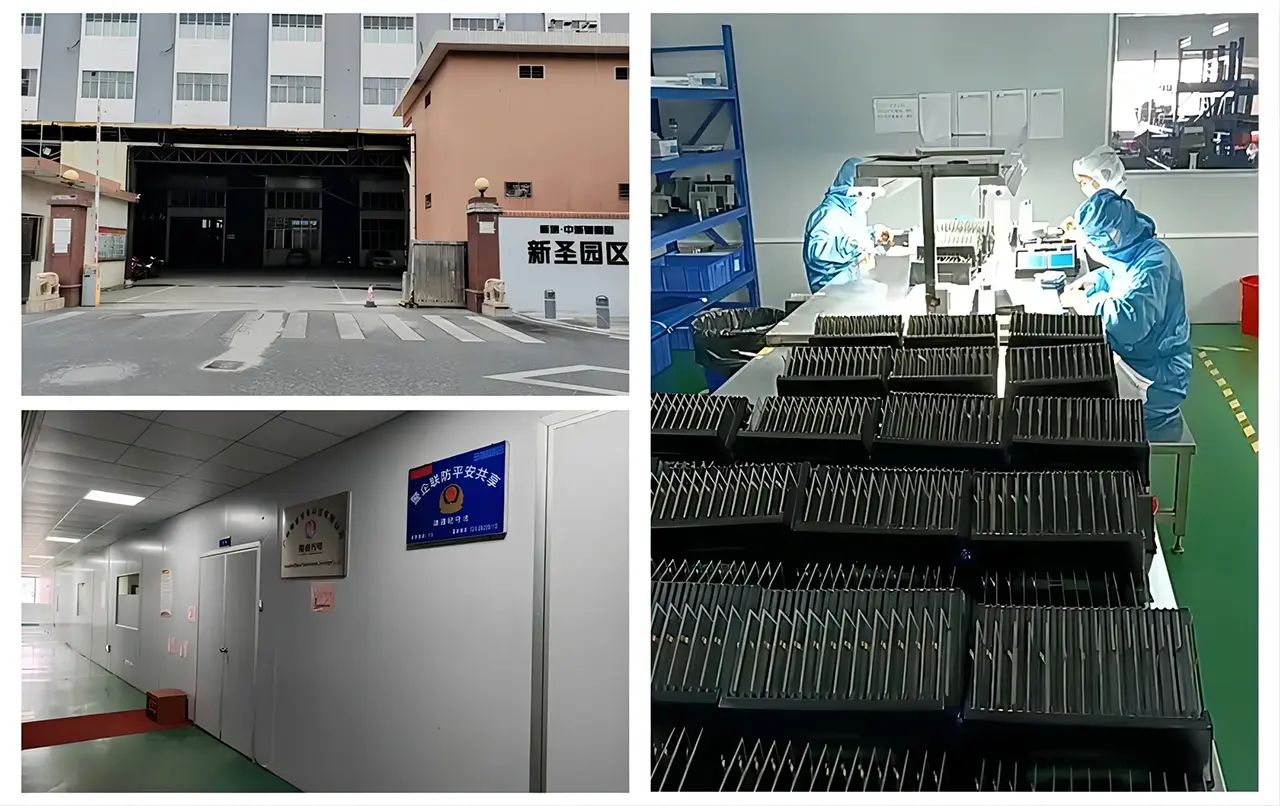
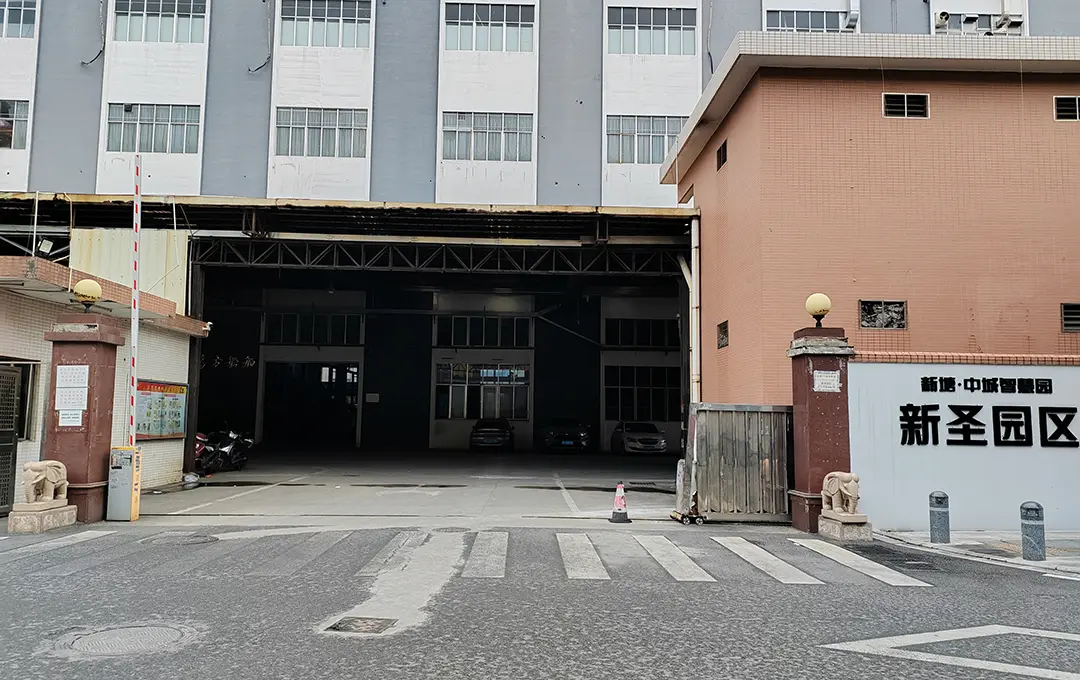
Guangzhou Xiangrui Optoelectronics Technology Co., Ltd., founded in 2010 and located in Guangzhou, China, is a high-tech company dedicated to the research, development, production, sales, and service of resistive touch panels, capacitive touch panels, cover glass, and module bonding products. We specialize in customized production of various touch screens, offering comprehensive OEM and ODM services to global enterprises.
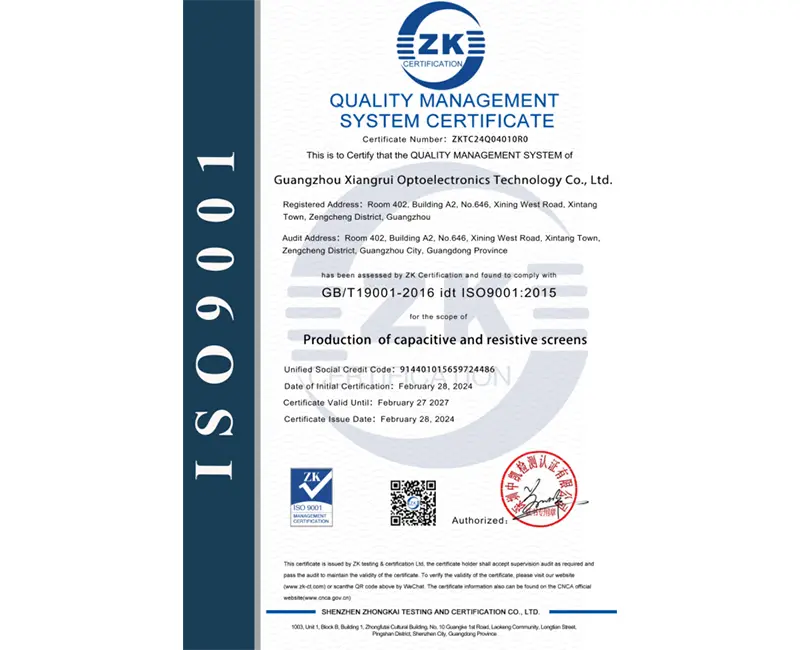
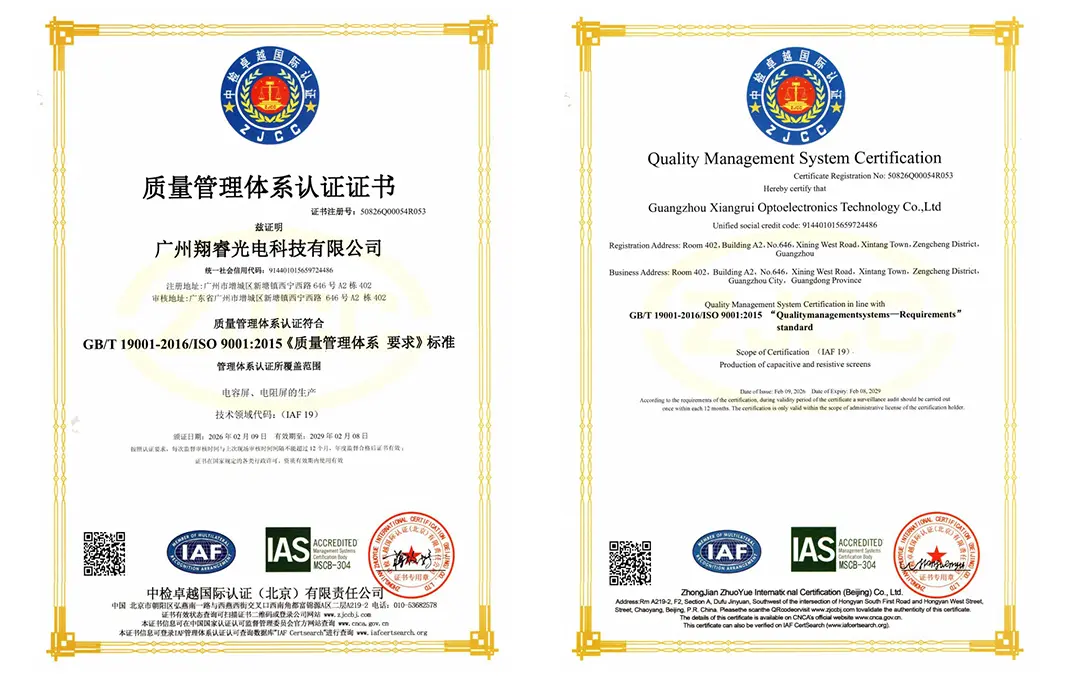
Our company has obtained the prestigious ISO 9001 quality management and ISO 14001 environmental management certificates. Under the leadership of our highly skilled R&D department, we have repeatedly obtained utility model patents and invention patents, earning the official title of "Guangdong Province High-Tech Enterprise" in 2022. Currently, we hold more than 30 utility and invention patents, exporting our systems to over 40 countries and regions worldwide.
A visual breakdown of our operations, capacity, and global footprint.
How Guangzhou Xiangrui Optoelectronics translates manufacturing dominance into supply chain resilience and cost advantages for global buyers.
Located in the heart of Southern China's electronics hub (Guangzhou), we procure premium raw materials such as ITO films, specialized control ICs, and ultra-durable cover glasses at rapid speeds. This local clustering minimizes shipping lead times and reduces production overhead.
We boast high-precision Class 100 dust-free workshops specifically configured for liquid optical clear adhesive (LOCA) and solid OCA optical bonding. This elimiates the air gap between the touch layer and the LCD screen, reducing reflections by up to 90% and vastly improving durability.
From custom FPC (Flexible Printed Circuit) exit routes and controller programming (EETI, Ilitek, Goodix) to specialized cover glass parameters (AG, AR, AF surface coatings), our engineers offer rapid custom mockups to meet specialized industrial needs.
Different application spaces have very distinct performance requirements. We optimize touch solutions accordingly.
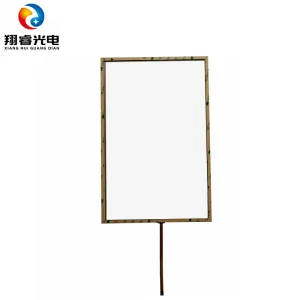
Industrial machinery rooms are prone to high electromagnetic interference (EMI), lubricants, and heavy dust. Our 12.1-inch wide-temperature resistive touch panels with IP65 front protection ensure that input execution remains stable, even when workers wear heavy leather or rubber gloves.
Medical monitors require flat, seamless surfaces that can resist heavy sanitization chemicals like isopropyl alcohol. Capacitive touch buttons under custom-tempered glass prevent liquids from seeping, creating an airtight seal that supports critical touch sensitivity and sterile environments.
Modern self-service kiosks incorporate palm print recognition systems. These systems rely on high light-transmittance glass. Our optical bonding techniques with cover glass adjustments guarantee crisp display clarity and precise sensor tracking under varying outdoor ambient light conditions.
We operate on the fundamental principles of being people-oriented, honest, pragmatic, innovative, and united. Our long-term partnerships with top enterprise brands are built on our commitment to reputation first, customer satisfaction, and timely delivery.
To guarantee reliability, we have integrated advanced testing setups within our Class 100/1000/10000 cleanrooms. This allows us to run standard quality assessment tests, including high-temperature/humidity storage, thermal shock tests, salt spray resistance, and steel ball drop impact trials for cover glass.
Strict compliance with ISO 9001 & ISO 14001.
Over 30 utility model and invention patents.
Class 100 to Class 10000 dust-free workshops.
Stay ahead with the latest technological developments defining the future of OEM Push Button Touch systems.
As the density of electrical machines inside factories increases, electromagnetic noise becomes a primary source of capacitive touch screen false triggers. The industry is rapidly adopting advanced IC controllers (e.g., EETI, Ilitek) that feature high signal-to-noise ratios (SNR), frequency hopping, and active noise filtering. These systems allow touch systems to operate stably right next to heavy motor invertors and high-frequency welding machines.
Modern smart home and automotive console dashboards demand 3D curved surfaces and integrated virtual sliders. Using specialized hot-bending processes on custom cover glass, manufacturers are now capable of forming curved designs with built-in capacitive touch buttons. This eliminates mechanical cuts on plastic housings and creates a continuous, high-end visual flow.
The biggest critique of capacitive touch buttons is the lack of tactile feedback, which is crucial for operators who need to execute commands without looking at the screen. Modern touch units solve this by integrating linear resonant actuators (LRA) or piezoelectric elements. When a capacitive touch button is activated, the device generates a precise localized micro-vibration, simulating a physical switch click.
Outdoor terminals (such as EV charging stations and parcel lockers) are heavily impacted by environmental variables. The integration of chemical-etched AG processes reduces glare under direct sunlight, while AR coatings maximize light transmittance from the backlight. Additionally, AF hydrophobic coatings keep grease and dust buildup at bay, ensuring high touch sensitivity and reducing clean-up frequency.
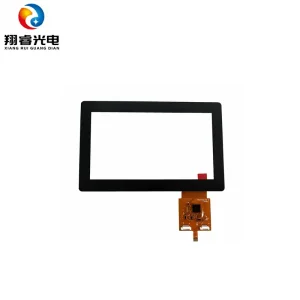
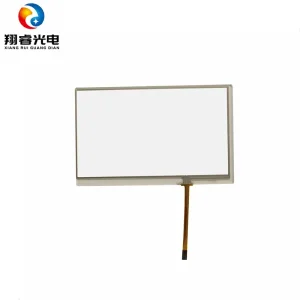
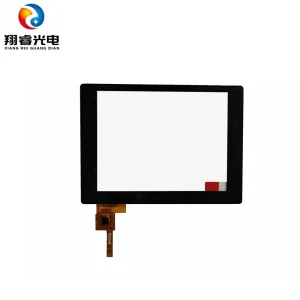
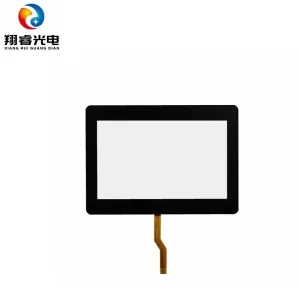
Select from specialized mini-button panels, optical bonding capacitive touch screens, and custom resistive interfaces.
A detailed overview of critical parameters global procurement teams must verify prior to sourcing from custom touch panel factories.
Cover glass plays a dual role: protection and touch surface. For industrial touch buttons and displays, chemical tempering (potassium ion exchange) yields surface compressive stresses exceeding 450 MPa. In contrast, standard thermal tempering yields far lower impact limits, making chemical tempering a requirement to pass IK07 to IK10 impact ratings.
Custom FPC configurations require careful copper trace routing. Standard designs utilize ground trace shielding around high-speed signals to suppress EMI. For tight enclosures, dual-sided copper sheets or electromagnetic shielding film (such as silver paste or copper foil) is applied to limit radiation interference from nearby power circuits.
Water on capacitive touch surfaces creates parasitic capacitance, resulting in false touch coordinates. To circumvent this, the controller firmware utilizes mutual capacitance touch algorithms. Mutual capacitance measures intersection nodes separately, distinguishing thin water layers or sweat droplets from actual finger inputs to ensure uninterrupted control.
When selecting capacitive touch controllers (such as OEM 7.0-inch capacitive touch panels), verify that the manufacturing partner has direct support relationships with primary chip designers (e.g., EETI, Ilitek). This ensures firmware can be quickly adjusted for custom cover glass thicknesses ranging from 0.7mm up to 6.0mm without compromising high-resolution touch detection.
Enterprise procurement departments look beyond unit prices; they demand long-term component availability, environmental compliance, and rapid engineering support. At Guangzhou Xiangrui, we systematically address these critical parameters:
Get answers to key technical and supply chain questions from our engineering team.
Resistive touch panels detect input through physical pressure which forces two flexible conductive layers to connect. This means they can be operated using gloves, pens, or any solid tool, and are highly immune to electrical noise. Capacitive touch panels rely on the electrical properties of the human body. They support multi-touch and offer better optical clarity and durability because they use hard cover glass, though they require advanced controller firmware to filter out water droplets and EMI noise.
Air bonding leaves an air gap between the touch layer and the LCD screen, which causes internal reflections, limits light transmission, and allows condensation/dust buildup in humid environments. Optical bonding fills this gap with transparent resin, increasing display contrast under bright light, improving impact resistance, and preventing interior moisture accumulation.
We are certified under ISO 9001:2015 for quality management and ISO 14001:2015 for environmental protection standards. Our customized products conform to REACH, RoHS, and CE guidelines, ensuring smooth import customs and compliance across North American, European, and Asian markets.
Yes. By implementing mutual capacitance scanning configurations in our touch controllers (such as EETI or Ilitek chipsets), our engineering team tunes the sensor array firmware to ignore water droplets while maintaining high sensitivity to direct finger touch.
Optical bonding requires Class 100 cleanroom zones (less than 100 particles of size 0.5 microns per cubic foot of air) for the actual lamination step. Any stray dust particle laminated between the glass and LCD creates a visual defect and weakens adhesive bonding. We operate Class 100, 1000, and 10000 cleanrooms to meet these strict cleanroom requirements.
We provide Anti-Glare (AG) chemical etching to minimize light reflection, Anti-Reflective (AR) optical coatings to improve light throughput and readability under direct sunlight, and Anti-Fingerprint/Anti-Smudge (AF) coatings to simplify wiping and cleaning procedures.
 Xiangrui Optoelectronics