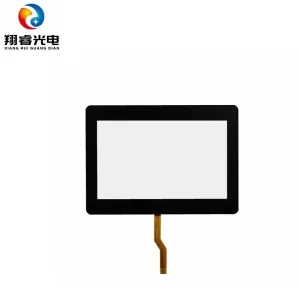
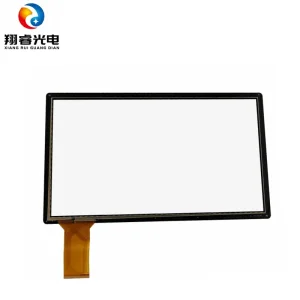
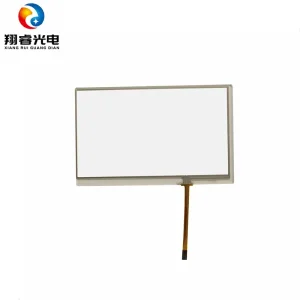
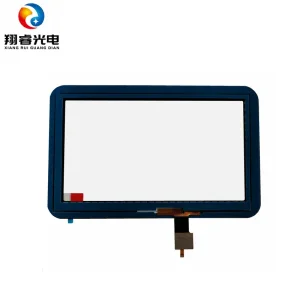
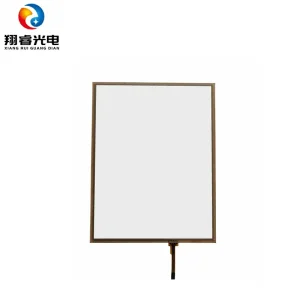
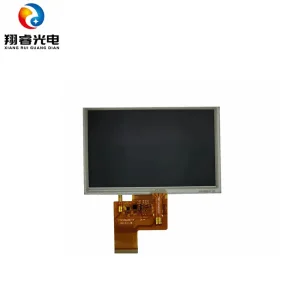
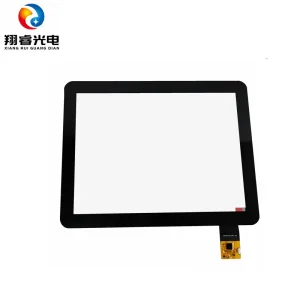
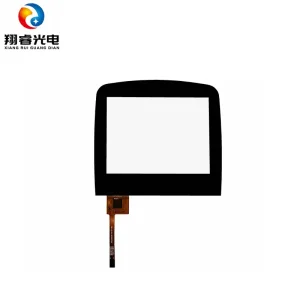
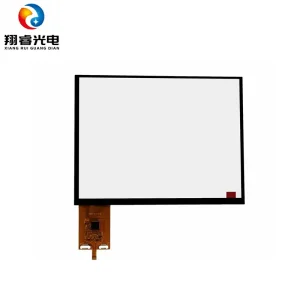
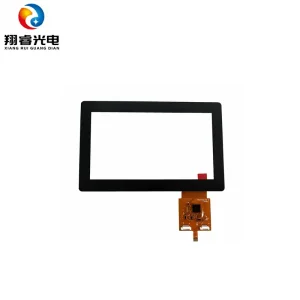
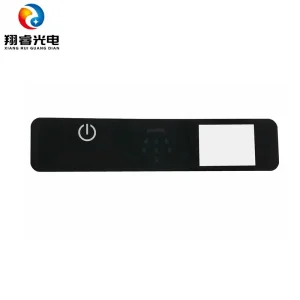
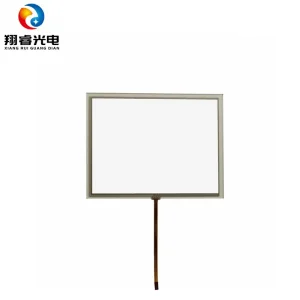
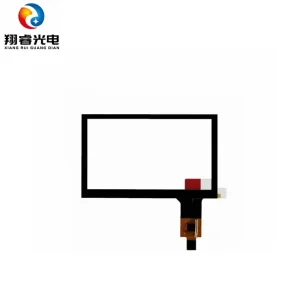
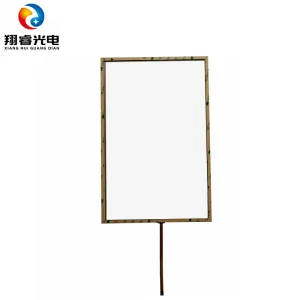
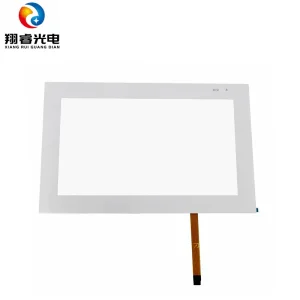
Explore our premium range of precision-manufactured resistive and capacitive touch panel assemblies configured to sustain rigorous application cycles.
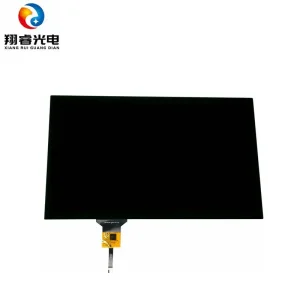
Uncovering the mechanics of modern Projected Capacitive (PCAP) Touch solutions in high-reliability environments.
The global marketplace for Human-Machine Interfaces (HMI) has shifted permanently toward Projected Capacitive (PCAP) touch screens. Originally popularized by consumer electronics, capacitive architectures are now mandated across medical diagnostics, heavy manufacturing, aerospace control boards, and harsh outdoor ticketing kiosks. According to global industrial market indexes, the demand for ruggedized capacitive assemblies is projected to expand significantly, driven by IoT integration and automated tactile control.
Modern system design dictates that touch controllers operate with maximum electromagnetic compatibility (EMC/EMI) compliance while rejecting false signals caused by heavy moisture, saline spray, or thick industrial gloves. This transition from basic resistive layers to complex multi-touch capacitive structures relies heavily on advanced manufacturing controls—specifically, custom sensor designs, tailored glass chemical strengthening, and precision optical bonding.
For global OEMs, partnering directly with a dedicated manufacturer like Guangzhou Xiangrui Optoelectronics Technology Co., Ltd. ensures access to tailored engineering, custom firmware tuning for specialized controllers (such as EETI, Ilitek, and FocalTech chipsets), and robust environmental validation protocols. This eliminates system failures and shortens critical integration timelines.
Founded in 2010 and based in Guangzhou, China, we are an industry-certified enterprise dedicated to the research, development, assembly, and quality validation of resistive touch panels, projected capacitive touch screens, custom cover glass layouts, and comprehensive optical and frame bonding (OCR/OCA) modules.
Our core operations are built around rigid international standards, validated by our ISO 9001 and ISO 14001 certifications. We maintain a versatile facility operating advanced dust-free rooms to guarantee the integrity of high-yield display bonding. Our assemblies serve critical sectors, including industrial process control, complex medical diagnostic screens, automated home security systems, high-intensity outdoor terminals, and biometrical palm-print recognition payment terminals.
Driven by a collaborative culture of integrity, technological progression, and quality assurance, our team is equipped to manage end-to-end custom production pipelines, providing highly tailored OEM and ODM solutions to global partners.
Maintaining absolute surface purity and calibration parameters during complex optical laminations.
Our bonding processes are completed inside custom dust-free workshops (operating Class 100, Class 1,000, and Class 10,000 zones). This ensures that microscopic ambient particulate matter does not degrade transparency, induce optical distortion, or compromise lamination integrity.
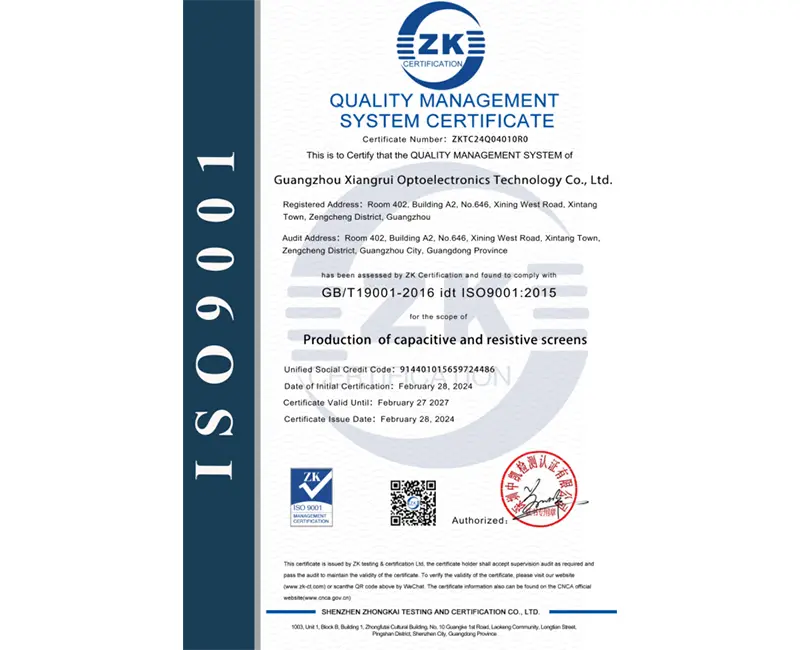
Operating under ISO 9001:2015 and ISO 14001:2015 certifications, our QA/QC loops track products from base ITO glass inspection to high-low temperature chamber tests, verifying that each batch meets industrial specifications before packaging and export.
Recognized officially as a "High-Tech Enterprise" in Guangdong Province in 2022, we continually reinvest in material science research and development to engineer innovations in resistive film fitting and multi-finger capacitive touch controllers.
Tailoring cover glass specifications, chip tuning, and protective treatments to match operational realities.
Medical screens require clean profiles, high optical clarity, and robust resistance to chemical disinfectants.
Factory floor machinery is often exposed to extreme temperatures, mechanical impact, and electrical interference.
Outdoor kiosks and biometric payment systems demand high durability and sunlight-readable displays.
Smart home hubs and residential intercom systems need sleek aesthetics coupled with low power draw.
Our design vectors are focused on evolving touch interfaces for the next generation of industrial displays.
Transitioning sensor structures to Silver Nanowire (AgNW) and Metal Mesh architectures to allow flexible folding geometries and superior optical transmission.
Integrating localized piezoelectric actuators directly beneath the capacitive stack to deliver physical vibration feedback to users in noisy plants.
Developing dual-curve 3D glass profiles with integrated touch layers for high-vibration control decks in automotive and marine vehicles.
Implementing permanent photocatalytic and hydrophobic outer glass treatments to continuously decompose organic oil residues and dry water droplets.
When designing outdoor or high-vibration touchscreens, the method used to bond the capacitive sensor to the display panel is critical. Air bonding, which leaves an air gap between the layers, creates internal reflective surfaces. This degrades contrast in bright sunlight and can allow condensation to form under high humidity.
To solve these issues, Guangzhou Xiangrui Optoelectronics Technology Co., Ltd. uses direct optical bonding. This process fills the internal gap with either Optical Clear Adhesive (OCA) tape or Optically Clear Resin (OCR/LOCA).
1. Optical Clear Adhesive (OCA): Ideal for smaller display profiles, mobile terminals, and flat assemblies. OCA sheet laminations are processed inside our Class 100 cleanrooms using autoclaves to eliminate micro-bubbles.
2. Liquid Optically Clear Resin (OCR/LOCA): Best for large-format displays, high-reliability medical equipment, and irregular surfaces. Liquid resin fills physical gaps and absorbs tolerances on uneven bezels. It also provides excellent shock absorption, protecting the inner LCD panel from mechanical impacts.
By matching the refractive index of the adhesive layer to the glass cover (approx. 1.51), we reduce internal reflections by up to 90%, ensuring displays remain readable in direct sunlight.
Answers to common engineering questions regarding the customization, integration, and reliability of capacitive touchscreens.
Explore more of our custom touchscreen displays and sensor glass designs built for global markets.
 Xiangrui Optoelectronics