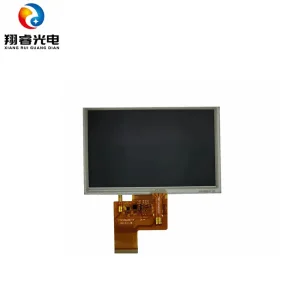
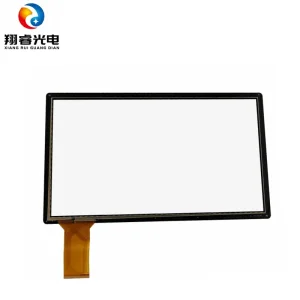
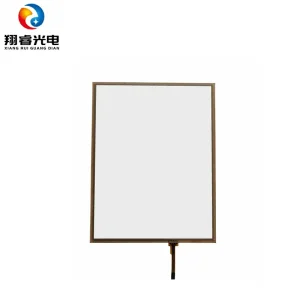
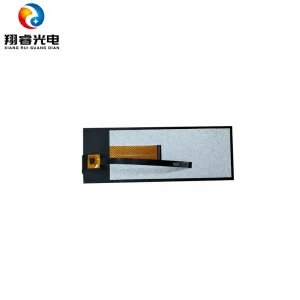
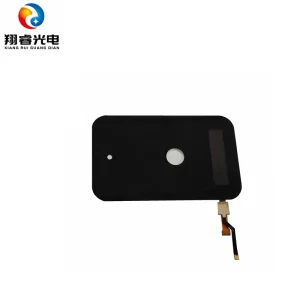
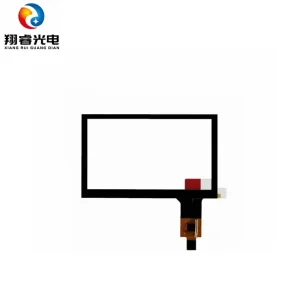
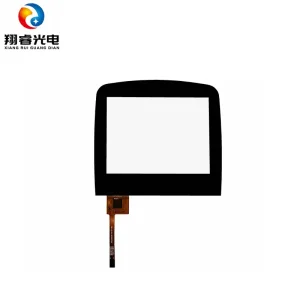
Direct manufacturer integration: Optical bonding, multi-touch capacitive structures, and ruggedized resistive controllers.
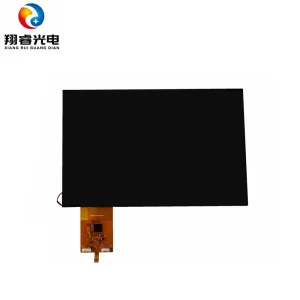
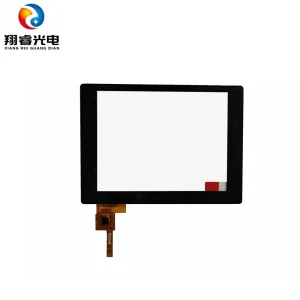
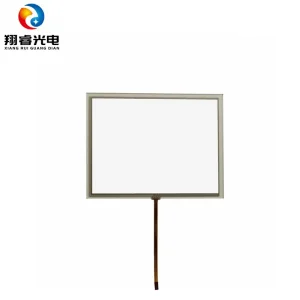
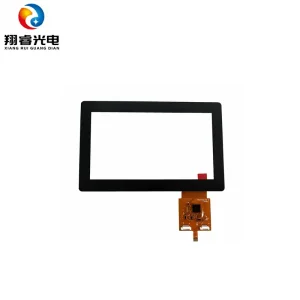
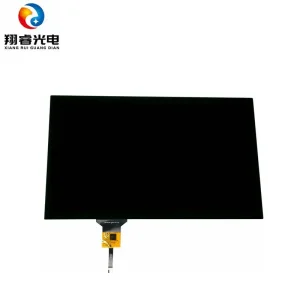
Modern touch technology relies heavily on advanced material science to maintain high electrical conductivity alongside maximum optical clarity. As industrial equipment transitions from mechanical physical interfaces to tactile screens, manufacturers face structural challenges such as electro-magnetic interference (EMI), harsh chemical cleaning regimes, and wide operating thermal envelopes.
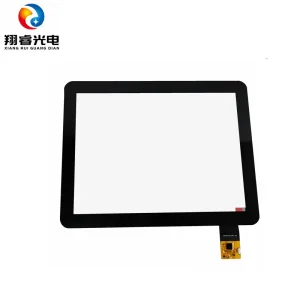
As a leading OEM conductive touch screen manufacturer, Guangzhou Xiangrui Optoelectronics Technology Co., Ltd. addresses these pain points by integrating high-quality Indium Tin Oxide (ITO) layers, copper mesh structures, and custom-tuned controller microchips. Whether developing multi-finger gesture capacitive modules or highly sealed analogue matrix resistive panels, our design architecture centers on reliability, durability, and signal integrity.
Selecting the correct touch technology involves balancing environmental stresses (such as water spray, extreme heat, or dust exposure) with high-fidelity input requirements. We help procurement engineers optimize this choice by offering comprehensive customization paths from structural cover glass selection to firmware tuning for heavy glove inputs.
Founded in 2010, we are a specialized manufacturer dedicated to the research, development, production, and custom engineering of touch solutions.
Operating from our modern production facility in Guangzhou, China, our manufacturing line integrates advanced ISO-compliant dust-free workshops (Class 100, Class 1,000, and Class 10,000 cleanrooms). This cleanroom hierarchy ensures precision laminating and optical bonding processes are shielded from airborne particulates, achieving zero-defect production runs.
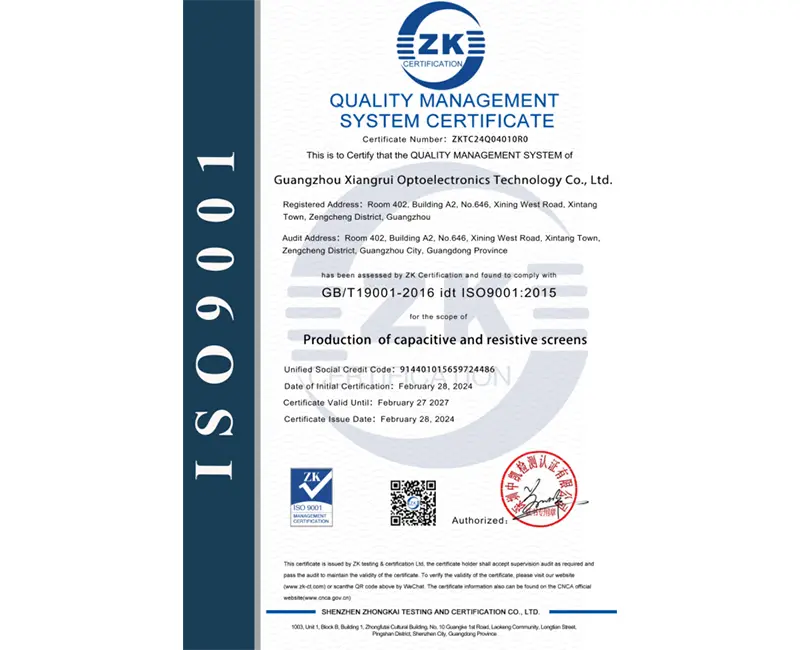
We hold certifications in ISO 9001:2015 Quality Management and ISO 14001:2015 Environmental Management Systems. Our focus on innovative R&D has led to over 30 utility and invention patents, solidifying our reputation as a trusted OEM and ODM partner for multi-national brands.
Different environments demand distinct electrical characteristics. Review the comparison below to align with your application requirements.
| Feature Set | Projected Capacitive (PCAP) | Resistive Touch (4-Wire/5-Wire) | Guangzhou Xiangrui Customization Path |
|---|---|---|---|
| Operating Mechanism | Electrostatic field alteration via conductive human body or active stylus contact. | Mechanical deformation bringing two conductive flexible layers (ITO film + ITO glass) into contact. | Integration of specialized controller ICs (EETI, Ilitek) to match your custom electrical setup. |
| Optical Performance | High transparency (Typically >88%, up to 92% with specialized optical bonding). | Lower transparency (Typically 75% to 82% due to double physical layer construction). | Custom anti-reflective (AR), anti-glare (AG), and anti-fingerprint (AF) chemical treatments. |
| Environmental Durability | Scratch-resistant cover glass (up to 7H Mohs scale). Resistant to chemicals and water. | Susceptible to surface scratching (3H scale limit), but highly resistant to heavy ambient electrical noise. | Chemical tempering, thermal strengthening, and mechanical impact buffering up to IK10. |
| Input Options | Supports bare finger, thin nitrile gloves, and capacitive stylus inputs. | Supports any physical stylus, heavy gloved hands, tools, or bare skin inputs. | Firmware optimization for dual/multi-mode touch profiles (e.g., medical glove & wet hands). |
How we customize raw materials, controllers, and protective surfaces for global industry compliance.
Heavy machinery and factory environments generate electrical noise and physical impacts. Our solutions feature optical bonding to absorb mechanical shocks, paired with high-performance controller algorithms that filter out electromagnetic noise from adjacent power relays and variable frequency drives (VFD).
Medical devices require regular sanitation using harsh isopropyl alcohol or bleach solutions. Our cover glass integrates chemically resistant coatings (AG/AF) and optical sealing to prevent liquid ingress, ensuring compliance with strict healthcare standards.
Vending systems, marine HMI navigation, and EV charging stations require clear visibility under direct sunlight. We utilize premium Index-Matched Optical Bonding (using OCA or OCR) to eliminate internal air gaps, preventing internal condensation and reflection while maintaining high color contrast.
Manufacturing high-performance touch screens requires precise control over dust particles, temperature, and humidity. Guangzhou Xiangrui operates cleanroom environments ranging from Class 100 (for sensitive optical lamination and sensor assemblies) to Class 10,000 (for frame fitting and back-end integration).
Every batch of conductive touch screens undergoes rigorous environmental and optical stress testing before delivery. This testing protocol ensures long-term reliability in high-humidity climates, marine installations, and medical environments.
Find answers to common technical queries about conductive touch panels, materials, and integration methods.
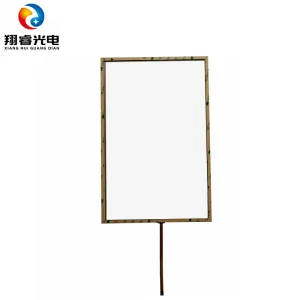
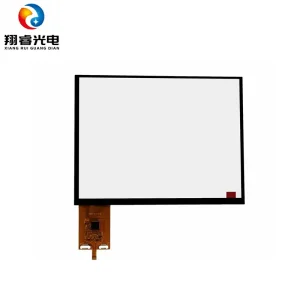
Explore additional industrial touch solutions, including optical bonding, resistive glass layouts, and custom frames.
 Xiangrui Optoelectronics