Explore our state-of-the-art interactive displays integrated with high-durability cover glass, optimized for commercial and extreme industrial deployments.
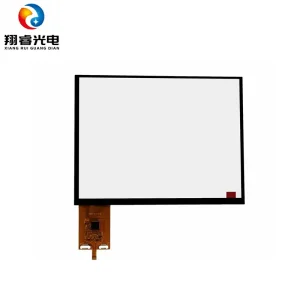
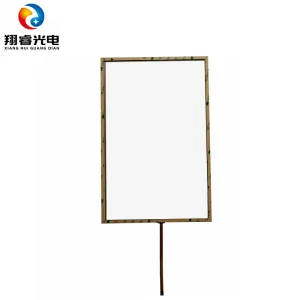
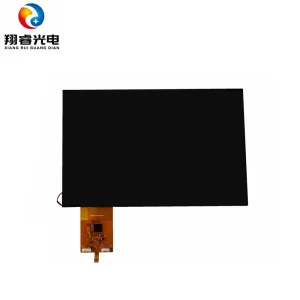
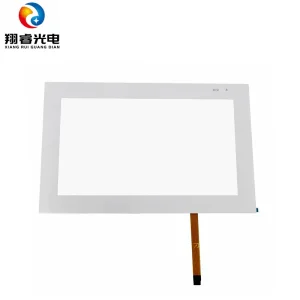
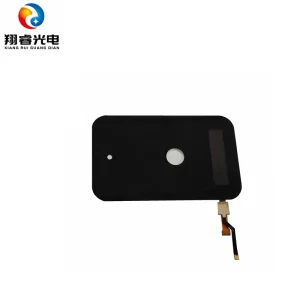
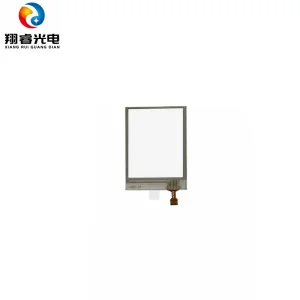
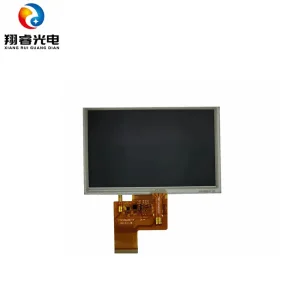
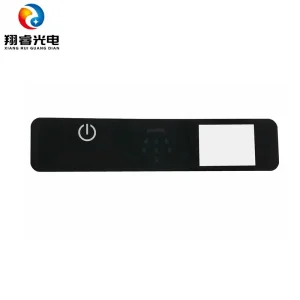
In the contemporary landscape of human-machine interfaces (HMIs), touchscreens, and precision displays, the outer cover glass serves as the critical line of defense and interaction. Once regarded as a simple protective sheet, the glass coverslip has evolved into a highly engineered optical component. Industry designers must address optical transmission, scratch durability, impact dispersion, anti-reflective properties, and localized environmental variables.
Globally, the integration of smart systems in medical clinics, outdoor IoT kiosks, military aviation, automotive cockpits, and home automation systems has driven massive demand for OEM cover glass personalization. Achieving high reliability requires deep domain expertise, advanced materials science, and ISO-certified micro-level fabrication environments.
How materials science and chemical processing transform standard glass into a highly durable industrial protective shield.
Unlike thermal tempering which creates internal stresses, chemical strengthening involves immersing glass substrates in a high-temperature potassium salt bath ($KNO_3$). This ion-exchange process swaps sodium ions on the glass surface with larger potassium ions, forming a high-compression stress layer that resists micro-cracks and structural failure.
We apply three primary nanocoatings depending on deployment: Anti-Reflective (AR) to minimize reflection; Anti-Glare (AG) via chemical etching to scatter specular reflections; and Anti-Fingerprint (AF) oleophobic/hydrophobic treatments to prevent grease buildup.
Using ultra-high precision CNC milling, laser cutting, and double-sided polishing systems, we manufacture custom profiles, irregular steps, ink-printed borders, and custom cutouts for cameras, speaker grilles, and tactile biological buttons.
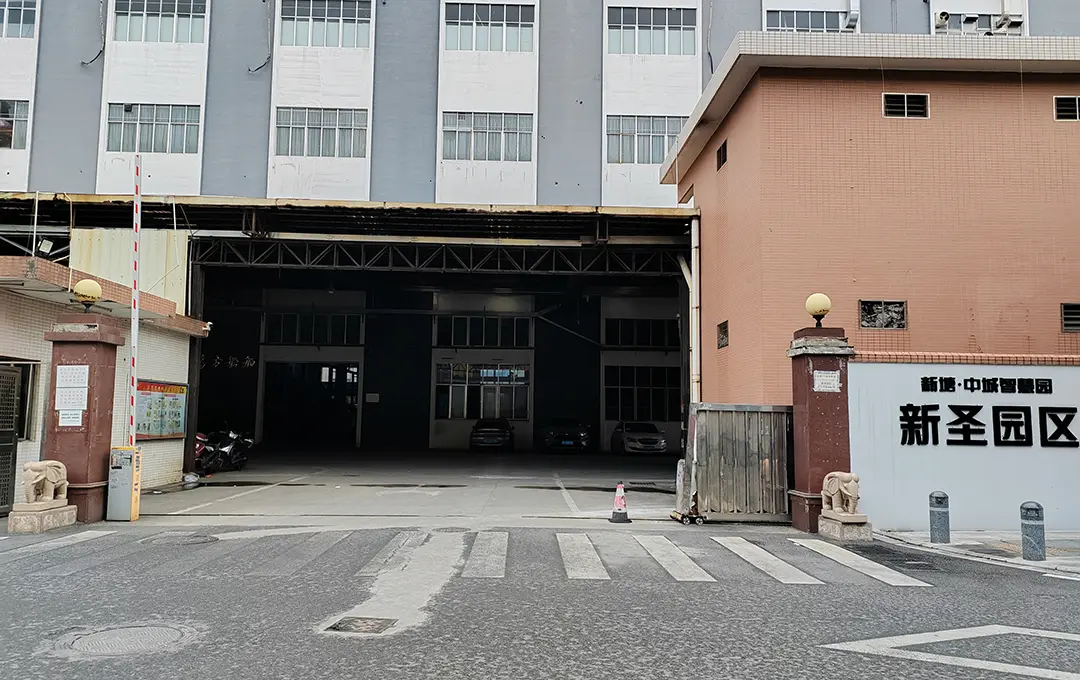
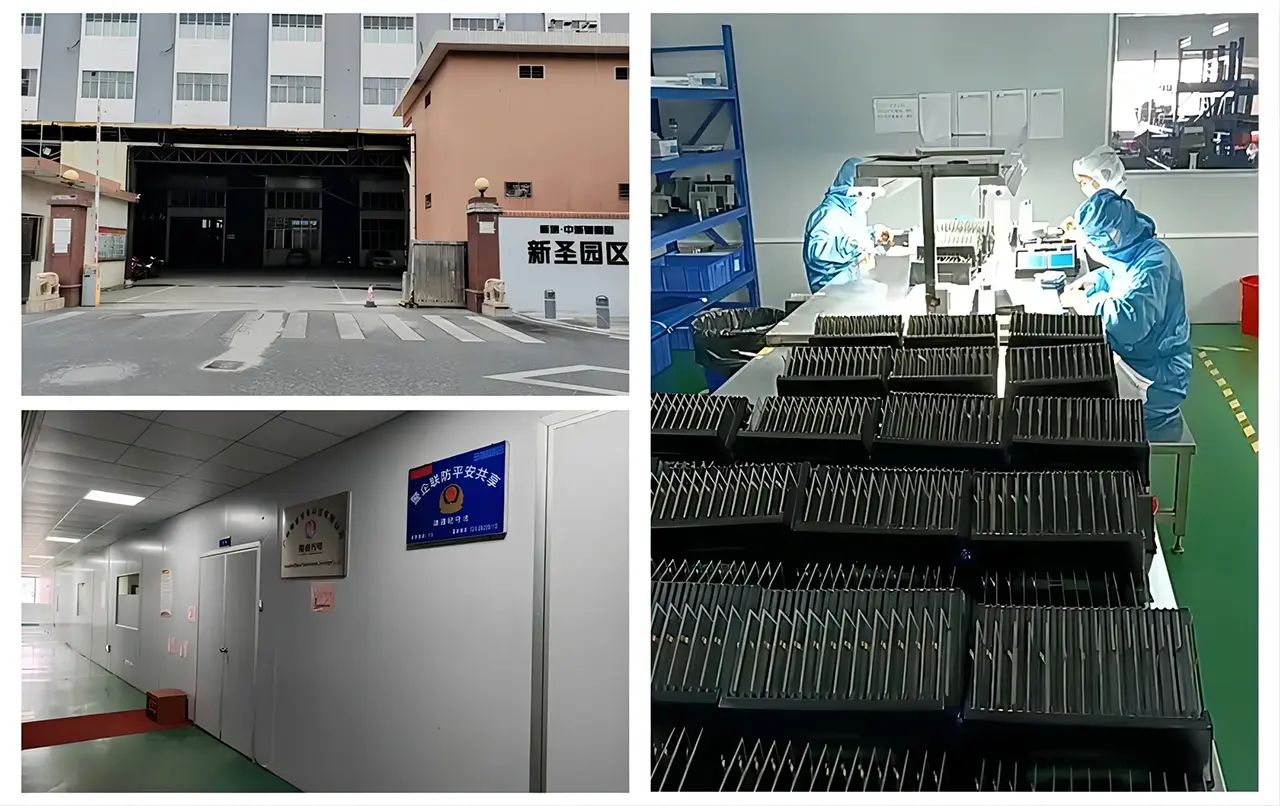
Founded in 2010 and located in Guangzhou, China, we are a professional enterprise dedicated to the research, development, production, sales, and service of resistive touch panels, capacitive touch panels, cover glass, and module bonding solutions. We specialize in customized touchscreen development, backed by robust OEM and ODM capabilities.
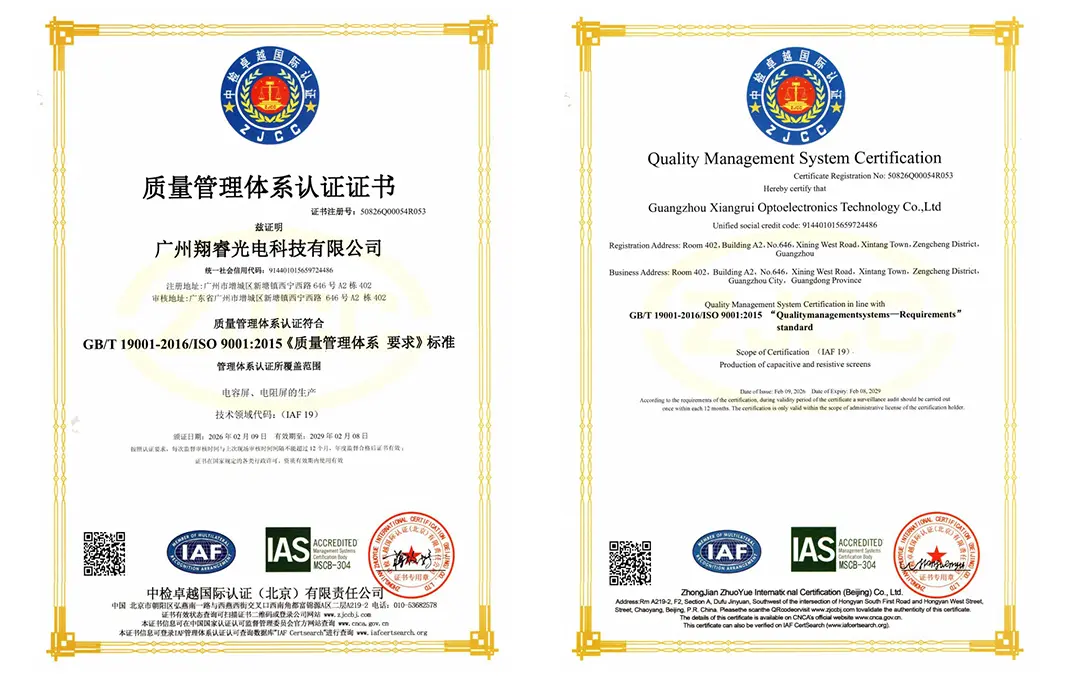
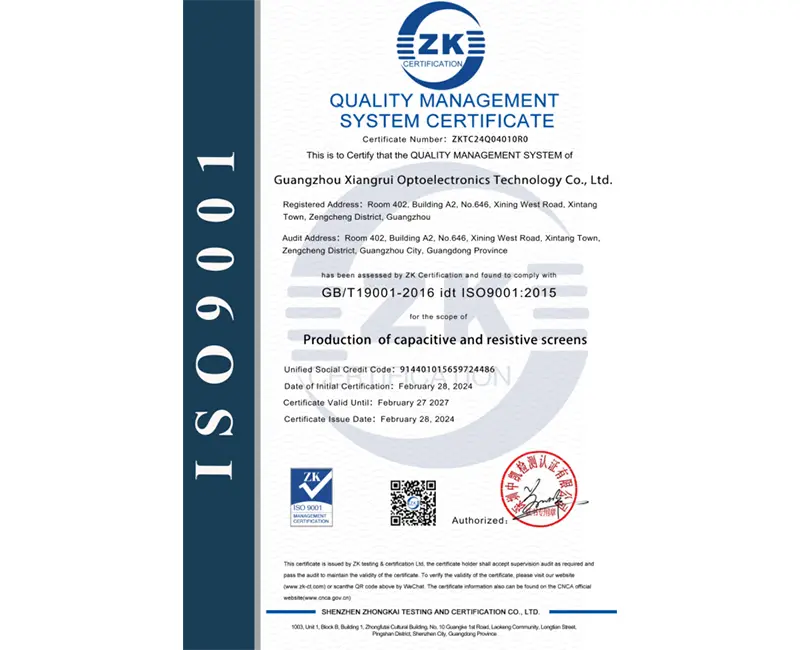
Our operation is certified to ISO 9001:2015 and ISO 14001:2015 standards, maintaining cleanroom fabrication units rated at Class 100, Class 1,000, and Class 10,000. These environments are critical to preventing microscopic dust contamination during custom glass laminations and optical bonding processes.
Our solutions serve major industrial application verticals: industrial controllers, medical terminals, smart home hubs, marine navigation interfaces, outdoor payment stations, and biometrics identification terminals.
Manufacturing Experience
Industrial standard quality assuranceProduct Breakdown Types
Diverse range of capacitive & resistive linesCleanroom Production Area
Class 100 to Class 10000 workshopsInvention & Utility Patents
R&D team striving for innovationA detailed breakdown of raw material choices and processing capabilities offered under our OEM/ODM custom services.
| Parameter | Soda-Lime Glass | High Aluminosilicate Glass | Borosilicate Glass |
|---|---|---|---|
| Chemical Composition | $SiO_2$ (72%), $Na_2O$ (14%), $CaO$ (9%) | $SiO_2$ (62%), $Al_2O_3$ (18%), $Na_2O$ (12%) | $SiO_2$ (81%), $B_2O_3$ (13%), $Na_2O$/$Al_2O_3$ (6%) |
| Elastic Modulus | 70 - 74 GPa | 72 - 78 GPa | 64 GPa |
| Max. Chemical Depth of Layer (DOL) | 10 - 15 μm | 40 - 90 μm | Minimal chemical exchange capacity |
| Compressive Surface Stress (CS) | 450 - 600 MPa | 750 - 950 MPa | N/A (Mainly thermal tempered) |
| Best Applications | Commercial kiosks, home appliances, standard HMIs | Rugged tablet HMIs, handheld scanners, medical monitors | High-temperature industrial glass, scientific instrumentation |
Xiangrui Touch maintains strong quality control protocols to meet local compliance frameworks across Europe, North America, and the APAC region. By standardizing our processes, we ensure that our OEM glass coverslips and touch module assemblies comply with international environmental and electrical mandates.
We enforce rigorous testing stages: 100% cosmetic inspection under polarized light, dimensional validation with automated coordinate-measuring machines (CMM), surface roughness analysis, thermal shock chambers, and ball-drop tests to verify mechanical strength. This guarantees that your customized display integration operates reliably even under volatile temperatures and high vibration.
Built on values of pragmatism, innovation, and long-term partnership, we are your engineering-driven supply partner.
1. Absolute Standardization: Our production line follows a standard operating procedure certified by ISO9001 and ISO14001, verifying that every single component, from raw silicate sheet inputs to optical bonding assemblies, satisfies exact tolerances.
2. R&D-Driven Adaptability: Guided by our in-house engineering team, we hold over 30 utility patents. We design and validate custom cover glass profiles to protect touch screens against thermal expansion, direct shock, and chemical exposure.
3. Seamless Optical Bonding Integration: We offer both air bonding (frame tape fitting) and full optical bonding (OCR/LOCA or OCA) to couple the coverslip to capacitive or resistive touch sensors. This eliminates air gaps, improves optical performance under daylight, and boosts structural strength.
Discover how our specialized coverslips and touch screen assemblies perform in real-world scenarios.
Coverslips treated with antimicrobial and oleophobic (AF) nanocoatings allow quick cleaning and disinfecting. High optical clarity ensures that diagnostic monitors render crisp images, and capacitive touch sensors react to latex-gloved hands.
Operating plants require robust coverslips to handle impact, oil splashes, and particulate abrasion. Our chemical tempering yields IK08 to IK10 impact ratings, protecting the underlying display module from mechanical damage.
Outdoor terminals face issues from solar glare and moisture. By combining chemically etched anti-glare (AG) surfaces, UV-blocking coatings, and full optical bonding, we prevent condensation and keep displays clear under direct sunlight.
The cover glass industry is evolving to support larger screen sizes, flexible displays, and deeper interactive features. Our R&D division focuses on refining fabrication workflows to match these shifts:
1. Ultra-Thin Glass (UTG): Developing flexible glass membranes down to 30μm, enabling foldable structures for future industrial controls and compact consumer electronics without losing mechanical resistance.
2. Bio-Safe Active Antimicrobial Coatings: Fusing silver-ion ($Ag^+$) matrices into the glass surface during potassium tempering, providing permanent protection against pathogens without losing optical clarity.
3. Dynamic Backlighting & Smart Silk Screening: Integrating dead-front printing techniques, where specific display elements remain hidden until illuminated by backend LEDs.
Quick answers to common questions about OEM glass coverslip materials, coatings, and display integrations.
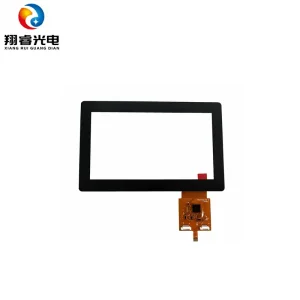
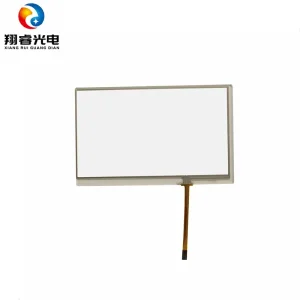
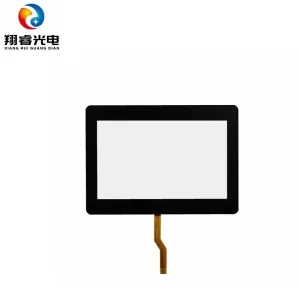
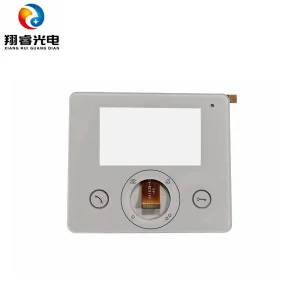
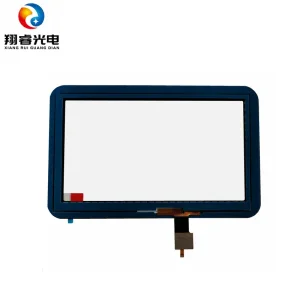
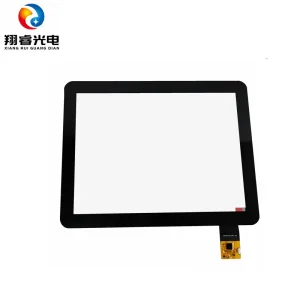
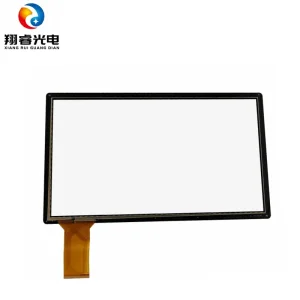
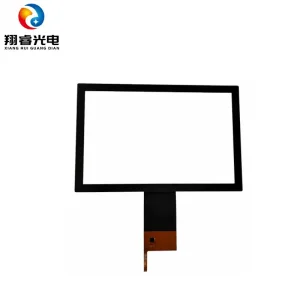
Engineered touch systems and cover glass configurations designed to fit your project requirements.
 Xiangrui Optoelectronics