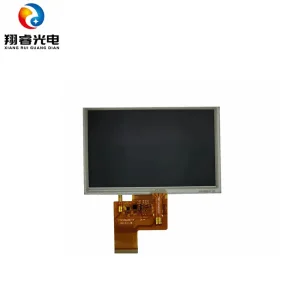
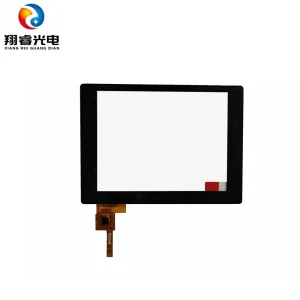
OEM Interactive Touch Display Suppliers & Products

Premium Industrial-Grade Resistive & Capacitive Custom Panels Engineered for Global OEM/ODM Standards

Interactive Touch Display Evolution & Market Imperatives

An Expert Analysis of Hardware Configurations, Sensor Architectures, and Integration Strategies

1. Technology Divergence: Capacitive vs. Resistive Touch Dynamics

Selecting the ideal touch sensor relies on balancing chemical resistance, input media, light transmission metrics, and environmental stress profiles. Modern systems have branched into two primary touch sensor topologies:

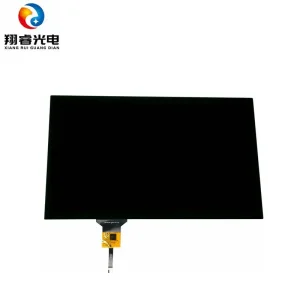
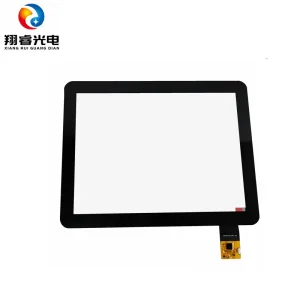
  • Projected Capacitive (PCAP) Panels: Employing a matrix of micro-fine sensor electrodes integrated into glass layers. When a conductive object (like a finger) interfaces with the glass surface, it disrupts the electrostatic field, modifying the local capacitance. Highly valued for supporting multi-touch capabilities (up to 10 points), excellent light transmittance (>87%), and resistance to chemical disinfectants and abrasives.
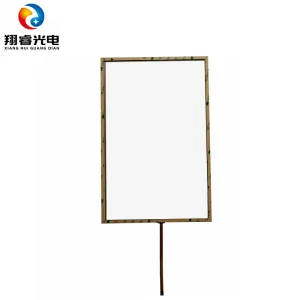
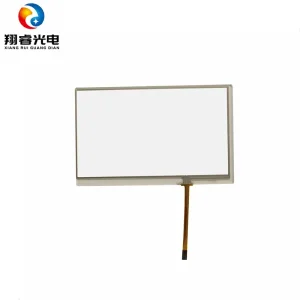
  • Resistive Touch Panels (4-Wire, 5-Wire, 8-Wire): Relying on two conductive ITO (Indium Tin Oxide) layers separated by spacer dots. When physical pressure is applied, the layers contact, creating a localized voltage drop registered by the controller. These panels excel in high-EMI settings, require zero electric conductivity from the user (allowing inputs from gloved hands, styluses, or hard tools), and offer robust cost efficiency.

2. The Imperative of Optical Bonding in Harsh Operating Environments

Air-gap bonding often introduces issues like internal reflections, condensation, and mechanical susceptibility to vibrations. Premium displays utilize optical bonding—filling the air gap between the touch sensor panel and the underlying LCD panel using an index-matched optical adhesive (LOCA or sheet resin).

This index-matching technique minimizes the refraction index difference between glass and air, reducing internal reflections by up to 90% and boosting outdoor sunlight readability without increasing backlight power consumption. Furthermore, it eliminates internal condensation issues and adds structural durability against mechanical shocks.

About Guangzhou Xiangrui Optoelectronics

A Globally Certified Touch Technology Manufacturer

Established in 2010 and based in Guangzhou, China, Guangzhou Xiangrui Optoelectronics Technology Co., Ltd. is a dedicated manufacturer specializing in the research, development, production, and service of resistive touch panels, capacitive touch panels, cover glass, and complete module bonding products.

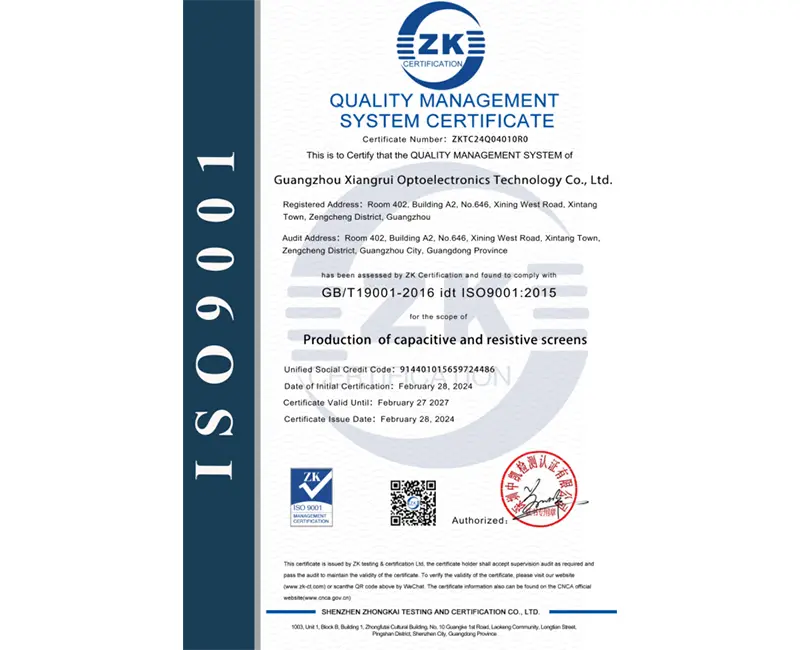
Operating from a state-of-the-art 3,000 square meter plant, we feature highly controlled Class 100, Class 1,000, and Class 10,000 dust-free cleanrooms. This pristine environment allows us to satisfy strict particulate requirements across advanced assembly and optical bonding processes. We operate under rigorous quality and environmental standards, certified by ISO 9001 and ISO 14001 frameworks.

Driven by professional R&D engineering and a strong focus on advanced materials, we hold more than 30 utility and invention patents. We were recognized as a *Guangdong Province High-Tech Enterprise* in 2022. We offer customized OEM/ODM services to match exact size, interface (USB, I2C, RS232), cover plate treatment, and structural integration requirements.
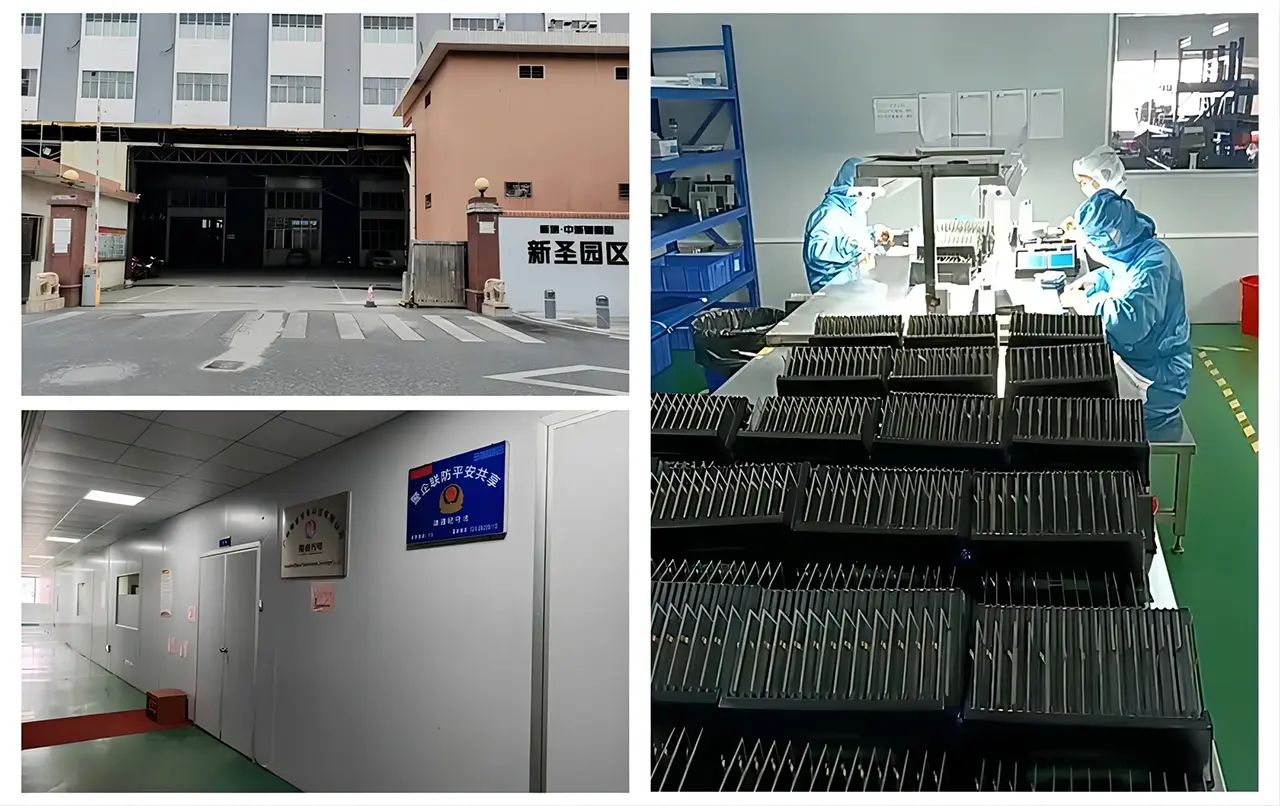
Guangzhou Xiangrui Cleanroom Assembly Facility
10+ Years
Manufacturing Experience
Founded in 2010 with a long-term focus on industrial touch solutions.
30+
Invention & Utility Patents
Continuous R&D investments driving innovation in touch control.
3,000 m²
Modern Facility Area
Equipped with Class 100, 1000, and 10000 cleanrooms.
40+
Countries Exported
Supplying systems across North America, Europe, and Asia.
Optoelectronic Testing and Assembly

Why Industrial Leaders Partner With Us

E-E-A-T Certified Quality Controls and Engineering Expertise

  • 01

    Systemic Quality & ISO Certification

    We maintain ISO 9001 (Quality) and ISO 14001 (Environmental) certifications. Every phase, from raw materials through FPC bonding to cleanroom lamination, follows standard operating procedures to guarantee high yield and product reliability.

  • 02

    Advanced Engineering and Patent Portfolio

    Recognized as a Guangdong High-Tech Enterprise, our dedicated R&D department continues to develop utility model patents in noise rejection, thick cover lens tuning, and water-rejection firmware algorithms.

  • 03

    Custom OEM/ODM Integration Pipelines

    We build displays tailored to your needs. This includes custom dimensions, cover glass thicknesses (from 0.55mm up to 10mm), anti-glare (AG), anti-reflective (AR), or anti-fingerprint (AF) finishes, along with optimized interfaces for target controller ICs.

Custom Tailored Industrial Touch Solutions

Engineered to Excel in Demanding High-Reliability Environments

Factory Automation & HMI

Our heavy-duty, wide-temperature resistive and capacitive displays support reliable glove operation, resist electrical noise (EMI), and withstand chemical cleanings on the factory floor.

Medical Diagnostics & Controls

Offering clean cover glass integration with anti-microbial treatments and high chemical resistance, designed to perform consistently in sterile healthcare environments.

Retail Kiosks & Palm Recognition

Highly responsive projected capacitive (PCAP) multi-touch panels designed for seamless optical bonding with palm print scanning and payment systems.

Technology Roadmap & Material Engineering

Understanding Substrate Formats, Surface Treatings, and Environmental Performance

Selecting the right touch panel requires a balance of substrate structures, surface modifications, and electrical configurations. Below is an engineering overview mapping out physical options against expected environmental performance.

Touch Type Structural Setup Common Thickness Optics (Light Transmission) Key Operational Strengths
Capacitive (PCAP) Glass + Glass (G+G) 0.55mm - 10.0mm ≥ 87% Supports multi-touch, high durability, excellent scratch resistance, optical clarity.
Capacitive (PCAP) Glass + Film (G+F) 0.25mm - 2.0mm ≥ 85% Thin Profile, lightweight structure, cost-efficient for consumer and smart home designs.
Resistive Film + Glass (F+G) 1.0mm - 3.2mm ≥ 80% Zero glove restriction, high EMI tolerance, cost-effective for basic HMI interfaces.
Resistive (Wide-Temp) Glass + Film + Glass (G+F+G) 1.8mm - 5.5mm ≥ 83% Tough surface construction, supports wide operating ranges, highly resistant to punctures.

Beyond sensor architecture, surface chemistry plays a key role in sunlight readability and maintenance. We offer three primary chemical cover treatments:

  • Anti-Glare (AG): Chemically etching the glass surface to diffuse reflected light. This minimizes mirror-like reflections on screens in bright environments.
  • Anti-Reflective (AR): Applying vacuum deposition layer coatings that reduce overall light reflection, increasing screen contrast and light transmission.
  • Anti-Fingerprint (AF): Bonding a hydrophobic and oleophobic coating to reduce fingerprint residue and make cleaning the screen quick and easy.

Expert Integration & Engineering Q&A

Technical guidance on environmental performance, material specs, and implementation
Q1: What are the main benefits of Glass-on-Glass (G+G) versus Glass-on-Film (G+F) for capacitive screens?
A: G+G structures feature a glass cover lens bonded to a glass sensor grid. This delivers high optical transmission (≥87%), long-term UV resistance, mechanical stability, and scratch resistance (often ≥7H). G+F structures use a film-based sensor, which is thinner, lighter, and more cost-effective. However, they can be more vulnerable to extreme temperatures and moisture, making G+G the preferred choice for rugged industrial and outdoor installations.
Q2: How does optical bonding improve sunlight readability in outdoor display setups?
A: In air-gap touch displays, light reflects off the boundaries between the LCD, the air, and the touch panel. Optical bonding fills this gap with an index-matched optical adhesive. This eliminates the internal air-glass boundaries, reducing overall surface reflections from roughly 8% down to less than 1%. This design maintains high screen contrast and readability under bright sunlight without requiring higher, power-hungry display backlights.
Q3: Can your capacitive touch screens support heavy industrial gloves or wet operation?
A: Yes. Working closely with controller partners like EETI, Ilitek, and FocalTech, we program custom firmware parameters to filter out water droplets and read inputs from thick work gloves (including latex, nitrile, leather, and double-layered thermal gloves). We tune the mutual and self-capacitance profiles of the sensors to ensure consistent touch detection while ignoring water drops or surface mist.
Q4: What surface treatments can be applied to custom display cover glass?
A: We offer custom surface engineering, including: Anti-Glare (AG) via chemical etching to scatter glare; Anti-Reflective (AR) optical coatings to maximize display light transmission; and Anti-Fingerprint/Anti-Smudge (AF) fluorosilane coatings to repel water and oils. These treatments can be combined to match your specific environmental requirements.
Q5: Why choose a 5-wire resistive touch panel over a standard 4-wire system?
A: In 4-wire setups, touch coordinates are calculated using both the upper film and lower glass layers. When the top film layer wears down, coordinate drift occurs. 5-wire resistive touch panels place all coordinate measurements on the durable lower glass substrate, using the flexible top layer only as a voltage probe. This increases the button-press lifespan of the touch panel, often extending it from 1 million cycles to over 35 million activations.
Q6: How do Guangzhou Xiangrui touch panels achieve IP65 water and dust ratings?
A: We design custom cover glass assemblies with custom gaskets, stepped glass edges, and specialized adhesives. When bonded to your display housing, this creates an airtight barrier that prevents moisture and dust ingress, ensuring the system meets IP65 ingress protection standards.